
Kate Chopin (1851–1904)
Author of The Awakening
About the Author
Kate Chopin was born Katherine O'Flaherty in St. Louis, Missouri, on February 8, 1851. Although she was brought up in a wealthy and socially elite Catholic family, Chopin's childhood was marred by tragedies. Her father was killed in a train accident when Chopin was just four years old, and in the show more following years she also lost her older brother, great-grandmother, and half-brother. In 1870, at the age of 19, she married Oscar Chopin, the son of a wealthy cotton-growing family in Louisiana. The couple had seven children together, five boys and two girls, before Oscar died of swamp fever in 1883. The following year, Chopin packed up her family and moved back to St. Louis to be with her mother, who died just a year later. To support herself and her family, Chopin started to write. Her first novel, At Fault, was published in 1890. Her most famous work, The Awakening, inspired by a real-life New Orleans woman who committed adultery, was published in 1899. The book explores the social and psychological consequences of a woman caught in an unhappy marriage in 19th century America, is now considered a classic of the feminist movement and caused such an uproar in the community that Chopin almost entirely gave up writing. Chopin did try her hand at a few short stories, most of which were not even published. Chopin died on August 22, 1904, of a brain hemorrhage, after collapsing at the World's Fair just two days before. (Bowker Author Biography) show less
Image credit: from Wikipedia
Works by Kate Chopin
Kate Chopin: Complete Novels and Stories: At Fault / Bayou Folk / A Night in Acadie / The Awakening / Uncollected Stories (Library of America) (2002) 361 copies, 3 reviews
Three Classics by American Women: The Awakening; Ethan Frome; O Pioneers! (1990) 29 copies, 1 review
Kate Chopin: Complete Collection of Works with analysis and historical background (Annotated and Illustrated) (Annotated Classics) (2013) 7 copies
Short Fiction 5 copies
A História de uma Hora e Outros Contos (Coleção Folha Inglês Com Clássicos Da Literatura, #24) 4 copies
Kate Chopin: The Complete Novels and Stories (The Greatest Writers of All Time Book 22) (2016) 3 copies
At the 'Cadian Ball 3 copies
Lilacs 3 copies
يقظة امرأة 2 copies
EDNA 2 copies
The Night Came Slowly 2 copies
O Beijo 2 copies
No title 2 copies
Her Letters 1 copy
Love on the Bon-Dieu 1 copy
Miss McEnders 1 copy
For Marse Chouchoute 1 copy
La Belle Zoraide 1 copy
Doctor Chevalier’s Lie 1 copy
Juanita 1 copy
Emancipation. A Life Fable 1 copy
Charlie; and other stories 1 copy
L'Éveil (French Edition) 1 copy
SST 35 - Il risveglio 1 copy
“Desiree’s Baby” 1 copy
Mamouche 1 copy
Madame Celestin's Divorce 1 copy
Kate Chopin Collection: The Awakening, At Fault, Bayou Folk, Désirée’s Baby & Other Stories (2020) 1 copy
En kvinde vågner 1 copy
The Awakening & Other Short Stories: Kate Chopin (Short Stories, Classics, Literature) [Annotated] (2021) 1 copy
Chopin, Kate Archive 1 copy
“The ‘Cadian Ball” 1 copy
Meias de Seda 1 copy
Associated Works
Literature: An Introduction to Fiction, Poetry, and Drama (1995) — Contributor, some editions — 1,017 copies, 7 reviews
The Norton Anthology of Literature by Women: The Tradition in English (1985) — Contributor — 940 copies, 2 reviews
American Fantastic Tales : Terror and the Uncanny from Poe to the Pulps (2009) — Contributor — 289 copies, 4 reviews
Daughters of Decadence: Women Writers of the Fin-de-Siècle (1993) — Contributor — 205 copies, 2 reviews
Classic American Short Stories [Barnes & Noble Leatherbound Classics] (2001) — Contributor — 176 copies, 1 review
The Graphic Canon, Vol. 3: From Heart of Darkness to Hemingway to Infinite Jest (2013) — Contributor — 162 copies, 1 review
The Norton Anthology of American Literature, Volume 2: 1865 to Present (1979) — Contributor, some editions — 137 copies
In the Shadow of Edgar Allan Poe: Classic Tales of Horror, 1816-1914 (2015) — Contributor — 107 copies, 3 reviews
Two Friends and Other 19th-century American Lesbian Stories (1994) — Contributor — 107 copies, 1 review
The Heath Anthology of American Literature, Concise Edition (2003) — Contributor — 74 copies, 1 review
The Signet Classic Book of Contemporary American Short Stories (1985) — Contributor — 47 copies, 1 review
Women in the Trees: U.S. Women's Short Stories About Battering and Resistance, 1839-1994 (1996) — Contributor — 45 copies
Civil War Memories: Nineteen Stories of Battle, Bravery, Love, and Tragedy (2000) — Contributor — 38 copies, 1 review
The Haves and Have Nots: 30 Stories About Money and Class in America (1999) — Contributor — 37 copies
The Strange History of Suzanne LaFleshe and Other Stories of Women and Fatness (2003) — Contributor — 31 copies, 1 review
Classic American women writers: Sarah Orne Jewett, Kate Chopin, Edith Wharton, Willa Cather (1980) — Contributor — 26 copies
Isaac Asimov Presents : The Best Horror and Supernatural of the 19th Century (1983) — Contributor — 22 copies, 1 review
"The Man Who Thought Himself a Woman" and Other Queer Nineteenth-Century Short Stories (Q19: The Queer American Nineteenth Century) (2017) — Contributor — 20 copies
Great Classic Stories II: Eighteen Unabridged Classics (2010) — Contributor, some editions — 17 copies
The Awakening / Cane / The Adventures of Huckleberry Finn / Maggie: A Girl of the Streets (1999) — Contributor — 2 copies
For Want of a Horse: Twenty-Three Tales of Supernatural Stallions, Magical Mares, and Paranormal Ponies (2015) — Contributor — 2 copies, 2 reviews
La nueva mujer: Relatos de escritoras estadounidenses del siglo XIX — Contributor — 1 copy
Tagged
Common Knowledge
- Canonical name
- Chopin, Kate
- Legal name
- O'Flaherty, Katherine (birth name)
Chopin, Katherine - Other names
- Chopin, Kate
- Birthdate
- 1851-02-08
- Date of death
- 1904-08-22
- Gender
- female
- Education
- Sacred Heart Academy, St. Louis
- Occupations
- novelist
short story writer - Organizations
- Wednesday Club
- Awards and honors
- St. Louis Walk of Fame
- Short biography
- Katherine O’Flaherty was the daughter of an Irish immigrant father and a French-Creole mother. She was educated at the St. Louis Sacred Heart Academy and then made a debut into Southern society. In 1870, she married Oscar Chopin, a cotton trader from Louisiana, and the couple had six children. Widowed in 1882, and needing to support herself and her young children, Kate Chopin began to write sketches of her former plantation life, which appeared in periodicals such as Bayou Folk. These received immediate acclaim, as did her first novel At Fault (1890). Kate Chopin published two novels and about 100 short stories in the 1890s. Most of her fiction was set in Louisiana and her best-known work focuses on the lives of sensitive, intelligent women. Her short stories were most popular in her own day and appeared in some of America's most prestigious magazines. After her death her work was temporarily forgotten, but then in the 1920s her short stories began to appear in anthologies, and the public and literary scholars again began to take notice of her.
- Cause of death
- brain hemorrhage
- Nationality
- USA
- Birthplace
- St. Louis, Missouri, USA
- Places of residence
- St. Louis, Missouri, USA
Grand Coteau, Louisiana, USA
New Orleans, Louisiana, USA
Natchitoches Parish, Louisiana, USA - Place of death
- St. Louis, Missouri, USA
- Burial location
- Calvary Cemetery, St. Louis, Missouri, USA
- Associated Place (for map)
- USA
Members
Reviews

What struck me most about this short story--besides the lovely, precise, observant writing--was the abundant loving care and tender domesticity. Even within a story about a single illicit passion outside a marriage, Chopin's brilliance is she doesn't pass judgement any more than she passes judgment on a sudden, potentially damaging storm.
Humans naturally do loving dutiful things. They also naturally do impulsive things given the just right circumstances. And sometimes rather than being made show more miserable by it, they will be made refreshed.
The storm passed without any damage, leaving behind only the much needed quench of a long thirst and the invigorating nitrogen injected by the electricity.
A beautifully written story. From 1898! show less
Humans naturally do loving dutiful things. They also naturally do impulsive things given the just right circumstances. And sometimes rather than being made show more miserable by it, they will be made refreshed.
The storm passed without any damage, leaving behind only the much needed quench of a long thirst and the invigorating nitrogen injected by the electricity.
A beautifully written story. From 1898! show less
Kate Chopin: Complete Novels and Stories: At Fault / Bayou Folk / A Night in Acadie / The Awakening / Uncollected Stories (Library of America) by Kate Chopin

THE AWAKENING: (Review written in 2007)
Excellent portrait of a tormented soul--the woman who "had everything" but cared little for either material things or the people she ought to have loved---husband, father, children, friends. Edna Pontellier was never happy or satisfied, either in her role as mother, or wife, or artist,---not even the love that awakened her passions gave her any truly joyous moments. This is tricky stuff--I'm inclined to want to shake such characters out of their show more "ennui", urge them to get a life, and toss their stories aside if they won't. But Edna roused my sympathies. She wasn't just your typical 19th century female shackled by societal restraints and looking for creative or emotional outlets. This woman defied convention repeatedly, and found very little satisfaction in it. She suffered no consequences that she did not impose on herself. She did as she pleased, but it gave her little pleasure. I came to suspect that she was suffering from true depressive episodes, which makes the story even more remarkable for its time. I read this from the Library of America collection of Chopin's novels and short stories. It left me eager to read the rest of her work. show less
Excellent portrait of a tormented soul--the woman who "had everything" but cared little for either material things or the people she ought to have loved---husband, father, children, friends. Edna Pontellier was never happy or satisfied, either in her role as mother, or wife, or artist,---not even the love that awakened her passions gave her any truly joyous moments. This is tricky stuff--I'm inclined to want to shake such characters out of their show more "ennui", urge them to get a life, and toss their stories aside if they won't. But Edna roused my sympathies. She wasn't just your typical 19th century female shackled by societal restraints and looking for creative or emotional outlets. This woman defied convention repeatedly, and found very little satisfaction in it. She suffered no consequences that she did not impose on herself. She did as she pleased, but it gave her little pleasure. I came to suspect that she was suffering from true depressive episodes, which makes the story even more remarkable for its time. I read this from the Library of America collection of Chopin's novels and short stories. It left me eager to read the rest of her work. show less
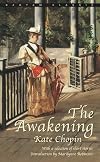
This often over-looked classic, has been making waves for more than a century. It has been called the “proto-feminist precursor to American modernism” and has inspired generations of women.
The story revolves around Edna Pontellier, a woman in her late twenties who is a mother, wife and socialite in New Orleans. After a family vacation to the seaside, Edna’s view of her world and the life she leads drastically changes. She’s no longer content to be viewed as a piece of property and show more she decides to rebel against the accepted social norms.
The novel is small in size, but large in revolutionary ideas. If it had been written in the last 50 years, it wouldn’t have the same power. It was published in 1899 and it challenged the traditional and widely accepted social standards of that time.
In Edna, Chopin created a character that balked at being defined by her husband and children, when no one else dared to do so. Though I’ve never had children and I’m lucky enough to have a husband who supports my interests, I can still understand how disturbing it would be to see yourself disappearing into the roles you’ve been assigned.
Henrik Ibsen published his play, A Doll House, which deals with a similar situation, in 1879, but I think it’s easier for a man to make those observations. It was much more daring and controversial for a woman to write about such things.
The book is striking both for the issues it deals with and because of the prose is beautiful. It provides a powerful look at our gender and a gives us a chance to reflect on just how far we’ve come. show less
The story revolves around Edna Pontellier, a woman in her late twenties who is a mother, wife and socialite in New Orleans. After a family vacation to the seaside, Edna’s view of her world and the life she leads drastically changes. She’s no longer content to be viewed as a piece of property and show more she decides to rebel against the accepted social norms.
The novel is small in size, but large in revolutionary ideas. If it had been written in the last 50 years, it wouldn’t have the same power. It was published in 1899 and it challenged the traditional and widely accepted social standards of that time.
In Edna, Chopin created a character that balked at being defined by her husband and children, when no one else dared to do so. Though I’ve never had children and I’m lucky enough to have a husband who supports my interests, I can still understand how disturbing it would be to see yourself disappearing into the roles you’ve been assigned.
Henrik Ibsen published his play, A Doll House, which deals with a similar situation, in 1879, but I think it’s easier for a man to make those observations. It was much more daring and controversial for a woman to write about such things.
The book is striking both for the issues it deals with and because of the prose is beautiful. It provides a powerful look at our gender and a gives us a chance to reflect on just how far we’ve come. show less
3 stars, but emotionally maybe upgraded to 4 for historical audacity.
It was... fine. I was mostly sitting there thinking, "yes, okay, I understand what we're doing here." Then I remembered this was published in 1899 and suddenly my reaction became: oh girl, the audacity. Get it.
And honestly? The historical context does a lot of heavy lifting. A woman writing this kind of exploration of female desire, dissatisfaction, autonomy, and identity at that point in history was genuinely bold. Ahead show more of its time, absolutely.
That said, if I'm judging purely on my personal reading experience rather than literary significance, I'm probably still closer to three stars. I appreciate what this book did far more than I actually enjoyed reading it, and I don't think I'm rushing out to reread it.
The comparison to Madame Bovary is interesting because they are essentially exploring the same premise from opposite moral angles: a woman trapped in an unhappy marriage seeks freedom through affairs, but where Flaubert presents Emma as selfish, romantic, and destructive, Chopin presents Edna as constrained by the expectations placed upon her. The contrast says a lot about how differently female dissatisfaction and desire have been interpreted depending on the author's perspective (and, frankly, the century).
So: historically important? Absolutely. Bold? Definitely. Did I personally love it? Not really. But I do have to respect a woman in 1899 looking society in the eye and saying, "Actually, what if women were people?" and causing a scandal. Points for that. show less
It was... fine. I was mostly sitting there thinking, "yes, okay, I understand what we're doing here." Then I remembered this was published in 1899 and suddenly my reaction became: oh girl, the audacity. Get it.
And honestly? The historical context does a lot of heavy lifting. A woman writing this kind of exploration of female desire, dissatisfaction, autonomy, and identity at that point in history was genuinely bold. Ahead show more of its time, absolutely.
That said, if I'm judging purely on my personal reading experience rather than literary significance, I'm probably still closer to three stars. I appreciate what this book did far more than I actually enjoyed reading it, and I don't think I'm rushing out to reread it.
The comparison to Madame Bovary is interesting because they are essentially exploring the same premise from opposite moral angles: a woman trapped in an unhappy marriage seeks freedom through affairs, but where Flaubert presents Emma as selfish, romantic, and destructive, Chopin presents Edna as constrained by the expectations placed upon her. The contrast says a lot about how differently female dissatisfaction and desire have been interpreted depending on the author's perspective (and, frankly, the century).
So: historically important? Absolutely. Bold? Definitely. Did I personally love it? Not really. But I do have to respect a woman in 1899 looking society in the eye and saying, "Actually, what if women were people?" and causing a scandal. Points for that. show less
Lists
AP Lit (1)
Carole's List (1)
Read (1)
My TBR (1)
Five star books (1)
Modernism (1)
bound (1)
Unread books (1)
Favourite Books (1)
Reading LIst (1)
Out of Copyright (1)
New Orleans (1)
Southern Fiction (1)
. (1)
Victorian Period (1)
American Realism (3)
1890s (1)
Short and Sweet (1)
2016 UpROOTed (1)
el (3)
Female Author (3)
19th Century (1)
Banned Books (1)
Summer Books (1)
Ocean (1)
Women's Stories (1)
Overdue Podcast (1)
Awards


You May Also Like


Associated Authors
Statistics
- Works
- 196
- Also by
- 82
- Members
- 21,077
- Popularity
- #1,025
- Rating
- 3.7
- Reviews
- 343
- ISBNs
- 792
- Languages
- 18
- Favorited
- 56