
Paul La Farge (1970–2023)
Author of The Night Ocean
About the Author
Works by Paul La Farge
The Observers [short story] 2 copies
Mrs. Ferris [short story] 1 copy
Associated Works
The Year's Best Fantasy and Horror: Seventeenth Annual Collection (2004) — Contributor — 242 copies, 9 reviews
McSweeney's 05: Sometimes Not Believing How Great This All Is (2012) — Contributor — 190 copies, 2 reviews
Read Hard: Five Years of Great Writing from the Believer (2009) — Contributor — 87 copies, 2 reviews
A Fictional History of the United States with Huge Chunks Missing (2006) — Contributor — 76 copies, 2 reviews
Tagged
Common Knowledge
- Other names
- Poissel, Paul
- Birthdate
- 1970-11-17
- Date of death
- 2023-01-18
- Gender
- male
- Education
- Yale University
- Occupations
- novelist
essayist
literature professor
writing teacher - Organizations
- Bard College
Wesleyan University - Cause of death
- cancer
- Nationality
- USA
- Birthplace
- New York, New York, USA
- Places of residence
- New York, New York, USA
- Place of death
- Poughkeepsie, New York, USA
- Associated Place (for map)
- New York, USA
Members
Reviews
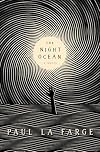
This book is a bizarre and beautifully written tribute to the Unreliable Narrator and to writers in general. Highly recommended for all libraries.
Favorite lines:
"This is how transmigration works. Words take you over. And you may inhabit others in the form of words."
"The American id could not be educated, Spinks thought. It needed horror in order to stay awake and to justify its most pleasureful pursuit, the destruction of helpless people who had never done anything wrong. America is truly show more Lovecraft's country: fearful because it cannot love." show less
Favorite lines:
"This is how transmigration works. Words take you over. And you may inhabit others in the form of words."
"The American id could not be educated, Spinks thought. It needed horror in order to stay awake and to justify its most pleasureful pursuit, the destruction of helpless people who had never done anything wrong. America is truly show more Lovecraft's country: fearful because it cannot love." show less
“No reality, but in books”
In his affecting novel The Night Ocean, Paul La Farge crafts a truly intricate tapestry of interwoven historical fact and fantasy, one that kept me enraptured and craving more. Building a mysterious and compelling narrative that travels back and forth through time, he grapples with the fraught legacy of H.P. Lovecraft, one in conversation with the true horrors of the twentieth century and the sexual, racial, and social realities of the twenty-first century. Like show more the best work of Lovecraft, La Farge writes with a pseudo-authentic voice, imbuing real life with eerie meaning, interrogating truth, fiction, and the fuzzy liminal space between them, capturing and critiquing the strange appeal of the horror author and of fandom in general.
Narrated by Dr. Marina Willett, a New York psychologist whose husband Charlie has disappeared in typical Lovecraftian fashion after his investigations into Lovecraft’s relationship with his young fan Robert H. Barlow began to spiral out of control, Marina too finds herself investigating Charlie’s research. Relying on the unreliable and eventful life of an unassuming elderly Canadian, Leo Spinks, who back in 1952 published the Erotonomicon, a salacious lost diary of Lovecraft himself admitting his sexual relationship with Barlow, Marina delves into a dozen striking stories within stories. Leo seems to know more than he lets on, and in fact, is the axle upon which the story revolves. Or is he?
It turns out that, like the Necronomicon of Lovecraft’s writing, what is real and what is imaginary begins to blur, as hoaxes and revelations compete for the reader’s attention. Just when you think the truth is coming out and a great revelation is at hand, it is pulled away, leaving our narrator and the reader scrambling for meaning. In this Russian nesting doll of a narrative, the way La Farge interweaves these narratives into a believable whole provides a perfect homage and criticism of Lovecraft’s place in fandom and popular culture, and why he remains relevant.
I write about other works that use Lovecraft as a fictional character in my article Lovecraft Reanimated at Fandom Fanatics. show less
In his affecting novel The Night Ocean, Paul La Farge crafts a truly intricate tapestry of interwoven historical fact and fantasy, one that kept me enraptured and craving more. Building a mysterious and compelling narrative that travels back and forth through time, he grapples with the fraught legacy of H.P. Lovecraft, one in conversation with the true horrors of the twentieth century and the sexual, racial, and social realities of the twenty-first century. Like show more the best work of Lovecraft, La Farge writes with a pseudo-authentic voice, imbuing real life with eerie meaning, interrogating truth, fiction, and the fuzzy liminal space between them, capturing and critiquing the strange appeal of the horror author and of fandom in general.
Narrated by Dr. Marina Willett, a New York psychologist whose husband Charlie has disappeared in typical Lovecraftian fashion after his investigations into Lovecraft’s relationship with his young fan Robert H. Barlow began to spiral out of control, Marina too finds herself investigating Charlie’s research. Relying on the unreliable and eventful life of an unassuming elderly Canadian, Leo Spinks, who back in 1952 published the Erotonomicon, a salacious lost diary of Lovecraft himself admitting his sexual relationship with Barlow, Marina delves into a dozen striking stories within stories. Leo seems to know more than he lets on, and in fact, is the axle upon which the story revolves. Or is he?
It turns out that, like the Necronomicon of Lovecraft’s writing, what is real and what is imaginary begins to blur, as hoaxes and revelations compete for the reader’s attention. Just when you think the truth is coming out and a great revelation is at hand, it is pulled away, leaving our narrator and the reader scrambling for meaning. In this Russian nesting doll of a narrative, the way La Farge interweaves these narratives into a believable whole provides a perfect homage and criticism of Lovecraft’s place in fandom and popular culture, and why he remains relevant.
I write about other works that use Lovecraft as a fictional character in my article Lovecraft Reanimated at Fandom Fanatics. show less

A wonderful novel about the world of weird fiction, its fans and phantoms. The spirit of H.P. Lovecraft is at or near the center of each character's obsession, drawing both suspecting and unsuspecting into the muck of his character and the murk of a vanishing stretch of literary time. With Robert H. Barlow, Lovecraft's friend, collaborator, and executor, as Imp of the Perverse. La Farge's style is plain but exploratory, without the self-infatuation of the fanboy. You needn't like Lovecraft show more to love this novel; I don't, and I do. For a West Coast complement, see Jake Arnott's The House of Rumour. show less
When Marina's husband Charles checks out of the mental hospital after having a breakdown and disappears with only his clothes left behind at the shore of a lake, she retraces his footsteps in the hopes he might still be alive. Charles had recently published a successful book about H. P. Lovecraft and Robert Barlow, which was later exposed as based on a hoax perpetrated by L. C. Spinks, who also wrote an erotic diary purported to be by Lovecraft about Barlow but was yet another hoax.
This book show more really hit all of my buttons. It's about writers and writing and books, and so many American genre writers of the early twentieth century and their associates turn up as characters that it's like being at the most fascinating cocktail party. (WIlliam S. Burroughs was my favorite of them, absolutely.) There are stories nested within stories within stories, and no narrator can be trusted. In the end, fact and fiction become inextricably blurred, but this is largely the point. I loved it. show less
This book show more really hit all of my buttons. It's about writers and writing and books, and so many American genre writers of the early twentieth century and their associates turn up as characters that it's like being at the most fascinating cocktail party. (WIlliam S. Burroughs was my favorite of them, absolutely.) There are stories nested within stories within stories, and no narrator can be trusted. In the end, fact and fiction become inextricably blurred, but this is largely the point. I loved it. show less
Lists
Awards


You May Also Like


Associated Authors
Statistics
- Works
- 11
- Also by
- 8
- Members
- 896
- Popularity
- #28,592
- Rating
- 3.5
- Reviews
- 52
- ISBNs
- 28
- Languages
- 2
- Favorited
- 1
