
Rilla Askew
Author of Kind of Kin
About the Author
Rilla Askew is the author of "Strange Business," a collection of stories, & the novel "The Mercy Seat," which was nominated for the PEN/Faulkner award & the Mountains & Plains Booksellers Association Award, & was the winner of the Western Heritage Award & the Oklahoma Book Award. (Bowker Author show more Biography) show less
Works by Rilla Askew
Associated Works
Aniyunwiya/Real Human Beings: An Anthology of Contemporary Cherokee Prose (1995) — Contributor — 18 copies
Tagged
Common Knowledge
- Birthdate
- 1951
- Gender
- female
- Awards and honors
- American Academy of Arts and Letters Academy Award (Literature, 2009)
- Nationality
- USA
- Associated Place (for map)
- USA
Members
Reviews
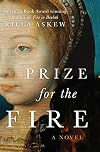
First sentence: They live meanly here, Maddie, and demand of me that I do the same. It is not poverty of purse but meanness of spirit which causes them to crimp their mouths if one but ask for a bit of beef for one's supper.
Premise/plot: Prize for the Fire is historical fiction based on the life of Anne Askew (aka Anne Kyme). She lived during the reign of Henry VIII and suffered greatly, or, perhaps reaped much spiritually from her many, many, many sufferings. She was Protestant and an show more advocate for reading the Bible in English at a time when England was having an identity crisis of sorts spiritually. The country could not decide how much access people should have to the Word of God in English, particularly in terms of class and gender. Her reading the Bible in private AND forming her own opinions of what the text means led to many difficulties. But first and foremost this one is about how HARD her life was because she could not separate from her A**H*** of a husband. She lived at a time when men could literally do anything and everything to punish their wives for any perceived faults. Perhaps not all took advantage of this power, but some did. Anne sought help from her family--her parents, her brothers, etc. But no one was willing or able to help 'save' her from this abuse. Some even, in my opinion, betrayed her and sided with her husband his his family. Her own family saw her as TROUBLE in her insistence that she had the right to read the Word of God on her own privately. She also shared what she learned with others. Wikipedia says she was a preacher. I'm not sure I took that away from reading the novel. I saw her speaking with other women, other ladies, about the Word of God. I don't see her preaching [from a pulpit] to audiences. I suppose it depends on how you define preaching. OR the accuracy of Wikipedia.
My thoughts: Honestly this one started off so incredibly sluggish. I persisted because I knew if the story ever really began to pick up, it would be worth it. The last third of the novel was quite INTENSE and fast-paced. Much of this one--if not all--is heartbreaking. The thought that it could be deemed WRONG or even ILLEGAL to read the Bible in one's own home in one's own language is shocking. I think I knew this in the back of my mind. I knew that the transition from Roman Catholic to Protestant was ROUGH and deadly. That there were many who were imprisoned and/or martyred for matters of faith. Owning the Bible in English was novel during her lifetime. Being able to read AND study the Word of God was still "new" during this century. show less
Premise/plot: Prize for the Fire is historical fiction based on the life of Anne Askew (aka Anne Kyme). She lived during the reign of Henry VIII and suffered greatly, or, perhaps reaped much spiritually from her many, many, many sufferings. She was Protestant and an show more advocate for reading the Bible in English at a time when England was having an identity crisis of sorts spiritually. The country could not decide how much access people should have to the Word of God in English, particularly in terms of class and gender. Her reading the Bible in private AND forming her own opinions of what the text means led to many difficulties. But first and foremost this one is about how HARD her life was because she could not separate from her A**H*** of a husband. She lived at a time when men could literally do anything and everything to punish their wives for any perceived faults. Perhaps not all took advantage of this power, but some did. Anne sought help from her family--her parents, her brothers, etc. But no one was willing or able to help 'save' her from this abuse. Some even, in my opinion, betrayed her and sided with her husband his his family. Her own family saw her as TROUBLE in her insistence that she had the right to read the Word of God on her own privately. She also shared what she learned with others. Wikipedia says she was a preacher. I'm not sure I took that away from reading the novel. I saw her speaking with other women, other ladies, about the Word of God. I don't see her preaching [from a pulpit] to audiences. I suppose it depends on how you define preaching. OR the accuracy of Wikipedia.
My thoughts: Honestly this one started off so incredibly sluggish. I persisted because I knew if the story ever really began to pick up, it would be worth it. The last third of the novel was quite INTENSE and fast-paced. Much of this one--if not all--is heartbreaking. The thought that it could be deemed WRONG or even ILLEGAL to read the Bible in one's own home in one's own language is shocking. I think I knew this in the back of my mind. I knew that the transition from Roman Catholic to Protestant was ROUGH and deadly. That there were many who were imprisoned and/or martyred for matters of faith. Owning the Bible in English was novel during her lifetime. Being able to read AND study the Word of God was still "new" during this century. show less
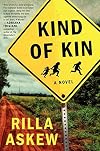
A richly comic yet heartfelt novel about people who want to do right and still do wrong, and people who do right in spite of themselves, as they try to help, protect, and provide for those they love most when a draconian new state law threatens an ordinary American family and throws a close-knit community into turmoil. All of Cedar, Oklahoma, is shocked when Bible-believing Bob Brown and his friend, Pastor Jesus Garcia, are tossed in the county jail for hiding a barn-full of Mexicans. Thanks show more to an ambitious blonde state legislator and her politically shrewd husband, it's a felony to harbor an undocumented immigrant in the Sooner State. show less
Immigration reform is a really big issue in my religious congregation and in my denomination. We've been studying the issue and hearing immigrants' stories and planning actions. So when I saw that I'd won a review copy of Kind of Kin through Goodreads First Reads, I was especially excited. Of course it's fiction, but I think fiction is a great way (often the best way) to explore the what-ifs and the motivations of those involved in a very complex issue.
I appreciate that Askew didn't resort show more to making her characters all good or all bad (except maybe Sheriff Holloway, who seemed pretty lacking in redeeming qualities). They were nuanced and complicated, their lives messy and not easily classified, just like real people. I loved her explanation of how Bob Brown came to have a barnful of migrant workers and of the difficult position in which people find themselves when the system provides no reasonable way for them to remain in the United States legally.
I would have preferred a little more focus on those immigrants who entered the country legally and, because of the backlog and bias within the United States immigration system, end up overstaying their visas with their renewal or green card applications pending; with no way to work legally or get a driver's license; with family, community, and a life built here in the U.S. This is the situation in which the majority of undocumented immigrants find themselves, and the situation of several of my friends who came here for school or for work and followed all of the rules only to find themselves threatened with deportation and paying thousands of dollars to immigration attorneys to try to stay here. This is the story of most undocumented immigrants, not the more dramatic sneaking-across-the-border means of getting here that Askew represented more thoroughly in her novel.
I would also have liked a description of the abuses that the current immigration system promotes among employers of immigrants. Employers routinely withhold wages or underpay their immigrant employees by threatening them with deportation if they complain. Many migrant workers' visas are tied to their place of employment and if their employer withdraws its support, they are no longer in the country legally.
Askew could also have gone into more detail about the many detention centers where immigrants sit for months or sometimes years in prison-like conditions, with no lawyer, no charges, and no contact with their families while awaiting deportation hearings or even just a review of their immigration status. One young man who spoke to our congregation had a pending immigration application when he was picked up for a driving infraction. He ended up being detained for five months before immigration finally determined that he was allowed to remain here while his paperwork was processed.
But of course, you can't put all of those things in one novel, and Askew chose to focus on the passage of a realistic but fictional anti-immigration law in Oklahoma, one which makes it a felony to give aid to undocumented immigrants. This fictional law falls into the category of newer laws in states like Alabama that attempt to create an environment hostile to all immigrants in the hopes that this will encourage "self-deportation." Askew does a very good job of demonstrating the ease with which officials can abuse such a law for their own power and personal gain. And I love that she had a second bill which included a forfeiture of property clause. This is part of current drug laws and makes it so someone who is merely accused of a particular crime can have any or all of their property seized by local law enforcement with essentially no chance to get it back, even if they are found not guilty.
My primary complaint with this book, though, is with the climactic standoff. This scene was very powerfully written and I found it quite moving, but I kept thinking, "Hey, if he doesn't have a search warrant, he can't go in there anyway. Why doesn't anyone ask for a warrant?"
So, I loved the book for bringing up such a huge and mostly invisible issue, and for the character development (especially of Sweet and Dustin), and for the very lovely and sympathetic Senor Celayo. I felt disappointed that it wasn't...more, but it's a great start. I hope more authors take up this issue and help to foster discussion and interaction with those touched by immigration---which, once we start looking, I think we'll find includes most of us. show less
I appreciate that Askew didn't resort show more to making her characters all good or all bad (except maybe Sheriff Holloway, who seemed pretty lacking in redeeming qualities). They were nuanced and complicated, their lives messy and not easily classified, just like real people. I loved her explanation of how Bob Brown came to have a barnful of migrant workers and of the difficult position in which people find themselves when the system provides no reasonable way for them to remain in the United States legally.
I would have preferred a little more focus on those immigrants who entered the country legally and, because of the backlog and bias within the United States immigration system, end up overstaying their visas with their renewal or green card applications pending; with no way to work legally or get a driver's license; with family, community, and a life built here in the U.S. This is the situation in which the majority of undocumented immigrants find themselves, and the situation of several of my friends who came here for school or for work and followed all of the rules only to find themselves threatened with deportation and paying thousands of dollars to immigration attorneys to try to stay here. This is the story of most undocumented immigrants, not the more dramatic sneaking-across-the-border means of getting here that Askew represented more thoroughly in her novel.
I would also have liked a description of the abuses that the current immigration system promotes among employers of immigrants. Employers routinely withhold wages or underpay their immigrant employees by threatening them with deportation if they complain. Many migrant workers' visas are tied to their place of employment and if their employer withdraws its support, they are no longer in the country legally.
Askew could also have gone into more detail about the many detention centers where immigrants sit for months or sometimes years in prison-like conditions, with no lawyer, no charges, and no contact with their families while awaiting deportation hearings or even just a review of their immigration status. One young man who spoke to our congregation had a pending immigration application when he was picked up for a driving infraction. He ended up being detained for five months before immigration finally determined that he was allowed to remain here while his paperwork was processed.
But of course, you can't put all of those things in one novel, and Askew chose to focus on the passage of a realistic but fictional anti-immigration law in Oklahoma, one which makes it a felony to give aid to undocumented immigrants. This fictional law falls into the category of newer laws in states like Alabama that attempt to create an environment hostile to all immigrants in the hopes that this will encourage "self-deportation." Askew does a very good job of demonstrating the ease with which officials can abuse such a law for their own power and personal gain. And I love that she had a second bill which included a forfeiture of property clause. This is part of current drug laws and makes it so someone who is merely accused of a particular crime can have any or all of their property seized by local law enforcement with essentially no chance to get it back, even if they are found not guilty.
My primary complaint with this book, though, is with the climactic standoff. This scene was very powerfully written and I found it quite moving, but I kept thinking, "Hey, if he doesn't have a search warrant, he can't go in there anyway. Why doesn't anyone ask for a warrant?"
So, I loved the book for bringing up such a huge and mostly invisible issue, and for the character development (especially of Sweet and Dustin), and for the very lovely and sympathetic Senor Celayo. I felt disappointed that it wasn't...more, but it's a great start. I hope more authors take up this issue and help to foster discussion and interaction with those touched by immigration---which, once we start looking, I think we'll find includes most of us. show less
To those who think reading fiction is for escape from the “real” world, this novel addresses a very serious real world problem, one with no easy, one-size-fits-all answer.
A fairly normal, strongly Christian family in Oklahoma gets caught up in a felony, harboring illegal immigrants, violating a new law. And the family is being torn apart.
Children are involved, as are family members who don't have good sense, good people trying to stand up for what they think is right and those trying to show more protect their families, and two men who are in the country illegally.
The story is exciting throughout. “Sweet” is a flawed character that I couldn't help but love. Some of the characters seemed a little too much like stereotypes for me, especially the sheriff. But then I live in Maricopa County – we have living, breathing stereotypes of our own. The publicity-seeking legislator also hit a little close to home.
The writing was lovely and crisp. In the end, some questions were answered but not everything was tied up into a nice, neat bundle. And just as in real life, there are no easy answers to the issue of what to do about people who are in the country without proper documentation. show less
A fairly normal, strongly Christian family in Oklahoma gets caught up in a felony, harboring illegal immigrants, violating a new law. And the family is being torn apart.
Children are involved, as are family members who don't have good sense, good people trying to stand up for what they think is right and those trying to show more protect their families, and two men who are in the country illegally.
The story is exciting throughout. “Sweet” is a flawed character that I couldn't help but love. Some of the characters seemed a little too much like stereotypes for me, especially the sheriff. But then I live in Maricopa County – we have living, breathing stereotypes of our own. The publicity-seeking legislator also hit a little close to home.
The writing was lovely and crisp. In the end, some questions were answered but not everything was tied up into a nice, neat bundle. And just as in real life, there are no easy answers to the issue of what to do about people who are in the country without proper documentation. show less
Lists
Awards


You May Also Like


Associated Authors
Statistics
- Works
- 9
- Also by
- 3
- Members
- 559
- Popularity
- #44,692
- Rating
- 3.6
- Reviews
- 14
- ISBNs
- 33
- Favorited
- 3
