
Gustaw Herling-Grudziński (1919–2000)
Author of A World Apart
About the Author
Disambiguation Notice:
(ita) Gutavo Herling autore di "Pale d'altare" (contiene i due racconti - La torre e il miracolo) Edizioni Silva 1956; e Gustaw Herling autore di "Due racconti - La torre - Il miracolo" edizioni Scheiwiller 1990 e anche autore di "La notte bianca dell'amore", "Il pellegrino delle libertà","Requiem per il campanaro","Breve racconto di me stesso", "Variazioni sulle tenebre. Conversazioni sul male","Don Ildebrando e altri racconti","Ricordare, raccontare. Conversazione su Salamov","Ritratto veneziano e altri racconti", "Un mondo a parte", "Diario scritto di notte",
Image credit: Dal sito che ne ricorda i 10 anni dalla morte dello scrittore.
Works by Gustaw Herling-Grudziński
Da Gorki a Pasternak 4 copies
La notte bianca dell'amore-«La notte bianca dell'amore» conversazione con Wlodzimierz Bolecki (2004) 3 copies
Żywi i umarli : szkice literackie 3 copies
Dzieła zebrane tom 4. 1 copy
Recenzje, szkice, rozprawy literackie 1957-1998, felietony i komentarze z radia Wolna Europa 1955-1967 (2013) 1 copy
Jiný svět 1 copy
Eseje 1 copy
Opowiadania 1 copy
Variazioni sulle tenebre 1 copy
Associated Works
Tagged
Common Knowledge
- Canonical name
- Herling-Grudziński, Gustaw
- Legal name
- Herling-Grudziński, Gustaw
- Birthdate
- 1919-05-20
- Date of death
- 2000-07-04
- Gender
- male
- Education
- University of Warsaw (Polish literature) (did not graduate)
- Occupations
- resistance leader
soldier, Polish Armed Forces in the West
writer
journalist
essayist
magazine editor - Organizations
- Polska Ludowa Akcja Niepodległościowa (PLAN) (co-founder)
Polish II Corps
"Kultura" magazine (co-founder) - Awards and honors
- Order of the White Eagle
Virtuti Militari
Premio Viareggio Internazionale (1994)
Gutenberg prize - Relationships
- Benedetto Croce (father-in-law)
- Nationality
- Poland
- Birthplace
- Kielce, Poland
- Places of residence
- Grodno, Byelorussian SSR, USSR
Vitebsk Prison, Vitebsk, Byelorussian SSR, USSR
Kargopol ITL, Yertsevo, Archangelsk Oblast', Russian SSR, USSR
Africa
Monte Cassino, Italy
Rome, Italy (show all 8)
London, England, UK
Naples, Italy - Place of death
- Naples, Italy
- Burial location
- Naples, Italy
Members
Reviews

Gustaw Herling was a Polish writer who was relatively unknown in the U.S., but it could be easy to make an argument that his book of three novellas, The Island, should be included among the other great works of literature. I first read it ages ago and it has not lost it’s ability to shock after a second reading.
The Tower is told in the first person by a Polish officer who borrows a friend’s house to rest after the end of the Italian campaign in World War II, and then brilliantly shifts show more and centers the story around an 18th century leper. My favorite of the three;
In The Island, the rich, selfish Carthusians living on Capri in their fortress-monastery in the 17th century bar the monastery doors when the plague ravages the island, that is, until the islanders begin to throw corpses over the wall. There’s also a sub plot involving a romance between a stone mason who has lost his sight and a beautiful young woman. The writing is so gorgeous that it literally brought a tear to my eye;
The Second Coming depicts the painful last years of Pope Urban IV, and involves a brilliant sub plot whereby a parish priest is condemned for an act of heresy after having confessed doubts as to Christ’s physical presence in the Eucharist, and is exposed to the July sun and starved to death in a cage. And while the plague rages, the faithful await the Second Coming, and Jews and heretics accused of profaning the Holy Host are burned, hanged or beheaded.
Amazing stories, beautiful writing. show less
The Tower is told in the first person by a Polish officer who borrows a friend’s house to rest after the end of the Italian campaign in World War II, and then brilliantly shifts show more and centers the story around an 18th century leper. My favorite of the three;
In The Island, the rich, selfish Carthusians living on Capri in their fortress-monastery in the 17th century bar the monastery doors when the plague ravages the island, that is, until the islanders begin to throw corpses over the wall. There’s also a sub plot involving a romance between a stone mason who has lost his sight and a beautiful young woman. The writing is so gorgeous that it literally brought a tear to my eye;
The Second Coming depicts the painful last years of Pope Urban IV, and involves a brilliant sub plot whereby a parish priest is condemned for an act of heresy after having confessed doubts as to Christ’s physical presence in the Eucharist, and is exposed to the July sun and starved to death in a cage. And while the plague rages, the faithful await the Second Coming, and Jews and heretics accused of profaning the Holy Host are burned, hanged or beheaded.
Amazing stories, beautiful writing. show less
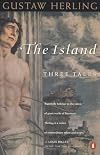
It is not easy to say what it is that awakens the inexpressible reveries and nostalgia that slowly rise within the soul like birds in flight: a fragment of a landscape, a single lighted window in a darkened house front, a glimmer on a distant shore, the smell of the earth, a heavy rain, or the murmur of the wind. Such thoughts seem to have their source in something concrete, yet they elude the tongue and never show themselves in full light; they slip through fingers too clumsy to catch and show more hold them. They seem to evoke the sensation of a continuous but vain approach to something unattainable - the very root of consciousness, overgrown with sterile and emotionless years - as if they sprang forth in those regions (near the dreams of delirium perhaps) where everything is somehow known but condemned to indistinct existence. And examined in detail they still do not reveal all of their secret nature, yet sometimes they can suddenly drive a man to an act that no one can understand.
.............................
Tremendous. Took this from the shelf at the used bookstore on a whim, because (sigh, I must admit to my fondness for them) there were jacket quotes "genius" and "one of the greatest European writers, " and the price was right, and I had never heard of this Gustaw Herling, Polish resistance fighter, prisoner of the Soviet slave labour camps (which produced a book that some say is the masterpiece of that experience, A World Apart), and unpublished exile in Sicily. The three loosely connected tales here are all set in Italy, and I kept having to remember that they were not, in fact, written by an Italian, so vivid are they in their ability to conjure the country.
The first, the title story, evokes the community, the history, and the landscape of its isolated island in novella length, and slowly, in precise, controlled prose, its central tragedy and its repercussions. The third is a historical piece, in which the slow, agonizing physical decay of Pope Urban IV during the plague years prompts his hallucinations of the earlier torture and burning of a heretic in the town square. The standout for me, however brilliant the other two were, was the achingly beautiful and moving central piece, the story of a leper doomed to an existence of total isolation who is unable to stifle his desire for human contact. It's up there with the great short stories of world literature. show less
.............................
Tremendous. Took this from the shelf at the used bookstore on a whim, because (sigh, I must admit to my fondness for them) there were jacket quotes "genius" and "one of the greatest European writers, " and the price was right, and I had never heard of this Gustaw Herling, Polish resistance fighter, prisoner of the Soviet slave labour camps (which produced a book that some say is the masterpiece of that experience, A World Apart), and unpublished exile in Sicily. The three loosely connected tales here are all set in Italy, and I kept having to remember that they were not, in fact, written by an Italian, so vivid are they in their ability to conjure the country.
The first, the title story, evokes the community, the history, and the landscape of its isolated island in novella length, and slowly, in precise, controlled prose, its central tragedy and its repercussions. The third is a historical piece, in which the slow, agonizing physical decay of Pope Urban IV during the plague years prompts his hallucinations of the earlier torture and burning of a heretic in the town square. The standout for me, however brilliant the other two were, was the achingly beautiful and moving central piece, the story of a leper doomed to an existence of total isolation who is unable to stifle his desire for human contact. It's up there with the great short stories of world literature. show less
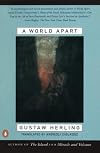
I can't believe that there aren't any reviews on this title. It is a powerful book. This author paints an honest and clear picture of his time in a Russian labour camp. It does go into detail the treachery of the various methods of punishment of his captors. What drew me in the most was the description of the psychological transformation of the inmates. To read this without digesting the mental impact is to do a great disservice to yourself. It is one of those works that really adjusts your show more perspective on life and society. I plan to read, of course, Dostoevsky's "House of the Dead" and Alexander Solzhenitsyn's work on the subject of Russian labor camps. It's such a shame that the world appears to have forgotten this aspect of history and lumped it with the rest of the horrors of World War II. show less
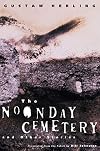
Well-written stories of Polish ex-pats in Italy, of murders and disappearances, of tenuous sanity and decaying environments, and of the fantastic in everyday life.
Lists
Awards


You May Also Like


Associated Authors
Statistics
- Works
- 71
- Also by
- 2
- Members
- 667
- Popularity
- #37,821
- Rating
- 3.9
- Reviews
- 9
- ISBNs
- 131
- Languages
- 10
- Favorited
- 1