
Joan Lowery Nixon (1927–2003)
Author of A Family Apart
About the Author
Joan Lowery Nixon was born in Los Angeles, California. She attended the University of Southern California where she received a B.A. in journalism and later an education certificate from California State. She has written over 100 mystery books for young adults. She is known for her Orphan Train show more Adventure Series and other titles including A Family Apart, The Seance and Other Side of the Dark. Her works have earned her the honor of being the only writer to win four Edgar Allen Poe awards and in addition, two Spurs from Western Writers of America. She was a past President of the Mystery Writers of America. She died from complications of pancreatic cancer on June 28, 2003, in Houston, Texas. She was 76. (Bowker Author Biography) show less
Image credit: AskTheBrain
Series
Works by Joan Lowery Nixon
Who is my neighbor?: The Good Samaritan for beginning readers : Luke 10:29-37 for children (I can read a Bible story) (1976) 38 copies
Five Loaves and Two Fishes: Feeding of Five Thousand for Beginning Readers : John 6:1-15 for Children (I Can Read a Bible Story) (1976) 27 copies
ORPHAN TRAIN ADVENTURE SET- A FAMILY APART, IN THE FACE OF DANGER, CAUGHT IN THE ACT, A PLACE TO BELONG (1999) 5 copies
A Family Apart 1 copy
The Son Who Came Home Again 1 copy
Orphan Train Children — Author — 1 copy
Associated Works
Mothers & Daughters: Celebrating the Gift of Love in 12 New Stories (1998) — Contributor — 88 copies
From One Experience to Another: Award-Winning Authors Sharing Real-Life Experiences Through Fiction (1997) — Contributor — 47 copies
Tagged
Common Knowledge
- Birthdate
- 1927-02-03
- Date of death
- 2003-06-28
- Gender
- female
- Education
- University of Southern California
Hollywood high school - Occupations
- journalist
children's book author
mystery writer
novelist - Organizations
- The Authors Guild
Society of Children's Book Writers
International Board on Books for Young People (Friends) - Short biography
- Joan Lowery grew up in Hollywood, California. She attended Hollywood High and the University of Southern California, where she majored in journalism and met her future husband, Hershell Nixon. She was a writer since very early childhood, and was first published at age 10, when one of her poems appeared in a children's magazine. She sold her first article to a magazine when she was 17. After college, she became interested in writing fiction and went on to produce more 100 books. Her books for children and young adults ranged from picture books to mysteries to historical novels. Joan Lowery Nixon won awards for her writing in all genres, but was especially recognized as a mystery writer -- she was a four-time winner of the prestigious Edgar Award from the Mystery Writers of America.
- Nationality
- USA
- Birthplace
- Los Angeles, California, USA
- Places of residence
- Los Angeles, California, USA
Houston, Texas, USA - Place of death
- Houston, Texas, USA
- Associated Place (for map)
- Texas, USA
Members
Discussions
Found: Kids' mystery with blackmail and murder - similar to Westing Game but not in Name that Book (March 2025)
Found: YA Cancer survivor in Name that Book (June 2022)
YA Historical Romance - Western in Name that Book (September 2016)
(M95'12) The Seance, Joan Lowery Nixon in World Reading Circle (January 2013)
childrens to young adult; mystery in Name that Book (April 2012)
Reviews

After a near-death experience, 16-year-old Sarah starts to feel a presence following her. Things only intensify when she moves into a new home and her parents learn a murder occurred there years before. Now Sarah is haunted by the spirit of a woman warning of her danger and asking for Sarah's help.
This book was originally written in the late 1980s and it has that style of so many teen books written then -- the language feels nothing like the way teenagers speak and in fact has a more show more childlike narration style (but not content). The characters are completely one-note and the big reveal is so completely obvious from very early on in the text.
That all being said, however, Nixon does write a compelling story and I found myself on the edge of my seat waiting for that reveal and all the smaller ones along the way. It is incredibly readable and moves at a quick pace. This book is perfect for folks like me who like a slightly spooky thriller but don't want a full-on horror novel. show less
This book was originally written in the late 1980s and it has that style of so many teen books written then -- the language feels nothing like the way teenagers speak and in fact has a more show more childlike narration style (but not content). The characters are completely one-note and the big reveal is so completely obvious from very early on in the text.
That all being said, however, Nixon does write a compelling story and I found myself on the edge of my seat waiting for that reveal and all the smaller ones along the way. It is incredibly readable and moves at a quick pace. This book is perfect for folks like me who like a slightly spooky thriller but don't want a full-on horror novel. show less
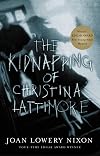
It's a YA book so I'm not going to be too critical of it. The premise of the book seemed interesting enough and it sounded suspenseful...and it was to a lesser extent than I had thought. I could figure it out long before it happened. The ending was a little disappointing and Christina more or less shrugged the entire event off. It's not a bad book at all. This author has written 130 YA books and is the only 4 time winner of the Edgar Allan Poe Award for Best Young Adult Mystery. I believe show more the main problem was I'm not 15 years old. show less
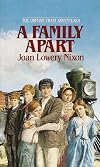
Imagine being taken from your home. Imagine your mother is the one who lets it happen. This is the fate that befalls the Kelly children. It’s 1856, and their widowed mother has sent them west from New York City because she’s convinced that she can’t give them the life they deserve. The Kellys board an “orphan train” and are taken to St. Joseph, Missouri, where their problems only grow worse. It was bad enough that they had to say goodbye to their mother, but now they’re forced to show more part ways with their fellow siblings as well. Thirteen-year-old Frances won’t stand for it. She’s going to protect her brothers and sisters, even if it means dressing up like a boy and putting herself in danger. Will Frances be able to save her siblings? And what about her mom—was splitting up their family really her greatest act of love? Ride the rails with Frances and her siblings to find out! show less
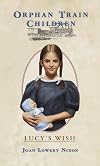
Lucy's Wish tells the fictional story of a young orphan girl in 1866. Her mother dies of cholera and Lucy is evicted from their apartment. She tries to find work to support herself, but her most meaningful accomplishment is playing with a young "simple" boy (he is probably autistic). After losing her job working in a butcher's shop, Lucy hears about a new program sending orphans to the West (modern-day Midwestern America) to be placed with families who want children. Lucy's only dream is to show more find a loving family complete with a younger sister.
Lucy is placed with the Snapes family in rural Missouri, and she quickly forms a bond with her new sister, Emma, who is also "simple". Within a short period of time, Lucy realizes that the Snapes family has fulfilled her wish: she has parents again and a sister who loves her, and Lucy herself learns to love her new sister and parents.
This short novel tries to portray the daily struggles of poor immigrants in the 1860's. Ms. Nixon paints a vivid picture of life for a young waif in New York City and her journey (both physical and emotional) on an orphan train. In addition to the narrative, she provides background information about orphan trains and New York City life for those who are not familiar with this particular episode of American history. I was among that number until I came across a non-fiction account of orphan trains earlier this year. Ms. Nixon is accurate in her account of the circumstances that led to orphan trains, and her omniscient narrator mostly succeeds in relating the emotions a young girl making such a journey would have felt.
Probably because of the intended audience of this book, Ms. Nixon does not reflect on the social justice issues raised by orphan trains: only white children were put on orphan trains, and religious distinctions were maintained with the adoptive families. She hints at the possibility of abuse occurring with adoptive families, and she distinctly mentions that children were sometimes returned or rejected by the adoptive families. In spite of these limitations, this book effectively portrays a time in America when people, even young children, were forced to fend for themselves because social safety nets had not been implemented by federal and state governments. This book would be perfect for an elementary school class learning about American history, social justice, family dynamics, children with special needs, or life conditions during the Industrial Revolution. show less
Lucy is placed with the Snapes family in rural Missouri, and she quickly forms a bond with her new sister, Emma, who is also "simple". Within a short period of time, Lucy realizes that the Snapes family has fulfilled her wish: she has parents again and a sister who loves her, and Lucy herself learns to love her new sister and parents.
This short novel tries to portray the daily struggles of poor immigrants in the 1860's. Ms. Nixon paints a vivid picture of life for a young waif in New York City and her journey (both physical and emotional) on an orphan train. In addition to the narrative, she provides background information about orphan trains and New York City life for those who are not familiar with this particular episode of American history. I was among that number until I came across a non-fiction account of orphan trains earlier this year. Ms. Nixon is accurate in her account of the circumstances that led to orphan trains, and her omniscient narrator mostly succeeds in relating the emotions a young girl making such a journey would have felt.
Probably because of the intended audience of this book, Ms. Nixon does not reflect on the social justice issues raised by orphan trains: only white children were put on orphan trains, and religious distinctions were maintained with the adoptive families. She hints at the possibility of abuse occurring with adoptive families, and she distinctly mentions that children were sometimes returned or rejected by the adoptive families. In spite of these limitations, this book effectively portrays a time in America when people, even young children, were forced to fend for themselves because social safety nets had not been implemented by federal and state governments. This book would be perfect for an elementary school class learning about American history, social justice, family dynamics, children with special needs, or life conditions during the Industrial Revolution. show less
Lists
Awards


You May Also Like


Associated Authors
Statistics
- Works
- 149
- Also by
- 7
- Members
- 11,638
- Popularity
- #2,022
- Rating
- 3.5
- Reviews
- 186
- ISBNs
- 722
- Languages
- 8
- Favorited
- 7