
Douglas Glover
Author of Elle: A Novel
About the Author
Works by Douglas Glover
Associated Works
Tagged
Common Knowledge
- Birthdate
- 1948-11-14
- Gender
- male
- Organizations
- Vermont College of Fine Arts
- Awards and honors
- Timothy Findley Award (2006)
- Nationality
- Canada
- Birthplace
- Waterford, Ontario, Canada
- Associated Place (for map)
- Ontario, Canada
Members
Reviews
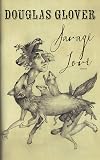
These short stories throb with energy and peculiar forms of lust. Savage love is present in some form or another in these stories, but they are really asking the same as the characters in “Uncle Boris Up in a Tree”: ”How should one behave? What does it mean to be alive?”
The story opens with “The photo was taken just before all hell broke loose.” Each person in the photo is briefly described: Uncle Boris the clown, Jannik the wastrel, Daphne the family slut, etc. Then follows the show more description of all hell breaking loose.
My favourite was the first of the ones grouped together as Fugues, “Tristiana”. It is 1869, in Idaho Territory. ”Against the winter he had scrupled not to lay in a sufficiency before the snow dropped. The snow surprised him…buried his traps, buried his hut, his pole barn, his stock. He started by killing the lambs, stuffing their skins in the cracks between the sappy logs. Then he kilt the ewes, one by one, then he kilt the ram, then he kilt the ox and the riding mule, which was starving also. Then he kilt his wife. And then his dog, regretting of the dog more than the rest because it was a pure Tennessee Plott hound.” Black, savage, but some sort of weird love is there in the rest of the story.
“Crown of Thorns” is another story about being askew. A disturbed man lives half in and half out of reality. The ending was pure poetry.
Another set of stories are grouped into “Comedies” but comic scenes are found in the other stories too: “…the ineffable Senior Citizens Contract Bridge Club of Iona Station, a crypto-fascist anti-tax cabal, where the denizens drank Alberta vodka and accused each other of suffering from early-onset Alzheimer’s disease while plotting, in the usual fashion of ethnic Ontarians, against artistic expression of all kinds, sexual freedom, freedom of speech and forensic archaeology,…” (from The Sun Lord and the Royal Child).
The Proustian scholar in “Pointless, Incessant Barking in the Night” is also asking what does it mean to be alive, and how should one behave. “And I thought how Proust teaches us that all love resides in anticipation, not the beloved, that love achieved is only on loan, that we are martyrs to our desires, which are endless. I had explained this to Geills between bouts of lovemaking. She said, “Is there a French word for ‘Lick my butthole and I’ll be yours for life’?”
His prose rushes forward, clauses tumbling into one another, and then the clauses pause for a breath while simple declarative sentences step forward and take charge. The stories pirouette from shocking violence to comedy to poignant tender love, and sometimes this all happens simultaneously.
It is a literary tour de force. show less
The story opens with “The photo was taken just before all hell broke loose.” Each person in the photo is briefly described: Uncle Boris the clown, Jannik the wastrel, Daphne the family slut, etc. Then follows the show more description of all hell breaking loose.
My favourite was the first of the ones grouped together as Fugues, “Tristiana”. It is 1869, in Idaho Territory. ”Against the winter he had scrupled not to lay in a sufficiency before the snow dropped. The snow surprised him…buried his traps, buried his hut, his pole barn, his stock. He started by killing the lambs, stuffing their skins in the cracks between the sappy logs. Then he kilt the ewes, one by one, then he kilt the ram, then he kilt the ox and the riding mule, which was starving also. Then he kilt his wife. And then his dog, regretting of the dog more than the rest because it was a pure Tennessee Plott hound.” Black, savage, but some sort of weird love is there in the rest of the story.
“Crown of Thorns” is another story about being askew. A disturbed man lives half in and half out of reality. The ending was pure poetry.
Another set of stories are grouped into “Comedies” but comic scenes are found in the other stories too: “…the ineffable Senior Citizens Contract Bridge Club of Iona Station, a crypto-fascist anti-tax cabal, where the denizens drank Alberta vodka and accused each other of suffering from early-onset Alzheimer’s disease while plotting, in the usual fashion of ethnic Ontarians, against artistic expression of all kinds, sexual freedom, freedom of speech and forensic archaeology,…” (from The Sun Lord and the Royal Child).
The Proustian scholar in “Pointless, Incessant Barking in the Night” is also asking what does it mean to be alive, and how should one behave. “And I thought how Proust teaches us that all love resides in anticipation, not the beloved, that love achieved is only on loan, that we are martyrs to our desires, which are endless. I had explained this to Geills between bouts of lovemaking. She said, “Is there a French word for ‘Lick my butthole and I’ll be yours for life’?”
His prose rushes forward, clauses tumbling into one another, and then the clauses pause for a breath while simple declarative sentences step forward and take charge. The stories pirouette from shocking violence to comedy to poignant tender love, and sometimes this all happens simultaneously.
It is a literary tour de force. show less
A few months ago I came across a copy of Douglas Glover's Precious, a novel I had always been meaning to read. I found it an utter delight, a Canadian hard-boiled noir that ranks with the best of Raymond Chandler and Ross Macdonald. Thus emboldened, I picked up a copy of Elle, somehow expecting more of the same.
Witness my shock, then, at Elle, which is about as far at odds with Precious' subject matter as you can get. Imagine discovering that Dashiell Hammett also wrote Naval histories; that show more weird.
And double my shock at this; Elle is very likely a masterpiece, a breathtaking, bold, coarse, witty, sexy, mythic, and scatological take on Canadian history unlike any historical novel I have ever read. Keep in mind I'm not a historical fiction type of guy, all told, but still: wow. This may be my favourite historical novel of all time.
Read the rest of the review here. show less
Witness my shock, then, at Elle, which is about as far at odds with Precious' subject matter as you can get. Imagine discovering that Dashiell Hammett also wrote Naval histories; that show more weird.
And double my shock at this; Elle is very likely a masterpiece, a breathtaking, bold, coarse, witty, sexy, mythic, and scatological take on Canadian history unlike any historical novel I have ever read. Keep in mind I'm not a historical fiction type of guy, all told, but still: wow. This may be my favourite historical novel of all time.
Read the rest of the review here. show less
What do you do with a headstrong girl in the 1500s? Elle's father's response was to send her to New France. The ship's captain (her uncle)'s response was to abandon her on an island with her nurse, and her tennis-player lover.
This is a story of survival. After the death of her two companions, Elle finds herself alone and pregnant, with minimal supplies in a harsh, unforgiving climate.
This story is very mystical with many aboriginal myths and beliefs woven into Elle's reality. It is also show more very earthy and lusty....Elle is a strong woman who remains true to herself and her beliefs. A fascinating, original perspective on survival in the new world. show less
This is a story of survival. After the death of her two companions, Elle finds herself alone and pregnant, with minimal supplies in a harsh, unforgiving climate.
This story is very mystical with many aboriginal myths and beliefs woven into Elle's reality. It is also show more very earthy and lusty....Elle is a strong woman who remains true to herself and her beliefs. A fascinating, original perspective on survival in the new world. show less
In the words of the protagonist, Elle is "The story of a girl who went to Canada, gave birth to a fish, turned into a bear, and fell in love with a famous author." The book is based on the true story of the French teenager Marguerite de la Rocque who was abandoned on a deserted Canadian island in 1542 after multiple "indiscretions" with crew members on a ship set sail to colonize Canada. With her latest lover, her maid, ball gowns and a tennis racket, Elle not only survives alone through the show more Canadian winter but makes it back to France. Douglas Glover creates an intelligent, insightful heroine with tendencies towards both the philosophical and the profane, and the result is an exciting but tender story that is funny, too. The language is mesmerizing, the tone is poetic, and I found myself both laughing out loud and "ooh"-ing at the phrases and sentences full of truth and beauty. show less
Lists
Awards


You May Also Like


Associated Authors
Statistics
- Works
- 30
- Also by
- 3
- Members
- 473
- Popularity
- #52,093
- Rating
- 3.5
- Reviews
- 21
- ISBNs
- 63
- Languages
- 4
- Favorited
- 2
