
Detection Club
Author of The Floating Admiral
About the Author
Image credit: The 1932 Detection Club dinner
Series
Works by Detection Club
L'ammiraglio alla deriva 1 copy
Tagged
Common Knowledge
Members
Reviews

Before beginning, it's worth noting that "The Detection Club" isn't merely a publisher's invention. It was an actual organization formed in 1930 by a group of British mystery writers, including such big names as G. K. Chesterton, Agatha Christie, Dorothy L. Sayers, and Baroness Emma Orczy. Indeed, it was these eminent personages who determined the "rules" of detective fiction, rules that writers have (more or less) followed ever since, such as "you have to provide sufficient clues in the show more text for the reader to be able to guess the perpetrator" and "the perpetrator can't be a new character introduced at the end."
I figured that any collection of stories by such an eminent group of writers ought to be good. Well ... maybe, maybe not! If anything, these stories serve as a reminder of just how much tastes have changed since the 1930s, when character development regularly took a back seat to dry, complicated, puzzle-like plots.
The conceit of this collection of stories is that each writer has been asked to submit a "perfect murders," which is then scrutinized by a C.I.D. Superintendent who passes judgment on whether the murder would, in fact, have been likely to have escaped detection.
"It Didn't Work Out," Margary Allingham's contribution, relates the story of how an obnoxious, boastful old showman is extinguished by his own vanity. Is it murder if you merely taunt someone into doing something stupidly dangerous? I rather liked this tale, perhaps because it's more about personalities than puzzles.
Not so much Father Ronald Knox's "The Fallen Idol," in which a fictional dictator meets his doom in the equivalent of a locked room - an apartment under constant guard. One would need a minute-by-minute timeline to actually puzzle the thing out, plus the main clue relies on a word association experiment, which feels a lot like cheating. Definitely my least favorite of the lot.
"The Policeman Only Taps Once," by Anthony Berkeley, tells the story of a con man who ends up conned into marriage; so outmatched, indeed, is our protagonist by his cannier spouse, she even manages to trick him into murdering himself. It's rather fun watching these two reprehensible souls endeavoring to outwit each other, though I'm still trying to process the fact that - apparently - it used to be a common thing for women to dip their hair in petrol as a beauty treatment. Seriously?
In Russell Thorndike's "Strange Death of Major Scallion," an odious, blackmailing British officer is extinguished by the man he is blackmailing. The elaborateness of the plot is a little hard to swallow, but "death by ant" is definitely a novel approach to murder!
Dorothy's Sayers contribution to the collection, "Blood Sacrifice," was my favorite, and definitely the most psychologically authentic of the lot. Indeed, it's hard to say for certain whether a murder actually occurs, though there is certainly murderous intent. For this reason, I'd easily nominate this as the most "perfect" murder of the lot.
Regrettably, the collection ends on a weak note with Freeman Wills Croft's "The Parcel," in which yet another odious blackmailer meets his doom, this time through the agency of an explosive parcel. Forget any pretense of character development: this one is as dry as a Popular Mechanics article, and relies on no one being able to connect the murder and victim. Anyone who hangs out with the likes of Christie, Allingham and Sayers ought to be able to do better! show less
I figured that any collection of stories by such an eminent group of writers ought to be good. Well ... maybe, maybe not! If anything, these stories serve as a reminder of just how much tastes have changed since the 1930s, when character development regularly took a back seat to dry, complicated, puzzle-like plots.
The conceit of this collection of stories is that each writer has been asked to submit a "perfect murders," which is then scrutinized by a C.I.D. Superintendent who passes judgment on whether the murder would, in fact, have been likely to have escaped detection.
"It Didn't Work Out," Margary Allingham's contribution, relates the story of how an obnoxious, boastful old showman is extinguished by his own vanity. Is it murder if you merely taunt someone into doing something stupidly dangerous? I rather liked this tale, perhaps because it's more about personalities than puzzles.
Not so much Father Ronald Knox's "The Fallen Idol," in which a fictional dictator meets his doom in the equivalent of a locked room - an apartment under constant guard. One would need a minute-by-minute timeline to actually puzzle the thing out, plus the main clue relies on a word association experiment, which feels a lot like cheating. Definitely my least favorite of the lot.
"The Policeman Only Taps Once," by Anthony Berkeley, tells the story of a con man who ends up conned into marriage; so outmatched, indeed, is our protagonist by his cannier spouse, she even manages to trick him into murdering himself. It's rather fun watching these two reprehensible souls endeavoring to outwit each other, though I'm still trying to process the fact that - apparently - it used to be a common thing for women to dip their hair in petrol as a beauty treatment. Seriously?
In Russell Thorndike's "Strange Death of Major Scallion," an odious, blackmailing British officer is extinguished by the man he is blackmailing. The elaborateness of the plot is a little hard to swallow, but "death by ant" is definitely a novel approach to murder!
Dorothy's Sayers contribution to the collection, "Blood Sacrifice," was my favorite, and definitely the most psychologically authentic of the lot. Indeed, it's hard to say for certain whether a murder actually occurs, though there is certainly murderous intent. For this reason, I'd easily nominate this as the most "perfect" murder of the lot.
Regrettably, the collection ends on a weak note with Freeman Wills Croft's "The Parcel," in which yet another odious blackmailer meets his doom, this time through the agency of an explosive parcel. Forget any pretense of character development: this one is as dry as a Popular Mechanics article, and relies on no one being able to connect the murder and victim. Anyone who hangs out with the likes of Christie, Allingham and Sayers ought to be able to do better! show less
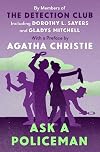
Ask a Policeman provides a treat -- albeit an uneven one -- thanks to a collaboration of six (mostly British) mystery writers who were members of the noteworthy Detection Club. (Dame Agatha Christie was a member, although she did not work on Ask a Policeman.) The 1934 novel began as an idea of Milward Kennedy, who wrote the Sir George Bull series and who also came up with the title. The author of the Dr. Lancelot Priestley series, John Rhode, penned the first fifth of the novel, Part I, show more which sets up the premise: A bullying press baron named Lord Comstock (clearly based on Lord Beaverbrook) is murdered while being visited by an archbishop, the chief whip of the ruling party, and the assistant commissioner for Scotland Yard. Who could have done it? One of these eminent people? Comstock's beleaguered secretary? Or someone else?
In Part II, each of four mystery writers take a crack at writing the solution to the mystery. However, rather than using their own detective creations, they swap. The first chapter of Part II, which features Mrs. Adela Lestrange Bradley, was written not by Gladys Mitchell, but by Australian writer Helen de Guerry Simpson. Mitchell returns the favor in the next chapter, "Sir John Takes His Cue," which features Simpson's amateur sleuth: the charming and handsome Sir John Saumarez, an actor and theater company manager. I am not really familiar with Sir John, but Simpson's portrayal of Mrs. Bradley was picture perfect, right down to the sly humor; I thoroughly enjoyed the chapter. While I enjoyed Mitchell's portrayal of Sir John, I wasn't in a position to know how accurate it was. Unfortunately, Mitchell did end the chapter with a whimper rather than a bang; even so, she piqued my interest in Sir John Saumarez, and I'll be reading the first of the three Sir John novels, Enter Sir John, as soon as I can.
The third chapter of Part II, "Lord Peter's Privy Counsel," penned by Detection Club founder and writer Anthony Berkeley rather than Lord Peters' originator, Dorothy L. Sayers, falls pretty flat. Admittedly, even in Sayers' skillful hands, at times, Lord Peter seems just on the verge of being a parody; however, Berkeley kicks him right over the edge and into an abyss. Berkeley's portrayal makes Lord Peter seem like a fey, flightly fool who, sadly, was born a century too soon to get the prescription for Ritalin or Adderall XR he needs to calm his distracted attention span. The chapter was literally unreadable -- I couldn't finish it. Berkeley was going for a light parody, but he stumbled into silly territory instead.
Sayers fared much better with her treatment of Berkeley's detective, the witty but guileful man about town Roger Sheringham. Indeed, Sayers' chapter, "The Conclusions of Mr. Roger Sheringham," was by far the most amusing part of the book. Roger Sheringham is portrayed as a sly and humorous gentleman who is not above a bit of deceit to suss out the truth. If Anthony Berkeley (whose real name was Anthony Berkeley Cox) was anything like the entertaining Roger Sherington, he must have been much in demand at London dinner parties in the 1930s and 1940s! Sayers' chapter on Sheringham was enough to convince me to buy a novel in the Sheringham series, Roger Sheringham and the Vane Mystery. (It's the third novel in the series, but at $1.99 for the Kindle edition, I thought it was a good case of trying before committing to the other, more expensive Sheringham novels.)
Needless to say, each of the four mystery writers develop the rest of the story in a different way and pin the murder on a different character. Who got it right? At the start of Part III, Milward Kennedy writes
In Part II, each of four mystery writers take a crack at writing the solution to the mystery. However, rather than using their own detective creations, they swap. The first chapter of Part II, which features Mrs. Adela Lestrange Bradley, was written not by Gladys Mitchell, but by Australian writer Helen de Guerry Simpson. Mitchell returns the favor in the next chapter, "Sir John Takes His Cue," which features Simpson's amateur sleuth: the charming and handsome Sir John Saumarez, an actor and theater company manager. I am not really familiar with Sir John, but Simpson's portrayal of Mrs. Bradley was picture perfect, right down to the sly humor; I thoroughly enjoyed the chapter. While I enjoyed Mitchell's portrayal of Sir John, I wasn't in a position to know how accurate it was. Unfortunately, Mitchell did end the chapter with a whimper rather than a bang; even so, she piqued my interest in Sir John Saumarez, and I'll be reading the first of the three Sir John novels, Enter Sir John, as soon as I can.
The third chapter of Part II, "Lord Peter's Privy Counsel," penned by Detection Club founder and writer Anthony Berkeley rather than Lord Peters' originator, Dorothy L. Sayers, falls pretty flat. Admittedly, even in Sayers' skillful hands, at times, Lord Peter seems just on the verge of being a parody; however, Berkeley kicks him right over the edge and into an abyss. Berkeley's portrayal makes Lord Peter seem like a fey, flightly fool who, sadly, was born a century too soon to get the prescription for Ritalin or Adderall XR he needs to calm his distracted attention span. The chapter was literally unreadable -- I couldn't finish it. Berkeley was going for a light parody, but he stumbled into silly territory instead.
Sayers fared much better with her treatment of Berkeley's detective, the witty but guileful man about town Roger Sheringham. Indeed, Sayers' chapter, "The Conclusions of Mr. Roger Sheringham," was by far the most amusing part of the book. Roger Sheringham is portrayed as a sly and humorous gentleman who is not above a bit of deceit to suss out the truth. If Anthony Berkeley (whose real name was Anthony Berkeley Cox) was anything like the entertaining Roger Sherington, he must have been much in demand at London dinner parties in the 1930s and 1940s! Sayers' chapter on Sheringham was enough to convince me to buy a novel in the Sheringham series, Roger Sheringham and the Vane Mystery. (It's the third novel in the series, but at $1.99 for the Kindle edition, I thought it was a good case of trying before committing to the other, more expensive Sheringham novels.)
Needless to say, each of the four mystery writers develop the rest of the story in a different way and pin the murder on a different character. Who got it right? At the start of Part III, Milward Kennedy writes
that the [four] Solvers have been more than good-natured. Even if they have introduced a touch or two of parody, they have nade their fellow sleuths extremely ingenious. In fact it seems plain to me that each of the four solutions is the right one.I can vouch that that's the case for three out of the four detectives' chapters. Part III reveals the actual denouement that Milwarad Kennedy envisioned. Read his solution for yourself and see who scored a hit. show less

The Floating Admiral was a collaborative effort among the members of the Detection Club, which boasted such names as G. K. Chesterton, Dorothy Sayers, and Agatha Christie. I didn't know much about the Detection Club until I read Dorothy Sayers's foreword to this book, which says, "It [the Detection Club] is a private association of writers of detective fiction in Great Britain, existing chiefly for the purpose of eating dinners together at suitable intervals and of talking illimitable show more shop... If there is any serious aim behind the avowedly frivolous organization of the Detection Club, it is to keep the detective story up to the highest standard that its nature permits, and to free it from the bad legacy of sensationalism, clap-trap and jargon with which it was unhappily burdened in the past." It sounds a little like a detective/mystery fiction offshoot of the Inklings to me.
It's clear the authors had good fun writing this mystery. G. K. Chesterton kicked it off with a prologue, and then the manuscript was passed from writer to writer, each adding a chapter in turn. But none of the contributors knew the others' proposed solutions, and at the end each had to provide a consistent solution based on all the clues up to the point of their chapter. It was a mystery novel in which the authors themselves were blindfolded, and I really enjoyed the experience of reading along with them and trying to puzzle it all out. As I read, I could almost sense the slight feeling of competition among the authors. Perhaps competition is not the word I want; it was more that everyone was trying to be at the top of his or her game with this one. It would be so minutely scrutinized and peer-reviewed.
The set-up is this: an old fisherman finds Admiral Penistone floating downstream in a boat, murdered by a wound to the heart. Inspector Rudge is set on the case, and has to hunt down all the people who knew the grumpy old martinet of an admiral. Everyone who knows him seems to scatter when they receive news of his death, and we are led on a merry chase through the technicalities of the river's tides, reticent witnesses, midnight excursions, train schedules, hurried nuptials, ancient scandals, and the provisions of the will. Finally in the last few pages we reach a complete upset of all previous theories, such as any good mystery novel must boast as a matter of course.
Though it seemed to drag a bit in the middle (I suppose that is what comes of everyone having to have a turn writing a chapter), this actually is a quite respectable mystery. Naturally the quality of the writing varied a bit. There was one author in particular whose style I didn't care for, a Freeman Wills Croft. His contributions to the plot were all right, but his style was distinctly clunky.
It was great fun reading everyone's proposed solutions at the end. Agatha Christie's was so laughably ridiculous (and I'm usually a great fan of her stories). Several of the writers admitted they couldn't explain certain facets of the case, and their bewilderment should be a great comfort to any reader who has ever felt quite at sea amidst a perplexing set of clues. It was really interesting to see the different characters brought forward as the murderer in each author's solution. Some of them were the same, but others had viewed the characters in almost opposite ways, and their solutions reflected those differences.
I'd recommend this mystery to anyone who enjoys detective fiction. Because of the nature of the novel's creation, the reader participates in a rather different way than usual. Every time someone came up with a startling new way to view the case, I thought of the person next in line to write a chapter with a feeling of pity, and wondered what the person who wrote the chapter before would think of what the current author had done with his work. I wouldn't like to experience this disjointed game-like feel with every mystery I read, but it was an enjoyable little experiment. If I weren't so shy of their brilliance, I should very much have liked to have attended one of the Detection Club's suitably intervalled dinners. show less
It's clear the authors had good fun writing this mystery. G. K. Chesterton kicked it off with a prologue, and then the manuscript was passed from writer to writer, each adding a chapter in turn. But none of the contributors knew the others' proposed solutions, and at the end each had to provide a consistent solution based on all the clues up to the point of their chapter. It was a mystery novel in which the authors themselves were blindfolded, and I really enjoyed the experience of reading along with them and trying to puzzle it all out. As I read, I could almost sense the slight feeling of competition among the authors. Perhaps competition is not the word I want; it was more that everyone was trying to be at the top of his or her game with this one. It would be so minutely scrutinized and peer-reviewed.
The set-up is this: an old fisherman finds Admiral Penistone floating downstream in a boat, murdered by a wound to the heart. Inspector Rudge is set on the case, and has to hunt down all the people who knew the grumpy old martinet of an admiral. Everyone who knows him seems to scatter when they receive news of his death, and we are led on a merry chase through the technicalities of the river's tides, reticent witnesses, midnight excursions, train schedules, hurried nuptials, ancient scandals, and the provisions of the will. Finally in the last few pages we reach a complete upset of all previous theories, such as any good mystery novel must boast as a matter of course.
Though it seemed to drag a bit in the middle (I suppose that is what comes of everyone having to have a turn writing a chapter), this actually is a quite respectable mystery. Naturally the quality of the writing varied a bit. There was one author in particular whose style I didn't care for, a Freeman Wills Croft. His contributions to the plot were all right, but his style was distinctly clunky.
It was great fun reading everyone's proposed solutions at the end. Agatha Christie's was so laughably ridiculous (and I'm usually a great fan of her stories). Several of the writers admitted they couldn't explain certain facets of the case, and their bewilderment should be a great comfort to any reader who has ever felt quite at sea amidst a perplexing set of clues. It was really interesting to see the different characters brought forward as the murderer in each author's solution. Some of them were the same, but others had viewed the characters in almost opposite ways, and their solutions reflected those differences.
I'd recommend this mystery to anyone who enjoys detective fiction. Because of the nature of the novel's creation, the reader participates in a rather different way than usual. Every time someone came up with a startling new way to view the case, I thought of the person next in line to write a chapter with a feeling of pity, and wondered what the person who wrote the chapter before would think of what the current author had done with his work. I wouldn't like to experience this disjointed game-like feel with every mystery I read, but it was an enjoyable little experiment. If I weren't so shy of their brilliance, I should very much have liked to have attended one of the Detection Club's suitably intervalled dinners. show less

In and of itself, hardly a masterpiece of the detective genre - the narration is rather directionless, and the plot is absurdly convoluted. But that's hardly surprising, and really it's remarkable how well it does hang together given the way it was written. The quality of writing is pretty variable, and I can certainly see why it's Christie and Sayers who have endured the best. I also found Sayers' proposed solution the most satisfactory - though Christie's suggestion is rather brilliant in show more its own way! show less
Lists
Awards

You May Also Like


Associated Authors
Statistics
- Works
- 10
- Members
- 1,556
- Popularity
- #16,556
- Rating
- 3.3
- Reviews
- 45
- ISBNs
- 74
- Languages
- 9
- Favorited
- 1