
D. M. Thomas (1935–2023)
Author of The White Hotel
About the Author
Writer and translator D. M. Thomas was born in Cornwall, England on January 27, 1935. He graduated with First Class Honours in English from New College, Oxford and became a teacher. In 1979, he became a full-time author and his best-known work is The White Hotel. His works also include memoirs, show more poetry and translations of Pushkin and Anna Akhmatova. (Bowker Author Biography) show less
Series
Works by D. M. Thomas
Top 4 copies
Flying into Love 2 copies
Vita Hotellet 2 copies
Beyaz otel 1 copy
The Honeymoon Voyage 1 copy
Japanese Tattoo 1 copy
HOTELI I BARDHË 1 copy
Associated Works
For the Love of Books: 115 Celebrated Writers on the Books They Love Most (1999) — Contributor — 479 copies, 4 reviews
Akhmatova: Poems {Everyman's Library Pocket Poets} (2006) — Translator, some editions — 144 copies, 5 reviews
Holding your eight hands; an anthology of science fiction verse (1970) — Contributor — 25 copies, 1 review
Tagged
Common Knowledge
- Canonical name
- Thomas, D. M.
- Legal name
- Thomas, Donald Michael
- Birthdate
- 1935-01-27
- Date of death
- 2023-03-26
- Gender
- male
- Education
- Trewirgie Primary School
Redruth Grammar School
University High School, Melbourne
University of Oxford (New College) - Occupations
- poet
novelist
translator
teacher
lecturer - Awards and honors
- Cholmondeley Award for Poetry
Arts Council Award for Literature
Los Angeles Times Fiction Prize - Nationality
- UK
- Birthplace
- Redruth, Cornwall, England, UK
- Places of residence
- Redruth, Cornwall, England, UK (birth)
Australia
USA
Truro, Cornwall, England, UK - Place of death
- Truro, Cornwall, England, UK
- Map Location
- England, UK
Members
Reviews
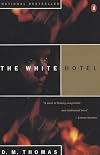
This is a tough book. Partly, it is the 'post-modern' style of the narrative, wherein actual events and non-fictional material is interlaced within the writing. Partly, it is the intense sexual fantasy in the (supposed) sessions between the main character and Freud that might put people off, and the knowledge we have of the doom awaiting those who lived between the wars of the 20th century. Or it might have been the iterative views of what is portrayed, each one changing the one before like show more a psychological Rashamon. How can we trust the narrator? How can we trust the portrayal of Freud, just reaching his ideas about the connection between love and the death wish?
And all along there is love, in various forms, and death, natural and otherwise. Ultimately, we follow the main character all the way from trauma and pain and love to barbarous death, and something more.
An excellent novel for those open to its method and frankness. show less
And all along there is love, in various forms, and death, natural and otherwise. Ultimately, we follow the main character all the way from trauma and pain and love to barbarous death, and something more.
An excellent novel for those open to its method and frankness. show less

Sigmund Freud attempts to treat a woman suffering from hallucinations that set explicit sexual acts in the foreground while mass death events are occurring in the background (drowning, fire, falling, buried alive). Getting into this novel is a bit of an uphill climb, since it's front-loaded with the hallucinations part but, on the far side of that, Sigmund goes to work as he tries to rationalize what's been shared, looking for the symbols he can tie into his patient's life and history. show more
There's a bit of a trick going on here, first hinted at and then increasingly evident (if you know your history, or you've just been reading the LT tags). The rising tension is mostly due to predicting what's coming rather than the plotting, although the hallucination element adds some ominousness. Its climax includes the most gut-wrenching description of this particular scene I've ever read, although I understand Thomas has Anatoly Kuznetsov to thank for its power. The final section ends on a mercifully happier note, the only one available. show less
There's a bit of a trick going on here, first hinted at and then increasingly evident (if you know your history, or you've just been reading the LT tags). The rising tension is mostly due to predicting what's coming rather than the plotting, although the hallucination element adds some ominousness. Its climax includes the most gut-wrenching description of this particular scene I've ever read, although I understand Thomas has Anatoly Kuznetsov to thank for its power. The final section ends on a mercifully happier note, the only one available. show less
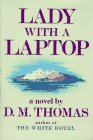
A second-rate novelist facilitates a beginners' creative writing workshop over the summer at a New Age center on an island off the coast of Greece. The center offers courses ranging from orgasmic consciousness, gastric dancing, colonic massages, and shamanism. It is quite farcical with a continuous undercurrent of murder mystery. While the content is often interesting, one is put off by the subplots which are injected frequently throughout the book and then left completely open ended. The show more characters you want to hear more about are often under developed and the most boring ones have whole chapters dedicated to them. My biggest issue with the book was the main character. He appears to be an alter ego of the writer himself, and unfortunately there is hardly a redeeming quality about his created persona. The man has a pretentious air about him to all of his students, then spends the rest of his time lamenting his lack of recognition in the literary world or reducing every woman in the program to nothing more than sexual objects whose worth is based on the likelihood of his shagging them. He comes off as shallow and spoiled, which is not all that attractive on a middle-aged balding Englishman. If the idea is to make a dirty old man the centerpiece of the novel, he would need to be much more likable to generate any sympathy for his fate. show less
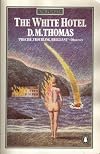
It's funny how sometimes you end up doing things in themes - I read this book shortly after watching David Cronenburg's new film about Freud and Jung, and also after reading Primo Levi - so Judaism and psychoanalysis coming together in this book which centres around a female singer, a 'case study' of Freud, and a central European/Russian Jew in the 1930s. It's a fascinating read; it starts with two different meditations on feminine sexuality and the erotic, very circular and repetitive, show more capable of reinterpretation in a myriad of different ways, by Freud and also by Anna the subject - but who owns the analysis - the analyst or the analysand - the male authority or the female subject? The more linear narrative, that takes us into the ghetto and the slaughterhouse, into the dark heart of man's inhumanity, brings fantasy against a dark reality of group psychosis. Is analysis and self knowledge just an egotistical indulgence? show less
Lists
Awards


You May Also Like


Associated Authors
Statistics
- Works
- 48
- Also by
- 19
- Members
- 3,206
- Popularity
- #7,982
- Rating
- 3.7
- Reviews
- 42
- ISBNs
- 156
- Languages
- 15
- Favorited
- 8
