
Fred Hoyle (1915–2001)
Author of The Black Cloud
About the Author
Image credit: Photo by Chandra Wickramasinghe
Series
Works by Fred Hoyle
The Andromeda Anthology: Containing A For Andromeda and Andromeda Breakthrough (S.F. MASTERWORKS) (1962) 87 copies, 2 reviews
A Different Approach to Cosmology: From a Static Universe through the Big Bang towards Reality (2000) 23 copies, 1 review
Three Classic Novels: Ossian's Ride, October the First Is Too Late, Fifth Planet (Fred Hoyle's World of Science Fiction) (2016) 11 copies
Blackmail [short story] 3 copies
A Decade of Decision 2 copies
Nello spazio profondo 2 copies
Nova ameaça de Andrómeda 2 copies
Man in the universe 2 copies
Os Abismos do Espaço 2 copies
Il primo ottobre è troppo tardi 2 copies
Zoomen 1 copy
Devilment 79 1 copy
Frontiers of Astronomy 1 copy
Mñniskor och vintergator 1 copy
℗L'℗universo intelligente 1 copy
Frontiers in Astronomy 1 copy
Ghiacci 1 copy
Os abismos do espaço 1 copy
La cosmologia contemporanea 1 copy
The Asymmetry of Time 1 copy
Fred Hoyle 1 copy
Astrophysics and Relativity 1 copy
nueva dimensión - 074 1 copy
L'energia nucleare 1 copy
Associated Works
Great Science Fiction Stories By the World's Greatest Scientists (1985) — Author — 56 copies, 2 reviews
Maailma mielen mukaan : yksitoista tieteisnovellia kolmeltatoista sci-fi -sarjan kirjailijalta (1986) — Contributor — 24 copies, 1 review
Readings in Cosmology and Extragalactic Astronomy: Physics 361-01 Cosmology, Spring Semester 1995 (1995) — Contributor — 1 copy
Tagged
Common Knowledge
- Legal name
- Hoyle, Fred
- Birthdate
- 1915-06-24
- Date of death
- 2001-08-20
- Gender
- male
- Education
- Bingley Grammar School
University of Cambridge (Emmanuel College) (Mathematics) - Occupations
- astronomer
science fiction writer - Organizations
- Cambridge University
- Awards and honors
- Fellow of the Royal Society (1957)
Knight Bachelor (1972)
Bruce Medal (1970)
Henry Norris Russell Lectureship (1971)
Klumpke-Roberts Award (1977)
Balzan Prize (Astrophysics ∙ 1994) (show all 8)
Crafoord Prize (1997)
Kalinga Prize for the Popularization of Science (1967) - Relationships
- Hoyle, Geoffrey (son)
- Nationality
- UK
- Birthplace
- Gilstead, Bingley, Yorkshire, England, UK
- Places of residence
- Gilstead, Yorkshire, England, UK
Bournemouth, Dorset, England, UK - Place of death
- Christchurch, Dorset, England, UK
- Map Location
- England, UK
Members
Reviews

I’ve spent the early part of my career working in orbital analysis and satellite tracking—“ironmongery,” as it’s charmingly called in this book. That alone was enough to win me over. But A for Andromeda offered something I didn’t expect: not just plausible science fiction, but a story that quietly threaded its way through every major sci-fi concept I’ve ever loved. And now that I’ve read it, I find myself wondering—did everyone else read Fred Hoyle too?
This show more novel—originally written as a companion to the BBC television series of the same name—is equal parts scientific thriller, Cold War political drama, and early meditation on artificial intelligence. It opens with a signal from space, received and interpreted by a team of scientists who slowly realize it contains blueprints—not just for a supercomputer, but for a living organism. What follows is a slow-burn unraveling of scientific hubris, geopolitical fear, and the ever-blurring line between tool and intelligence.
At its core, this book is about the dangers of understanding too late. Andromeda, the girl built from alien code, is a mystery to the last page. Is she a person? A puppet? A probe? That ambiguity is never fully resolved, and I think that’s the point.
Science Future -- Fiction Future
As I read, I found myself constantly referencing other works—almost like a running timeline of science fiction's evolution. Hoyle’s story predates them all, but Contact by Carl Sagan echoes here, particularly in the initial discovery: the alien signal, the hidden palimpsest, the world’s scramble to build something it doesn’t fully grasp. There's a clear thematic line from Andromeda’s machine to Sagan’s interstellar device.
Michael Crichton’s Andromeda Strain also came to mind—same fear of contagion, though Hoyle’s version is intellectual rather than biological. The creation of a being from alien instructions forces the same questions of quarantine, control, and the limits of human oversight.
There were cinematic echoes too. Andromeda’s role reminded me of Sil from Species, the android Rommie in Gene Roddenberry’s Andromeda, and even Lt. Ilia as the transformed probe in Star Trek: The Motion Picture. All of them are synthetic interfaces—alien or machine-made—who must navigate human relationships and intentions while concealing (or discovering) their own. Hoyle didn’t invent the concept of “the machine made flesh,” but he gave it a particularly grounded and uneasy treatment here.
Even the strategic military layer is startlingly prescient: orbital weapons systems, fractional bombardment, the political manipulation of science. Hoyle’s view of space tech as both savior and sword feels unnervingly relevant in today’s age of ASAT tests and orbital debris diplomacy.
The Science Is Solid
Hoyle, an astrophysicist by trade, doesn’t shy away from technical detail, but he never lets the science dominate the story. It’s there to serve the tension, not distract from it. The orbital dynamics, radar systems, and trajectory modeling felt surprisingly accurate. Sure, some of the terms are dated (I may be the first person in decades to get excited about calling satellite tracking “ironmongery”), but the fundamentals still hold.
In that sense, reading this book was like stepping into a time capsule that still echoes with relevance. The fears Hoyle articulates—the hijacking of science by politics, the uncertainty of machine autonomy, the ethical paralysis in the face of rapid progress—are our fears too.
Final Thoughts
Did I like the book? That’s hard to say. It didn’t wrap up neatly, and it certainly didn’t give me a satisfying resolution about Andromeda’s true nature. But I don’t think it was meant to.
More than anything, A for Andromeda left me with a quiet sense of unease. That’s a rare thing in science fiction, and I think it’s what makes it endure. Hoyle didn’t just write a story about receiving a message from the stars. He wrote a warning about what happens when we answer—not with caution, but with unbridled curiosity.
Having now read both Rockets in Ursa Major and A for Andromeda, I can see a consistent thread in Hoyle’s fiction: a scientist’s worry that humanity might be clever enough to build the future, but not wise enough to survive it. Rockets was more of a pulpy alien-contact romp; Andromeda is quieter, more insidious—and, in many ways, more haunting. show less
This show more novel—originally written as a companion to the BBC television series of the same name—is equal parts scientific thriller, Cold War political drama, and early meditation on artificial intelligence. It opens with a signal from space, received and interpreted by a team of scientists who slowly realize it contains blueprints—not just for a supercomputer, but for a living organism. What follows is a slow-burn unraveling of scientific hubris, geopolitical fear, and the ever-blurring line between tool and intelligence.
At its core, this book is about the dangers of understanding too late. Andromeda, the girl built from alien code, is a mystery to the last page. Is she a person? A puppet? A probe? That ambiguity is never fully resolved, and I think that’s the point.
Science Future -- Fiction Future
As I read, I found myself constantly referencing other works—almost like a running timeline of science fiction's evolution. Hoyle’s story predates them all, but Contact by Carl Sagan echoes here, particularly in the initial discovery: the alien signal, the hidden palimpsest, the world’s scramble to build something it doesn’t fully grasp. There's a clear thematic line from Andromeda’s machine to Sagan’s interstellar device.
Michael Crichton’s Andromeda Strain also came to mind—same fear of contagion, though Hoyle’s version is intellectual rather than biological. The creation of a being from alien instructions forces the same questions of quarantine, control, and the limits of human oversight.
There were cinematic echoes too. Andromeda’s role reminded me of Sil from Species, the android Rommie in Gene Roddenberry’s Andromeda, and even Lt. Ilia as the transformed probe in Star Trek: The Motion Picture. All of them are synthetic interfaces—alien or machine-made—who must navigate human relationships and intentions while concealing (or discovering) their own. Hoyle didn’t invent the concept of “the machine made flesh,” but he gave it a particularly grounded and uneasy treatment here.
Even the strategic military layer is startlingly prescient: orbital weapons systems, fractional bombardment, the political manipulation of science. Hoyle’s view of space tech as both savior and sword feels unnervingly relevant in today’s age of ASAT tests and orbital debris diplomacy.
The Science Is Solid
Hoyle, an astrophysicist by trade, doesn’t shy away from technical detail, but he never lets the science dominate the story. It’s there to serve the tension, not distract from it. The orbital dynamics, radar systems, and trajectory modeling felt surprisingly accurate. Sure, some of the terms are dated (I may be the first person in decades to get excited about calling satellite tracking “ironmongery”), but the fundamentals still hold.
In that sense, reading this book was like stepping into a time capsule that still echoes with relevance. The fears Hoyle articulates—the hijacking of science by politics, the uncertainty of machine autonomy, the ethical paralysis in the face of rapid progress—are our fears too.
Final Thoughts
Did I like the book? That’s hard to say. It didn’t wrap up neatly, and it certainly didn’t give me a satisfying resolution about Andromeda’s true nature. But I don’t think it was meant to.
More than anything, A for Andromeda left me with a quiet sense of unease. That’s a rare thing in science fiction, and I think it’s what makes it endure. Hoyle didn’t just write a story about receiving a message from the stars. He wrote a warning about what happens when we answer—not with caution, but with unbridled curiosity.
Having now read both Rockets in Ursa Major and A for Andromeda, I can see a consistent thread in Hoyle’s fiction: a scientist’s worry that humanity might be clever enough to build the future, but not wise enough to survive it. Rockets was more of a pulpy alien-contact romp; Andromeda is quieter, more insidious—and, in many ways, more haunting. show less
I’ll admit it: I picked this one up and put it down more than once. Andromeda Breakthrough trades the eerie stillness and philosophical ambiguity of its predecessor for something louder—more espionage, more power games, more men in suits making dangerous decisions. It felt, at times, like Hoyle had wandered onto the set of a different genre entirely.
And maybe he had.
But I kept coming back. Because if A for Andromeda taught me anything, it’s that Hoyle doesn’t play all his cards at show more once. The science and the ideas—they’re always there. You just have to read the table and bide your time.
Science, Subversion, and a Change of Tone
This sequel—also born from a BBC teleplay—picks up in the aftermath of A for Andromeda, relocating the story to the Middle East and shifting the focus from scientific discovery to the geopolitical exploitation of what remains: an engineered girl and the alien technology that made her.
Where A for Andromeda felt like an act of cautious decoding, this one plays more like a race for control. Governments and corporations vie to turn Andromeda’s capabilities into weapons, cures, or capital. Scientific curiosity is no longer the driver; now it’s power. I’ll be honest—I struggled with that. Hoyle is no Le Carré, and certainly no Clancy. The thriller elements stumble—cardboard characters, coarse geopolitics, and espionage that never quite clicks. And yet…
The Long Game
What pulled me through—what finally made the story click—was the last third of the book. That’s where Hoyle reasserts himself. The science re-emerges: environmental manipulation, climate as a lever of global power, and the return of a synthetic mind that might not be quite so docile.
That shift—from spy drama back to existential sci-fi—is where the book earns its place. The questions come flooding back: Is Andromeda a tool, or is she something more? Can powerful knowledge be used without corrupting the intentions of those who wield it? Can we ever separate scientific progress from the political hands that wield it?
A Proto-Thriller Before the Thrillers
Here’s the curious part: the teleplay for The Andromeda Breakthrough predates The Spy Who Came in from the Cold (1963) by a year. Hoyle didn’t just write early sci-fi—he may have stumbled into the spy thriller before it had a name. Granted, his version is clunky in places. But the bones are there: betrayal, disillusionment, secrets. As with A for Andromeda, I’m left wondering how many later writers quietly borrowed from this one without ever saying so.
Final Thoughts
In the end, this isn’t really a standalone novel—it’s the second half of a long (and strange) thought experiment. If A for Andromeda asked what happens when we follow a signal too far, Andromeda Breakthrough asks what happens when we try to own it. The alien mystery may be quieter here, but the warning still rings clear.
We build things we don’t understand. We hand them to people we shouldn’t trust. And if we’re not careful, we end up serving the machine we meant to command.
P.S.: The Mountaintop and the Machine
A brief postscript feels appropriate here. I don’t normally draw out key takeaways from fiction, but this one earns the exception.
The final chapter of Andromeda Breakthrough takes us to a literal and symbolic high point. Fleming and Andromeda—exhausted, hunted, and half-forgotten—stand on a mountain contemplating the stars. It’s an unlikely place for revelation, but that’s where Hoyle sets his closing argument.
This isn’t just narrative closure. It’s philosophy. Here, in four deliberate turns, Hoyle reframes the entire series:
1. From Noise to Clarity
They’re fugitives now—scientists turned saboteurs, fleeing not a machine, but the systems of power that sought to control it. The mountaintop is more than scenery. It’s isolation, distance, perspective. Hoyle’s choice of setting is deliberate: this is where interference fades and insight becomes possible.
2. Restraint over Ruin
Fleming doesn’t destroy the machine. He nearly does—but he stops. Not because he trusts it, but because he finally understands the real threat isn’t the knowledge. It’s the ambition of those who would misuse it. Saving the computer is not an act of rebellion, but restraint. He protects not a device, but a possibility. Hoyle likens it to sparking a new renaissance—not a technological leap, but a philosophical one.
3. A Future Embodied—and Withheld
By now, André has become something else. Neither fully human nor machine, she represents the potential synthesis: knowledge tempered by empathy. But she’s also dying. Hoyle seems to suggest we’re not ready for what she embodies. At least not yet. Fleming’s choice (to love the girl) is both hopeful and sad—a gesture toward a future he knows he may never see.
4. Stewardship, Not Surrender
Across both books, the warning is clear: knowledge without wisdom is dangerous—but fear of knowledge is worse. Hoyle isn’t advocating blind pursuit; he’s arguing for stewardship. Curiosity tempered by conscience. Fleming’s final act is a moral one. He refuses to let power dictate what survives. He gives the future a second chance.
Taken together, this final chapter is more than a conclusion—it’s a statement of principle. The Andromeda series isn’t really about alien signals or Cold War espionage. It’s about the ethics of invention. Our capacity to build is never in doubt. Our readiness to wield what we build—that’s the real question.
We build things we don’t understand. We hand them to people we shouldn’t trust. And if we’re not careful, we end up serving the machine we meant to command. show less
And maybe he had.
But I kept coming back. Because if A for Andromeda taught me anything, it’s that Hoyle doesn’t play all his cards at show more once. The science and the ideas—they’re always there. You just have to read the table and bide your time.
Science, Subversion, and a Change of Tone
This sequel—also born from a BBC teleplay—picks up in the aftermath of A for Andromeda, relocating the story to the Middle East and shifting the focus from scientific discovery to the geopolitical exploitation of what remains: an engineered girl and the alien technology that made her.
Where A for Andromeda felt like an act of cautious decoding, this one plays more like a race for control. Governments and corporations vie to turn Andromeda’s capabilities into weapons, cures, or capital. Scientific curiosity is no longer the driver; now it’s power. I’ll be honest—I struggled with that. Hoyle is no Le Carré, and certainly no Clancy. The thriller elements stumble—cardboard characters, coarse geopolitics, and espionage that never quite clicks. And yet…
The Long Game
What pulled me through—what finally made the story click—was the last third of the book. That’s where Hoyle reasserts himself. The science re-emerges: environmental manipulation, climate as a lever of global power, and the return of a synthetic mind that might not be quite so docile.
That shift—from spy drama back to existential sci-fi—is where the book earns its place. The questions come flooding back: Is Andromeda a tool, or is she something more? Can powerful knowledge be used without corrupting the intentions of those who wield it? Can we ever separate scientific progress from the political hands that wield it?
A Proto-Thriller Before the Thrillers
Here’s the curious part: the teleplay for The Andromeda Breakthrough predates The Spy Who Came in from the Cold (1963) by a year. Hoyle didn’t just write early sci-fi—he may have stumbled into the spy thriller before it had a name. Granted, his version is clunky in places. But the bones are there: betrayal, disillusionment, secrets. As with A for Andromeda, I’m left wondering how many later writers quietly borrowed from this one without ever saying so.
Final Thoughts
In the end, this isn’t really a standalone novel—it’s the second half of a long (and strange) thought experiment. If A for Andromeda asked what happens when we follow a signal too far, Andromeda Breakthrough asks what happens when we try to own it. The alien mystery may be quieter here, but the warning still rings clear.
We build things we don’t understand. We hand them to people we shouldn’t trust. And if we’re not careful, we end up serving the machine we meant to command.
P.S.: The Mountaintop and the Machine
A brief postscript feels appropriate here. I don’t normally draw out key takeaways from fiction, but this one earns the exception.
The final chapter of Andromeda Breakthrough takes us to a literal and symbolic high point. Fleming and Andromeda—exhausted, hunted, and half-forgotten—stand on a mountain contemplating the stars. It’s an unlikely place for revelation, but that’s where Hoyle sets his closing argument.
This isn’t just narrative closure. It’s philosophy. Here, in four deliberate turns, Hoyle reframes the entire series:
1. From Noise to Clarity
They’re fugitives now—scientists turned saboteurs, fleeing not a machine, but the systems of power that sought to control it. The mountaintop is more than scenery. It’s isolation, distance, perspective. Hoyle’s choice of setting is deliberate: this is where interference fades and insight becomes possible.
2. Restraint over Ruin
Fleming doesn’t destroy the machine. He nearly does—but he stops. Not because he trusts it, but because he finally understands the real threat isn’t the knowledge. It’s the ambition of those who would misuse it. Saving the computer is not an act of rebellion, but restraint. He protects not a device, but a possibility. Hoyle likens it to sparking a new renaissance—not a technological leap, but a philosophical one.
3. A Future Embodied—and Withheld
By now, André has become something else. Neither fully human nor machine, she represents the potential synthesis: knowledge tempered by empathy. But she’s also dying. Hoyle seems to suggest we’re not ready for what she embodies. At least not yet. Fleming’s choice (to love the girl) is both hopeful and sad—a gesture toward a future he knows he may never see.
4. Stewardship, Not Surrender
Across both books, the warning is clear: knowledge without wisdom is dangerous—but fear of knowledge is worse. Hoyle isn’t advocating blind pursuit; he’s arguing for stewardship. Curiosity tempered by conscience. Fleming’s final act is a moral one. He refuses to let power dictate what survives. He gives the future a second chance.
Taken together, this final chapter is more than a conclusion—it’s a statement of principle. The Andromeda series isn’t really about alien signals or Cold War espionage. It’s about the ethics of invention. Our capacity to build is never in doubt. Our readiness to wield what we build—that’s the real question.
We build things we don’t understand. We hand them to people we shouldn’t trust. And if we’re not careful, we end up serving the machine we meant to command. show less
The Andromeda Anthology: Containing A For Andromeda and Andromeda Breakthrough (S.F. MASTERWORKS) by Fred Hoyle
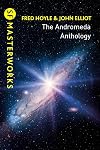
Beware of Greeks bearing gifts, or in this case an advanced civilization broadcasting technical blueprints from their home world somewhere in the Andromeda galaxy. Reminiscent of D. F. Jones' Colossus Trilogy with just a touch of Shelley's Frankenstein this two-volume novelization of the old BBC series mixes hard science and shady political intrigue in an entertaining Doomsday thriller with enough of a twist to make me feel like I didn't waste the ten days it took to read it.

A book which revels in eminent practicality. A cosmic disaster fractures time and the contemporary world suddenly finds itself co-existing with the past. In London, it's 1966; but in France, it's 1916.
Forget your temporal non-interference directives; the modern politicians decide that they cannot allow the carnage of the Western Front to continue just a hundred or so miles away. They summon the generals of each side and when they refuse to believe the (admittedly fantastic) story they are show more told, they are ushered into a room where there is a wind-up gramophone playing. Then the modern politicians switch to the same music on a modern hi-fi system. When the generals have picked themselves up off the floor, they are pointedly told that weaponry has made similar advances, and if they don't call a ceasefire immediately, the modern powers will step in and enforce one by knocking a few heads together. Peace breaks out immediately.
Yes, I know it's a nice fantasy; but it appealed to my sense of the ridiculous yet rational. That scene stayed with me for years, both for its image and the utter sense of wonder in the situation, and the pragmatic good sense that Hoyle gives his characters. If only real life politicians were so sensible! (Sorry, I forgot. We're talking fantasy here.) show less
Forget your temporal non-interference directives; the modern politicians decide that they cannot allow the carnage of the Western Front to continue just a hundred or so miles away. They summon the generals of each side and when they refuse to believe the (admittedly fantastic) story they are show more told, they are ushered into a room where there is a wind-up gramophone playing. Then the modern politicians switch to the same music on a modern hi-fi system. When the generals have picked themselves up off the floor, they are pointedly told that weaponry has made similar advances, and if they don't call a ceasefire immediately, the modern powers will step in and enforce one by knocking a few heads together. Peace breaks out immediately.
Yes, I know it's a nice fantasy; but it appealed to my sense of the ridiculous yet rational. That scene stayed with me for years, both for its image and the utter sense of wonder in the situation, and the pragmatic good sense that Hoyle gives his characters. If only real life politicians were so sensible! (Sorry, I forgot. We're talking fantasy here.) show less
Lists
Awards

You May Also Like


Associated Authors
Statistics
- Works
- 99
- Also by
- 11
- Members
- 6,154
- Popularity
- #3,994
- Rating
- 4.0
- Reviews
- 97
- ISBNs
- 264
- Languages
- 15
- Favorited
- 4