
Carmen Laforet (1921–2004)
Author of Nada
About the Author
Series
Works by Carmen Laforet
LOS EMPLAZADOS 2 copies
Diez cuentos 2 copies
Al colegio 1970 1 copy
La niña 1 copy
Mis paginas mejores 1 copy
El piano 1 copy
Associated Works
Spanische Erzähler der Gegenwart — Contributor — 1 copy
Tagged
Common Knowledge
- Legal name
- Laforet Díaz, Carmen
- Other names
- Laforet i Díaz, Carme
Laforet Diaz, Carmen - Birthdate
- 1921-09-06
- Date of death
- 2004-02-28
- Gender
- female
- Education
- University of Barcelona
Universidad Complutense - Occupations
- short story writer
novelist - Awards and honors
- Premi Nadal (1944)
- Relationships
- Sender, Ramon J. (correspondent)
- Nationality
- Spain
- Birthplace
- Barcelona, Spain
- Places of residence
- Barcelona, Spain
Canary Islands, Spain
Madrid, Spain - Place of death
- Madrid, Spain
- Burial location
- Cementerio de la Almudena, Madrid, Spain
- Associated Place (for map)
- Madrid, Spain
Members
Reviews
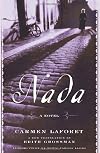
Nada is a wonderfully atmospheric coming-of-age story set in post-war Barcelona. The narrator, Andrea, comes to Barcelona from a small town, excited and eager to experience the big city. Instead, she finds a claustrophobic and decaying house with feuding, violent relatives, all with their own secrets. She eventually tries to break away from the family but has mixed success with friendship and romance. Andrea also finds that it is harder than she thinks to get away from the family. show more Well-written and involving, a sharp portrait of both a horribly dysfunctional family and the awkwardness of being 18.
Andrea only has a few happy memories of the family before the war but the truth turns out to be much different. Her uncle Juan is violent and unpredictable. He is married to Gloria, a flashily attractive woman looked down upon by Andrea’s uptight and controlling aunt Angustias and her manipulative but charismatic uncle Roman. Andrea’s grandmother tries to help her and the others in small ways but also seems a little not-all-there. The decaying, stifling house is vividly portrayed and comes to be a symbol of the family’s attempt to hold on to their faded gentility. The first half mostly deals with Andrea’s nervous attempts to negotiate living with such unhappy people. There are many hidden conflicts and past bad blood, some of which are revealed, but in a way that Andrea can’t be certain of the truth. Later, she forms a fast friendship with the happy, beautiful, well-off Ena and falls in with a group of pseudo-bohemians. The mistakes and quirks of youth – Andrea wanders the city at night, goes on a date with a creeper, and, when she gets control of her money, spends it all on luxuries, making hunger a constant companion – feel realistic. Overall a good, if somewhat claustrophobic read. show less
Andrea only has a few happy memories of the family before the war but the truth turns out to be much different. Her uncle Juan is violent and unpredictable. He is married to Gloria, a flashily attractive woman looked down upon by Andrea’s uptight and controlling aunt Angustias and her manipulative but charismatic uncle Roman. Andrea’s grandmother tries to help her and the others in small ways but also seems a little not-all-there. The decaying, stifling house is vividly portrayed and comes to be a symbol of the family’s attempt to hold on to their faded gentility. The first half mostly deals with Andrea’s nervous attempts to negotiate living with such unhappy people. There are many hidden conflicts and past bad blood, some of which are revealed, but in a way that Andrea can’t be certain of the truth. Later, she forms a fast friendship with the happy, beautiful, well-off Ena and falls in with a group of pseudo-bohemians. The mistakes and quirks of youth – Andrea wanders the city at night, goes on a date with a creeper, and, when she gets control of her money, spends it all on luxuries, making hunger a constant companion – feel realistic. Overall a good, if somewhat claustrophobic read. show less

This is obviously the Spanish counterpart of The catcher in the rye, Bonjour tristesse, De avonden, and all the other great coming-of-age novels by young authors that came out in the aftermath of the Second World War. It's full of the energy and vitality of a young person frustrated with the mess that her parents’ generation has made of the world, but nonetheless confident that the future is out there for the taking. And unlike many of the other so-called coming-of-age novels, this one show more really deals explicitly with the difference between being a child and being an adult, and with what it feels like to be going through that process of change.
Where Laforet’s situation differs most strongly from most of her literary contemporaries is of course that she was writing in the Sleeping-Beauty state of Nationalist Spain, in a city where almost anything that she could want to say about the events of the last ten years would be construed by the censor as a political statement. As the title implies, this has to be a book that is constructed around what is not said: not so much Adorno’s famous silences, but active denials of what is and what has been. The word nada punches into the text frequently, and we see it coming because Laforet has given us a pretty strong hint to look out for it.
In the end, perhaps, you're not so sure what you've read. Is it a book celebrating the joys of motherhood and the reconstruction of respectable society and culture after the destruction of the war, or is it telling us that bourgeois art is dilettantism, and the process of creating something beautiful has to be dangerous and subversive? Is there really a homoerotic subtext, or did we just imagine it?
Very interesting, and a very necessary antidote to the over-romantic Barcelona of Carlos Ruiz Zafón. show less
Where Laforet’s situation differs most strongly from most of her literary contemporaries is of course that she was writing in the Sleeping-Beauty state of Nationalist Spain, in a city where almost anything that she could want to say about the events of the last ten years would be construed by the censor as a political statement. As the title implies, this has to be a book that is constructed around what is not said: not so much Adorno’s famous silences, but active denials of what is and what has been. The word nada punches into the text frequently, and we see it coming because Laforet has given us a pretty strong hint to look out for it.
In the end, perhaps, you're not so sure what you've read. Is it a book celebrating the joys of motherhood and the reconstruction of respectable society and culture after the destruction of the war, or is it telling us that bourgeois art is dilettantism, and the process of creating something beautiful has to be dangerous and subversive? Is there really a homoerotic subtext, or did we just imagine it?
Very interesting, and a very necessary antidote to the over-romantic Barcelona of Carlos Ruiz Zafón. show less
This semi-autobiographical bildungsroman, written in 1943 when the author was 22 years of age, is widely considered to be one of the best novels of the post-Spanish Civil War period. It was largely unknown in the English speaking world until Edith Grossman's translation of it was published in 2007. It won the inaugural Premio Nadal, one of the oldest and most prestigious Spanish literary prizes, in 1944, and it continues to be widely read more than 70 years after its initial publication.
The show more novel opens in Barcelona in 1939, shortly after the Civil War has ended, as Andrea, an 18 year old orphan from the country who has won a scholarship and a small stipend to the Universtat de Barcelona, arrives in the city. She intends to stay with her grandmother on Carrer d'Aribau in the city's well to do L'Eixample neighborhood, in a home that she remembers fondly from her stay there as a young child.
The Civil War has been devastating to the residents of Barcelona, including Andrea's grandmother and her family. What was once an opulent and spacious apartment is now one half of its original size, decaying and filthy, and filled with decrepit relics from her grandparents' former wealth. Andrea provides a powerful description of the main bathroom on the night of her arrival, as she prepares to take a shower:
That bathroom seemed like a witches' house. The stained walls had traces of hook-shaped hands, of screams of despair. Everywhere the scaling walls opened their toothless mouths, oozing dampness. Over the mirror, because it didn't fit anywhere else, they'd hung a macabre still life of pale bream and onions against a black background. Madness smiled from the bent faucets.
The sense of claustrophobia and inhospitality is intensified by Andrea's extended family, and their struggles with poverty and hunger. Her grandmother, once a proud and virile matriarch, is now a senile and frail old woman, who doesn't recognize Andrea at first, and she confuses her with Gloria, her beguiling but maddening daughter in law. Gloria is tormented by her abusive and domineering husband Juan, his musically talented but shady and mentally unstable brother Román, and their suffocatingly devout and controlling sister Angustias. The family members routinely engage in bitter and sometimes violent arguments, similar to the characters in Jean-Paul Sartre's existentialist play No Exit, and Andrea is frequently dragged into the middle of these heated battles.
Andrea finds respite from this house of horrors in her studies, and especially in the company of her classmate and best friend Ena, a beautiful girl from a merchant family whose wealth and social standing have not been adversely affected by the war. Their relationship is occasionally fractious, due to Andrea's diffidence and to Ena's desire to know more about her friend's family and particularly her uncle Román, who Ena is strangely attracted to.
As the novel proceeds, Andrea's sense of independence grows, while at the same time she recognizes that she needs intimacy and friendship as an essential balance to the chaos and increasingly disturbing behavior of her family and her best friend. However, she is caught in the middle of a contracting whirlwind surrounded by these characters, one that she has little control over and that threatens her own sanity.
Nada is a fascinating and superbly written novel about adolescence, despair and escape, set in a city under siege that is attempting to regain its footing and former glory after a crippling war. This insightful debut novel reminded me of Carson McCullers's first book The Heart Is a Lonely Hunter, and Laforet's effort is nearly as good as that masterpiece. show less
The show more novel opens in Barcelona in 1939, shortly after the Civil War has ended, as Andrea, an 18 year old orphan from the country who has won a scholarship and a small stipend to the Universtat de Barcelona, arrives in the city. She intends to stay with her grandmother on Carrer d'Aribau in the city's well to do L'Eixample neighborhood, in a home that she remembers fondly from her stay there as a young child.
The Civil War has been devastating to the residents of Barcelona, including Andrea's grandmother and her family. What was once an opulent and spacious apartment is now one half of its original size, decaying and filthy, and filled with decrepit relics from her grandparents' former wealth. Andrea provides a powerful description of the main bathroom on the night of her arrival, as she prepares to take a shower:
That bathroom seemed like a witches' house. The stained walls had traces of hook-shaped hands, of screams of despair. Everywhere the scaling walls opened their toothless mouths, oozing dampness. Over the mirror, because it didn't fit anywhere else, they'd hung a macabre still life of pale bream and onions against a black background. Madness smiled from the bent faucets.
The sense of claustrophobia and inhospitality is intensified by Andrea's extended family, and their struggles with poverty and hunger. Her grandmother, once a proud and virile matriarch, is now a senile and frail old woman, who doesn't recognize Andrea at first, and she confuses her with Gloria, her beguiling but maddening daughter in law. Gloria is tormented by her abusive and domineering husband Juan, his musically talented but shady and mentally unstable brother Román, and their suffocatingly devout and controlling sister Angustias. The family members routinely engage in bitter and sometimes violent arguments, similar to the characters in Jean-Paul Sartre's existentialist play No Exit, and Andrea is frequently dragged into the middle of these heated battles.
Andrea finds respite from this house of horrors in her studies, and especially in the company of her classmate and best friend Ena, a beautiful girl from a merchant family whose wealth and social standing have not been adversely affected by the war. Their relationship is occasionally fractious, due to Andrea's diffidence and to Ena's desire to know more about her friend's family and particularly her uncle Román, who Ena is strangely attracted to.
As the novel proceeds, Andrea's sense of independence grows, while at the same time she recognizes that she needs intimacy and friendship as an essential balance to the chaos and increasingly disturbing behavior of her family and her best friend. However, she is caught in the middle of a contracting whirlwind surrounded by these characters, one that she has little control over and that threatens her own sanity.
Nada is a fascinating and superbly written novel about adolescence, despair and escape, set in a city under siege that is attempting to regain its footing and former glory after a crippling war. This insightful debut novel reminded me of Carson McCullers's first book The Heart Is a Lonely Hunter, and Laforet's effort is nearly as good as that masterpiece. show less

Una amistad por correspondencia que comienza con una carta de felicitación de Sender a Laforet por su premio Nadal. Una carta que, además, es contestada casi veinte años después por la escritora pero con la que comienza una correspondencia entre ambos, prácticamente hasta la muerte de él.
Es una amistad rara principalmente porque parecen dos personas ajenas entre sí, pero destaca en ambos un apego a su independencia y libertad que termina por unirlos en muchos aspectos.
Sender es un show more ardiente defensor de la obra de Laforet, pese a que comprende los problemas de ella para escribir hasta el punto de caracterizarse a sí mismo como el dueño de “un vacío invasor” contra el que luchar y del que ella no necesita preocuparse porque tiene una vida completamente llena.
Mucho más desinhibido él que ella, sobre todo en sus confesiones amorosas y aún sexuales, comparten el ejercicio de la sinceridad, también consigo mismos. Hablan de la posible vuelta a España de Sender y de las continuas huidas de Laforet del país, de los hijos y nietos de ambos, de amigos comunes, y por supuesto de literatura y escritura.
Sorprende también lo moderno de algunos planteamientos, teniendo en cuenta el lugar y el momento, sobre las “pobres escritoras” que según Laforet “no hemos contado nunca la verdad, aunque queramos. La literatura la inventó el varón y seguimos empleando su mismo enfoque para las cosas. Yo quisiera inventar una traición para dar algo de ese secreto (frase que da para pensar sobre qué tipo de traición necesitaríamos...). Y sigue: Para que poco a poco vaya dejando de existir esa fuerza de dominio, y hombres y mujeres nos entendamos mejor, sin sometimientos ni aparentes ni reales de unos a otros… tiene que llover mucho para eso.”
Y, de ahí, su gran ambición literaria, escribir una novela sobre un mundo “que no se conoce más que por fuera porque no ha encontrado su lenguaje…: el mundo del gineceo”.
Se habla poco de política, pero también. Y algo de religión. Pero sobre todo de la soledad, tanto de la buscada como de la impuesta. Nos pasamos la vida quejándonos de la soledad y defendiendo la soledad al mismo tiempo, dice Sender. Y continúa: “Cuando alguien se acerca demasiado, lo mandamos a hacer gárgaras, y luego nos quejamos"
Probablemente esta correspondencia haya servido muchas veces para aliviarlos a ellos y a nosotros, tanto del exceso como de la falta de soledad. show less
Es una amistad rara principalmente porque parecen dos personas ajenas entre sí, pero destaca en ambos un apego a su independencia y libertad que termina por unirlos en muchos aspectos.
Sender es un show more ardiente defensor de la obra de Laforet, pese a que comprende los problemas de ella para escribir hasta el punto de caracterizarse a sí mismo como el dueño de “un vacío invasor” contra el que luchar y del que ella no necesita preocuparse porque tiene una vida completamente llena.
Mucho más desinhibido él que ella, sobre todo en sus confesiones amorosas y aún sexuales, comparten el ejercicio de la sinceridad, también consigo mismos. Hablan de la posible vuelta a España de Sender y de las continuas huidas de Laforet del país, de los hijos y nietos de ambos, de amigos comunes, y por supuesto de literatura y escritura.
Sorprende también lo moderno de algunos planteamientos, teniendo en cuenta el lugar y el momento, sobre las “pobres escritoras” que según Laforet “no hemos contado nunca la verdad, aunque queramos. La literatura la inventó el varón y seguimos empleando su mismo enfoque para las cosas. Yo quisiera inventar una traición para dar algo de ese secreto (frase que da para pensar sobre qué tipo de traición necesitaríamos...). Y sigue: Para que poco a poco vaya dejando de existir esa fuerza de dominio, y hombres y mujeres nos entendamos mejor, sin sometimientos ni aparentes ni reales de unos a otros… tiene que llover mucho para eso.”
Y, de ahí, su gran ambición literaria, escribir una novela sobre un mundo “que no se conoce más que por fuera porque no ha encontrado su lenguaje…: el mundo del gineceo”.
Se habla poco de política, pero también. Y algo de religión. Pero sobre todo de la soledad, tanto de la buscada como de la impuesta. Nos pasamos la vida quejándonos de la soledad y defendiendo la soledad al mismo tiempo, dice Sender. Y continúa: “Cuando alguien se acerca demasiado, lo mandamos a hacer gárgaras, y luego nos quejamos"
Probablemente esta correspondencia haya servido muchas veces para aliviarlos a ellos y a nosotros, tanto del exceso como de la falta de soledad. show less
Lists
Schwob Nederland (1)
Hidden Classics (1)
Awards


You May Also Like


Associated Authors
Statistics
- Works
- 30
- Also by
- 3
- Members
- 1,952
- Popularity
- #13,182
- Rating
- 3.7
- Reviews
- 71
- ISBNs
- 135
- Languages
- 14
- Favorited
- 2