
Piers Anthony
Author of On a Pale Horse
About the Author
Piers Anthony Dillingham Jacob was born in August, 1934, in Oxford, England. He graduated from Goddard College in Vermont in 1956. He became a naturalized U.S. citizen while serving in the United States Army in 1958. He served in the U.S. Army from 1957-1959. In 1977, he received a British Fantasy show more Award for A Spell for a Chameleon. Anthony's family emigrated to the United States from Britain when he was six. Highly popular because of his science fiction and fantasy works, Anthony is also known for the Jason Striker series and martial arts novels co-written with Roberto Fuentes. A highly prolific author, Anthony's other works include Bio of a Space Tyrant, Cluster, and the Omnivore series. Anthony makes his home in Tampa, Florida. He also writes under the pseudonym Robert Piers. (Bowker Author Biography) show less
Disambiguation Notice:
Please do not combine this single author with any author page containing his name along with that of another author. See "Who Should/Shouldn't Get Combined" on the Author wiki page.
(ger) Bitte den Autor alleine nicht mit gemeinschaftlichen Arbeiten mit anderen Aoturen kombinieren.. See "Who Should/Shouldn't Get Combined" on the Author wiki page.
Series
Works by Piers Anthony
The Adventures of Kelvin of Rud: Across the Frames: Dragon's Gold, Serpent's Silver & Chimaera's Copper (1993) — Author — 210 copies, 1 review
Jason Striker Martial Arts Series Volume 3: Amazon Slaughter and Curse of the Ninja (2001) 26 copies
The Cluster Series: Cluster, Chaining the Lady, Kirlian Quest, Thousandstar, and Viscous Circle (2018) 26 copies
Bio of a Space Tyrant 5 Volumes: Refugee; Mercenary; Politician; Executive; Statesman (1990) 8 copies
By Piers Anthony - Demons Don't Dream (Xanth, No. 16) (1994-03-02) [Mass Market Paperback] (1994) 5 copies
Xanth Series #1-25 4 copies
Biografia di un tiranno 3 copies
Dolfin Tayle 3 copies
Doomsday Mode 3 copies
A Visual Guide to Xanth 3 copies
Knickelpede Knight 2 copies
The Apprentice Adept 3 Book Set - Book One: Split Infinity - Book Two: Blue Adept - Book Three: Juxtaposition (1985) 2 copies
"The Series Boxed Set" 2 copies
Demons Don't Dream (Xanth, No. 16) 2 copies
Xanth Series #1-10 2 copies
The Unstilled World (UNPUBLISHED) 2 copies
Nebula Award Stories 2 copies
Quest For a Fallen Star 1 copy
I'll Pay Thee Not in Gold 1 copy
Azael 1 copy
Dragon on a Pedestel 1 copy
Six Crystal Princess 1 copy
Piers Anthony - Cluster Complete Series Cluster, Chaining the Lady and More Five-Novel Series 1 copy
Unicorn's Point 1 copy
Az emlékmás 1 copy
Of Man And Manta 3: Ox 1 copy
Of Man And Manta 2: Orn 1 copy
Of Man And Manta 1: Omnivore 1 copy
Audiobook Collection 1 copy
Harpy Thine (Xanth, Book 17) 1 copy
Mouvar's Magic 1 copy
Sos the Rope in The Magazine of Fantasy and Science Fiction Volume 35 Numbers 1-3, July - September 1968 (1968) 1 copy
The Mythical Tarot 1 copy
Xanth Series #15-19 1 copy
Un Incantesimo Per Chameleon 1 copy
Il grande cerchio 1 copy
Xanth Series #10-14 1 copy
Aladdin: Books One and Two 1 copy
Lava 1 copy
The Alien Rulers (Novelette) 1 copy
Split Infinity Trilogy 1 copy
Early Xanth Series (#1-12) 1 copy
Omnivore, orn 1 copy
Xanth Series #20-25 1 copy
Xanth series 1-3 1 copy
Medusa 1 copy
Short Fiction Collection 1 copy
Myth of Tarot 1 copy
Se Vos Não Pagar em Ouro - I 1 copy
Xanth Series #1-6 1 copy
THE CLUSTER SERIES BOOKS 1-5: CLUSTER, CHAINING THE LADY, KIRLIAN QUEST, THOUSANDSTAR, and VISCOUS CIRCLE (1981) 1 copy
Xanth Series #1/7/14/15 1 copy
Tortoise Shell [short story] 1 copy
Associated Works
Isaac Asimov's Wonderful Worlds of Science Fiction, Volume 2: The Science Fictional Olympics (1984) — Contributor — 96 copies, 1 review
Before They Were Giants: First Works from Science Fiction Greats (2010) — Contributor — 54 copies, 2 reviews
Gauntlet: Exploring the Limits of Free Expression, No. 2 - Stephen King Special (1991) — Contributor — 31 copies, 1 review
Analog Science Fiction/Science Fact: Vol. LXXXI, No. 1 (March 1968) (1968) — Contributor — 21 copies
Worlds of If Science Fiction 161, July/August 1972 (Vol. 21, No. 6) (1972) — Contributor — 12 copies
Analog Science Fact/Science Fiction: Vol. LXXIV, No. 1 (September 1964) (1964) — Contributor — 9 copies
Worlds of If Science Fiction 163, November/December 1972 (Vol. 21, No. 8) (1972) — Contributor — 8 copies
C'è sempre una guerra — Contributor — 1 copy
Tagged
Common Knowledge
- Legal name
- Jacob, Piers Anthony Dillingham
- Other names
- Xanthony, Pier
Jacob, Piers A.
Jacob, Piers Anthony - Birthdate
- 1934-08-06
- Gender
- male
- Education
- Goddard College (BA|Creative Writing)
- Occupations
- teacher (English)
mental hospital aide
technical writer
novelist
editor
cartoonist - Organizations
- Admiral Farragut Academy
United States Army - Awards and honors
- Preditors & Editors Award (1999)
The Wizard Sites Award (1999)
British August Derleth Fantasy award (1977)
The Spokane Public Library (Golden Pen Award, 1982)
Books for the Teen Age, New York Public Library
EPIC (Friend Of E-Publishing Award, 2003) (show all 13)
Winner of the Pyramid/F&SF/Kent Production $5,000.00 contest (The Unstilled World, 1968)
Locus Poll Nominee (Best Fan Writer, old)
Hugo Nominee (Best Fan Writer, 1970)
Locus Poll Nominee (All-Time Best Fantasy Novelist, 1987)
Locus Poll Nominee (All-Time Best Novelist, combined)
Locus Poll Nominee (All-Time Best Author, 1988)
Locus Poll Nominee (Best 80's Author, 1988) - Relationships
- Jacob, Carol Marble (wife)
Jacob, Penelope Carolyn (daughter)
Jacob, Cheryl (daughter) - Nationality
- UK (birth)
USA (naturalization | 1958) - Birthplace
- Oxford, Oxfordshire, England, UK
- Places of residence
- Inverness, Florida, USA
Oxford, Oxfordshire, England, UK
Plainfield, Vermont, USA
Spain
Manhattan Beach, California, USA - Map Location
- USA
- Disambiguation notice
- Please do not combine this single author with any author page containing his name along with that of another author. See "Who Should/Shouldn't Get Combined" on the Author wiki page.
Members
Discussions
Lego my castle in Good Show Sir! — bad science fiction and fantasy covers (April 25)
Found: YA Scifi with recovering amnesiac in Name that Book (August 2025)
Booty battle in Good Show Sir! — bad science fiction and fantasy covers (February 2025)
Fractal Mode in Good Show Sir! — bad science fiction and fantasy covers (September 2024)
Found: Book Series (maybe 5-7) - Earth - humans being selected to replace deities in Name that Book (October 2021)
the sopaths in Book talk (June 2012)
Heaven Cent by Piers Anthony, reviewed by jimroberts in Reviews reviewed (June 2011)
Golem in the Gears by Piers Anthony, jimroberts' review in Review Discussions (June 2011)
Golem in the Gears by Piers Anthony, review by jimroberts in Reviews reviewed (June 2011)
Golem in the Gears by Piers Anthony in Spoilerful Summaries (June 2011)
SciFi Avg guy holds key to finding genius in Name that Book (May 2011)
Reviews
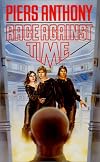
My experience of reading this novel (many years ago):
Stage 1: Wow, what a very strange 1950s America. I'll bet something's up!
Stage 2: Cool, teenagers race against vast conspiracy of adults breeding them for nefarious purposes!
Stage 3: How strange. The pinnacle of "white" culture is 1950s America, while the pinnacle of "Asian" culture is ancient China, and the pinnacle of "African" culture is a tribe on the savannah. Not, like, 1950s America vs. 1950s Shanghai and 1950s Nairobi. Hmm. And is show more it really just white/black/asian here? Is every other race on planet earth close enough to "standard brown" that they don't merit bringing back? And why is there only one of each? If this is worth the resources wouldn't you want to have a spare or two on hand in cases of accidents, injury, illness, infertility, death, whatever? What about inbreeding in generation two? Or are they going to build in some redundancies and clone spares for that generation?
Stage 4: Lots of happy interracial love stories between these kids when they meet up. How sweet!
Stage 5: What?
...
No.
...
So the happy ending of the story is that all of the kids agree that restoring racial purity is a goal so worthy that they're going to go back to their fake homes and their fake lives and marry their racial counterpart so they can successfully breed racially pure babies?
That is the most revoltingly racist thing I have ever read in fiction form.
I need to scrub my brain out with bleach.
~~~~~
After reading Race Against Time, I was never able to read another Piers Anthony book.
I don't think I've ever even tagged them on here as 'read.' I can't bring myself to admit that I ever brought my mind in close contact to the products of a mind able to construct such a narrative.
I'm shocked that anyone could give this thing more than a 1-star rating. It's the 21st century, people. Whatever excuses people had for praising this novel's "layered messages" in 1973 don't exist anymore. (The excuses were no good then either, but we like to praise ourselves for making progress on race relations--no?--and this novel is as close to a manual for white supremacy as I have ever had the displeasure of reading.)
If I could give this book negative stars, I would. show less
Stage 1: Wow, what a very strange 1950s America. I'll bet something's up!
Stage 2: Cool, teenagers race against vast conspiracy of adults breeding them for nefarious purposes!
Stage 3: How strange. The pinnacle of "white" culture is 1950s America, while the pinnacle of "Asian" culture is ancient China, and the pinnacle of "African" culture is a tribe on the savannah. Not, like, 1950s America vs. 1950s Shanghai and 1950s Nairobi. Hmm. And is show more it really just white/black/asian here? Is every other race on planet earth close enough to "standard brown" that they don't merit bringing back? And why is there only one of each? If this is worth the resources wouldn't you want to have a spare or two on hand in cases of accidents, injury, illness, infertility, death, whatever? What about inbreeding in generation two? Or are they going to build in some redundancies and clone spares for that generation?
Stage 4: Lots of happy interracial love stories between these kids when they meet up. How sweet!
Stage 5: What?
...
No.
...
So the happy ending of the story is that all of the kids agree that restoring racial purity is a goal so worthy that they're going to go back to their fake homes and their fake lives and marry their racial counterpart so they can successfully breed racially pure babies?
That is the most revoltingly racist thing I have ever read in fiction form.
I need to scrub my brain out with bleach.
~~~~~
After reading Race Against Time, I was never able to read another Piers Anthony book.
I don't think I've ever even tagged them on here as 'read.' I can't bring myself to admit that I ever brought my mind in close contact to the products of a mind able to construct such a narrative.
I'm shocked that anyone could give this thing more than a 1-star rating. It's the 21st century, people. Whatever excuses people had for praising this novel's "layered messages" in 1973 don't exist anymore. (The excuses were no good then either, but we like to praise ourselves for making progress on race relations--no?--and this novel is as close to a manual for white supremacy as I have ever had the displeasure of reading.)
If I could give this book negative stars, I would. show less
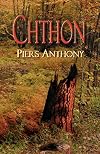
As an SF prison break adventure it's fine, but honestly, it's everything that's under the surface that makes this book pretty fantastic. It was nominated in '68 for the Hugo even though it was a first-time author who spent 7 years writing it. Interesting? Especially since he's a hugely recognized name now?
The fact is, beyond the prison break, it's a psychological horrorshow that spotlights its very own Oedipus tragedy, wold-spanning telepaths, commentary on the nature of love and hate, show more complete with a truly horrible inversion, and just a little more tragedy.
This is the novelized SF form of Freudian unconsciousness, travelling the labyrinth, and the eventual rise from the darkest spaces of our own souls to reach the light, as it seen in the title. Chthonic?
But don't worry about any of these themes being too deep to spot. Anthony keeps everything pretty much on the surface, putting his knowledge of myth and classic literature a direct service to *his* story, and not as a nod.
I'm honestly very impressed, but I can also see why people might not give this higher stars, too, because the deeper themes and even the general one of a SF prison break has been done many times. Still, this one is done extremely well, so I'm giving it full props. It's complex but very readable, disturbing in the sexual themes, the love themes, in all the ways that people hurt each other or are even programmed to hurt each other. It might be too rough for the casual reader. I'm honestly a bit shaken, myself, and I pride myself on knowing my dark side.
Very impressive. :) show less
The fact is, beyond the prison break, it's a psychological horrorshow that spotlights its very own Oedipus tragedy, wold-spanning telepaths, commentary on the nature of love and hate, show more complete with a truly horrible inversion, and just a little more tragedy.
This is the novelized SF form of Freudian unconsciousness, travelling the labyrinth, and the eventual rise from the darkest spaces of our own souls to reach the light, as it seen in the title. Chthonic?
But don't worry about any of these themes being too deep to spot. Anthony keeps everything pretty much on the surface, putting his knowledge of myth and classic literature a direct service to *his* story, and not as a nod.
I'm honestly very impressed, but I can also see why people might not give this higher stars, too, because the deeper themes and even the general one of a SF prison break has been done many times. Still, this one is done extremely well, so I'm giving it full props. It's complex but very readable, disturbing in the sexual themes, the love themes, in all the ways that people hurt each other or are even programmed to hurt each other. It might be too rough for the casual reader. I'm honestly a bit shaken, myself, and I pride myself on knowing my dark side.
Very impressive. :) show less

I have no idea how to review this book. Let me start by recognizing how incredibly misogynistic it is. I want to praise certain things about the world, but I want the main takeaway of this review to be that the entirety of this book hates and devalues women. It is awful, sometimes shocking, and, honestly, it was a little depressing to realize that this was a childhood classic for a generation of people, at least based on the other reviews I glanced through before reading. The main character show more is detestable, instantly, on page two. At least I cannot say I wasn't aware of what I was getting into.
At many points I considered abandoning this book, but I kept on because it is short, because I already have the sequel, and because I was curious as to whether the main character would undergo some growth throughout the story. Well, to illustrate exactly how that did not happen, I have pulled a selection of quotes, equally spaced throughout the novel, presented below. I will leave this section of my review with the strongest recommendation that you do not give or recommend this book to anyone in your life, especially if they are children, especially if you remember loving it as a kid but haven't revisited it, and especially if you want that person to hold anything resembling a basic respect for women and girls.
Quotes:
"Other girls managed to enhance their appearance by cosmetics or padding or specialized spells, but beside Sabrina all other females looked somewhat artificial." - Bink's internal thoughts, page 2
"How could she avoid being seductive? She was a creature constructed for no other visible purpose than ra---than love." - I don't feel context is required for this one, page 57
"'It can all be yours,' she said. The alluring fourteen-year-old reappeared. 'No other woman can make this promise.'
Bink was suddenly, forcefully tempted." - Iris, shapeshifting to seduce Bink, who is 25, almost succeeds while in the form of a 14 year old, page 98
"It figured. She had said he wouldn't believe her reasons, and he had believed the first one, so she wouldn't tell him the other. Typically female logic." - Bink's internal thoughts on Fanchon, page 175, included mostly for this particular tone, which is pervasive in the book
"Bink was impressed again with her intelligence. Every time he caught her doing something stupid, it turned out to be the opposite." - Bink's internal thoughts, page 210
"Bink suspected Milly would turn out to be a rather pretty girl, and he wondered just how she had died. A liaison with a castle guest, then a stabbing by the jealous wife who discovered them?" - Bink's internal thoughts, concerning a ghost in a castle, who is steadily becoming more visible, page 259
"He obviously had no emotional attachment to the Sorceress, and shared a masculine appreciation for the insulting pause Bink had made. Iris had, just now, shown them all how ready she was to sell her illusion-enhanced body for power." - Bink's internal thoughts, following his insult calling Iris "sluttish", page 301
"'That's good,' Trent said gravely. 'Now put on your pretty face; we are entertaining company.'" - Trent telling Iris, who he holds complete control over through physical threat, to use illusion, page 343
Also, it turns out after that exercise of pulling quotes, where I'm afraid I did not even scratch the surface of what I found issue with within this book, I do not actually want to praise certain things about the world, as previously stated. I just want to move on to better books. show less
At many points I considered abandoning this book, but I kept on because it is short, because I already have the sequel, and because I was curious as to whether the main character would undergo some growth throughout the story. Well, to illustrate exactly how that did not happen, I have pulled a selection of quotes, equally spaced throughout the novel, presented below. I will leave this section of my review with the strongest recommendation that you do not give or recommend this book to anyone in your life, especially if they are children, especially if you remember loving it as a kid but haven't revisited it, and especially if you want that person to hold anything resembling a basic respect for women and girls.
Quotes:
"Other girls managed to enhance their appearance by cosmetics or padding or specialized spells, but beside Sabrina all other females looked somewhat artificial." - Bink's internal thoughts, page 2
"'It can all be yours,' she said. The alluring fourteen-year-old reappeared. 'No other woman can make this promise.'
Bink was suddenly, forcefully tempted." - Iris, shapeshifting to seduce Bink, who is 25, almost succeeds while in the form of a 14 year old, page 98
"It figured. She had said he wouldn't believe her reasons, and he had believed the first one, so she wouldn't tell him the other. Typically female logic." - Bink's internal thoughts on Fanchon, page 175, included mostly for this particular tone, which is pervasive in the book
"Bink was impressed again with her intelligence. Every time he caught her doing something stupid, it turned out to be the opposite." - Bink's internal thoughts, page 210
"Bink suspected Milly would turn out to be a rather pretty girl, and he wondered just how she had died. A liaison with a castle guest, then a stabbing by the jealous wife who discovered them?" - Bink's internal thoughts, concerning a ghost in a castle, who is steadily becoming more visible, page 259
"He obviously had no emotional attachment to the Sorceress, and shared a masculine appreciation for the insulting pause Bink had made. Iris had, just now, shown them all how ready she was to sell her illusion-enhanced body for power." - Bink's internal thoughts, following his insult calling Iris "sluttish", page 301
"'That's good,' Trent said gravely. 'Now put on your pretty face; we are entertaining company.'" - Trent telling Iris, who he holds complete control over through physical threat, to use illusion, page 343
Also, it turns out after that exercise of pulling quotes, where I'm afraid I did not even scratch the surface of what I found issue with within this book, I do not actually want to praise certain things about the world, as previously stated. I just want to move on to better books. show less

I had known of this book since it was new on shelves in the 1980s, but my discouraging experience of the author's Xanth series had put me off his work altogether. As time passed, my curiosity about the Tarot books increased, but they became scarcer. Finally stumbling across a cheap battered copy recently, I went ahead and read this first of the three books. The author's front matter is very clear that the "trilogy" is really a single work divided into three volumes for convenience of show more production and sales, and the text bears that out. There is nothing like a resolution of the larger plot at the conclusion of the book. God of Tarot was good enough that I went ahead and ordered an inexpensive copy of Vision of Tarot directly after finishing it, so that I wouldn't lose the thread of the story. But it was just bad enough that I had genuine reason to worry that I would lose that thread.
The protagonist Brother Paul is an adherent of the Holy Order of Vision, a religious body on a future Earth that has been depopulated and energy-rationed into pre-industrial levels of technology, while most of humanity has departed into exoplanetary colonization efforts. He is very explicitly an octaroon identifiable as "black" to his colleagues, a point of occasional relevance to the plot. It is not reflected in Rowena Morrill's cover art, which otherwise accurately shows a scene from chapter 7 of the book, with Paul confronting a dragon who represents Temptation.
The general plot concerns Paul's investigation of strange phenomena on the colonized planet Tarot. The planet's "animation zone," in which thought-forms take on physical reality, seems to be Anthony's science-fictional conceit for what occultists would call the astral plane. As Paul explores it, he encounters simulations of significant historical designers, commenters, and patrons of the Tarot, including Filippo Maria Visconti, Arthur Edward Waite, and Aleister Crowley. Anthony gets Waite's diction just right, to the point where I suspected him of simply cribbing from Waite's work for some of the dialogue. Crowley is not quite as spot-on, and is given misogyny as a disproportionate keynote of his character. Still, it is Crowley who becomes Paul's principal guide in the animation zone.
The final section of the book is occasioned by Paul's effort to know his True Will, as goaded by Crowley. The upshot is that he recovers a Phildickian, proto-cyberpunk sort of tale from his previously inaccessible memories of his life before joining the Holy Order of Vision. Thus the very end of the book takes place in narrative chronology before the beginning, and the reconnection of that knowledge to Paul's dilemma on Tarot is left for later volumes. It seems that I will need to read further before reaching any real opinion on the merits of the work as a whole. show less
The protagonist Brother Paul is an adherent of the Holy Order of Vision, a religious body on a future Earth that has been depopulated and energy-rationed into pre-industrial levels of technology, while most of humanity has departed into exoplanetary colonization efforts. He is very explicitly an octaroon identifiable as "black" to his colleagues, a point of occasional relevance to the plot. It is not reflected in Rowena Morrill's cover art, which otherwise accurately shows a scene from chapter 7 of the book, with Paul confronting a dragon who represents Temptation.
The general plot concerns Paul's investigation of strange phenomena on the colonized planet Tarot. The planet's "animation zone," in which thought-forms take on physical reality, seems to be Anthony's science-fictional conceit for what occultists would call the astral plane. As Paul explores it, he encounters simulations of significant historical designers, commenters, and patrons of the Tarot, including Filippo Maria Visconti, Arthur Edward Waite, and Aleister Crowley. Anthony gets Waite's diction just right, to the point where I suspected him of simply cribbing from Waite's work for some of the dialogue. Crowley is not quite as spot-on, and is given misogyny as a disproportionate keynote of his character. Still, it is Crowley who becomes Paul's principal guide in the animation zone.
The final section of the book is occasioned by Paul's effort to know his True Will, as goaded by Crowley. The upshot is that he recovers a Phildickian, proto-cyberpunk sort of tale from his previously inaccessible memories of his life before joining the Holy Order of Vision. Thus the very end of the book takes place in narrative chronology before the beginning, and the reconnection of that knowledge to Paul's dilemma on Tarot is left for later volumes. It seems that I will need to read further before reaching any real opinion on the merits of the work as a whole. show less
Lists
Best Young Adult (1)
Overdue Podcast (1)
Very Very Bad (1)
Awards


You May Also Like


Associated Authors
Statistics
- Works
- 370
- Also by
- 33
- Members
- 144,791
- Popularity
- #44
- Rating
- 3.5
- Reviews
- 1,172
- ISBNs
- 1,342
- Languages
- 13
- Favorited
- 240
