
John Philip Jenkins
Author of The Next Christendom: The Coming of Global Christianity
About the Author
Image credit: via HarperCollins Publishers
Works by John Philip Jenkins
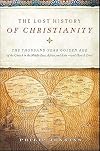
The Lost History of Christianity: The Thousand-Year Golden Age of the Church in the Middle East, Africa, and Asia--and How It Died (2008) 973 copies, 19 reviews
Jesus Wars: How Four Patriarchs, Three Queens, and Two Emperors Decided What Christians Would Believe for the Next 1,500 years (2010) — Author — 575 copies, 15 reviews
Decade of Nightmares: The End of the Sixties and the Making of Eighties America (2006) 117 copies, 2 reviews
Crucible of Faith: The Ancient Revolution That Made Our Modern Religious World (2017) 77 copies, 2 reviews
The Many Faces of Christ: The Thousand-Year Story of the Survival and Influence of the Lost Gospels (2015) 69 copies, 2 reviews
Images of Terror: What We Can and Can't Know About Terrorism (Social Problems and Social Issues) (2003) 18 copies
Fertility and Faith: The Demographic Revolution and the Transformation of World Religions (2020) 10 copies
Associated Works
You Are Being Lied To: The Disinformation Guide to Media Distortion, Historical Whitewashes, and Cultural Myths (2001) — Contributor, some editions — 739 copies, 4 reviews
From the Outside Looking In: Essays on Mormon History, Theology, and Culture (2015) — Contributor — 10 copies
Tagged
Common Knowledge
- Birthdate
- 1952-04-03
- Gender
- male
- Education
- University of Cambridge (Clare College) (PhD)
- Nationality
- UK
- Birthplace
- Port Talbot, Wales, UK
- Map Location
- Wales, UK
Members
Reviews
The Lost History of Christianity: The Thousand-Year Golden Age of the Church in the Middle East, Africa, and Asia—and How It Died by Philip Jenkins
Where was Christianity a dominant religion in 700 or 1100 CE? You would certainly look to Western Europe, and by 1100, even Eastern Europe. Maybe you’d think of the Byzantine Empire. Perhaps you even know there were Christians in Egypt, Nubia, and Ethiopia.
But what about the large number of Christians in the Middle East, all the way to China and India?
In The Lost History of Christianity: The Thousand-Year Golden Age of the Church in the Middle East, Africa, and Asia - and How it Died, show more Philip Jenkins attempts to correct the record and the impressions of Christians and others about the nature of Christian history. We all understand how Christianity started in the Middle East, but in our minds Christianity “shifts” to Europe with the rise of Islam. No one attempts to dismiss the “Christianization” of Western and Eastern Europe during the first millennium as an important event and factor. But if one could have an overall perspective of Christianity at 700 or 1100, one would not think of it as primarily centered in Europe. The author presents what can be known of the history of Christianity in Africa and Asia, predominantly before the later Western European missions after 1400. He is able to tell the story of the Church of the East (Nestorians) and the Syrian Orthodox Church (Jacobites) and their pervasive spread and influence in the Middle East, even to China.
But he also tells the story of how and why Christianity has been eliminated from those regions. It does involve the spread of Islam, but not as often imagined. The author well demonstrates how much of how Islam developed was on account of its interaction with, and appropriation of, many aspects of Christianity; Christian practice in the area was also influenced by Islam. It was not a story of immediate conquest and assimilation; Christianity persevered, and even flourished, in the Middle East even in the face of Islam. It would involve later events - the persecutions of the Turks, the fact some of the Mongols had been Christianized and seemed to prefer Christians to Muslims at the beginning, but then ultimately going over to Islam and providing the final blow to the hopes of Christianity remaining pervasive in the Middle East. Whereas a significant number of Christians existed across the Middle East in 1100, by 1400 there were precious few in a few restricted areas. In a sad irony, it has been modern events in the Middle East, with the creation of modern-day Iraq, etc., which has led to the final end of the Christian communities in the Middle East.
The author invites the reader to consider what would have happened if the Mongols had decided to favor Christianity and become Christian: the Middle East would be Christian predominantly, not Muslim. But that’s not how it worked out. And so the author compels the reader to consider how a faith tradition basically dies out in a land, and what that might mean for the generally triumphalist posturing a lot of Christians would manifest about their faith. Even though the areas might no longer be Christian, traces of that Christianity remain. And no one knows what might become or be in the future.
This is a very important book for Christians to consider in order to re-calibrate their understanding of the spread of Christianity and their triumphalist priors. show less
But what about the large number of Christians in the Middle East, all the way to China and India?
In The Lost History of Christianity: The Thousand-Year Golden Age of the Church in the Middle East, Africa, and Asia - and How it Died, show more Philip Jenkins attempts to correct the record and the impressions of Christians and others about the nature of Christian history. We all understand how Christianity started in the Middle East, but in our minds Christianity “shifts” to Europe with the rise of Islam. No one attempts to dismiss the “Christianization” of Western and Eastern Europe during the first millennium as an important event and factor. But if one could have an overall perspective of Christianity at 700 or 1100, one would not think of it as primarily centered in Europe. The author presents what can be known of the history of Christianity in Africa and Asia, predominantly before the later Western European missions after 1400. He is able to tell the story of the Church of the East (Nestorians) and the Syrian Orthodox Church (Jacobites) and their pervasive spread and influence in the Middle East, even to China.
But he also tells the story of how and why Christianity has been eliminated from those regions. It does involve the spread of Islam, but not as often imagined. The author well demonstrates how much of how Islam developed was on account of its interaction with, and appropriation of, many aspects of Christianity; Christian practice in the area was also influenced by Islam. It was not a story of immediate conquest and assimilation; Christianity persevered, and even flourished, in the Middle East even in the face of Islam. It would involve later events - the persecutions of the Turks, the fact some of the Mongols had been Christianized and seemed to prefer Christians to Muslims at the beginning, but then ultimately going over to Islam and providing the final blow to the hopes of Christianity remaining pervasive in the Middle East. Whereas a significant number of Christians existed across the Middle East in 1100, by 1400 there were precious few in a few restricted areas. In a sad irony, it has been modern events in the Middle East, with the creation of modern-day Iraq, etc., which has led to the final end of the Christian communities in the Middle East.
The author invites the reader to consider what would have happened if the Mongols had decided to favor Christianity and become Christian: the Middle East would be Christian predominantly, not Muslim. But that’s not how it worked out. And so the author compels the reader to consider how a faith tradition basically dies out in a land, and what that might mean for the generally triumphalist posturing a lot of Christians would manifest about their faith. Even though the areas might no longer be Christian, traces of that Christianity remain. And no one knows what might become or be in the future.
This is a very important book for Christians to consider in order to re-calibrate their understanding of the spread of Christianity and their triumphalist priors. show less
I've long been fascinated by World War II and it has provided a focus of what I might call my "hobby reading" (aka, stuff I don't teach and likely never will but still fascinates me to no end). A good bit of that reading has focused on the lead-up to the war rather than the actual conflict...books like David Faber's "Munich, 1938" and Lynne Olson's "Those Angry Days" (both fine reads).
My reading so far, limited and scattered as it has been, has been enough to reveal what others most show more assuredly already know: You can't understand World War II without understanding World War I. In fact, I might go so far as to venture a renaming of these conflicts as "World War, PART I and World War, PART II." To point to the most obvious reason for this claim: It was certainly the punitive nature of the Treaty of Versailles that ended WW1 that laid the basic groundwork for the next iteration of world war just over 2 decades later.
So, I picked up Jenkins' book driven by the curiosity to better understand the forces that erupted into WW2; it just seemed logical, given my formal training and area of expertise, to begin with a theological analysis. And I quickly discovered that Jenkins' analysis of WW1 was teaching me a LOT more about America's "war on terror" than it was about WW2 (in fact, in his conclusion, Jenkins points out that a key difference between WW's 1 and 2 is the virtual absence of a justifying apocalyptic/religious rhetoric in WW2 era).
It took my breath away to compare Jenkins' chronicle of WW1 headlines with current viral articles about radicalized Islam that are circulating endlessly in my Facebook newsfeed....and no one wants to talk about the medieval Crusades anymore (I wonder why THAT is...). Clearly, each side saw itself as THE representative of the divine will and purpose, and such deluded propaganda fueled many of the extremities of that first international conflagration.
Though Jenkins analyzes the ROLE of religion in both sparking and perpetuating WW1, he does not stoop to BLAMING religion for the war. This is not another book about why religion is so "bad" for the world. Rather, it is an attempt to show how religious language has been (and is still being) abused to achieve decidedly unrelated political ends.
Probably the most enlightening chapter was on the post-WW1 fortunes of Islam; Jenkins does a phenomenal job of illuminating the current politico-religious structure of the Mid-East especially as a post-Ottoman Empire reality. Again, the focus is not on glib explanations or easy answers but on providing important background that helps us to grasp the complexity of current issues.
That may have been what I appreciated most about this book: Jenkins has a fine way of retelling history in ways that illuminate but do not over-simplify or become some sort of cheesy 3-step, how-to manual for "world peace and happiness." Even though Jenkins is a religious historian, he clearly grasps the interplay of socio-economic factors with that history and explicates those relationships in a way that is as profound as it is easy-to-understand, providing a book equally valuable to theologians and historians. show less
My reading so far, limited and scattered as it has been, has been enough to reveal what others most show more assuredly already know: You can't understand World War II without understanding World War I. In fact, I might go so far as to venture a renaming of these conflicts as "World War, PART I and World War, PART II." To point to the most obvious reason for this claim: It was certainly the punitive nature of the Treaty of Versailles that ended WW1 that laid the basic groundwork for the next iteration of world war just over 2 decades later.
So, I picked up Jenkins' book driven by the curiosity to better understand the forces that erupted into WW2; it just seemed logical, given my formal training and area of expertise, to begin with a theological analysis. And I quickly discovered that Jenkins' analysis of WW1 was teaching me a LOT more about America's "war on terror" than it was about WW2 (in fact, in his conclusion, Jenkins points out that a key difference between WW's 1 and 2 is the virtual absence of a justifying apocalyptic/religious rhetoric in WW2 era).
It took my breath away to compare Jenkins' chronicle of WW1 headlines with current viral articles about radicalized Islam that are circulating endlessly in my Facebook newsfeed....and no one wants to talk about the medieval Crusades anymore (I wonder why THAT is...). Clearly, each side saw itself as THE representative of the divine will and purpose, and such deluded propaganda fueled many of the extremities of that first international conflagration.
Though Jenkins analyzes the ROLE of religion in both sparking and perpetuating WW1, he does not stoop to BLAMING religion for the war. This is not another book about why religion is so "bad" for the world. Rather, it is an attempt to show how religious language has been (and is still being) abused to achieve decidedly unrelated political ends.
Probably the most enlightening chapter was on the post-WW1 fortunes of Islam; Jenkins does a phenomenal job of illuminating the current politico-religious structure of the Mid-East especially as a post-Ottoman Empire reality. Again, the focus is not on glib explanations or easy answers but on providing important background that helps us to grasp the complexity of current issues.
That may have been what I appreciated most about this book: Jenkins has a fine way of retelling history in ways that illuminate but do not over-simplify or become some sort of cheesy 3-step, how-to manual for "world peace and happiness." Even though Jenkins is a religious historian, he clearly grasps the interplay of socio-economic factors with that history and explicates those relationships in a way that is as profound as it is easy-to-understand, providing a book equally valuable to theologians and historians. show less
The Lost History of Christianity: The Thousand-Year Golden Age of the Church --- and How It Died by Philip Jenkins
Jenkins spills a lot of ink on lamenting the loss of the Christian churches of the Middle East and North Africa to be Muslim onslaught, and he bemoans present-day Christians' ignorance of this history and failure to draw lessons from it. This book is valuable for presenting a much more complete picture of how these churches disappeared, or almost disappeared. He counters the views of modern historians who often seem to portray Muslims as benevolent rulers, showing that while there were show more periods of peace and cohabitation, there were also horrendous massacres and forced conversions, extending into the 20th century with Muslim Turkey's genocide of half the Christian Armenian population. Jenkins rightly acknowledges that Christians (and biblical Jews) have also massacred Muslims (and other sects of Christians, for that matter). In the end, Jenkins' message is rather muddled. He offers hope for things to change in the long-term, pointing out how unimaginable it was to image the Jews returning to Israel after 1800 years. But the same history he has written about the decline of Christianity in parts of the world could be written by Muslims about their loss of Spain, Hungary, or other places. Although shot through with faith, Jenkins' book should make any intelligent person draw the logical conclusion: there is no god. While most humans seem to undeniably need belief in a higher power, the shape of that power differs significantly. It is ridiculous to think that one religion, whether it is Christianity, Islam, Buddhism, Hinduism, or any other holds any exclusive place in the heart of an imagined deity. show less
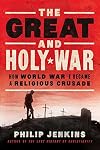
The Great and Holy War: How World War I Became a Religious Crusade by Philip Jenkins (2014-04-29) by Philip Jenkins
In "The Great and Holy War", Philip Jenkins, professor of history at Baylor University and one of the leading American scholars in religious history and the confluence of religion, politics and popular culture, provides a masterful study of the powerful influence of religion on those who waged and experienced the First World War. In his eloquent narrative, he cites numerous examples of religion being enlisted on behalf of the war effort on each side in the form of propaganda. He also shows show more how religious feeling, without deliberate state intent, sprang up among the people of the various nations at war. And he examines the effect of the Great War on religious thought and religious-cultural politics among the world's major monotheistic faiths, with consequences that persist to the present day.
Jenkins first describes the almost euphoric atmosphere that prevailed in Europe in August 1914 upon the beginning of the Great War. In each of the major combatant powers, there was a burst of nationalism and the assumption that the war would be glorious and short, culminating in victory for "our" side. At first, all the nations at war were Christian countries, even if some of them, such as France, did not have a state church, so they all asserted that God and Jesus favored them in the war. In the German army, the troops marched to the front wearing belt buckles engraved with the motto "Gott mit Uns" (God with Us). On each side, the war effort was soon elevated above mere nationalistic aims to the level of an holy cause, a crusade. The propaganda of the combatants began to depict their soldiers as Christian warriors fighting for a righteous cause and the enemy as evil and even satanic.
It wasn't long before mystical visions and spiritual apparitions began to stoke religious fervor on behalf of the war effort. The outnumbered British Expeditionary Force (BEF) fought a battle against the German Army at the edge of the Mons Canal in Belgium in August 1914, holding back the invaders for a day and inflicting heavy casualties on them before the BEF was forced to resume its retreat into northern France. About a month later, an account of the battle in a British newspaper mentioned that it was fought not far from the battlefield of Agincourt, where in 1415 on Saint Crispin's Day, the longbowmen in Henry V's badly outnumbered army had cut down the charging French knights and won the battle for England against all odds. This evocation the memory of the British archers at Agincourt was soon turned into the myth of the spectral longbowmen who appeared in the sky above Mons to help the BEF hold back the Germans. It also inspired the "Angel of Mons", attached to a statue above the ruins of a church in the village of Mons that was said to provide divine protection to Allied troops in the vicinity.
The Great War, as Jenkins illustrates, revived national memories of former religious causes. Although the French republic had formally established the separation of church and state in 1905, the Roman Catholic Church was still a powerful institution in France and Catholicism was revived as an element of national identity, even for the many non-believers and lapsed Catholics, during the war. The memory of Joan of Arc was particularly strong and was encouraged by the normally secular government. There was also a belief, held by many, that the souls of French soldiers killed in defense of the nation, would rise again to help their living comrades continue the fight to drive the enemy from the soil of France.
In Germany, where Martin Luther had launched the Protestant Reformation in 1517, there was a strong sense that German Christianity was superior to all other sects, such as Catholicism (although there was a large Catholic minority in Germany), the Eastern Orthodox churches and the Church of England. German religious propaganda portrayed France as godless, decadent and depraved and England as materialistic, under Jewish control and innately dishonest. In German propaganda, their soldiers were depicted as Christian knights, like those of crusader times, fighting to redeem Europe from barbarism.
As the war dragged on and the death toll mounted into the millions, apocalyptic visions began to enter into religious and spiritual thinking on the conflict. As Jenkins notes, several evangelists, novelists and film makers began to speculate that the Great War was the final battle known as Armageddon as shown in the Book of Revelations. The capture of Jerusalem by a British army commanded by General Allenby in November 1917 was interpreted by many as a sign of prophecy foretelling the approach of the End of Times.
Jenkins explains that the Great War touched on the lives of millions of Jews and Muslims- and Hindus and Buddhists and the religions of sub-Saharan Africa as well. He concentrates on its impact on the Jewish and Islamic world, as that caused the most significant events and movements that affected the entire world in the following century. Nowhere else in Europe were the Jews treated as badly as in Russia under the old tsarist regime. This would prove to be a fatal weakness for that regime, and for the Allied cause in Russia during the Great War. Jews, including Leon Trotsky, were a major element in the Bolshevik Revolution that removed Russia from the Allied coalition in the winter of 1918.
Part of the British effort to keep Russia in the war was the Balfour Declaration, a statement by Foreign Secretary Arthur Balfour in early November 1917 that the British Empire favored providing a "national home for the Jewish people" in Palestine. This statement didn't move the Russian Jews to save the Tsar, but it greatly encouraged the Zionists- and was used by them 31 years later to justify the establishment of the state of Israel.
The British enlisted hundreds of thousands of Muslim and Sikh troops in their armies in the Great War. They had to be careful not to offend them by referring to the war as a "crusade" in their presence. The Turks tried to appeal to Muslim solidarity by calling their war effort a "jihad", but this had little effect on British Muslim troops or on the rebel Arabs. While promising the Jews a home in Palestine, the British also promised the Arab chieftains of Arabia, Palestine, Syria and Mesopotamia that the Allies would support their claims for independence in return for their help in fighting the Turks. The betrayal of the Arabs, except for the House of Sa'ud, and the Palestinian Mandate are echoes of the Great War that haunt us to this day. show less
Jenkins first describes the almost euphoric atmosphere that prevailed in Europe in August 1914 upon the beginning of the Great War. In each of the major combatant powers, there was a burst of nationalism and the assumption that the war would be glorious and short, culminating in victory for "our" side. At first, all the nations at war were Christian countries, even if some of them, such as France, did not have a state church, so they all asserted that God and Jesus favored them in the war. In the German army, the troops marched to the front wearing belt buckles engraved with the motto "Gott mit Uns" (God with Us). On each side, the war effort was soon elevated above mere nationalistic aims to the level of an holy cause, a crusade. The propaganda of the combatants began to depict their soldiers as Christian warriors fighting for a righteous cause and the enemy as evil and even satanic.
It wasn't long before mystical visions and spiritual apparitions began to stoke religious fervor on behalf of the war effort. The outnumbered British Expeditionary Force (BEF) fought a battle against the German Army at the edge of the Mons Canal in Belgium in August 1914, holding back the invaders for a day and inflicting heavy casualties on them before the BEF was forced to resume its retreat into northern France. About a month later, an account of the battle in a British newspaper mentioned that it was fought not far from the battlefield of Agincourt, where in 1415 on Saint Crispin's Day, the longbowmen in Henry V's badly outnumbered army had cut down the charging French knights and won the battle for England against all odds. This evocation the memory of the British archers at Agincourt was soon turned into the myth of the spectral longbowmen who appeared in the sky above Mons to help the BEF hold back the Germans. It also inspired the "Angel of Mons", attached to a statue above the ruins of a church in the village of Mons that was said to provide divine protection to Allied troops in the vicinity.
The Great War, as Jenkins illustrates, revived national memories of former religious causes. Although the French republic had formally established the separation of church and state in 1905, the Roman Catholic Church was still a powerful institution in France and Catholicism was revived as an element of national identity, even for the many non-believers and lapsed Catholics, during the war. The memory of Joan of Arc was particularly strong and was encouraged by the normally secular government. There was also a belief, held by many, that the souls of French soldiers killed in defense of the nation, would rise again to help their living comrades continue the fight to drive the enemy from the soil of France.
In Germany, where Martin Luther had launched the Protestant Reformation in 1517, there was a strong sense that German Christianity was superior to all other sects, such as Catholicism (although there was a large Catholic minority in Germany), the Eastern Orthodox churches and the Church of England. German religious propaganda portrayed France as godless, decadent and depraved and England as materialistic, under Jewish control and innately dishonest. In German propaganda, their soldiers were depicted as Christian knights, like those of crusader times, fighting to redeem Europe from barbarism.
As the war dragged on and the death toll mounted into the millions, apocalyptic visions began to enter into religious and spiritual thinking on the conflict. As Jenkins notes, several evangelists, novelists and film makers began to speculate that the Great War was the final battle known as Armageddon as shown in the Book of Revelations. The capture of Jerusalem by a British army commanded by General Allenby in November 1917 was interpreted by many as a sign of prophecy foretelling the approach of the End of Times.
Jenkins explains that the Great War touched on the lives of millions of Jews and Muslims- and Hindus and Buddhists and the religions of sub-Saharan Africa as well. He concentrates on its impact on the Jewish and Islamic world, as that caused the most significant events and movements that affected the entire world in the following century. Nowhere else in Europe were the Jews treated as badly as in Russia under the old tsarist regime. This would prove to be a fatal weakness for that regime, and for the Allied cause in Russia during the Great War. Jews, including Leon Trotsky, were a major element in the Bolshevik Revolution that removed Russia from the Allied coalition in the winter of 1918.
Part of the British effort to keep Russia in the war was the Balfour Declaration, a statement by Foreign Secretary Arthur Balfour in early November 1917 that the British Empire favored providing a "national home for the Jewish people" in Palestine. This statement didn't move the Russian Jews to save the Tsar, but it greatly encouraged the Zionists- and was used by them 31 years later to justify the establishment of the state of Israel.
The British enlisted hundreds of thousands of Muslim and Sikh troops in their armies in the Great War. They had to be careful not to offend them by referring to the war as a "crusade" in their presence. The Turks tried to appeal to Muslim solidarity by calling their war effort a "jihad", but this had little effect on British Muslim troops or on the rebel Arabs. While promising the Jews a home in Palestine, the British also promised the Arab chieftains of Arabia, Palestine, Syria and Mesopotamia that the Allies would support their claims for independence in return for their help in fighting the Turks. The betrayal of the Arabs, except for the House of Sa'ud, and the Palestinian Mandate are echoes of the Great War that haunt us to this day. show less
Lists
Awards


You May Also Like


Associated Authors
Statistics
- Works
- 32
- Also by
- 3
- Members
- 5,412
- Popularity
- #4,606
- Rating
- 3.7
- Reviews
- 57
- ISBNs
- 171
- Languages
- 7