
Anna Beer
Author of Milton: Poet, Pamphleteer, and Patriot
About the Author
Anna Beer is lecturer in English at Regent's Park College.
Works by Anna Beer
Associated Works
Tagged
Common Knowledge
- Birthdate
- 1964
- Gender
- female
- Occupations
- lecturer
writer
researcher - Organizations
- University of Oxford
- Awards and honors
- Fellow of Kellogg College
- Nationality
- UK
- Birthplace
- London, England, UK
- Associated Place (for map)
- England, UK
Members
Reviews
Disclaimer: I won an ARC of this title via Netgalley.
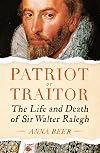
When you actually sit down and think about, what exactly did Sir Walter Ralegh actually do to deserve almost being a household name in today’s world? You are more likely to have heard of him than Robert Cecil. He is one of the famous prisoners of the Tower of London, isn’t he? Thankfully, Anna Beer’s new book partially answers that question. In fact, she answers it as much as is humanly possible.
The book is less an examination of show more whether Ralegh was a traitor but how much he truly relied on self-promotion and proclamation. It is about treading the minefields that were political life in both Elizabeth and early Jacobean English court history.
While it is helpful to have a working knowledge of English history during the closing years of Elizabeth’s reign and the beginning of James, Beer’s writing is very engaging, and the pace is lively. The chapters each deal an aspect of Ralegh – solider, husband, and on – and what is undoubtedly more engrossing than a simpler linear biography.
What really sells the book are the subtle, at times funny, asides, such her musing about a codpiece, and her ability to not see her subject through rose-colored glasses. There are examinations of Ralegh’s various relationships – in particular with his wife and with his rivals. While one can’t say a better knowing of Ralegh as a man is a result of this book, one does get a better idea of how when he lived affected him. It doesn’t make Ralegh into your drinking mate, but it deepens your understanding. show less
When you actually sit down and think about, what exactly did Sir Walter Ralegh actually do to deserve almost being a household name in today’s world? You are more likely to have heard of him than Robert Cecil. He is one of the famous prisoners of the Tower of London, isn’t he? Thankfully, Anna Beer’s new book partially answers that question. In fact, she answers it as much as is humanly possible.
The book is less an examination of show more whether Ralegh was a traitor but how much he truly relied on self-promotion and proclamation. It is about treading the minefields that were political life in both Elizabeth and early Jacobean English court history.
While it is helpful to have a working knowledge of English history during the closing years of Elizabeth’s reign and the beginning of James, Beer’s writing is very engaging, and the pace is lively. The chapters each deal an aspect of Ralegh – solider, husband, and on – and what is undoubtedly more engrossing than a simpler linear biography.
What really sells the book are the subtle, at times funny, asides, such her musing about a codpiece, and her ability to not see her subject through rose-colored glasses. There are examinations of Ralegh’s various relationships – in particular with his wife and with his rivals. While one can’t say a better knowing of Ralegh as a man is a result of this book, one does get a better idea of how when he lived affected him. It doesn’t make Ralegh into your drinking mate, but it deepens your understanding. show less
 This review was written for LibraryThing Early Reviewers.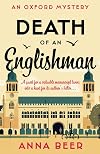
I received a copy of this novel from the publisher via NetGalley.
This started put well for me: I like an Oxford setting, and I thought the character of the protagonist Eve was well-drawn and fully rounded. She had actual friends, an interesting job, a relationship with her daughter, feminist principles, and persevered in taking public transport wherever she went. But... then, instead of doing her job (which had initially been to finish off and get ready for publication a book by a sort of show more Jordan Peterson type, the recently dead David Morrow, and which then morphed into discovering if he had indeed written a word of the book before his death) she decides there is something off about Morrow's death and that it is her responsibility to get to the bottom of things. To this end she travels all around England and to France, stirring things up with all Morrow's family and contacts, keeping secrets and spilling secrets and suspecting everyone of nebulous things.
Even setting aside the strangeness of what she is doing, at about the 50% mark the narrative got really bogged down. Eve would go on a journey and thrash things out in her own mind and then she would do it again, and then again and so on. The ending was an anticlimax and also the sort of ending of which I disapprove. A pity, as I liked the writing and I liked Eve. show less
This started put well for me: I like an Oxford setting, and I thought the character of the protagonist Eve was well-drawn and fully rounded. She had actual friends, an interesting job, a relationship with her daughter, feminist principles, and persevered in taking public transport wherever she went. But... then, instead of doing her job (which had initially been to finish off and get ready for publication a book by a sort of show more Jordan Peterson type, the recently dead David Morrow, and which then morphed into discovering if he had indeed written a word of the book before his death) she decides there is something off about Morrow's death and that it is her responsibility to get to the bottom of things. To this end she travels all around England and to France, stirring things up with all Morrow's family and contacts, keeping secrets and spilling secrets and suspecting everyone of nebulous things.
Even setting aside the strangeness of what she is doing, at about the 50% mark the narrative got really bogged down. Eve would go on a journey and thrash things out in her own mind and then she would do it again, and then again and so on. The ending was an anticlimax and also the sort of ending of which I disapprove. A pity, as I liked the writing and I liked Eve. show less
I'm writing this review with mixed feelings, not because I can't make up my mind if this book is good or not, it is in fact quite good. Instead the contents of this work of descriptive history needs to be evaluated against modern approaches to teaching history. I'm going to try to explain what I mean by that.
When you're writing a novel you want to begin with a bang, you want to make the reader interested. It's a modern approach to fiction writing we can trace back to Goethe and his short show more novel: The Suffering of Young Werther. That novel starts with: I'm so glad I don't ever have to be here again. It puts you right in the scene and sets up the mood of everything that follows. Later on novelists and especially screenwriters have picked this up and refined it to an art. E.g. if you can't engage a movie audience in the first 10 minutes you've lost them.
In this book about Sir Walter Ralegh, by Anna Beer, the same approach is used. We immediately learn in graphic detail how the protagonist meets his ending. So the question is: does the effect of starting with a bang work for non-fiction as well? I think it does, even though I don't like that it does. Chances are I'm too old and set in my ways to appreciate what this format can do for learning about historical facts, but it felt too forced, too on the nose. It does work though, it does get you engaged and connected to a human being who lived a very long time ago in a period where daily life was a lot more brutal to say the least.
Ironically the author goes against the 'novel' approach of the book by adding lots of detail that gets in the way and doesn't add to our knowledge of who this person Ralegh was. This could easily have been fixed by using footnotes and end notes. Providing a listing of names who were involved in certain event in Ralegh's life, although historically relevant, gets in the way of following the narrative. At some point you simply read over it because trying to remember all those names simply doesn't work and doesn't help.
Overall I appreciated the human aspects and approach. This otherwise abstract from long ago became a crisp clear individual in my mind. As such I think some of the extrapolations and interpretations the author makes are fully warranted. More so because they are noted and indicated.
We're living in an age where the skill of writing is applied to otherwise dry subjects like history. I wish all high school history books were written in the same style and manner as this biography. show less
When you're writing a novel you want to begin with a bang, you want to make the reader interested. It's a modern approach to fiction writing we can trace back to Goethe and his short show more novel: The Suffering of Young Werther. That novel starts with: I'm so glad I don't ever have to be here again. It puts you right in the scene and sets up the mood of everything that follows. Later on novelists and especially screenwriters have picked this up and refined it to an art. E.g. if you can't engage a movie audience in the first 10 minutes you've lost them.
In this book about Sir Walter Ralegh, by Anna Beer, the same approach is used. We immediately learn in graphic detail how the protagonist meets his ending. So the question is: does the effect of starting with a bang work for non-fiction as well? I think it does, even though I don't like that it does. Chances are I'm too old and set in my ways to appreciate what this format can do for learning about historical facts, but it felt too forced, too on the nose. It does work though, it does get you engaged and connected to a human being who lived a very long time ago in a period where daily life was a lot more brutal to say the least.
Ironically the author goes against the 'novel' approach of the book by adding lots of detail that gets in the way and doesn't add to our knowledge of who this person Ralegh was. This could easily have been fixed by using footnotes and end notes. Providing a listing of names who were involved in certain event in Ralegh's life, although historically relevant, gets in the way of following the narrative. At some point you simply read over it because trying to remember all those names simply doesn't work and doesn't help.
Overall I appreciated the human aspects and approach. This otherwise abstract from long ago became a crisp clear individual in my mind. As such I think some of the extrapolations and interpretations the author makes are fully warranted. More so because they are noted and indicated.
We're living in an age where the skill of writing is applied to otherwise dry subjects like history. I wish all high school history books were written in the same style and manner as this biography. show less
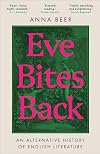
This was a really fascinating mix of biography and literary criticism of a select group of women writers. I knew the names of all but only had real familiarity with Austen, but I’m definitely interested in learning more. The author does a great job at placing them in their times and how it could have affected their words. I tend to enjoy more speculative biography and so had fun most with the Julian of Norwich and Margery Kempe chapter (since there’s almost nothing known about them show more besides their written words). show less
Lists
Awards

You May Also Like


Associated Authors
Statistics
- Works
- 8
- Also by
- 1
- Members
- 629
- Popularity
- #40,057
- Rating
- 3.7
- Reviews
- 32
- ISBNs
- 30
- Languages
- 2
