
John Stubbs (1) (1977–)
Author of John Donne: The Reformed Soul: A Biography
For other authors named John Stubbs, see the disambiguation page.
About the Author
John Stubbs received his PhD in Renaissance literature from Cambridge University. His biography John Donne: The Reformed Soul was shortlisted for the Costa Award and won a Royal Society of Literature Jerwood Award. He lives in Slovenia.
Works by John Stubbs
Tagged
Common Knowledge
- Birthdate
- 1977
- Gender
- male
- Education
- Hele's School, Plymouth
University of Oxford (English Literature|1996-1999)
University of Cambridge (PhD|Renaissance Literature|2005) - Occupations
- biographer
high school teacher - Organizations
- Oxford University
Bezigrad High School - Awards and honors
- Royal Society of Literature Jerwood Award
- Nationality
- UK
- Birthplace
- Leicestershire, England, UK
- Places of residence
- Plymouth, Devon, England, UK
Slovenia
Dalmation coast, Croatia - Associated Place (for map)
- England, UK
Members
Reviews
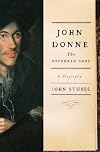
I often find fault with subtitles for the eye-rolling breathlessness they seem to lend to a book's cover (...The Fair That Changed America, The Men Who Made America Rich, ...The Election That Changed the Country, The Drink That Changed the World, Five Friends Whose Curiosity Changed the World, &c.). You get the point. The subtitle to John Stubbs' new biography of poet and cleric John Donne, however, is well chosen and utterly without hyperbole. John Donne: The Reformed Soul is the story of a show more man whose life, whose very soul, was indeed reformed, reshaped, reborn - in many and various ways, no less - over the course of his earthly existence.
Stubbs says it best, in a closing chapter: "For almost sixty years, Donne ... survived by altering. He had transformed himself from a closeted Catholic, as boy and youth, to a government secretary; from social outcast, after he married, to a pillar of the community, as a priest; from avant-garde poet, in his writing, to a popular preacher" (p. 442). Donne, who saw his brother persecuted to death for clinging to the Catholic faith, became a staunch defender of Anglicanism and dean of St. Paul's. The man who wrote the barely-veiled lines "License my roving hands, and let them go, / Before, behind, between, above, below" as a youthful poet, who married for love and came close to committing professional suicide by doing so would, in his bereavement, preach a marriage sermon in which he called that sacrament "but a continuall fornication sealed with an oath" (p. 350).
Donne mellowed on that last point within a year or so, to be fair, but his life, as Stubbs vibrantly recounts, was indeed a life of reformation. As his nation and the world changed around him, Donne changed as well.
This is the second exhaustive biography I've read in the last month or so that has brought a historical figure I hadn't known much about to life for me (the other was Hugh Brogan's Alexis de Tocqueville, which I reviewed here). Stubbs does an admirable job of fleshing out Donne's life and works, though it is the life with which he concerns himself primarily. Michael Dirda and Thomas Mallon point out in their reviews that Stubbs may be too quick to glean autobiographical details from Donne's poetry, but these usages seem to be tactfully done and appropriately hedged so as to make them unobjectionable. The research is thorough, and the notes and bibliography are both reasonably comprehensive and useful. Like the Brogan book, this no breezy weekend read, but it too will reward your attention.
http://philobiblos.blogspot.com/2007/05/book-review-john-donne-reformed-soul.htm... show less
Stubbs says it best, in a closing chapter: "For almost sixty years, Donne ... survived by altering. He had transformed himself from a closeted Catholic, as boy and youth, to a government secretary; from social outcast, after he married, to a pillar of the community, as a priest; from avant-garde poet, in his writing, to a popular preacher" (p. 442). Donne, who saw his brother persecuted to death for clinging to the Catholic faith, became a staunch defender of Anglicanism and dean of St. Paul's. The man who wrote the barely-veiled lines "License my roving hands, and let them go, / Before, behind, between, above, below" as a youthful poet, who married for love and came close to committing professional suicide by doing so would, in his bereavement, preach a marriage sermon in which he called that sacrament "but a continuall fornication sealed with an oath" (p. 350).
Donne mellowed on that last point within a year or so, to be fair, but his life, as Stubbs vibrantly recounts, was indeed a life of reformation. As his nation and the world changed around him, Donne changed as well.
This is the second exhaustive biography I've read in the last month or so that has brought a historical figure I hadn't known much about to life for me (the other was Hugh Brogan's Alexis de Tocqueville, which I reviewed here). Stubbs does an admirable job of fleshing out Donne's life and works, though it is the life with which he concerns himself primarily. Michael Dirda and Thomas Mallon point out in their reviews that Stubbs may be too quick to glean autobiographical details from Donne's poetry, but these usages seem to be tactfully done and appropriately hedged so as to make them unobjectionable. The research is thorough, and the notes and bibliography are both reasonably comprehensive and useful. Like the Brogan book, this no breezy weekend read, but it too will reward your attention.
http://philobiblos.blogspot.com/2007/05/book-review-john-donne-reformed-soul.htm... show less
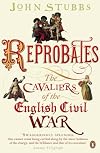
This book left me with the impression of a literature grad student wandering around a 17th-century battlefield. I'm not certain exactly what the author was trying to accomplish, but I felt like I was reading a strange mixture of literary history and military history along with 17th-century politics. I know the basics of 17th-century Britain, so I wasn't completely lost, but I struggled with this book. The author's passion clearly lies with the literary figures of this era, but for the life show more of me, I could understand why these men (they were all men) had been chosen for inclusion and also why others were passed over. The way the history unfolded feels barely coherent - the dramatic politics and battles of the English Civil War emerge as background noise to literary pursuits. I'm not a specialist in the 17th-century British literature, so it's quite possible I missed some brilliant insights, but those more interested in the history of this era would be better served by other books. show less
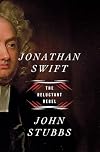
This must, perforce, be an interim review. The book, while eminently readable, and rather well-written, is an old-style, comprehensive biography. It lays out in great detail the political scene, begins with Swift's grandparents, speculates on the psychological effects of early childhood experiences, and so forth. I have decided to take a break.
When I first saw its size, I was daunted. I felt I didn't actually know much about Swift, and it seemed a big step from virtual ignorance to this show more biography. But it turns out that I know a bit more than I thought. In my youth, and several times since, I read "Mistress Masham's Repose", by T. H. White, and now that I'm reading this book, I realize more and more the importance of Swift in the shaping of White's work. Although Swift may not be mentioned explicitly in "Mistress Masham's Repose", I think he is alluded to constantly.
My previous knowledge of Swift amounted to:
1. Author of "Gulliver's Travels". I never read this book, but I did read portions of it in illustrated stories for children. It is alluded to frequently in "Mistress Masham's Repose".
2. I read "A Modest Proposal" in high school, and can't remember much.
3. I knew that Swift had an anti-science bent, wrote "The Battle of the Books", and lampooned scientists in "Gulliver's Travels" with his floating island of Laputa. I learned all this by reading "The Invention of Science".
But it turns out that this book is also a pretty comprehensive history and that Swift lived during a period in English and Irish history with which I am somewhat familiar. The reigns of William of Orange and Charles II are familiar to anybody who has read Neal Stephenson's "System of the World" and the career of the Duke of Marlborough is well known to one who has watched "The First Churchills".
I knew absolutely nothing about Swift, but I knew a lot about his time, and other figures, so there was really plenty of framework for Swift's life. The book, although long and full of detail and incident, is an engrossing read. show less
When I first saw its size, I was daunted. I felt I didn't actually know much about Swift, and it seemed a big step from virtual ignorance to this show more biography. But it turns out that I know a bit more than I thought. In my youth, and several times since, I read "Mistress Masham's Repose", by T. H. White, and now that I'm reading this book, I realize more and more the importance of Swift in the shaping of White's work. Although Swift may not be mentioned explicitly in "Mistress Masham's Repose", I think he is alluded to constantly.
My previous knowledge of Swift amounted to:
1. Author of "Gulliver's Travels". I never read this book, but I did read portions of it in illustrated stories for children. It is alluded to frequently in "Mistress Masham's Repose".
2. I read "A Modest Proposal" in high school, and can't remember much.
3. I knew that Swift had an anti-science bent, wrote "The Battle of the Books", and lampooned scientists in "Gulliver's Travels" with his floating island of Laputa. I learned all this by reading "The Invention of Science".
But it turns out that this book is also a pretty comprehensive history and that Swift lived during a period in English and Irish history with which I am somewhat familiar. The reigns of William of Orange and Charles II are familiar to anybody who has read Neal Stephenson's "System of the World" and the career of the Duke of Marlborough is well known to one who has watched "The First Churchills".
I knew absolutely nothing about Swift, but I knew a lot about his time, and other figures, so there was really plenty of framework for Swift's life. The book, although long and full of detail and incident, is an engrossing read. show less
 This review was written for LibraryThing Early Reviewers.
This wasn't a horrible book, but it was far too exhaustive for my interest level. Stubbs gives us every detail he possibly can and in the process loses his thesis about Swift being a reluctant rebel.
That thread is still in the book, but it really gets lost in the trees. I also found Swift pretty darn annoying, which I'm sure colored my feelings. If you're looking for a comprehensive biography, this is that. Whether it's the best out there I can't say, and I'm not really willing to show more investigate it at this point!
I wouldn't really recommend it for the casual reader, but your mileage may vary. show less
That thread is still in the book, but it really gets lost in the trees. I also found Swift pretty darn annoying, which I'm sure colored my feelings. If you're looking for a comprehensive biography, this is that. Whether it's the best out there I can't say, and I'm not really willing to show more investigate it at this point!
I wouldn't really recommend it for the casual reader, but your mileage may vary. show less
This review was written for LibraryThing Early Reviewers.Lists
Review 4 (1)
Awards


You May Also Like


Statistics
- Works
- 3
- Members
- 557
- Popularity
- #44,821
- Rating
- 3.8
- Reviews
- 13
- ISBNs
- 25
- Favorited
- 1
