
Stéphane Hessel (1917–2013)
Author of Time for Outrage: Indignez-vous!
About the Author
Stéphane Hessel was born in Berlin, Germany in 1917. During World War II, he joined the resistance movement. In March 1944, he was on a mission to contact underground activists in Paris, but was captured and tortured by waterboarding. He survived by giving out false information and was sent to show more Buchenwald concentration camp. He escaped hanging by exchanging identities with a French soldier who had died of typhoid fever. He was then sent to a different camp, where he managed to escape and return to Paris, which had by then been liberated. After the war, he became a diplomat, working as an official for the United Nations, where he participated in the drafting of the Universal Declaration of Human Rights, which was adopted in 1948. He later held diplomatic posts in Algeria and Vietnam. He wrote or contributed to several books including Danse Avec le Siècle (Dance with the Century) and Indignez-Vous! (Time for Outrage!). He died on February 26, 2013 at the age of 95. (Bowker Author Biography) show less
Image credit: Stéphane Hessel, 2010. Photo by Marie-Lan Nguyen / Wikimedia Commons.
Works by Stéphane Hessel
The Power of Indignation: The Autobiography of the Man Who Inspired the Arab Spring (2011) 22 copies, 1 review
Dalla parte giusta: Un secolo di passione civile nella testimonianza di un grande protagonista (2011) 3 copies
Le Rescapé et l'Exilé. Israël-Palestine, une exigence de justice (NON FICTION) (French Edition) (2012) 2 copies
¡INDIGNAOS| 1 copy
Stéphane Hessel: les perspectives d'un engagement: [Actes du colloque organisé à Grenoble le 14 janvier 2020] (2020) — Honoree — 1 copy
Empenhai-vos! 1 copy
Associated Works
Walking in Berlin: A Flaneur in the Capital (1929) — Introduction, some editions — 156 copies, 1 review
Tagged
Common Knowledge
- Canonical name
- Hessel, Stéphane
- Other names
- HESSEL, Stephane Frederic
HESSEL, Stéphane - Birthdate
- 1917-10-20
- Date of death
- 2013-02-26
- Gender
- male
- Occupations
- diplomat
- Organizations
- French Resistance
- Awards and honors
- Grand Cross of the Ordre National du Merite (1999)
Grand Officer of the Legion of Honor (2006) - Relationships
- Hessel-Chabry, Christiane (wife)
Hessel, Franz (father) - Nationality
- France
Germany (birth) - Birthplace
- Berlin, Germany
- Place of death
- Paris, France
- Map Location
- France
Members
Discussions
Indignez-vous ! de Stéphane Hessel in Lectures des francophones (June 2011)
Reviews

Stéphane Hessel lived for nearly a century and almost everything he achieved in that time was extraordinary. He fought in the French Resistance; he was captured by the Nazis, sent to Buchenwald, waterboarded; he was in the room as they drafted the Universal Declaration of Human Rights. Not the least of his achievements was Indignez-vous!.
Who would have believed that a 30-page political pamphlet written by a nonagenarian diplomat would be translated into 15 languages, and spark protest show more movements across the world? This was the essay that was poking out of the pockets of students in Tunis and Basra, and it was one of the direct influences on the Occupy movement in the US.
He was amazed by its success, but it came at the right time. Unlike many more important political thinkers, Hessel wrote essays rather than tomes; and instead of post-modern jargon his sentences have the simplicity of experience: he lived through it all and had nothing to prove. Even those who disagreed most strongly with him granted him that much.
For a man in his nineties he is refreshingly un-mellow. He is pissed-off about the state of the world, and his point is that you should be too. It may have been more clear-cut to face the Nazis than to face modern politcal elites, but that doesn't mean there are fewer things to be outraged over today. Hessel touches on three areas which particularly exercise his fury – the growing gap between rich and poor, the treatment of immigrants, and the fate of the Palestinians – but the main thing is that you find something that annoys you, and focus on it. That is how changes are made. La pire des attitudes est l'indifference: the worst attitude is indifference.
Hessel was an optimist, not a doom-monger. The necessity of hope is part of the point of Indignez-vous! and one of its most appealing features – and god knows it's good to see that this stance is not just the preserve of the young. Admittedly, some people have taken Hessel's message in some odd directions, but for him the specific targets were secondary to the fact of provoking a reaction. Idealism and political naïveté might be irritating, but they are infinitely preferable to not caring at all. show less
Who would have believed that a 30-page political pamphlet written by a nonagenarian diplomat would be translated into 15 languages, and spark protest show more movements across the world? This was the essay that was poking out of the pockets of students in Tunis and Basra, and it was one of the direct influences on the Occupy movement in the US.
He was amazed by its success, but it came at the right time. Unlike many more important political thinkers, Hessel wrote essays rather than tomes; and instead of post-modern jargon his sentences have the simplicity of experience: he lived through it all and had nothing to prove. Even those who disagreed most strongly with him granted him that much.
For a man in his nineties he is refreshingly un-mellow. He is pissed-off about the state of the world, and his point is that you should be too. It may have been more clear-cut to face the Nazis than to face modern politcal elites, but that doesn't mean there are fewer things to be outraged over today. Hessel touches on three areas which particularly exercise his fury – the growing gap between rich and poor, the treatment of immigrants, and the fate of the Palestinians – but the main thing is that you find something that annoys you, and focus on it. That is how changes are made. La pire des attitudes est l'indifference: the worst attitude is indifference.
Hessel was an optimist, not a doom-monger. The necessity of hope is part of the point of Indignez-vous! and one of its most appealing features – and god knows it's good to see that this stance is not just the preserve of the young. Admittedly, some people have taken Hessel's message in some odd directions, but for him the specific targets were secondary to the fact of provoking a reaction. Idealism and political naïveté might be irritating, but they are infinitely preferable to not caring at all. show less

Empört Euch! ist ein 15seitiger Aufruf gegen die Gleichgültigkeit, die in weiten Teilen unserer Gesellschaft grassiert. Der Autor, der sich zeit seines 93jährigen Lebens empört hat und auch Widerstand leistete, vermisst dies heute und fordert mit seiner kurzen Streitschrift seine MitbürgerInnen auf, sich auch heute zu entrüsten und einzusetzen ("Wenn man sich über etwas empört,..., wird man aktiv, stark und engagiert."). Er räumt ein, dass es in den jetzigen Zeiten schwieriger ist show more klar Stellung zu beziehen als im III. Reich, wo der Gegner offensichtlich war. Die politischen und wirtschaftlichen Verhältnisse sind komplexer, nicht jede scheinbar eindeutige Situation stellt sich als derart unstrittig heraus wie man es sich wünsche würde. Dennoch gibt es noch immer genügend Gelegenheiten die die Möglichkeit der Empörung bieten, wie Stéphane Hessel aufführt.
Ich habe mir wohl etwas zuviel von der Lektüre versprochen, denn Empörung allein bringt einen nicht automatisch weiter. Vielmehr erhoffte ich mir Impulse, wie ich und andere diese Empörung konstruktiv einsetzen könnten, sodass nicht nach der ersten Welle der Entrüstung gleich alles wieder verebbt. Wie könnte man die Aufregung nachhaltig kanalisieren? In Bahnen leiten um tatsächliche Veränderungen zu erreichen, ohne dass man gleich seinen Beruf und sein ganzes restliches Leben aufgeben muss? Fragen, die unmittelbar nach der Empörung kommen und noch immer nicht geklärt sind. show less
Ich habe mir wohl etwas zuviel von der Lektüre versprochen, denn Empörung allein bringt einen nicht automatisch weiter. Vielmehr erhoffte ich mir Impulse, wie ich und andere diese Empörung konstruktiv einsetzen könnten, sodass nicht nach der ersten Welle der Entrüstung gleich alles wieder verebbt. Wie könnte man die Aufregung nachhaltig kanalisieren? In Bahnen leiten um tatsächliche Veränderungen zu erreichen, ohne dass man gleich seinen Beruf und sein ganzes restliches Leben aufgeben muss? Fragen, die unmittelbar nach der Empörung kommen und noch immer nicht geklärt sind. show less
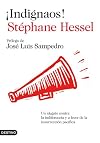
Arenga dirigida, especialmente, a la juventud, panfleto antiliberal, de tendencia socialdemócrata. Con un tono manrriqueño del tipo “...cualquier tiempo pasado fue mejor...” y un estilo “batallitas del abuelo”. La resistencia francesa ante la ocupación alemana en la II Guerra Mundial se mitifica, mostrándola como ejemplo a seguir, culmen de acción y generadora de las mejores instituciones de la posguerra. Hessel olvida que es con esas instituciones con las que se ha llegado a la show more situación actual, claro que se puede argumentar que a pesar de ellas.
A destacar la fe en el ser humano, el convencimiento de la responsabilidad del hombre ante la historia en tanto que individuo y la confianza en la unión de estos en un objetivo común. La visión de la indignación como acicate para el compromiso y no como una pataleta pueril. Ingenuamente sólo vislumbra un camino de acción y compromiso sin contemplar otras posibilidades seguramente menos halagüeñas para el autor. show less
A destacar la fe en el ser humano, el convencimiento de la responsabilidad del hombre ante la historia en tanto que individuo y la confianza en la unión de estos en un objetivo común. La visión de la indignación como acicate para el compromiso y no como una pataleta pueril. Ingenuamente sólo vislumbra un camino de acción y compromiso sin contemplar otras posibilidades seguramente menos halagüeñas para el autor. show less

This is a very short book—more of a pamphlet. Stéphane Hessel has lived an extraordinary life, and in this text he calls for the young people of today to stand up for the rights and freedoms he fought and was tortured for as part of the WWII French Resistance and codified as a member of the UN Human Rights Commission, who drafted the Universal Declaration of Human Rights.
While interesting, and yes, inspiring indignation, the main effect of this book was to make me want to read Hessel's show more memoirs, as he seems to have done EVERYTHING. What a treasure this man is. show less
While interesting, and yes, inspiring indignation, the main effect of this book was to make me want to read Hessel's show more memoirs, as he seems to have done EVERYTHING. What a treasure this man is. show less
Lists
Awards

You May Also Like


Associated Authors
Statistics
- Works
- 36
- Also by
- 3
- Members
- 1,433
- Popularity
- #17,953
- Rating
- 3.4
- Reviews
- 62
- ISBNs
- 116
- Languages
- 15
- Favorited
- 1