
Heather Havrilesky
Author of What If This Were Enough? Essays
About the Author
Heather Havrilesky was a TV critic at Salon for seven years. She has written for New York magazine, The New York Times Book Review, the Los Angeles Times, The New York Times Magazine, Bookforum, The New Yorker, and NPR's All Things Considered. Her books include the memoir Disaster Preparedness and show more How to Be a Person in the World: Ask Polly's Guide Through the Paradoxes of Modern Life. (Bowker Author Biography) show less
Image credit: Author Heather Havrilesky at the 2018 Texas Book Festival in Austin, Texas, United States. By Larry D. Moore - Own work, CC BY-SA 4.0, https://commons.wikimedia.org/w/index.php?curid=74121933
Works by Heather Havrilesky
How to Be a Person in the World: Ask Polly's Guide Through the Paradoxes of Modern Life (2016) 210 copies, 9 reviews
Associated Works
Neptune Noir: Unauthorized Investigations into Veronica Mars (2007) — Contributor — 231 copies, 3 reviews
Tagged
Common Knowledge
- Canonical name
- Havrilesky, Heather
- Other names
- Polly Esther
- Birthdate
- 1970
- Gender
- female
- Education
- Duke University, North Carolina
- Occupations
- senior writer for Salon.com
writer
blogger
co-creator of Filler at Suck.com
advice columnist (Ask Polly) - Nationality
- USA
- Places of residence
- Silver Lake, California, USA
North Carolina, USA
San Francisco, California, USA - Associated Place (for map)
- California, USA
Members
Reviews
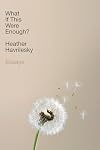
What do Timothy Ferris and Heather Havrilesky have in common? Not that long ago, I hadn't heard of either of them. That's not the answer, just a reflection which it turns out will lead to the answer. It's not even a true statement. I had forgotten who both were but had heard of them. I had reviewed a book in this space (I always wanted to use that phrase!) by chess master and martial arts champion Josh Waitzkin in which Mr. Ferris made an appearance, and I had put one of Ms. Havrilesky's show more earlier books on my "to read" list. That's because they are both sort of famous people and both became that way by telling us how to live. That's what they have in common.
To be fair, Ms. H does so with much more self-reflection personal disclosure and with occasional insecurity which she wishes she didn't have to feel, imagining in the moment that men, e.g. Timothy Ferris, never harbor self-doubt. A second difference is that, outside of a doctor's waiting room, I'd never knowingly choose to read Mr. Ferris, while I actually finished H.H.'s book (though it was touch and go at times.) To be even fairer, in my weaker moments, I have found myself telling people how to live, thus I have a certain sympathy for Ms. Havrilesky's doing so and I imagine that, like me, she also knows better.
I also want to review the actual book at hand and not turn this into a vote for or against her philosophies. It's too easy and not useful to simply oppose consumerism and Trumpism along with the author and rate this book accordingly. It's enjoyable to read the well-composed screeds of those you agree with and mistake that feeling for literary greatness. (If you're the kind of reader who looks for that in choosing a book, I recommend this one to you.)
I'm not being sadistic when I say I found this book at its best when the author was suffering. Not suffering in the masochistic sense, and I don't mean that she suffered through, not just one, but three E. L. James books so that she could deconstruct them for us--going the extra mile for her readers. The suffering I refer to occurred when she found herself swept up in Disney enthusiasm and suddenly realized what had happened, or when she found herself in a bad relationship. In these moments, she joins the rest of us, which is where "her best self" (quoted for irony) wanted to be all along. Her last essay asserts this appreciation for our common humanity as a "way to live" and it feels like she's talking to herself as much as to the reader, reminding us that this is enough. It was the book's title that drew me to it in the first place. I think she blunts this philosophy a bit by bringing in Mozart, as if, though she is careful to deny it, his genius is what makes it enough but I credit that to her own ambivalence which actually adds a certain poignancy as we realize that it's not enough to be told it's enough, even when you're telling your own self and it's the title of your book. show less
To be fair, Ms. H does so with much more self-reflection personal disclosure and with occasional insecurity which she wishes she didn't have to feel, imagining in the moment that men, e.g. Timothy Ferris, never harbor self-doubt. A second difference is that, outside of a doctor's waiting room, I'd never knowingly choose to read Mr. Ferris, while I actually finished H.H.'s book (though it was touch and go at times.) To be even fairer, in my weaker moments, I have found myself telling people how to live, thus I have a certain sympathy for Ms. Havrilesky's doing so and I imagine that, like me, she also knows better.
I also want to review the actual book at hand and not turn this into a vote for or against her philosophies. It's too easy and not useful to simply oppose consumerism and Trumpism along with the author and rate this book accordingly. It's enjoyable to read the well-composed screeds of those you agree with and mistake that feeling for literary greatness. (If you're the kind of reader who looks for that in choosing a book, I recommend this one to you.)
I'm not being sadistic when I say I found this book at its best when the author was suffering. Not suffering in the masochistic sense, and I don't mean that she suffered through, not just one, but three E. L. James books so that she could deconstruct them for us--going the extra mile for her readers. The suffering I refer to occurred when she found herself swept up in Disney enthusiasm and suddenly realized what had happened, or when she found herself in a bad relationship. In these moments, she joins the rest of us, which is where "her best self" (quoted for irony) wanted to be all along. Her last essay asserts this appreciation for our common humanity as a "way to live" and it feels like she's talking to herself as much as to the reader, reminding us that this is enough. It was the book's title that drew me to it in the first place. I think she blunts this philosophy a bit by bringing in Mozart, as if, though she is careful to deny it, his genius is what makes it enough but I credit that to her own ambivalence which actually adds a certain poignancy as we realize that it's not enough to be told it's enough, even when you're telling your own self and it's the title of your book. show less
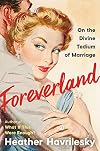
Liberating, Honest, Amazing Honest & Honestly Amazing!
»Forever is two immortal elves, sipping pink champagne by a burbling stream, then exploring the wild, gorgeous woods around them in everlasting harmony. Forever is set in New Zealand, not New Jersey.«
It was around Christmas when I came across Heather Havrilesky’s essay “Marriage Requires Amnesia” (which is an adaptation from this book) (https://www.nytimes.com/2021/12/24/style/marriage-heather-havrilesky-foreverland.html) in the show more New York Times.
In it, Havrileski poignantly describes her 15-year marriage to Bill Sandoval. While reading it, I laughed out loud and I cried and sometimes all of it at the same time.
Being in the 23rd year of my marriage myself, I felt both understood and like gaining a better understanding of my wife.
»But we weren’t married yet, so he still thought he could do whatever he wanted.«
I couldn’t wait to see “Foreverland: On the Divine Tedium of Marriage” released in early February because I was hoping for more of the same. And I got it - to some extent.
Divided into four parts, “Foreverland” reads like the memoir of a relationship - starting at the tumultuous courtship between Heather and Bill, we learn a lot about Heather who tells us precisely who she is and what she craves at the age of 34:
»I wanted a husband. One that looked nice. [...] with a solid career to match my own. I wanted a hunky, square-jawed, mature listener. [...] a nurturing daddy type who would hang on my every word. And I wanted an athlete. [...] an intellectual who was also a comedian, but with a nice ass. I wanted a cross between a therapist and a cowboy.«
This is when she meets Bill, a professor. Who is, as we’re going to learn, hot and incredibly patient and, on the other hand, »he is more or less exactly the same as a heap of laundry: smelly, inert, useless, almost sentient but not quite.« before he had his first coffee (which I can totally relate to!).
Marriage, kids, the suburbs, pestilence and plague follow and are explored in-depth in this wonderfully liberating book. While Havrilesky is both exploring and explaining her marriage, she delivers an unapologetically honest account of both their struggles.
A totally honest Havrilesky dispels the myths of “happily ever after” and marriages without issues.
»I wrote this book to explore that tedium, along with everything else that marriage brings: the feeling of safety, the creeping darkness, the raw fear and suspense of growing older together, the tiny repeating irritations, the rushes of love, the satisfactions of companionship, the unexpected rage of recognizing that your partner will probably never change. And in writing this book, I discovered new layers within my marriage and myself, haunting and chaotic, wretched and unlovable.«
From the small annoyances…
»A simple inquiry—“What are we going to do about dinner?”—incites an existential crisis, the 742nd of its kind since your wedding day.«
… to completely questioning everything…
»I wasn’t sure I wanted to spend forever with anyone, least of all myself.«
… this was a breath of fresh air. A much needed breeze to blow away the fairy tale depictions of love and marriage to create space for a more understanding and a more humane approach.
At times, the book drew out a little - there was a lot of stuff about the kids around the 50% mark and rambling descriptions of life in the suburbs (which seem to be very similar in Western societies, even on different continents…) but at about 70% Havrilesky picks up the pace again and I was laughing tears. When my daughter (20) came along and I let her read some passages, she giggled and triumphantly shouted “That’s YOU, DAD!”.
And I cannot really deny it. In some aspects I’m Bill. If I were the type, I’d get myself a t-shirt saying “I’m Bill”. But, luckily, my wife is also a bit of a Heather. And so am I, too. And she can be a Bill at times.
Maybe you’re going to say, “But my marriage is perfect! My partner farts a scent of roses!”. Well, maybe I’m the odd one out - or maybe you are. Maybe Havrilesky gets it all wrong, I don’t know (it’s just that a lot of it makes sense to me!).
At no point, though, does Havrilesky claim to present any universal truths about marriage. She doesn’t fall prey to making one - her - marriage as a blueprint for all marriages. That’s part of what I like a lot about this book. In fact, she states it clearly:
»This book represents my personal attempt to understand why I signed myself up for the world’s most impossible endurance challenge.«
To me, Havrilesky very much succeeds at that while also rationalising feelings of doubt, “the darkness” as she puts it:
»I wrote this book to explore that tedium, along with everything else that marriage brings: the feeling of safety, the creeping darkness, the raw fear and suspense of growing older together, the tiny repeating irritations, the rushes of love, the satisfactions of companionship, the unexpected rage of recognizing that your partner will probably never change. And in writing this book, I discovered new layers within my marriage and myself, haunting and chaotic, wretched and unlovable.«
Thank you, Heather, for this book! And thank you to you, C., for being my “partner in crime” for all this time and, hopefully, for a long time to come.
Four out of five stars for the book - and an extra one for courage and honesty!
Blog | Facebook | Twitter | Instagram show less
»Forever is two immortal elves, sipping pink champagne by a burbling stream, then exploring the wild, gorgeous woods around them in everlasting harmony. Forever is set in New Zealand, not New Jersey.«
It was around Christmas when I came across Heather Havrilesky’s essay “Marriage Requires Amnesia” (which is an adaptation from this book) (https://www.nytimes.com/2021/12/24/style/marriage-heather-havrilesky-foreverland.html) in the show more New York Times.
In it, Havrileski poignantly describes her 15-year marriage to Bill Sandoval. While reading it, I laughed out loud and I cried and sometimes all of it at the same time.
Being in the 23rd year of my marriage myself, I felt both understood and like gaining a better understanding of my wife.
»But we weren’t married yet, so he still thought he could do whatever he wanted.«
I couldn’t wait to see “Foreverland: On the Divine Tedium of Marriage” released in early February because I was hoping for more of the same. And I got it - to some extent.
Divided into four parts, “Foreverland” reads like the memoir of a relationship - starting at the tumultuous courtship between Heather and Bill, we learn a lot about Heather who tells us precisely who she is and what she craves at the age of 34:
»I wanted a husband. One that looked nice. [...] with a solid career to match my own. I wanted a hunky, square-jawed, mature listener. [...] a nurturing daddy type who would hang on my every word. And I wanted an athlete. [...] an intellectual who was also a comedian, but with a nice ass. I wanted a cross between a therapist and a cowboy.«
This is when she meets Bill, a professor. Who is, as we’re going to learn, hot and incredibly patient and, on the other hand, »he is more or less exactly the same as a heap of laundry: smelly, inert, useless, almost sentient but not quite.« before he had his first coffee (which I can totally relate to!).
Marriage, kids, the suburbs, pestilence and plague follow and are explored in-depth in this wonderfully liberating book. While Havrilesky is both exploring and explaining her marriage, she delivers an unapologetically honest account of both their struggles.
A totally honest Havrilesky dispels the myths of “happily ever after” and marriages without issues.
»I wrote this book to explore that tedium, along with everything else that marriage brings: the feeling of safety, the creeping darkness, the raw fear and suspense of growing older together, the tiny repeating irritations, the rushes of love, the satisfactions of companionship, the unexpected rage of recognizing that your partner will probably never change. And in writing this book, I discovered new layers within my marriage and myself, haunting and chaotic, wretched and unlovable.«
From the small annoyances…
»A simple inquiry—“What are we going to do about dinner?”—incites an existential crisis, the 742nd of its kind since your wedding day.«
… to completely questioning everything…
»I wasn’t sure I wanted to spend forever with anyone, least of all myself.«
… this was a breath of fresh air. A much needed breeze to blow away the fairy tale depictions of love and marriage to create space for a more understanding and a more humane approach.
At times, the book drew out a little - there was a lot of stuff about the kids around the 50% mark and rambling descriptions of life in the suburbs (which seem to be very similar in Western societies, even on different continents…) but at about 70% Havrilesky picks up the pace again and I was laughing tears. When my daughter (20) came along and I let her read some passages, she giggled and triumphantly shouted “That’s YOU, DAD!”.
And I cannot really deny it. In some aspects I’m Bill. If I were the type, I’d get myself a t-shirt saying “I’m Bill”. But, luckily, my wife is also a bit of a Heather. And so am I, too. And she can be a Bill at times.
Maybe you’re going to say, “But my marriage is perfect! My partner farts a scent of roses!”. Well, maybe I’m the odd one out - or maybe you are. Maybe Havrilesky gets it all wrong, I don’t know (it’s just that a lot of it makes sense to me!).
At no point, though, does Havrilesky claim to present any universal truths about marriage. She doesn’t fall prey to making one - her - marriage as a blueprint for all marriages. That’s part of what I like a lot about this book. In fact, she states it clearly:
»This book represents my personal attempt to understand why I signed myself up for the world’s most impossible endurance challenge.«
To me, Havrilesky very much succeeds at that while also rationalising feelings of doubt, “the darkness” as she puts it:
»I wrote this book to explore that tedium, along with everything else that marriage brings: the feeling of safety, the creeping darkness, the raw fear and suspense of growing older together, the tiny repeating irritations, the rushes of love, the satisfactions of companionship, the unexpected rage of recognizing that your partner will probably never change. And in writing this book, I discovered new layers within my marriage and myself, haunting and chaotic, wretched and unlovable.«
Thank you, Heather, for this book! And thank you to you, C., for being my “partner in crime” for all this time and, hopefully, for a long time to come.
Four out of five stars for the book - and an extra one for courage and honesty!
Blog | Facebook | Twitter | Instagram show less
I bought this one because I'd seen Heather Havrilesky's TV and movie reviews and enjoyed her insights, but there's a whole lot more going on in "What If This Were Enough?" than I bargained for. Havrilesky has a special talent for seeing through the distracting nonsense that fills our super-connected everyday to the logical endgame of much of modern American capitalism. The author seems to have a special talent for nosing out the creeping, discomfiting angst that lurks behind a lot of the show more institutions of the still relatively new internet age, whether it's guru culture or internet nostalgia or life-hacking or luxury living. The endless choices and opportunities for communication that the internet has facilitated has, in her view, skewed both our conceptions of ourselves and our values: the opportunity to live your "best life" can lead to success, but it can also make you feel lonely and alienated, and, should you not get to where you want to be, ashamed. Her central message, which is reiterated throughout this book, is that many of these media environments are more-or-less designed to make us feel weak, needy, insufficient and alienated, and that surviving them takes the courage to push back against the hidden assumptions that they make. Considering that techno-utopianism seems to have had a rough couple of years and many Americans still feel uncertain about both their economic futures and their value in a rapidly changing economy, this might be a message that a lot of people would benefit from hearing. Frankly, I'm probably one of those people myself. I reread several of these essays numerous times: the subject matter she was discussing felt familiar to me, but the implications of judging yourself and the world using internet-age metrics can be a hard habit to break. At its very best -- and there are some very good essays in this one -- reading Harvilesky can feel like getting deprogrammed. Maybe everyone who spends a whole lot of time cruising internet newsboards to no real purpose or who dreads looking at their Facebook feed lest they feel badly about themselves when they see that someone they knew at school has gotten married or published a book or something should read this one.
Of course, polemics against the way we live now can also go too far, and there are some places where I think the author might shade into arguments a bit too sentimental to really move a lot of potential readers. She emphasizes the importance of real human connection, but I think that some will doubt that there was every all that much of that to be found among us, even before we all plugged in to the world wide web. She argues passionately that believing in and loving yourself are essential not necessarily to success but to a certain kind of human contentment, and she might be right, but you can push that argument only so hard before your prose gets a bit too purple. Some readers might be put off by Havrilesky's authorial persona. She's protective, and rightly so, of the right to feel melancholy, conflicted, and wistful in a world that increasingly sees these feelings as signs of weakness. Throughout "What If This Were Enough" we see her describe and fight her insecurities, insist on her prerogatives, and try as best she can to celebrate her successes. These essays were never meant to be dry exercises in media criticism, but how you respond to them may depend, at least a little, on how you respond to Havrilesky herself: she has, after all, put a lot of herself into them. That being said, her diagnoses of what a hyperconsumerist society that insists, however subtly, that anything less than perfection constitutes failure and sees ordinary sadness and ambiguity as things to be eliminated as quickly as possible are as insightful and timely as anything I've read in the past few years. I wish that it was a bit higher up LibraryThing's rankings: this one often feels like the sort of book that many of us need right now. show less
Of course, polemics against the way we live now can also go too far, and there are some places where I think the author might shade into arguments a bit too sentimental to really move a lot of potential readers. She emphasizes the importance of real human connection, but I think that some will doubt that there was every all that much of that to be found among us, even before we all plugged in to the world wide web. She argues passionately that believing in and loving yourself are essential not necessarily to success but to a certain kind of human contentment, and she might be right, but you can push that argument only so hard before your prose gets a bit too purple. Some readers might be put off by Havrilesky's authorial persona. She's protective, and rightly so, of the right to feel melancholy, conflicted, and wistful in a world that increasingly sees these feelings as signs of weakness. Throughout "What If This Were Enough" we see her describe and fight her insecurities, insist on her prerogatives, and try as best she can to celebrate her successes. These essays were never meant to be dry exercises in media criticism, but how you respond to them may depend, at least a little, on how you respond to Havrilesky herself: she has, after all, put a lot of herself into them. That being said, her diagnoses of what a hyperconsumerist society that insists, however subtly, that anything less than perfection constitutes failure and sees ordinary sadness and ambiguity as things to be eliminated as quickly as possible are as insightful and timely as anything I've read in the past few years. I wish that it was a bit higher up LibraryThing's rankings: this one often feels like the sort of book that many of us need right now. show less
Last night, after watching the first episode of Babylon Berlin, I fell asleep to the police scanner.
A spurned ex, also a sex offender, had abducted and blown a bullet through the brain of a University of Utah student and dumped her body in a parking lot.
I work at the University of Utah.
My brother goes to the University, and texted me the alerts from New Orleans.
Heather Havrilesky understands this cultural moment — the way that, at its worst, we can pipe in our worst nightmares directly to show more our frontal lobes until we collapse from exhaustion — at a spiritual level.
As I finished this essay collection on the bus, going up Highland Drive, then 1300 East, a rainbow appeared out the window, which is definitely not a sign from God that now we'll pass sensible gun control laws (because this nation hates women more than it loves guns, to quote BoJack Horseman S4), but was lovely nonetheless.
And below it was a billboard.
For Fat Boy ice cream sandwiches.
With the hashtag:
#YouDeserveIt
You deserve it, you worthless collection of sentient nuclei, every moment of anxiety and self-doubt and nagging sense if you log into Tinder that you could be bludgeoned in an alley and someone, somewhere would wonder what you were wearing.
Hooray cardboard-like "ice cream" "sandwiches!"
I looked at the Smokes & Vapors shop to my right, the Nielsen's frozen custard shop to my left, and suddenly everything seemed pointless and ugly, in a way I think Havrilesky would recognize as valid.
Then, I came to her final essay, with its highlight of [b: Angle of Repose|292408|Angle of Repose|Wallace Stegner|https://images.gr-assets.com/books/1329151576s/292408.jpg|283706] as among the accomplishments that make life feel worth living.
And it came together, why she got it.
I knew from her Ask Polly column and [b: How to Be a Person in the World|27065373|How to Be a Person in the World Ask Polly's Guide Through the Paradoxes of Modern Life|Heather Havrilesky|https://images.gr-assets.com/books/1453058078s/27065373.jpg|47105785] that like [a: Wallace Stegner|157779|Wallace Stegner|https://images.gr-assets.com/authors/1252177524p2/157779.jpg], like me, she had lost a parent in her mid-twenties.
That changes you. I've hit year six of the After, and I see every day the subtle ways it shapes your consciousness.
At its best, it can make you more open hearted, more attuned to life's fragility and therefore its beauty.
At its worst, it can crush you in your loneliness, in how lost you feel at 25, 26, 30 on a road where you feel largely alone.
I realized my bus was on a road Stegner himself traveled often, and yet again, I felt so lucky.
I got off at my stop for my writing group, took the Draw as they call it under 1300 East from Sugar House Park to the shopping center.
And this park, Hidden Hollow, which when I was a child was mostly known for drug paraphernalia, felt storybook beautiful.
The late afternoon sun broke through the golden leaves, and kids were playing on the bridge, and I thought, prompted by the sum total of Heather's philosophy:
What if these are in fact the best conditions in which to write? What if being a writer is what I was meant to be all along?
As if to hammer home the book's points, a sign in the Hollow referenced "Appreciating messiness," and a quote by City Parks Idealist R. E. Sleater from 1922 laid out its vision for"natural rather than artificial beauty."
This didn't feel like empty Rousseauian nonsense to me at that moment. It felt like women have been routinely silenced, ignored, even slaughtered, and I was connected to a smart, funny, and weird one through something she invented in her mind.
Stegner was from a poverty-riddled background. He spent time in an orphanage in Seattle. He didn't seem destined for literary greatness. He worked his way through the University of Utah in a tile store.
He thought he might just sell tile the rest of his life; it was the belief of a handful of professors who believed in him that set him on his path.
He wasn't particularly religious, but had an unwavering faith in himself.
I emerged from the Hollow to my well-trod corner of suburbia, specifically Whole Foods, which I frequent because it takes Apple Pay and I like it and it was on the way.
My notes for this review were stained with pepperoni grease, and "I Will Survive" by Gloria Gaynor was piped in.
It felt like second-wave feminism was giving the finger to the forces trying to destroy women before death inevitably comes for us all.
We can't crumple, we can't lay down and die.
Another dessert, another hashtag:
#makesmewhole
I mean can an apple galette solve this? Probs not, but it did look tasty.
"The piano player's playing 'This Must Be the Place'
And it's a miracle to be alive."
No angel came and told Stegner or Havrilesky they had to write, to avenge the injustices of unstable childhoods and dead parents through spilled ink.
It feels even more noble, in a way, that they just did it.
I'm glad they did.
Stegner wrote this in "It Is the Love of Books I Owe Them:"
Laura McCluskey's vigil is at the Park Building.
I'm reading those last pages of [b: All the Little Live Things|10805|All the Little Live Things|Wallace Stegner|https://images.gr-assets.com/books/1442665463s/10805.jpg|949594], and I can't stop the tears.
I think Heather would understand. show less
A spurned ex, also a sex offender, had abducted and blown a bullet through the brain of a University of Utah student and dumped her body in a parking lot.
I work at the University of Utah.
My brother goes to the University, and texted me the alerts from New Orleans.
Heather Havrilesky understands this cultural moment — the way that, at its worst, we can pipe in our worst nightmares directly to show more our frontal lobes until we collapse from exhaustion — at a spiritual level.
As I finished this essay collection on the bus, going up Highland Drive, then 1300 East, a rainbow appeared out the window, which is definitely not a sign from God that now we'll pass sensible gun control laws (because this nation hates women more than it loves guns, to quote BoJack Horseman S4), but was lovely nonetheless.
And below it was a billboard.
For Fat Boy ice cream sandwiches.
With the hashtag:
#YouDeserveIt
You deserve it, you worthless collection of sentient nuclei, every moment of anxiety and self-doubt and nagging sense if you log into Tinder that you could be bludgeoned in an alley and someone, somewhere would wonder what you were wearing.
Hooray cardboard-like "ice cream" "sandwiches!"
I looked at the Smokes & Vapors shop to my right, the Nielsen's frozen custard shop to my left, and suddenly everything seemed pointless and ugly, in a way I think Havrilesky would recognize as valid.
Then, I came to her final essay, with its highlight of [b: Angle of Repose|292408|Angle of Repose|Wallace Stegner|https://images.gr-assets.com/books/1329151576s/292408.jpg|283706] as among the accomplishments that make life feel worth living.
And it came together, why she got it.
I knew from her Ask Polly column and [b: How to Be a Person in the World|27065373|How to Be a Person in the World Ask Polly's Guide Through the Paradoxes of Modern Life|Heather Havrilesky|https://images.gr-assets.com/books/1453058078s/27065373.jpg|47105785] that like [a: Wallace Stegner|157779|Wallace Stegner|https://images.gr-assets.com/authors/1252177524p2/157779.jpg], like me, she had lost a parent in her mid-twenties.
That changes you. I've hit year six of the After, and I see every day the subtle ways it shapes your consciousness.
At its best, it can make you more open hearted, more attuned to life's fragility and therefore its beauty.
At its worst, it can crush you in your loneliness, in how lost you feel at 25, 26, 30 on a road where you feel largely alone.
I realized my bus was on a road Stegner himself traveled often, and yet again, I felt so lucky.
I got off at my stop for my writing group, took the Draw as they call it under 1300 East from Sugar House Park to the shopping center.
And this park, Hidden Hollow, which when I was a child was mostly known for drug paraphernalia, felt storybook beautiful.
The late afternoon sun broke through the golden leaves, and kids were playing on the bridge, and I thought, prompted by the sum total of Heather's philosophy:
What if these are in fact the best conditions in which to write? What if being a writer is what I was meant to be all along?
As if to hammer home the book's points, a sign in the Hollow referenced "Appreciating messiness," and a quote by City Parks Idealist R. E. Sleater from 1922 laid out its vision for"natural rather than artificial beauty."
This didn't feel like empty Rousseauian nonsense to me at that moment. It felt like women have been routinely silenced, ignored, even slaughtered, and I was connected to a smart, funny, and weird one through something she invented in her mind.
Stegner was from a poverty-riddled background. He spent time in an orphanage in Seattle. He didn't seem destined for literary greatness. He worked his way through the University of Utah in a tile store.
He thought he might just sell tile the rest of his life; it was the belief of a handful of professors who believed in him that set him on his path.
He wasn't particularly religious, but had an unwavering faith in himself.
I emerged from the Hollow to my well-trod corner of suburbia, specifically Whole Foods, which I frequent because it takes Apple Pay and I like it and it was on the way.
My notes for this review were stained with pepperoni grease, and "I Will Survive" by Gloria Gaynor was piped in.
It felt like second-wave feminism was giving the finger to the forces trying to destroy women before death inevitably comes for us all.
We can't crumple, we can't lay down and die.
Another dessert, another hashtag:
#makesmewhole
I mean can an apple galette solve this? Probs not, but it did look tasty.
"The piano player's playing 'This Must Be the Place'
And it's a miracle to be alive."
No angel came and told Stegner or Havrilesky they had to write, to avenge the injustices of unstable childhoods and dead parents through spilled ink.
It feels even more noble, in a way, that they just did it.
I'm glad they did.
Stegner wrote this in "It Is the Love of Books I Owe Them:"
I am coming along Thirteenth East on my way to an eight o’clock class. It is a marvelous morning – it is always a marvelous morning, whether the air is hazy with autumn and the oakbrush on the Wasatch has gone bronze and gold, or whether the chestnut trees along the street are coned with blossoms ... I am enveloped in a universal friendliness. I turn at the drugstore on Second South and start uphill toward the Park Building at the head of the U drive.
Laura McCluskey's vigil is at the Park Building.
I'm reading those last pages of [b: All the Little Live Things|10805|All the Little Live Things|Wallace Stegner|https://images.gr-assets.com/books/1442665463s/10805.jpg|949594], and I can't stop the tears.
I think Heather would understand. show less
Lists
Awards


You May Also Like


Associated Authors
Statistics
- Works
- 6
- Also by
- 3
- Members
- 699
- Popularity
- #36,216
- Rating
- 3.7
- Reviews
- 34
- ISBNs
- 28