
Aleksandar Hemon
Author of The Lazarus Project
About the Author
Aleksandar Hemon was born in Sarajevo. He lives in Chicago. (Bowker Author Biography)
Image credit: By Slowking4 - https://www.flickr.com/photos/73455099@N07/48659500083/, CC BY-SA 2.0, https://commons.wikimedia.org/w/index.php?curid=83848349
Series
Works by Aleksandar Hemon
The Kauders Case {story} 2 copies
Accordion {story} 1 copy
Hemon Aleksandar 1 copy
Blind Jozef Pronek {story} 1 copy
The Conductor {story} 1 copy
The Liar {story} 1 copy
Nije ovo tvoje 1 copy
Associated Works
McSweeney's 12: Unpublished, Unknown, and/or Unbelievable (2003) — Contributor — 290 copies, 4 reviews
Fight of the Century: Writers Reflect on 100 Years of Landmark ACLU Cases (2020) — Contributor — 260 copies, 5 reviews
Object Lessons: The Paris Review Presents the Art of the Short Story (2012) — Introduction — 253 copies, 9 reviews
The Matrix Ultimate Collection [2023 boxset] — some editions — 1 copy
Tagged
Common Knowledge
- Birthdate
- 1964-09-09
- Gender
- male
- Education
- University of Sarajevo (Literature, 1990)
Northwestern University (M.A., English Literature) - Occupations
- short story writer
novelist
columnist
critic - Awards and honors
- MacArthur Fellowship (2004)
Guggenheim Fellowship (2003)
Chicago Public Library Foundation's 21st Century Award
Illinois Art Council Literary Award, Fiction ( [1998])
PEN/W.G. Sebald Award (2011)
John Dos Passos Prize (2020) - Nationality
- Bosnia
USA - Birthplace
- Sarajevo, Yugoslavia
- Places of residence
- Sarajevo, Bosnia-Herzegovina (formerly Yugoslavia)
Chicago, Illinois, USA - Map Location
- Bosnia and Herzegovina
Members
Reviews
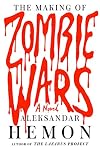
4.5 out of 5. Hemon is having a ball here and it's evident on nearly every page. People keep talking about how "unexpected" the humor is - but even if you go in now expecting it, you'll still laugh. There is a glee to the writing, a glee the author quite clearly felt, that makes it that much more fun for the reader. It might not be a life-changing novel or story about a serious topic - but not all novels need to be. Quote-unquote "serious" authors ought to follow Hemon's lead and have a show more little fun now and then. As he proves, you can still write something heartfelt and thoughtful while making people laugh. I almost feel a little spoiled that this was my first of his novels.
More at RB next week: http://ragingbiblioholism.com/2015/04/13/the-making-of-zombie-wars/ show less
More at RB next week: http://ragingbiblioholism.com/2015/04/13/the-making-of-zombie-wars/ show less
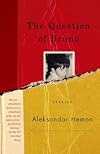
As a Bosnian who now lives in the States and writes in English, Aleksandar Hemon has been compared to Nabokov, Conrad, Kundera and even Hrabal. While these comparisons are, certainly, flattering, it is obvious that they are made simply because these are the cultural references the reviewers or the blurbers associate with the part of the world Hemon comes from. This is a rather pathetic situation that occurs over and over with writers from other parts of the world, especially when their show more “exoticism” goes beyond Western Europe or Latin America. It seems that in order to place them, American reviewers can only use the token touristy data they have about the writer’s so-called “background,” relegating the writer’s makeup to ethnic picturesqueness.
What makes a writer is less the accident of his birth than the books he’s read. From the very first line of “Islands,” the story opening The Question of Bruno, I was struck by its Proustian echoes: something in the sentences’ rhythm, a melancholy or a hard-to-define longing for a lost world, in spite of its bloody history. My intuition was confirmed 200 pages later by the beginning of the last story, “Imitation of Life”: “For a long time I used to go to bed early”—the exact words that open Proust’s In Search of Lost Time. But Hemon continues, “but then my parents finally bought their first TV set.” This sentence, with its reference to one of the most nostalgic moments in the history of literature (Marcel’s remembrance of the paradise lost of his childhood when his mother used to kiss him good night) is emblematic of Hemon’s tightrope walk between romantic nostalgia and literary parody.
The tone and atmosphere change in the second story, “The Life and Work of Alphonse Kauders,” whose irony and dark humor bordering on the absurd represent what one could call an Eastern European sensibility. The story is written in small paragraphs of two to three lines, such as “Alphonse Kauders said: ‘Literature has nothing human in itself. Nor in myself.’” Reading Hemon one can understand that this dark humor and this awareness of the absurd often manifested in a dismantling of language are not gratuitous but are rooted in Eastern Europe’s blood-soaked history. The more insane its history, the more permeated with dark humor it is. One can find this humor in Mikhail Bulgakov’s or Daniil Kharms’s musings on their daily life under the Bolsheviks, as well as in many other writers virtually unknown in this country, who at the turn of the 20th century were writing a literature that was more Kafkaesque than Kafka.
The third in a collection of eight stories, “The Sorge Spy Ring,” is centered on Sorge, a spy the narrator has read about as a child in The Greatest Spies of World War Two. This book may have existed, and Aleksandar Hemon the author (not to be confused with Hemon the character) may have read it; what is certain is that “The Sorge Spy Ring” mixes “real” events with fiction, and uses photos as complementary artifacts for storytelling, as in the books of German writer W.G. Sebald. It also uses footnotes as a sort of parallel story or as a corollary. The text above the footnote describes the “real life” of the Yugoslav little boy fantasizing about Sorge’s adventures and about the possibility that his own father might be a spy, while the text in the footnote is Sorge’s story as described by the “objective,” impersonal voice of the author. A literal representation of day-life versus nightlife or the underground, one might say. “Reality” and fiction are thus two parallel universes that converge when fiction catches up with reality, and the boy’s father is thrown in prison for political reasons.
“Blind Josef Pronek and Dead Souls” (a story whose main character is also the main character in most of the pieces collected and published two years after The Question of Bruno under the title Nowhere Man, with the subtitle “The Pronek Fantasies”) offers a Balzacian solution to Hemon’s two main characters, Pronek and Hemon, by allowing them to cross paths and meet, and thus uniting two separate universes into one encompassing world. show less
What makes a writer is less the accident of his birth than the books he’s read. From the very first line of “Islands,” the story opening The Question of Bruno, I was struck by its Proustian echoes: something in the sentences’ rhythm, a melancholy or a hard-to-define longing for a lost world, in spite of its bloody history. My intuition was confirmed 200 pages later by the beginning of the last story, “Imitation of Life”: “For a long time I used to go to bed early”—the exact words that open Proust’s In Search of Lost Time. But Hemon continues, “but then my parents finally bought their first TV set.” This sentence, with its reference to one of the most nostalgic moments in the history of literature (Marcel’s remembrance of the paradise lost of his childhood when his mother used to kiss him good night) is emblematic of Hemon’s tightrope walk between romantic nostalgia and literary parody.
The tone and atmosphere change in the second story, “The Life and Work of Alphonse Kauders,” whose irony and dark humor bordering on the absurd represent what one could call an Eastern European sensibility. The story is written in small paragraphs of two to three lines, such as “Alphonse Kauders said: ‘Literature has nothing human in itself. Nor in myself.’” Reading Hemon one can understand that this dark humor and this awareness of the absurd often manifested in a dismantling of language are not gratuitous but are rooted in Eastern Europe’s blood-soaked history. The more insane its history, the more permeated with dark humor it is. One can find this humor in Mikhail Bulgakov’s or Daniil Kharms’s musings on their daily life under the Bolsheviks, as well as in many other writers virtually unknown in this country, who at the turn of the 20th century were writing a literature that was more Kafkaesque than Kafka.
The third in a collection of eight stories, “The Sorge Spy Ring,” is centered on Sorge, a spy the narrator has read about as a child in The Greatest Spies of World War Two. This book may have existed, and Aleksandar Hemon the author (not to be confused with Hemon the character) may have read it; what is certain is that “The Sorge Spy Ring” mixes “real” events with fiction, and uses photos as complementary artifacts for storytelling, as in the books of German writer W.G. Sebald. It also uses footnotes as a sort of parallel story or as a corollary. The text above the footnote describes the “real life” of the Yugoslav little boy fantasizing about Sorge’s adventures and about the possibility that his own father might be a spy, while the text in the footnote is Sorge’s story as described by the “objective,” impersonal voice of the author. A literal representation of day-life versus nightlife or the underground, one might say. “Reality” and fiction are thus two parallel universes that converge when fiction catches up with reality, and the boy’s father is thrown in prison for political reasons.
“Blind Josef Pronek and Dead Souls” (a story whose main character is also the main character in most of the pieces collected and published two years after The Question of Bruno under the title Nowhere Man, with the subtitle “The Pronek Fantasies”) offers a Balzacian solution to Hemon’s two main characters, Pronek and Hemon, by allowing them to cross paths and meet, and thus uniting two separate universes into one encompassing world. show less

The writing grabbed me from page one: there is a real rhythm to it, and the description is beautiful. The first story in the collection is the sort of "lazy childhood summer holiday" tale that you expect to be idyllic, until the writer throws in really gruesome details, like a dog killing a mongoose, dead fish caught in hooks, a tourist vomiting in the sea, a dead bee swirling in the boy's coffee, etc., etc. Then old Uncle Julius, who smells of pine cologne with a whiff of rot and decay, show more starts telling stories about his time in Soviet gulags. Then they get home to find the plants have all died because the neighbour who was supposed to water them died of a heart attack. And the near-starved family cat now looks at them with irreversible hatred.
So the tone is set. The stories are all separate but interlinked: images like the starving cat and details like the family's history of bee-keeping recur later and remind you of the earlier stories. Much of the book seems autobiographical, as it ties up with known events in Hemon's life: he really did leave Sarajevo for America in the early 90s, just before the siege started. So despite the apparent randomness of the stories and wide variation of writing style, the book is coherent. Hemon, however, plays with fact and fiction, leaving you unsure what, if anything, is true. In the story that struck me as most likely to be heavily autobiographical, Blind Jozef Pronek and Dead Souls, Hemon's character is called Pronek, and Hemon makes a minor appearance as a Dominican immigrant who wants to play soccer. A "Herr Alexander Hemon" also appears briefly in one of the lengthy footnotes to the Sorge Spy Ring as a researcher at the German Foreign Office Archives.
The overall effect reminds me of Jorge Luis Borges, a writer I admire a lot. There's a sense of knowledge accumulating not logically but gradually, through the recurring images and symbols and the threads of stories running through each piece, even though individual facts themselves are distorted and played with. The contrast of the horrors of Sarajevo and the triviality of life in Chicago is handled very well, by focusing on the guilt of the narrator who has escaped, rather than adopting an accusatory tone of which Americans, I'm sure, are tired. The contrasts between a family dodging sniper fire in Sarajevo and a man in a Chicago restaurant demanding romaine lettuce instead of iceberg lettuce on his Turkey Dijon are striking enough and don't need to be laboured. Thankfully Hemon doesn't labour anything. His prose skips quickly on, letting the images speak for themselves.
Not everything worked - sometimes the similes were piled on too thick and sometimes they just didn't work for me (how can pot plants on a step look like "servants with candles"?). And I didn't see the point of the story The Life and Work of Alphonse Kauders at all. But overall I loved the book, and definitely want to read his latest, The Lazarus Project, as soon as I can. show less
So the tone is set. The stories are all separate but interlinked: images like the starving cat and details like the family's history of bee-keeping recur later and remind you of the earlier stories. Much of the book seems autobiographical, as it ties up with known events in Hemon's life: he really did leave Sarajevo for America in the early 90s, just before the siege started. So despite the apparent randomness of the stories and wide variation of writing style, the book is coherent. Hemon, however, plays with fact and fiction, leaving you unsure what, if anything, is true. In the story that struck me as most likely to be heavily autobiographical, Blind Jozef Pronek and Dead Souls, Hemon's character is called Pronek, and Hemon makes a minor appearance as a Dominican immigrant who wants to play soccer. A "Herr Alexander Hemon" also appears briefly in one of the lengthy footnotes to the Sorge Spy Ring as a researcher at the German Foreign Office Archives.
The overall effect reminds me of Jorge Luis Borges, a writer I admire a lot. There's a sense of knowledge accumulating not logically but gradually, through the recurring images and symbols and the threads of stories running through each piece, even though individual facts themselves are distorted and played with. The contrast of the horrors of Sarajevo and the triviality of life in Chicago is handled very well, by focusing on the guilt of the narrator who has escaped, rather than adopting an accusatory tone of which Americans, I'm sure, are tired. The contrasts between a family dodging sniper fire in Sarajevo and a man in a Chicago restaurant demanding romaine lettuce instead of iceberg lettuce on his Turkey Dijon are striking enough and don't need to be laboured. Thankfully Hemon doesn't labour anything. His prose skips quickly on, letting the images speak for themselves.
Not everything worked - sometimes the similes were piled on too thick and sometimes they just didn't work for me (how can pot plants on a step look like "servants with candles"?). And I didn't see the point of the story The Life and Work of Alphonse Kauders at all. But overall I loved the book, and definitely want to read his latest, The Lazarus Project, as soon as I can. show less

Lazarus Averbuch survived a Ukrainian pogrom, but in 1908 he's shot by the Chicago Chief of Police in the entry of the Chief's home. A century later, Vladimir Brik, an immigrant from Bosnia now married and living in Chicago, becomes interested in Averbuch and decides to write about him, sending him to Eastern Europe along with an old friend from Sarajevo, a photographer who survived the war there.
It's impossible to communicate how very brilliant and well-constructed this novel is without show more going into far too much detail. There's a lot going on, but it's so well-juggled that each thread shines on its own, and enhances the book as a whole. There's much about the life of Eastern Europeans in Chicago along with the nascent labor movement, the war in the former Yugoslavia and how one man survived, the memory of the Jews of Moldova and Ukraine, the current state of life in those two countries, and a recent immigrant's struggles to belong to the new life he finds himself in. Aleksandar Hemon's writing style is razor-sharp and tinged with a black humor. show less
It's impossible to communicate how very brilliant and well-constructed this novel is without show more going into far too much detail. There's a lot going on, but it's so well-juggled that each thread shines on its own, and enhances the book as a whole. There's much about the life of Eastern Europeans in Chicago along with the nascent labor movement, the war in the former Yugoslavia and how one man survived, the memory of the Jews of Moldova and Ukraine, the current state of life in those two countries, and a recent immigrant's struggles to belong to the new life he finds himself in. Aleksandar Hemon's writing style is razor-sharp and tinged with a black humor. show less
Lists
Awards


You May Also Like


Associated Authors
Statistics
- Works
- 33
- Also by
- 28
- Members
- 4,169
- Popularity
- #6,037
- Rating
- 3.6
- Reviews
- 128
- ISBNs
- 183
- Languages
- 18
- Favorited
- 13

