
Hermann Hesse (1877–1962)
Author of Siddhartha
About the Author
Hermann Hesse (July 2, 1877 -- August 9, 1962) was a German poet, novelist, essayist and painter. His best-known works included Steppenwolf, Siddhartha, and The Glass Bead Game, each of which explores an individual's search for authenticity, self-knowledge and spirituality. In 1946, he received the show more Nobel Prize in Literature. Hess publicly announced his views on the savagery of World War I, and was considered a traitor. He moved to Switzerland where he eventually became a naturalized citizen. He warned of the advent of World War II, predicting that cultureless efficiency would destroy the modern world. His theme was usually the conflict between the elements of a person's dual nature and the problem of spiritual loneliness. His first novel, Peter Camenzind, was published in 1904. His masterpiece, Death and the Lover (1930), contrasts a scholarly abbot and his beloved pupil, who leaves the monastery for the adventurous world. Steppenwolf (1927), a European bestseller, was published when defeated Germany had begun to plan for another war. It is the story of Haller, who recognizes in himself the blend of the human and wolfish traits of the completely sterile scholarly project. During the 1960s Hesse became a favorite writer of the counter culture, especially in the United States, though his critical reputation has never equaled his popularity. Hermann Hesse died in 1962. (Bowker Author Biography) show less
Series
Works by Hermann Hesse
The Seasons of the Soul: The Poetic Guidance and Spiritual Wisdom of Hermann Hesse (2011) 86 copies, 1 review
Hermann-Hesse-Lesebuch: Erzählungen, Betrachtungen und Gedichte (suhrkamp taschenbuch) (1992) 31 copies, 1 review
Peter Camenzind ; Gertrud ; Knulp ; Kuren ; Narziss en Goldmund ; Fabuleuze vertellingen ; Een golfje op de stroom (1990) — Author — 24 copies, 1 review
Gesammelte Erzählungen: Band 1. Aus Kinderzeiten. 1900-1905: Gesammelte Erzählungen I. 1900-1905: BD 1 (suhrkamp taschenbuch) (1977) 21 copies
De terugkeer van Zarathoestra en andere gedenkschriften tegen het radicalisme van rechts en links (1993) — Author — 20 copies
Gedichte des Malers: Zehn Gedichte mit farbigen Zeichnungen von Hermann Hesse (insel taschenbuch) (1985) 12 copies
Die schönsten Gedichte von Hermann Hesse. Mit einem Essay des Autors über Gedichte. (1996) 11 copies
Knulp-Il ciclone-Demian-Narciso e Boccadoro-Saggi-Poesie-Lettere ai contemporanei. Nobel 1946 (1979) 10 copies
Kindheit und Jugend vor Neunzehnhundert: Zweiter Band. Hermann Hesse in Briefen und Lebenszeugnissen. 1895-1900 (suhrkamp taschenbuch) (1984) 10 copies
Notizie straordinarie da un altro pianeta: Augustus ; Sequenza di sogni (Piccola biblioteca universale) (1993) 9 copies
In der alten Sonne und andere Erzählungen — Author — 8 copies
Klingsors sista sommar : Österlandsfärden — Author — 8 copies
The Seasons of Life: A Companion for the Poetic Journey--Poems and Prose Previously Unpublished in English (2020) 7 copies
Gesammelte Werke. Bd. 8. Narziss und Goldmund - Die Morgenlandfahrt - Späte Prosa. (2001) — Author — 7 copies
Obras completas II (Prosas tempranas / Relatos de aquende / Gertrudis / Rosshalde / Demian / Pequeño (1979) 5 copies
Antología poética 5 copies
Hermann Hesse & Romain Rolland : correspondence, diary entries, and reflections, 1915 to 1940 (1978) 5 copies
Stunder i trädgården : en idyll 5 copies
Una hora después de medianoche : Hermann Lauscher : Peter Camnzind : Bajo la rueda : Cuentos (1903-1906) (1987) 4 copies
Histórias Medievais 4 copies
O livro das fábulas 4 copies
Der Lateinschüler. Geschichten und Erinnerungen aus Kindheit und Schulzeit (bb, 376) (1977) 4 copies
Stupně. - Pozdní básně. - Raná próza. - Petr Camenzind ; [z německého originálu přeložili Vratislav Slezák, Vladimír… (1998) 4 copies
Bajo la rueda. Kleiin y Wagner. El ultimo verano (SC686) (Spanish Edition) (2010) — Author — 4 copies
Erzählungen 4 copies
Gesammelte Werke. Bd. 7. Kurgast — Author — 4 copies
The World of Hermann Hesse (Boxed Set) (Magister Ludi, Steppenwolf, Narcissus & Goldmund, Siddhartha, The Journey to the East, and Demian) (1990) 4 copies
False vocazioni 4 copies
Blätter aus Prevorst - Eine Auswahl von Berichten über Magnetismus, Hellsehen, Geistererscheinungen aus dem Kreise Justinus Kerners (1987) 4 copies
Unenäokingitus : [jutustused] 3 copies
Gesammelte Werke. Bd. 1. Stufen - Die späten Gedichte - Frühe Prosa - Peter Camenzind. (1972) 3 copies
Mažame mieste: novelės 3 copies
Il gioco della vita - I. La disperazione e la grazia. Epistolario scelto (1904-1950) (2016) 3 copies
Briefe 3 copies
Kingsor's Last Summer 3 copies
Tempo di fieno: racconti 3 copies
湖畔の家 : ロスハルデ 3 copies
孤独な魂 : ゲルトルート 3 copies
Les Contes merveilleux 3 copies
Själens spegel : Valda noveller 3 copies
Podivuhodné posolstvo z inej hviezdy 3 copies
Zauber des Anfangs 3 copies
I capolavori di Hermann Hesse 3 copies
Narrativas 2 copies
Obras Completas (v. III) 2 copies
Augustus 2 copies
2002 2 copies
Faldum 2 copies
Die dunkle und wilde Seite der Seele. Briefwechsel mit seinem Psychoanalytiker Josef Bernhard Lang. 1916-1944. (2006) 2 copies
Bilder der Toskana: Von Florenz bis Siena. Betrachtungen, Reisenotizen, Gedichte und Erzählungen (2006) 2 copies, 1 review
Gesammelte Werke: neue Gedichte 2 copies
Ο βροχοποιός, Ο εξομολογητής , Ινδική βιογραφία : νουβέλες / Έρμαν Έσσε , απόδοση στα ελληνικά… (1989) 2 copies
Vroege romans Hesse set 3 ex: avonturen Herman Lauscher, Peter Camenzind en Tussen de raderen — Author — 2 copies
Fine Dream Sequence 2 copies
Alene : Dikt i utvalg 2 copies
Sämtliche Werke in 20 Bänden und einem Registerband: Band 8: Die Erzählungen 3. 1911–1954 (2001) 2 copies
Friedrich Hölderlin. Dokumente seines Lebens - Tagebuchblätter, Aufzeichnungen, Briefe (Eine kleine Landesbibliothek) (2012) 2 copies
Reis naar het morgenland een verhaal 2 copies
Neue Gedichte 2 copies
Ο βροχοποιός 2 copies
Obras completas, en cuatro tomos 2 copies
JORNADAS DESDE LA TIERRA 2 copies
El cofre robado 2 copies
Herman Hesse Collected Works 8 2 copies
Câu chuyện dòng sông 2 copies
Un'ora dopo mezzanotte 2 copies
Das Stumme spricht. Herkunft und Heimat. Natur und Kunst. Zusammengestellt von Volker Michels. (1986) 2 copies
Weg nach innen fünf Erzählungen 2 copies
Obras Completas (v. I) 2 copies
Die Welt im Buch 1: Rezensionen und Aufsatze aus den Jahren 1900 - 1910: Bd. 16 (Samtliche Werke) (2002) 2 copies
Die Welt im Buch III. Rezensionen und Aufsätze aus den Jahren 1917-1925 [= Sämtliche Werke, Bd. 18/20] (2001) 2 copies
Die Welt im Buch 5: Rezensionen und Aufsätze aus den Jahren 1935 - 1962 und Nachlese: Bd. 20 (2005) 2 copies
Jocul Cu Margele De Sticla 2 copies
»Außerhalb des Tages und des Schwindels«: Hermann Hesse – Alfred Kubin. Briefwechsel 1928-1952 (2008) 2 copies
Minha fé 2 copies
Obras completas - Tomo II 2 copies
Obras completas - Tomo III 2 copies
Gesammelte Erzählungen. Band 2 Geschenkausgabe. Zusammengestellt von Volker Michels. (1983) 2 copies
Betrachtungen 2 copies
Gesammelte Erzählungen. Band 3 Geschenkausgabe. Zusammengestellt von Volker Michels. (1983) 2 copies
Contos sublimes 2 copies
Brev från en diktare 2 copies
Demijan ; Roshalde 2 copies
Bilderbuch Schilderungen — Author — 2 copies
Hermann Hesse, Helene Voigt-Diederichs;: Zwei Autorenportrats in Briefen 1897 bis 1900 (German Edition) (1971) 2 copies
Opere 2 copies
Von Wesen und Herkunft des Glasperlenspiels: Die vier Fassungen der Einleitung zum Glasperlenspiel (Suhrkamp Taschenbuch ; 382) (German Edition) (1977) 2 copies
Úvahy a imprese ; Vzpomínky a listy přátelům ; Politické úvahy ; Mozaika z dopisů 1930-1961 ; O literatuře ; Recenze a články (2003) 2 copies
Das Glasperlenspiel II 1 copy
Die Erzh̃lungen / Bd. 1-2 1 copy
Das Glasperlenspiel I 1 copy
Hermann Hesse, 3 book set , paperback softcover, Rosshalde, Magister Ludi, Narziss and Goldmund 1 copy
The Complete Hermann Hesse Collection: Siddhartha, Demian and Steppenwolf (Grapevine Press) (2025) 1 copy
Poemas 1 copy
Briefe : erweiterte Ausgabe 1 copy
Ein Blatt von meinem Baum 1 copy
Una sonata (in Racconti) 1 copy
Späte Prosa 1 copy
Ο Λύκος της Στέππας 1 copy
HERMAN HESSE - OPERE 1 copy
Hans Amstein (in Racconti) 1 copy
Peter Camenzind. Rao Clasic 1 copy
The Dream of the Gods 1 copy
Сидхарта 1 copy
Innen und Außen 1 copy
Briefwechsel 1 copy
I na kraju šta je sreća 1 copy
Male radosti 1 copy
INFANCIA DE UN MAGO. 1 copy
Hermann Hesse Kalender - 2013: Mit 13 Aquarellen sowie Handschriften seiner Gedichte über die Natur (2012) 1 copy
The Poet, A Fable 1 copy
El Lobo Estrepario 1 copy
Cuentos 04 [1919 - 1953] 1 copy
Cuentos 03 [1910 - 1919] 1 copy
Cuentos 02 [1907 - 1909] 1 copy
Cuentos 01 [1903 - 1906] 1 copy
Seçilmiş Şiirler 1896 -1962 1 copy
Il liceale (in Racconti) 1 copy
L'angelo azzurro 1 copy
Erzählungen. 2 1 copy
The Poet 1 copy
Hesse - Poesie d'amore 1 copy
La musica del mondo: Pensieri e letture (Oscar scrittori moderni Vol. 2031) (Italian Edition) (2012) 1 copy
Stupne 1 copy
Damyān 1 copy
Najpiękniejsze opowiadania 1 copy
O m©Łgico 1 copy
... Das junge Genie. 1 copy
Leggende e Fiabe 2 voll. 1 copy
Eine Auswahl für Ausländer. 1 copy
Erwin 1 copy
Siddhartha, Alma de niño 1 copy
Hesse: Racconti 1 copy
In sight of chaos 1 copy
Siddhartha, Magister Ludi: the Bead Game, Narcissus and Goldman, Demian, Steppenwolf, short stories 1 copy
Hermann Hesse, Een biografie 1 copy
The Jackdaw 1 copy
Report From Normalia 1 copy
Nocturnal Games 1 copy
King Yu 1 copy
Among The Massagetae 1 copy
Conversation With he Stove 1 copy
Tale Of The Wicker Chair 1 copy
Gesammelte Werke 6 1 copy
The Dream Of The Gods 1 copy
Ausgewählte Werke. Bd. 6: Ausgewählte Gedichte. Ausgewählte Betrachtungen. Briefe an junge Menschen 1 copy
Gesammelte Werke 5 1 copy
Spolverare i libri 1 copy
Η ινδική βιογραφία και άλλα… 1 copy
Leggere a letto 1 copy
Gesammelte Werke 2 1 copy
Gesammelte Werke 3 1 copy
Gesammelte Werke 4 1 copy
The Painter 1 copy
Three Lindens 1 copy
O Livro das Fábulas 1 copy
Sobre guerra e paz 1 copy
El Balneario 1 copy
Δοκίμια, δεύτερος τόμος 1 copy
Una hora después de medianoche / Hermann Lauscher / Peter Camenzind / Bajo la rueda / Cuentos (1903/1906) 1 copy, 1 review
Correspondance 1 copy
Sidharta 1 copy
Pod kołami 1 copy
Narziss och goldmun 1 copy
52 Poesie 1 copy
Discursos en Suecia 1 copy
Erzählungen 1 1 copy
The Enamored Youth 1 copy
UJKU I STEPËS 1 copy
The Merman 1 copy
Deambulações Fantásticas 1 copy
PELEGRINËT E LINDJES 1 copy
LUFTË DHE PAQE 1 copy
NËN RROTË 1 copy
Vivências 1 copy
Erzählungen 2 1 copy
Sidhdhartha 1 copy
Suhrkamp 1 copy
I Meridiani - Siddharta 1 copy
I Meridiani - Klein e Wagner 1 copy
I Meridiani - Demian 1 copy
I Meridiani - Knulp 1 copy
هرمان هسه؛ سيرة ذاتية 1 copy
Atsitokėjimai: [esė] 1 copy
Ystykset : kertomuksia 1 copy
Ντέμιαν: Μυθιστόρημα 1 copy
1994 1 copy
2003 1 copy
2005 1 copy
1975 1 copy
il romanzo della mia vita 1 copy
1970 1 copy
Peter Camenzind. Unterm Rad. Gertrud: Sämtliche Werke in 20 Bänden und einem Registerband, Band 2 (2001) — Author — 1 copy
Hermann Hesse uber "Narziss und Goldmund" : eine Dokumentation zur Entstehung- und Wirkungsgeschicht 1 copy
Sämtliche Werke in 20 Bänden und einem Registerband: Band 7: Die Erzählungen 2. 1907–1910 (2001) 1 copy
Siddhartha : Hermann Hesse u. d. Ferne Osten , Erzählgn, Legenden, Tagebücher, Essays. (1973) 1 copy
Minha fé 1 copy
Gesammelte Dichtungen 1 copy
Lettere ai contemporanei 1 copy
Der schwere Weg 1 copy
Harry's Loves 1 copy
1961 1 copy
Correspondência entre amigos 1 copy
Große Erzählungen. 1 copy
Two Worlds [from "Demian"] 1 copy
Trost der Nacht 1 copy
流浪者之歌(Vagrants) 1 copy
Six novels, The Prodigy etc 1 copy
ヘッセ=マン往復書簡集 1 copy
An einen jungen Künstler. 1 copy
Diario italiano, 1901-1903 1 copy
Sommernacht mit Raketen 1 copy
Şeftali Ağacı 1 copy
Gesammelte Werke: Erzählung 1 copy
Nuvele 1 copy
amicizia e altri racconti 1 copy
Lettere da un minuto 1 copy
Το όνειρο και άλλα διηγήματα 1 copy
Narrativa completa 18 Una hora despues de medianoche / Hermann Lauscher / Peter Camenzind / Bajo la 1 copy
Lieder deutscher Dichter 1 copy
Demian - Siddharta - Der Steppenwolf. Erläuterungen und Materialien. (Lernmaterialien) (2001) 1 copy
Pod kołami 1 copy
Da un'altra stella: favole 1 copy
PELKO 1 copy
Klett Lektürehilfen Hermann Hesse, Der Steppenwolf: Interpretationshilfe für Oberstufe und Abitur (2017) 1 copy
Le opere: Il ciclone; Demian; Narciso e Boccadoro; Saggi; Poesie; Lettere ai contemporanei; Knulp 1 copy
Rejsen til Nürnberg 1 copy
Minha vida 1 copy
L'infanzia del mago 1 copy
Obras Completas Tomo 3 1 copy
Obras Completas Tomo 2 1 copy
Obras Completas Tomo 1 1 copy
Obras Maestras - Hesse 1 copy
Chakke Tale 1 copy
O Lobo das Estepes Livro 1 1 copy
Merkwürdige Nachricht von einem andern Stern. Märchen. Mit Illustrationen von Ernst Lewinger. 1 copy
Sämtliche Werke in 20 Bänden und einem Registerband: Band 15: Die politischen Schriften. Eine Dokumentation (2004) 1 copy
Sämtliche Werke in 20 Bänden und einem Registerband: Band 14: Betrachtungen und Berichte II. 1927–1961 (2003) 1 copy
PEQUEÑAS ALEGRÌAS 1 copy
Valter Kempf i druge priče 1 copy
Razmatranja i pisma 1 copy
פטר קמנצינד : סיפור 1 copy
Obras completas, Tomo III 1 copy
Obras completas, Tomo II 1 copy
Sidra 1 copy
Knulp - Il ciclone - Demian - Narciso e Boccadoro - Saggi - Poesie - Lettere ai contemporanei 1 copy
Pod kolesom 1 copy
Fantaasiad : [esseed] 1 copy
Short Stories — Author — 1 copy
Blick ins Chaos 1 copy
Associated Works
Spells of Enchantment: The Wondrous Fairy Tales of Western Culture (1991) — Contributor — 605 copies, 5 reviews
The Graphic Canon, Vol. 3: From Heart of Darkness to Hemingway to Infinite Jest (2013) — Contributor — 162 copies, 1 review
Flower, Fruit, and Thorn Pieces, or, the Wedded Life, Death, and Marriage of Firmian Stanislaus Siebenkaes (1796) — Afterword, some editions — 108 copies, 2 reviews
A Very German Christmas: The Greatest Austrian, Swiss and German Holiday Stories of All Time (2020) — Contributor — 37 copies, 1 review
Four Last Songs + Four songs, Op.27 : No.1 Rest, my soul op. 27/1 + No.2 Cäcilie + No.4 Tomorrow! + Eight songs, Op.10 : No.1 Dedication + 5 songs, Op.41 : No.1 Lullaby+ 6 songs,… (2007) — Texts — 22 copies, 1 review
Strauss : Death and transfiguration + Four last Songs + Metamorphosen {sound recording} {1969/1972/1973 Karajan/Berlin Philharmonic/Janowitz}/ (1969) — Text — 20 copies, 1 review
Strauss : Death and transfiguration + Four last songs {sound recording} {1972/1973 Karajan/Berlin Philharmonic/Janowitz} (1972) — Text — 6 copies
The intellectual tradition of modern Germany : A collection of writings from the eighteenth to the twentieth century : Volume 2 : History and Society (1973) — Contributor — 3 copies
Scarlett Pimpernel / Der letzte Mohikaner / Knulp / Irgendwo in Tibet (1973) — Contributor — 3 copies
The intellectual tradition of modern Germany : A collection of writings from the eighteenth to the twentieth century (1973) — Contributor — 3 copies
Die Einsamen. Kindheitsnovellen von O. Dymow, A.v. Hatzfeld, H. Hesse, J. Mühlberger, R. Musil, F. Ssologub und St. Zweig. (1947) — Contributor — 2 copies
Strauss : Death and transfiguration + Four Last Songs + Wagner : Twilight of the Gods : Siegfried's Rheinfahrt + Siegfried's death und funeral march {sound recording} (1992) — Text — 2 copies
Lebensgut — Ein deutsches Lesebuch für Mädchen — 5. Teil (9. Schuljahr) — Contributor — 1 copy
Velhagen und Klasings Monatshefte 40. Jahrgang 1925/1926 Band 1 — Illustrator — 1 copy
Winterzeit : eine fotografisch-poetische Betrachtung — Contributor — 1 copy
Los premios Nobel de literatura. Alteza real / Pensamientos y aventuras / viaje a oriente — Contributor — 1 copy
Maulbronner Impressionen — Text from estate — 1 copy
Tagged
Common Knowledge
- Legal name
- Hesse, Hermann Karl
- Birthdate
- 1877-07-02
- Date of death
- 1962-08-09
- Gender
- male
- Education
- Evangelical Theological Seminary, Maulbronn Abbey, Baden-Württemberg, Germany
Gymnasium, Cannstatt, Germany - Occupations
- novelist
short story writer
essayist
poet - Awards and honors
- Bauernfeld-Preis (1906)
Mejstrik-Preis of the Schiller Foundation in Vienna (1928)
Gottfried Keller Preis (1936)
Goethe Prize (1946)
Nobel Prize (Literature, 1946)
Honorary Doctorate from The University of Bern (1947) (show all 9)
Wilhelm Raabe Literature Prize (1950)
Pour le Mérite (1954)
Peace Prize of the German Book Trade (1955) - Relationships
- Hesse, Martin (zoon)
- Short biography
- Hermann Karl Hesse; 2 July 1877 – 9 August 1962) was a German-born Swiss poet, novelist, and painter. His best-known works include Demian, Steppenwolf, Siddhartha, and The Glass Bead Game, each of which explores an individual's search for authenticity, self-knowledge and spirituality. In 1946, he received the Nobel Prize in Literature.
Hermann Karl Hesse was born on 2 July 1877 in the Black Forest town of Calw in Württemberg, German Empire. His grandparents served in India at a mission under the auspices of the Basel Mission, a Protestant Christian missionary society. His grandfather Hermann Gundert compiled the current grammar in Malayalam language, compiled a Malayalam-English dictionary, and also contributed to the work in translating the Bible to Malayalam. Hesse's mother, Marie Gundert, was born at such a mission in India in 1842. In describing her own childhood, she said, "A happy child I was not..." As was usual among missionaries at the time, she was left behind in Europe at the age of four when her parents returned to India. - Nationality
- Germany
Switzerland (naturalised 1923) - Birthplace
- Calw, Kingdom of Württemberg, German Empire
- Places of residence
- Montagnola, Ticino, Switzerland
Bern, Switzerland
Gaienhofen, Lake Constance, Germany
Basel, Switzerland
Calw, German Empire - Place of death
- Montagnola, Ticino, Switzerland
- Burial location
- Cimitero di San Abbondio, Montagnola, Ticino, Switzerland
- Associated Place (for map)
- Switzerland
Members
Discussions
Fine editions of Hesse or Hašek? in Fine Press Forum (October 2022)
1914 Hermann Hesse, Rosshalde in Literary Centennials (September 2014)
English Boy Thinks He Finds Eden in Name that Book (January 2012)
Reviews

I hadn't been aware of this early (1920) Hesse work before I found a slender used paperback copy in a used bookstore. It contains three short fictions, of which the third is the eponymous "Klingsor's Last Summer." I think it was the author's first published fiction after Demian, and it shows his attention to psychoanalytic concerns and the cultural aftermath of the First World War. More than once while reading it I was reminded of Huysmans' Au Rebours on account of the decadent, show more introspective subject matter, reinforced by the symbolic yellow of the Pan Books Picador cover art by Peter LeVasseur, which attempts to faithfully represent a scene from the last pages of the "Klingsor" story.
The first story of the set is "A Child's Heart," and it explores the hapless culpability of childhood hardening into ill-will and resentment. It is something of an outlier among the three under this cover because of the reminiscing first-person narrative voice. The whole story transpires over just a couple of days, and Hesse's thoroughly unsentimental representation of the boy's mentality is vivid and convincing.
The other two stories concern central characters who were about Hesse's age when he wrote the book, and in various features reflect his biography at the time. Unlike "A Child's Heart," though, they are written in third-person voices. The subject of "Klein and Wagner" is a Friedrich Klein, although he is living under a different, assumed name that isn't specified. The "Wagner" of the title is ambivalently the famous composer Richard and a contemporary schoolteacher named Wagner who was reported to have murdered his family and suicided. The tale culminates in a passage that cannot have been autobiographical, except possibly as catharsis for a contemplated course of events.
Wikipedia at the moment (January 2026) falsely calls "Klingsor's Last Summer" a Bildungsroman, even though it concerns an accomplished forty-two-year-old art painter. In this story, I found some attributes that were prominent for me in Hesse's final novel The Glass Bead Game: a documentary attitude for the not-quite-identified narrator, inclusion of poems and heterogeneous texts, textual representations of other artistic media, and a sense of the precession of eras. Where the conclusion of "Klein and Wagner" involves a sort of extreme rapture, that mode is more distributed through "Klingsor." It finishes on a suspended chord: the tonic has been defined, but the score stops before that resolution is reached.
Each of the three novellas in this short volume were substantial and illuminating. I suppose that for someone studying Hesse as an author it helps to have them grouped together. He did seem to be using all of them to explore a set of shared themes, but they are only mutually illuminating on that sort of abstracted basis, and each would stand on its own very well. show less
The first story of the set is "A Child's Heart," and it explores the hapless culpability of childhood hardening into ill-will and resentment. It is something of an outlier among the three under this cover because of the reminiscing first-person narrative voice. The whole story transpires over just a couple of days, and Hesse's thoroughly unsentimental representation of the boy's mentality is vivid and convincing.
The other two stories concern central characters who were about Hesse's age when he wrote the book, and in various features reflect his biography at the time. Unlike "A Child's Heart," though, they are written in third-person voices. The subject of "Klein and Wagner" is a Friedrich Klein, although he is living under a different, assumed name that isn't specified. The "Wagner" of the title is ambivalently the famous composer Richard and a contemporary schoolteacher named Wagner who was reported to have murdered his family and suicided. The tale culminates in a passage that cannot have been autobiographical, except possibly as catharsis for a contemplated course of events.
Wikipedia at the moment (January 2026) falsely calls "Klingsor's Last Summer" a Bildungsroman, even though it concerns an accomplished forty-two-year-old art painter. In this story, I found some attributes that were prominent for me in Hesse's final novel The Glass Bead Game: a documentary attitude for the not-quite-identified narrator, inclusion of poems and heterogeneous texts, textual representations of other artistic media, and a sense of the precession of eras. Where the conclusion of "Klein and Wagner" involves a sort of extreme rapture, that mode is more distributed through "Klingsor." It finishes on a suspended chord: the tonic has been defined, but the score stops before that resolution is reached.
Each of the three novellas in this short volume were substantial and illuminating. I suppose that for someone studying Hesse as an author it helps to have them grouped together. He did seem to be using all of them to explore a set of shared themes, but they are only mutually illuminating on that sort of abstracted basis, and each would stand on its own very well. show less
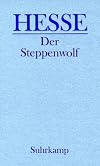
I read this book for the first time some 40 years ago in a Spanish translation. I didn't remember almost anything about it, except that it had made a great impression in my youth and that I had felt a great affinity for Harry Haller and his solitude. I bought this edition some ten years ago during one of my trips to Germany and it had been sitting on my shelves ever since. A few days ago I was rearranging some of my books and came across it, so I decided to finally read it again.
I had read show more "Knulp" in the original German before so I knew Hesse' prose was clear and to my level of fluency. This time around being older, the nihilism, the ennui and the Weltschmerz of Haller still leaves a profound impression, but this time I noticed that despite its darkness and the general perception about this novel being all about nihilism and suicide, in the end it's an affirmation of life and is misunderstood the same way that a lot of people misunderstand Nietzsche.
Harry's alienation from the world starts at an early age when conventional values are "beaten into him". His embrace of intellectual pursuits and high culture further alienates him from his inner wolf. The section where Hesse describes the duality of our civilized exterior and inner beast is brilliant. It's this inability to accept his duality, or more correctly the multiplicity of inner Harry's, that makes him fall into despair and contemplate suicide. Salvation comes from the acceptance of sensuality and "low culture" (jazz and dancing) and realizing, thanks to his conversation with Mozart during a drug induced hallucination, that he can have both.
On deeper level, Steppenwolf is an uncannily accurate description of the German soul during the 1920's and 30's. Behind the thin façade of high culture, intellectualism and deep romanticism lurks a murdering beast, ready to come out... and it did.
This is a short novel and definitely worth reading. show less
I had read show more "Knulp" in the original German before so I knew Hesse' prose was clear and to my level of fluency. This time around being older, the nihilism, the ennui and the Weltschmerz of Haller still leaves a profound impression, but this time I noticed that despite its darkness and the general perception about this novel being all about nihilism and suicide, in the end it's an affirmation of life and is misunderstood the same way that a lot of people misunderstand Nietzsche.
Harry's alienation from the world starts at an early age when conventional values are "beaten into him". His embrace of intellectual pursuits and high culture further alienates him from his inner wolf. The section where Hesse describes the duality of our civilized exterior and inner beast is brilliant. It's this inability to accept his duality, or more correctly the multiplicity of inner Harry's, that makes him fall into despair and contemplate suicide. Salvation comes from the acceptance of sensuality and "low culture" (jazz and dancing) and realizing, thanks to his conversation with Mozart during a drug induced hallucination, that he can have both.
On deeper level, Steppenwolf is an uncannily accurate description of the German soul during the 1920's and 30's. Behind the thin façade of high culture, intellectualism and deep romanticism lurks a murdering beast, ready to come out... and it did.
This is a short novel and definitely worth reading. show less

Knulp is an extremely likeable character and what impressed me most about this book is how Hesse could evoke in me the very same feeling towards his central character that everyone else in the story had. On paper and in society’s eyes, this man is a failure: dropping out of school despite huge potential, abandoning his family to live a life of a vagrant wanderer; living hand-to-mouth and never working; journeying from friend to friend taking advantage of their hospitality and charity; show more upping and leaving when he longs once more for solitude, sometimes without so much as a goodbye; refraining from any intimate friendships or relationships. Yet despite all this, Knulp is extremely likeable, disarming and charming and everyone is happy to have him stay, share his company and are even envious of his carefree existence which seems to pale their own ordered and responsibility-ridden lives. As the reader I too was happy to follow his life and spend my time with him. But in direct contrast to what I’ve just said, it is when Knulp eschews his philosophical musings later in the book that we see a melancholy beneath his free-spirited existence:
‘The most beautiful things, I think, give us something else beside pleasure; they leave us with a feeling of sadness or fear... to me there’s nothing more beautiful than fireworks in the night. There are blue and green fireballs, they rise up in the darkness, and at the height of their beauty they double back and they’re gone. When you watch them, you’re happy but at the same time afraid, because in a moment it will be over. The happiness and fear go together and it’s much more beautiful than if it lasted longer.’
‘Every human being has his soul, he can’t mix it with any other. Two people can meet, they can talk with one another, they can be close together. But their souls are like flowers, each rooted to its place. One can’t go to another, because it would have to break away from its roots, and that it can’t do.’
We experience three points in his story at and learn his attitude to life at each point. Once as a youngish man staying at a friends house, once a little older and through the eyes of the chapters narrator who learns of why Knulp came to be a vagrant and finally close to the end of his life where he is terminally ill and wanting to see his home village for one last time.
I read Hesse’s Siddhartha a couple of years ago and wasn’t too blown away by it but this was a subtle and powerful book that I really enjoyed. It was an astute portrait of a peaceful and intriguing man. Well worth a read. show less
‘The most beautiful things, I think, give us something else beside pleasure; they leave us with a feeling of sadness or fear... to me there’s nothing more beautiful than fireworks in the night. There are blue and green fireballs, they rise up in the darkness, and at the height of their beauty they double back and they’re gone. When you watch them, you’re happy but at the same time afraid, because in a moment it will be over. The happiness and fear go together and it’s much more beautiful than if it lasted longer.’
‘Every human being has his soul, he can’t mix it with any other. Two people can meet, they can talk with one another, they can be close together. But their souls are like flowers, each rooted to its place. One can’t go to another, because it would have to break away from its roots, and that it can’t do.’
We experience three points in his story at and learn his attitude to life at each point. Once as a youngish man staying at a friends house, once a little older and through the eyes of the chapters narrator who learns of why Knulp came to be a vagrant and finally close to the end of his life where he is terminally ill and wanting to see his home village for one last time.
I read Hesse’s Siddhartha a couple of years ago and wasn’t too blown away by it but this was a subtle and powerful book that I really enjoyed. It was an astute portrait of a peaceful and intriguing man. Well worth a read. show less

Harry Haller is a well-off man (not a wolf man) who has no need of employment but has been unlucky in love and in his opinions. Approaching fifty, he has become restless with undemanding contentment and aging. He is still longing for adventure, still in search of something that will stir his heart. He calls himself the steppenwolf because he is suspicious of the animal side of his nature - really just all the portions of himself he thrusts down and away from his sense of identity as a man of show more wisdom and learning. Hesse despaired of readers who only focused on the surface level of this novel, viewing it only as the story of a man sinking slowly into despair and madness. If it isn't that, then what is it?
To a degree it is what Hesse is always saying, about the sturdy slap intellectuals receive after becoming lost in themselves, when they are reminded about reality, and what impact for good or ill they can have upon its unfolding. It's a story about how we get so wrapped up in the narrow stories we tell about ourselves, built upon just a small handful of events in our lives that we replay in memory, we abandon and forget the thousand other shades that formed us and were also a part of that story. And it reminds us that work's, art's and leisure's effects upon our emotions and well-being is what counts most, more than their objective worth. It reminds us that identifying too closely with just one slice of ourselves, one interpretation, creates a fallacy whereby we can mistakenly underrate our worth to ourselves and to the world. And that even if the entire world seems bent on moving in the wrong direction, it does not change the fundamental laws of the universe that underlie everything, and all must straighten out again in time. Those laws are accessible in even the darkest times, thus we can celebrate them even in the midst of despair.
Or maybe it's just some old man getting high on drugs and not learning a whole lot in the end. You decide. show less
To a degree it is what Hesse is always saying, about the sturdy slap intellectuals receive after becoming lost in themselves, when they are reminded about reality, and what impact for good or ill they can have upon its unfolding. It's a story about how we get so wrapped up in the narrow stories we tell about ourselves, built upon just a small handful of events in our lives that we replay in memory, we abandon and forget the thousand other shades that formed us and were also a part of that story. And it reminds us that work's, art's and leisure's effects upon our emotions and well-being is what counts most, more than their objective worth. It reminds us that identifying too closely with just one slice of ourselves, one interpretation, creates a fallacy whereby we can mistakenly underrate our worth to ourselves and to the world. And that even if the entire world seems bent on moving in the wrong direction, it does not change the fundamental laws of the universe that underlie everything, and all must straighten out again in time. Those laws are accessible in even the darkest times, thus we can celebrate them even in the midst of despair.
Or maybe it's just some old man getting high on drugs and not learning a whole lot in the end. You decide. show less
Lists
1910s (1)
Metafiction (1)
Five star books (1)
Folio Society (1)
Metamorphoses (1)
Monastic life (1)
AP Lit (1)
100 knjiga (1)
All Things India (1)
. (1)
Macho Fiction (1)
current (1)
Elegant Prose (1)
Modernism (1)
Didactic Fiction (1)
Overdue Podcast (1)
el (3)
1930s (2)
Florida (2)
philosophy (2)
1920s (2)
Existentialism (4)
Unread books (4)
Gen X Library (3)
. (3)
Favourite Books (2)
Books to Read (1)
Magic Realism (1)
At the Library (1)
Short and Sweet (1)
BitLife (1)
Read (1)
A Novel Cure (2)
Read in 2006 (2)
Out of Copyright (1)
Awards


You May Also Like


Associated Authors
Statistics
- Works
- 1,011
- Also by
- 47
- Members
- 93,350
- Popularity
- #99
- Rating
- 3.9
- Reviews
- 1,282
- ISBNs
- 3,337
- Languages
- 53
- Favorited
- 465


