
Kathleen M. Higgins
Author of A Short History of Philosophy
About the Author
Kathleen Marie Higgins is professor of philosophy at the University of Texas, Austin.
Image credit: Teaching Company
Works by Kathleen M. Higgins
Secrets of the Bus 2 copies
World Philosophy, Part II 2 copies
World Philosophy, Part I 2 copies
Reading Zarathustra 1 copy
Beginnings of Philosophy 1 copy
Betty in bushland 1 copy
Emotion and the Arts 1 copy
Associated Works
Tagged
Common Knowledge
- Canonical name
- Higgins, Kathleen M.
- Legal name
- Higgins, Kathleen Marie
- Birthdate
- 1954-10-15
- Gender
- female
- Education
- University of Missouri–Kansas City (BA | 1977 | Music)
Yale University (MA | 1978 | M.Phil | 1979 | Ph.D | 1982 | Philosophy) - Occupations
- Professor of Philosophy, University of Texas at Austin
- Organizations
- University of Texas at Austin
University of California, Riverside
University of Auckland
American Society for Aesthetics - Relationships
- Solomon, Robert (late Husband)
- Nationality
- USA
- Places of residence
- Austin, Texas, USA
- Associated Place (for map)
- Texas, USA
Members
Reviews
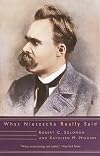
Having recommended this book recently, I thought I'd better re-read it. It's a fantastic introduction to Nietzsche's thought. It debunks myths and misconceptions, gives an overview of his works and main theories, and basically provides all that anyone coming to his philosophy for the first time can need - and more. Actually, it's a good read even for those familiar with his work. It also gives a balanced view - Nietzsche's somewhat misogynistic attitudes are not spared, and it provides a show more good basis for further criticism. Clearly and accessibly written, so ideal for any serious beginner, but especially recommended to anyone studying philosophy.
Gareth Southwell is a philosopher, writer and illustrator. show less
Gareth Southwell is a philosopher, writer and illustrator. show less
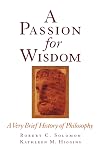
If you are like me and are looking for a way into the intriguing world of Philosophy, then this would be a good place to start. Jumping into this genre is a bit like going for a swim in a violent, tempestuous ocean. There are many different thinkers and many diverse schools of thought that it can be intimidating and overwhelming. I'm happy to say this book served as a sturdy raft.
As the title suggests, this is indeed a very brief overview of Philosophy. Solomon introduces all the big names show more in the field and gives a crisp summary of their outlooks and the questions they were asking.
Solomon's writing is easy to follow; the thoughts and beliefs of the philosophers however? Not so much. These men* were really thinking beyond. Philosophy isn't "thinking outside the box." It's taking that box and studying its dimensions, its size and weight, measuring its corners. It's about taking the box apart and then rebuilding it.
I look at it this way; imagine non-philosophers living on a planet where it was extremely bright, and they walk around squinting and shielding their eyes. It's difficult to see. Philosophers are the ones that put on sunglasses and view the world in a different way. If that makes sense.
I plan on reading more books like this so I can better my understanding. I think it helps to build a foundation first before jumping into the source texts.
Maybe one day I can put on a pair of sunglasses too.
*Solomon introduces one female philosopher, Simone de Beauvoir. He goes on to say that women weren't taken seriously in this field of study and so no publications exist. If a great female philosopher lived, her work was not recorded. Quite unfortunate. show less
As the title suggests, this is indeed a very brief overview of Philosophy. Solomon introduces all the big names show more in the field and gives a crisp summary of their outlooks and the questions they were asking.
Solomon's writing is easy to follow; the thoughts and beliefs of the philosophers however? Not so much. These men* were really thinking beyond. Philosophy isn't "thinking outside the box." It's taking that box and studying its dimensions, its size and weight, measuring its corners. It's about taking the box apart and then rebuilding it.
I look at it this way; imagine non-philosophers living on a planet where it was extremely bright, and they walk around squinting and shielding their eyes. It's difficult to see. Philosophers are the ones that put on sunglasses and view the world in a different way. If that makes sense.
I plan on reading more books like this so I can better my understanding. I think it helps to build a foundation first before jumping into the source texts.
Maybe one day I can put on a pair of sunglasses too.
*Solomon introduces one female philosopher, Simone de Beauvoir. He goes on to say that women weren't taken seriously in this field of study and so no publications exist. If a great female philosopher lived, her work was not recorded. Quite unfortunate. show less

In these lectures on world philosophy, Higgins seeks to cover the major bodies of thought of various world cultures. From Kenya to Korea, from the Aztecs to Asia, she covers vast ranges of geography and time. I really enjoyed the way she brought together many different traditions we often do not hear even exist. She begins the course with Western philosophy and the categories and questions laid down by Greek thinkers, then moves into African thought, pre- and post-colonial Latin American show more thought, and ends in Asia where she covers the philosophies of Hinduism, Buddhism, Taoism, and Confucianism. Her hope is that philosophy broadens out of being just a Western affair, that we can learn from the wisdom of other world traditions.
My favorite part of this course was her discussion of African and Latin American thought. She spends one lecture on the Yoruba people of Nigeria. Their traditional, pre-Christian thought goes in directions very foreign to the West: a cyclical notion of time, an emphasis on change over stasis, and the worship of God's intermediaries (polytheism) rather than God directly. Unlike Christian notions of time, which tend to be linear culminating in an apocalypse, Yoruba - and Mayan - concepts of time are cyclical. For the Mayans, there is an apocalyptic end, but it only marks a new beginning, and there have been several of them. And the Yoruba's emphasis on change gives them an affinity with the Taoists, who also see change as more fundamental to reality than Platonic stasis. All of these vastly different notions can help the Platonic or Aristotelian Western thinker to see how different frameworks of philosophy play out. Higgins does a good job with these.
I also enjoyed her discussion of what philosophy is. However, this is also where her discussion was incomplete. She discussed the problem of philosophy in premodern societies. Are a culture's oral traditions or folk/religious beliefs to be considered philosophy? Must philosophy be oral? On the one hand, some argue that oral folk beliefs constitute a form of philosophy, and the idea that philosophy must be written is ethnocentric. Others argue that philosophy requires critical reflection and a level of precision that can only be reached with written thought. I tend to agree with the latter. So the Yoruba 'philosophy' described above is no such thing. Philosophy, to be differentiated from myth and religion, must also involve rational criticism apart from appeals to revelation or tradition. There must also be differing opinions or schools of thought.
That said, what about the distinction between philosophy and religion? Higgins discusses the philosophical schools of Eastern religions, but ignores those in the Abrahamic faiths. This is too bad. For example, most philosophers agree Aquinas is in their field. What about Augustine? What about Ecclesiastes? In Jewish thought, Maimonides is clearly a philosopher, but is the Talmud a philosophical text? Since Jewish and Islamic thought are seldom taught in American philosophy departments, they seem like they should have been a part of this course.
Overall, I enjoyed this course, although her lectures on Indian thought were hard to follow. I'm especially curious to follow up on Mayan philosophy, which I had never heard of. show less
My favorite part of this course was her discussion of African and Latin American thought. She spends one lecture on the Yoruba people of Nigeria. Their traditional, pre-Christian thought goes in directions very foreign to the West: a cyclical notion of time, an emphasis on change over stasis, and the worship of God's intermediaries (polytheism) rather than God directly. Unlike Christian notions of time, which tend to be linear culminating in an apocalypse, Yoruba - and Mayan - concepts of time are cyclical. For the Mayans, there is an apocalyptic end, but it only marks a new beginning, and there have been several of them. And the Yoruba's emphasis on change gives them an affinity with the Taoists, who also see change as more fundamental to reality than Platonic stasis. All of these vastly different notions can help the Platonic or Aristotelian Western thinker to see how different frameworks of philosophy play out. Higgins does a good job with these.
I also enjoyed her discussion of what philosophy is. However, this is also where her discussion was incomplete. She discussed the problem of philosophy in premodern societies. Are a culture's oral traditions or folk/religious beliefs to be considered philosophy? Must philosophy be oral? On the one hand, some argue that oral folk beliefs constitute a form of philosophy, and the idea that philosophy must be written is ethnocentric. Others argue that philosophy requires critical reflection and a level of precision that can only be reached with written thought. I tend to agree with the latter. So the Yoruba 'philosophy' described above is no such thing. Philosophy, to be differentiated from myth and religion, must also involve rational criticism apart from appeals to revelation or tradition. There must also be differing opinions or schools of thought.
That said, what about the distinction between philosophy and religion? Higgins discusses the philosophical schools of Eastern religions, but ignores those in the Abrahamic faiths. This is too bad. For example, most philosophers agree Aquinas is in their field. What about Augustine? What about Ecclesiastes? In Jewish thought, Maimonides is clearly a philosopher, but is the Talmud a philosophical text? Since Jewish and Islamic thought are seldom taught in American philosophy departments, they seem like they should have been a part of this course.
Overall, I enjoyed this course, although her lectures on Indian thought were hard to follow. I'm especially curious to follow up on Mayan philosophy, which I had never heard of. show less
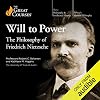
Full of enthusiasm and wide knowledge of Nietzsche and and where he fits into the whole history of philosophy. The speakers pay little attention to his adoption by the Nazis, describing for example the phrase “the will to power” as “unfortunate”. But it’s not just the phrasing, it’s his whole air of impatience , even contempt, towards the weakness of humanity that made him ripe for takeover by Hitler and his cronies. Some direct quotes from Nietzsche’s texts are very elegant show more even in translation. But I still find Nietzsche has little to say to me. So this book ****, Nietzsche himself ** show less
Lists
You May Also Like


Associated Authors
Statistics
- Works
- 28
- Also by
- 2
- Members
- 1,576
- Popularity
- #16,374
- Rating
- 3.9
- Reviews
- 12
- ISBNs
- 69
- Languages
- 6