
Nachman of Breslov (1772–1810)
Author of Nahman of Bratslav: The Tales
About the Author
The grandson of Israel ben Eliezer (Baal Shem Tov), founder of Hasidism, Rabbi Nachman of Breslov was renowned for his storytelling. After his death a number of his moralistic and symbolic tales were published in a bilingual Yiddish and Hebrew book. These tales had an important impact on later show more Yiddish writing and, thanks largely to the efforts of the philosopher Martin Buber (see Vol. 4), were eventually made known to a far wider public. Several English translations of The Tales exist, one of them published by Rabbi Nachman's disciples. (Bowker Author Biography) show less
Image credit: Rabbi Nahman Tomb (Uman, Ukraine)
Works by Nachman of Breslov
The Empty Chair: Finding Hope and Joy―Timeless Wisdom from a Hasidic Master, Rebbe Nachman of Breslov (1994) 94 copies
Rebbe Nachman's Soul: A commentary on Sichos HaRan from the classes of Rabbi Zvi Aryeh Rosenfeld z"l (2017) 3 copies
CROSSING THE NARROW BRIDGE 3 copies
A voice calls out to God: Based on the works of Rabbi Nachman of Breslov and his holy disciples 2 copies
The Letter from Heaven 2 copies
THE THIRTEEN STORIES 2 copies
סיפורי מעשיות משנים קדמוניות 2 copies
ספר ליקוטי מוהר"ן 2 copies
Rebbe Nachman: This Land Is My Land (History, Conflict and Hope in the Land of Israel) (2002) 2 copies
Rabbi Nachman's stories 2 copies
Sefer Likutei Tefefilot 1 copy
װאונדער מעשיות 1 copy
ספר ארך אפים 1 copy
תורותת, שיחות,סיפורי מעשיות 1 copy
ספר ליקוטי מוהר"ן 1 copy
THE CANDELABRUM 1 copy
Ometz 1 copy
Marpeh Lashon 1 copy
Restore My Soul 1 copy
Land of Wealth 1 copy
Tales of Ancient Times 1 copy
Sefer Likute Moharan 1 copy
ארך אפים 1 copy
סיפורי מעשיות 1 copy
La principessa smarrita 1 copy
סיפורי מעשיות משנים קדמוניות 1 copy
ספר סיפורי מעשיות המנקד 1 copy
תיקון הלב 1 copy
ספר סיפורי מעשיות 1 copy
No Longer Alone 1 copy
Tales of Rabbi Nachman 1 copy
השתפכות הנפש. משיבת נפש 1 copy
To love and to cherish 1 copy
A Miraculous Tale 1 copy
ספר קיצור ליקוטי מוהר"ן 1 copy
ספר חק ברסלב החדש 1 copy
ליקוטי מוהר״ן : שני חלקים 1 copy
ספר לקוטי עצות חדש : מסודר ע"פ א"ב, נחלק לארבעה חלקים החלק הראשון נקרא אמת וצדק, החלק השני נקרא בשם… 1 copy
ספר ליקוטי עצות 1 copy
Associated Works
A Book of Luminous Things: An International Anthology of Poetry (1996) — Contributor — 941 copies, 12 reviews
Yenne Velt: The Great Works of Jewish Fantasy and Occult (1976) — Contributor — 363 copies, 2 reviews
The Jewish caravan : great stories of twenty-five centuries (1965) — Contributor, some editions — 139 copies
Radiant Days, Haunted Nights: Great Tales from the Treasury of Yiddish Literature (2005) — Contributor — 71 copies, 1 review
No Star Too Beautiful: An Anthology of Yiddish Stories 1382 to the Present (2002) — Contributor — 65 copies
Tagged
Common Knowledge
- Canonical name
- Breslov, Nachman of
- Birthdate
- 1772-04-04
- Date of death
- 1810-10-16
- Gender
- male
- Occupations
- rabbi
- Organizations
- Breslov branch of Hasidic Judaism
- Nationality
- Polish–Lithuanian Commonwealth
- Birthplace
- Medzhybizh, Ukraine
- Places of residence
- Bratslav, Ukraine
- Place of death
- Uman, Ukraine
- Map Location
- Ukraine
Members
Reviews
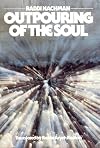
For somebody like me, who only read stories of and from Rabbi Nachman of Breslov (or Bratslav) the slim volume of "Outpouring of the Soul" is an excellent introduction to his theology and practice of religion. The subtitle of the book is "Rabbi Nahcman's Path in Meditation." The book was published (in English) in 1980 by the Breslov Research Institute, one year after the Institute was founded. The 72 numbered pages of the book includes,
The 52 lessons, the essence of the book range from 4 page length(#1) to 2 lines. (E.g. #21: "After true contrition comes joy. A sign of true contrition is when one is later truly happy.") Each entry is numbered, has a title and for most, the original source is cited. A few entries are made up from multiple sections from various sources (1, 2, 14, 17, 27, 28, 30, 39, 42, 48.
With the above I am done with the easy part of the review, where I describe the book's format and structure. The more interesting part is of course the content itself. That's where I have a bit if a difficulty. One obstacle is that it is all written in third person masculine: he must/should do this or that. I am male, so I can identify with that, but I also feel that this non-gender neutral language is excluding half of humanity. When I am reading such lovely and tempting thoughts the lack of harmony between the meaning and this exclusion bothers me.
My other challenge is that as I have never practiced meditation this is all reads as a theory to me. The ideas here presented as guidelines on how/why/when meditate, therefore reading it as literature is not its intended use. But that's they way I accessed it and as such it reads a bit of a closed indoctrination system. Closed, because looking at it from the outside it seems to have circular logic: If you meditate you will be happier, which will make you want to meditate more. Meditation is presented both as a mean and as an end. Nevertheless I found the language and the concepts tempting. I experienced inner calmness and relaxation just reading about the topic. It is clear that both the author and the translator had enormous charisma and skill with words.
But the book didn't convince me to change my lifestyle. What it did was to awaken my curiosity to ask for more. So I will periodically return to this book to read a page or two to "meditate" on. The book is an excellent resource for seekers because of its modular structure. I just need more time to internalize what I can from it. Reading from cover to cover, the way I did it is not recommended. show less
- Publisher's preface: written by Chaim Kramer,
- explaining why Rabbi Alter of Tepik "gathered all the writings of Rabbi Nachman and his disciple, Rabbi Nathan of Nemerov, that dealt with meditation (hithbodeduth) and published them in a single book... Hishtapchuth HaNefesh ("Outpouring of the Soul").
- Translator's introduction: written by Aryeh Kaplan, essentially a short history of the development of Jewish meditation and its connection to prayer. (Sidenote: In the edition I read the date of this introduction is printed as 5780 (2020) and not as the correct 5740 (1980).)
- Author's introduction: a 12 page long essay on the history and need for prayer/meditation. As is customary in Jewish rabbinic literature the current ideas were put in the context as promoted and practiced by earlier authoritative figures. In this case Rabbi Nachman describes how Adam, Noah, Abraham, Isaac, Jacob, Jacob's sons, Moses, Samson, Elisa, Daniel, Ezra and the Baal Shem Tov all meditated. Why bother?: "He will learn how to ask God for all that he needs, both materially and spiritually. This is the only way that one can receive divine help at all times."
- The bulk of the book (42 pages) contain 52 lessons, stories, practices or outpouring if you wish.
- The book concludes with a fairly comprehensive index for such a short book, a list of biblical quotations, and a list of the publisher's other books.
The 52 lessons, the essence of the book range from 4 page length(#1) to 2 lines. (E.g. #21: "After true contrition comes joy. A sign of true contrition is when one is later truly happy.") Each entry is numbered, has a title and for most, the original source is cited. A few entries are made up from multiple sections from various sources (1, 2, 14, 17, 27, 28, 30, 39, 42, 48.
With the above I am done with the easy part of the review, where I describe the book's format and structure. The more interesting part is of course the content itself. That's where I have a bit if a difficulty. One obstacle is that it is all written in third person masculine: he must/should do this or that. I am male, so I can identify with that, but I also feel that this non-gender neutral language is excluding half of humanity. When I am reading such lovely and tempting thoughts the lack of harmony between the meaning and this exclusion bothers me.
My other challenge is that as I have never practiced meditation this is all reads as a theory to me. The ideas here presented as guidelines on how/why/when meditate, therefore reading it as literature is not its intended use. But that's they way I accessed it and as such it reads a bit of a closed indoctrination system. Closed, because looking at it from the outside it seems to have circular logic: If you meditate you will be happier, which will make you want to meditate more. Meditation is presented both as a mean and as an end. Nevertheless I found the language and the concepts tempting. I experienced inner calmness and relaxation just reading about the topic. It is clear that both the author and the translator had enormous charisma and skill with words.
But the book didn't convince me to change my lifestyle. What it did was to awaken my curiosity to ask for more. So I will periodically return to this book to read a page or two to "meditate" on. The book is an excellent resource for seekers because of its modular structure. I just need more time to internalize what I can from it. Reading from cover to cover, the way I did it is not recommended. show less
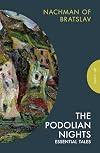
These are clever stories that each contain timeless wisdom that they impart to the reader. Each tale is designed to teach the reader i portent lessons. What exactly the Baal Shem Tov wants us to learn can be discerned in many different ways by various readers. That’s what makes these tales timeless. Each reader will take away something different from the stories. They are creative and interesting and filled with wisdom. Anyone interested innajewish folklore will appreciate them. I was show more given this book in exchange for my honest opinion. show less
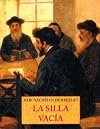
LA SILLA VACIA
No perder nunca la esperanza; encontrar la alegría y un motivo de felicidad en todo lo que nos ocurre: éste es el mensaje del gran maestro y místico judío Rabí Nachman de Breslau.
Rabí Nachman de Breslau nació en 1772 en Ucrania y era niero del gran Baal-Shem-Tov, fundador del jasidismo (corriente mística judía inspirada en la Cábala). Rabí Nachman alcanzó un alto grado de santidad y sabiduría y tuvo un gran número de seguidores en todas las capas de la sociedad, show more desde los eruditos hasta las gentes sencillas, pues desarrolló una doctrina que hallaba eco tanto entre los que aspiraban a una vida espiritual como en las personas centradas en los problemas de la vida cotidiana. Tras su muerte en 1810, su influjo siguió vivo y ha continuado hasta hoy. Rabí Nachman, con su supremo optimismo y su sabiduría práctica, es uno de los maestros judíos más citados y estudiados. Su palabra es un mensaje de esperanza y de alegría. show less
No perder nunca la esperanza; encontrar la alegría y un motivo de felicidad en todo lo que nos ocurre: éste es el mensaje del gran maestro y místico judío Rabí Nachman de Breslau.
Rabí Nachman de Breslau nació en 1772 en Ucrania y era niero del gran Baal-Shem-Tov, fundador del jasidismo (corriente mística judía inspirada en la Cábala). Rabí Nachman alcanzó un alto grado de santidad y sabiduría y tuvo un gran número de seguidores en todas las capas de la sociedad, show more desde los eruditos hasta las gentes sencillas, pues desarrolló una doctrina que hallaba eco tanto entre los que aspiraban a una vida espiritual como en las personas centradas en los problemas de la vida cotidiana. Tras su muerte en 1810, su influjo siguió vivo y ha continuado hasta hoy. Rabí Nachman, con su supremo optimismo y su sabiduría práctica, es uno de los maestros judíos más citados y estudiados. Su palabra es un mensaje de esperanza y de alegría. show less
LA SILLA VACÍA
No perder nunca la esperanza;
encontrar la alegría y un motivo
de felicidad en todo lo que nos ocurre:
este es el mensaje del gran maestro
y místico judío Rabi Nachman
de Breslau.
No perder nunca la esperanza;
encontrar la alegría y un motivo
de felicidad en todo lo que nos ocurre:
este es el mensaje del gran maestro
y místico judío Rabi Nachman
de Breslau.
Lists
Awards

You May Also Like


Associated Authors
Statistics
- Works
- 148
- Also by
- 10
- Members
- 886
- Popularity
- #28,919
- Rating
- 4.1
- Reviews
- 5
- ISBNs
- 73
- Languages
- 5
- Favorited
- 1