
Sergei Dovlatov (1941–1990)
Author of The Suitcase
About the Author
Dovlatov, who studied at Leningrad University, worked for a while as a journalist in Tallinn, Estonia. His fiction was unpublished in the Soviet Union, but he was active in unofficial literary life and was forced to leave in 1978 for publishing satirical fiction in Samizdat. After settling in the show more United States, he co-founded a Russian-language newspaper, worked as a broadcaster for Radio Liberty in New York City, and published both in major Russian emigre publications and in the U.S. press (he wrote short stories for The New Yorker). Among his books, known for their irreverent views of Soviet reality, are the autobiographical The Compromise (1981) and Ours (1983). When Dovlatov died, his works were being reissued and favorably received in Russia. (Bowker Author Biography) show less
Works by Sergei Dovlatov
Заповедник - Авторский сборник 4 copies
Встретились, поговорили : из сборника "Демарш энтузиастов" ; рассказы 1970-х ; рассказы 1980-х ;… (2007) 2 copies
Собрание сочинений 4 2 copies
Pisma ženama 2 copies
Собрание прозы в трех томах 2 copies
Full C / s in 4 vols. (New), Volume 2 (N / A ) / Polnoe S/s v 4-kh tt. (novyy), t.2 (n/o ) (2010) 1 copy
Beležnice 1 copy
Regime speciale 1 copy
Straniera 1 copy
" Rasskazy". 1 copy
Remeslo 1 copy
Рассказы 1 copy
සූට්කේසය 1 copy
Maloizvestnyi Dovlatov 1 copy
Довлатов, Сергей 1 copy
Встретились, поговорили 1 copy
Собрание прозы в 3-х томах 1 copy
Собрание прозы в 3-х томах. Том 3. (Иностранка; Филиал; Хочу быть сильным; Блюз для Натэллы;… 1 copy
Associated Works
The Girl From the Metropol Hotel: Growing Up in Communist Russia (2006) — Contributor — 167 copies, 8 reviews
Tagged
Common Knowledge
- Canonical name
- Dovlatov, Sergei
- Legal name
- Довлатов-Мечник, Сергей Донатович
Dovlatov-Mechnik, Sergei Donatovich - Birthdate
- 1941-09-03
- Date of death
- 1990-08-24
- Gender
- male
- Education
- Leningrad State University (Nongrad|Finnish)
Leningrad State University (Diplom|Journalism) - Occupations
- journalist
security guard
editor
writer
researcher
museum tour guide - Organizations
- Writer's Union of the USSR
The New Yorker - Short biography
- Unable to publish freely in the Soviet Union, Sergei Dovlatov circulated his writings through "samizdat" (underground) press, and had them smuggled into Western Europe for publication in foreign journals. These activities caused his expulsion from the USSR in 1976. A few years later, he was able to emigrate with his family to the USA, where his sly, humorous stories became popular in The New Yorker magazine. He also co-edited "The New American," a liberal Russian-language émigré newspaper.
- Nationality
- USSR
Armenia
USA - Birthplace
- Ufa, Republic of Bashkiria, USSR
- Places of residence
- Leningrad, Russia, USSR
Tallinn, Estonia, USSR
New York, New York, USA
Chiniavoryk, Komi Republic, USSR
Pushkin Hills, Russia, USSR - Place of death
- New York, New York, USA
- Burial location
- Mount Hebron Cemetery, New York, New York, USA
- Map Location
- Russia
Members
Reviews
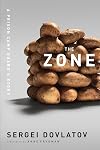
Instead of the usual disclaimer, Dovlatov wrote:
"The names, events, and dates given here are all real. I invented only those details that were not essential.
Therefore, any resemblance between the characters in this book and living people is intentional and malicious. And all the fictionalizing was unexpected and accidental."
In the sixties Dovlatov had dropped out of university and been drafted into the Soviet Internal Troops to work as a prison guard in high security camps. Unlike the camps show more for political prisoners that Aleksandr Solzhenitsyn wrote about, these camps are for criminals. They are so isolated and remote that the guards, as well as the criminals, are effectively serving a sentence. Distinctions between guards and prisoners break down.
The book is a series of first-person narrations by various guards, who appear in each other's stories from different perspectives. What they all have in common is a bleak and sardonic humour. Interspersed with the guard's narrations are letters written by the author to his New York publisher. The book is coming along in fits and starts as random sections are smuggled out from the USSR. The author's works have never been published there and have circulated in samizdat. Parts have been lost, and the author discusses with the publisher how he will manage the gaps. He talks about what he will include and what he will leave out, and his writing philosophy.
It took me a while to get into The Zone, but once I did I found it well worth the trouble. It's Dovlatov's world view that makes it fascinating. show less
"The names, events, and dates given here are all real. I invented only those details that were not essential.
Therefore, any resemblance between the characters in this book and living people is intentional and malicious. And all the fictionalizing was unexpected and accidental."
In the sixties Dovlatov had dropped out of university and been drafted into the Soviet Internal Troops to work as a prison guard in high security camps. Unlike the camps show more for political prisoners that Aleksandr Solzhenitsyn wrote about, these camps are for criminals. They are so isolated and remote that the guards, as well as the criminals, are effectively serving a sentence. Distinctions between guards and prisoners break down.
The book is a series of first-person narrations by various guards, who appear in each other's stories from different perspectives. What they all have in common is a bleak and sardonic humour. Interspersed with the guard's narrations are letters written by the author to his New York publisher. The book is coming along in fits and starts as random sections are smuggled out from the USSR. The author's works have never been published there and have circulated in samizdat. Parts have been lost, and the author discusses with the publisher how he will manage the gaps. He talks about what he will include and what he will leave out, and his writing philosophy.
It took me a while to get into The Zone, but once I did I found it well worth the trouble. It's Dovlatov's world view that makes it fascinating. show less
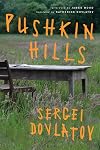
Really fun, quick-witted satire of a man who chooses a tourist outpost in Russia as a kind of boozy comic self-imposed exile and circle of Hell. Writer Boris has to deal with his difficult writing career and estranged marriage while giving lectures on Pushkin to barely-listening tourists and living with a colorful cast of eccentrics. I loved Dovlatov's economic writing and aphoristic descriptions. So many memorable lines! You have to read slow but it's a very satisfying and rewarding book show more from an author about whom I want to learn more. show less
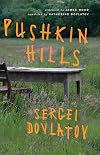
“Pushkin Hills” has a simple plot that really doesn’t go anywhere. Boris Alikhanov is an unpublished writer with an alcohol dependency, who is recently divorced from Tatyana and in need of money. To make matters worse, Tatyana is planning to emigrate to America with their daughter, Masha. Boris takes a job as a tour guide at the Pushkin Hills Preserve. Notwithstanding the thin plot, this autobiographical novella has much strength. Its tone is dark and ironic; it is filled with show more insightful observations on the Soviet culture, writing, censorship and emigration; there are humorous asides and crisp dialogue; and of course many delightful characterizations of the people Boris interacts with at the Preserve. show less
Another Russian writer that I've just discovered. He was severely censured during Soviet time, so at first he was published in the West, but after his death at the still young age of 48 (in New York where he had emigrated), his works became known in his homeland as well, and not just in "underground" publications as before.
This book is quite autobiographical. Dovlatov's writing talent really shines in it. I found his style bitterly sardonic and poignant, his eye for description of things show more around him super sharp, while he is also brutally honest about himself and his "failings". Though it was normal history in Soviet Russia to not let any real and dissenting talent break through the rock solid censure, it still feels sad to see such writer being obscure for so long. His deep frustration at being unable to earn his living at what he does best pours out with angst in this book. And then to have a very short life of freedom in New York - he died in 1990, just about the time socialism died in Soviet Russia too - a time when he could have gone back to Russia to be recognized for who he was, a fine writer...
I read this book in the original Russian, but it has been been translated into English - and that's where I see a huge challenge for the translator: I cannot fathom how to translate some of the dialogues in it, so peculiar to the Russian language alone: Dovlatov picked up so skillfully on the colorful, hardly translatable, expressions of the local population of the village near Pushkin Hills. show less
This book is quite autobiographical. Dovlatov's writing talent really shines in it. I found his style bitterly sardonic and poignant, his eye for description of things show more around him super sharp, while he is also brutally honest about himself and his "failings". Though it was normal history in Soviet Russia to not let any real and dissenting talent break through the rock solid censure, it still feels sad to see such writer being obscure for so long. His deep frustration at being unable to earn his living at what he does best pours out with angst in this book. And then to have a very short life of freedom in New York - he died in 1990, just about the time socialism died in Soviet Russia too - a time when he could have gone back to Russia to be recognized for who he was, a fine writer...
I read this book in the original Russian, but it has been been translated into English - and that's where I see a huge challenge for the translator: I cannot fathom how to translate some of the dialogues in it, so peculiar to the Russian language alone: Dovlatov picked up so skillfully on the colorful, hardly translatable, expressions of the local population of the village near Pushkin Hills. show less
Lists
Awards


You May Also Like


Associated Authors
Statistics
- Works
- 146
- Also by
- 4
- Members
- 1,483
- Popularity
- #17,315
- Rating
- 3.9
- Reviews
- 46
- ISBNs
- 250
- Languages
- 20
- Favorited
- 10