
Courtney E. Martin
Author of Perfect Girls, Starving Daughters: The Frightening New Normalcy of Hating Your Body
About the Author
Image credit: Courtney E. Martin
Works by Courtney E. Martin
Perfect Girls, Starving Daughters: The Frightening New Normalcy of Hating Your Body (2007) 244 copies, 7 reviews
Learning in Public: Lessons for a Racially Divided America from My Daughter's School (2021) 62 copies, 2 reviews
Associated Works
We Don't Need Another Wave: Dispatches from the Next Generation of Feminists (2006) — Contributor — 133 copies
Tagged
Common Knowledge
- Birthdate
- 1979-12-31
- Gender
- female
- Organizations
- Feministing
- Nationality
- USA
- Associated Place (for map)
- USA
Members
Reviews
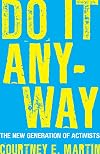
In the first pages of this book, we are faced with a charge most of us have heard many times in our lives : "save the world". But what does that mean? Courtney Martin has an answer for this question, as she shows us through the course of the book that "the world will not be saved. It will be changed."
In fact, in the very beginning of the text we are told the book is "dedicated to abandoning" this save the world mentality and rhetoric, that it is a "call to transcend" activism the way we, as show more society in general, currently understand it for the kind of activism that reflects passion so strong it "keeps you up at night because you believe in it so deeply".
Through the stories of 8 modern day activists, she personalizes the face of activism, showing us that its not about finding a "right way", or about the grandness of an individual, but instead that "activism is a daily, even hourly, experiment in dedication, moral courage, and resilience."
She ends her book addressing again the idea of "saving the world", saying "our charge is not to 'save the world', after all; it is to live in it, flawed and fierce, loving and humble." She speaks of the things that work against us, like bureaucracy and unjust institutions and systems, and reminds us that even though we may find failure (even if it is "good failure")and disappointment :
"We must strive to make the world better anyway. We must struggle to make our friendships, our families, our neighborhoods, our cities, and our nation more dignified, know that it might not work and struggling anyway. We must dedicate ourselves each and every morning to being the most kind, thoughtful, courageous human beings who have ever walked the earth, and know that it still won't be enough. We must do it anyway." (page 190)
Beautiful and poignant, this book is so well written you won't be able to put it down. She invites us to be inspired without sounding preachy or having to resort to some sort of sales pitch. A definite must read for any socially conscious individual. :) show less
In fact, in the very beginning of the text we are told the book is "dedicated to abandoning" this save the world mentality and rhetoric, that it is a "call to transcend" activism the way we, as show more society in general, currently understand it for the kind of activism that reflects passion so strong it "keeps you up at night because you believe in it so deeply".
Through the stories of 8 modern day activists, she personalizes the face of activism, showing us that its not about finding a "right way", or about the grandness of an individual, but instead that "activism is a daily, even hourly, experiment in dedication, moral courage, and resilience."
She ends her book addressing again the idea of "saving the world", saying "our charge is not to 'save the world', after all; it is to live in it, flawed and fierce, loving and humble." She speaks of the things that work against us, like bureaucracy and unjust institutions and systems, and reminds us that even though we may find failure (even if it is "good failure")and disappointment :
"We must strive to make the world better anyway. We must struggle to make our friendships, our families, our neighborhoods, our cities, and our nation more dignified, know that it might not work and struggling anyway. We must dedicate ourselves each and every morning to being the most kind, thoughtful, courageous human beings who have ever walked the earth, and know that it still won't be enough. We must do it anyway." (page 190)
Beautiful and poignant, this book is so well written you won't be able to put it down. She invites us to be inspired without sounding preachy or having to resort to some sort of sales pitch. A definite must read for any socially conscious individual. :) show less
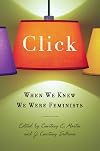
This collection, now fourteen years old, has aged fairly well. Different voices and points of view are represented; collectively, the authors describe the moments they realized they were feminists or embraced the label. Often, this meant distinguishing from what they perceived feminism to be (e.g. their mothers' feminism, Second Wave feminism, white woman feminism). They argue for the continued necessity of feminism, as it evolves to suit the times.
Quotes/notes
...forced to defend ideas I show more didn't yet understand. (Elisa Albert, 22)
The activism of today is subtler, intersectional, individual, and sensitive....It is the activism of inhabiting a space once the door has been kicked open, warming up a chilly atmosphere, creating the infrastructure for a healthy social environment. (Jennifer Baumgardner, 29)
Feminism is the fundamental and, some would say, dangerous belief that women are, and should be treated as, equals. Feminism is about empowering women to be whatever they want to be, to break walls that oppress and stagnate women.
And when you put one gender into a box, you create a companion box for the other gender. So while women suffer disproportionately, men are also cheated by the boxes they have to fit into. (Jordan Berg Powers, 41)
I'm not sure highlighting one identity over another in any given moment is a bad thing; I have learned that it can, at times, be a survival tactic. (Anitra Cottledge, 65)
Feminism...gave me the revelatory feeling that the world was not how I'd seen it before. (Jillian Mackenzie, 86)
...any time a society had prescribed roles for its people, it was unfair. (Olessa Pindak, 109)
I needed the feminism to be mine, not my mothers... (Amy Richards, 139)
I started paying more attention to what angered me and how I might be able to change it. (Amy Richards, 140)
Feminism involves a great deal of sculpting. It relies on the notion that the reality that we live is not the way things must be, or the way they have always been. In feminism I find a duty to dream, to pay attention...I believe that I can change things, and that anything I can focus on can come into being. (Marta L. Sanchez, 146)
...Western feminists fought for the right to work, while third world feminists acknowledged that women did most of the world's work, and were therefore fighting for the right to rest. (Mathangi Subramanian, paraphrasing Chandra Mohanty, 188)
I began to see that the members of our family...were victims of a culture that devalues caretaking in the home while at the same time fetishizing it....allowing women to make inroads professionally, but punishing them if they cannot, as they say, have it all. (By which, they, of course, mean do it all.) (J. Courtney Sullivan, 196)
"An Engineering Approach to Feminism," Janet Tsai (207) show less
Quotes/notes
...forced to defend ideas I show more didn't yet understand. (Elisa Albert, 22)
The activism of today is subtler, intersectional, individual, and sensitive....It is the activism of inhabiting a space once the door has been kicked open, warming up a chilly atmosphere, creating the infrastructure for a healthy social environment. (Jennifer Baumgardner, 29)
Feminism is the fundamental and, some would say, dangerous belief that women are, and should be treated as, equals. Feminism is about empowering women to be whatever they want to be, to break walls that oppress and stagnate women.
And when you put one gender into a box, you create a companion box for the other gender. So while women suffer disproportionately, men are also cheated by the boxes they have to fit into. (Jordan Berg Powers, 41)
I'm not sure highlighting one identity over another in any given moment is a bad thing; I have learned that it can, at times, be a survival tactic. (Anitra Cottledge, 65)
Feminism...gave me the revelatory feeling that the world was not how I'd seen it before. (Jillian Mackenzie, 86)
...any time a society had prescribed roles for its people, it was unfair. (Olessa Pindak, 109)
I needed the feminism to be mine, not my mothers... (Amy Richards, 139)
I started paying more attention to what angered me and how I might be able to change it. (Amy Richards, 140)
Feminism involves a great deal of sculpting. It relies on the notion that the reality that we live is not the way things must be, or the way they have always been. In feminism I find a duty to dream, to pay attention...I believe that I can change things, and that anything I can focus on can come into being. (Marta L. Sanchez, 146)
...Western feminists fought for the right to work, while third world feminists acknowledged that women did most of the world's work, and were therefore fighting for the right to rest. (Mathangi Subramanian, paraphrasing Chandra Mohanty, 188)
I began to see that the members of our family...were victims of a culture that devalues caretaking in the home while at the same time fetishizing it....allowing women to make inroads professionally, but punishing them if they cannot, as they say, have it all. (By which, they, of course, mean do it all.) (J. Courtney Sullivan, 196)
"An Engineering Approach to Feminism," Janet Tsai (207) show less
Courtney Martin provides the reader with revealing profiles of eight young activists. Martin digs behind the actions to uncover what motivates these young people to devote themselves to making a difference in the world. Most of the activists portrayed are not seeking to change the world on a grand scale. Instead they are taking action within their communities to have an impact where they live. The portraits reveal each person’s struggle to find and live his or her calling. Martin describes show more the false starts many of the individuals experienced on their way to finding their cause. Even then, many continue to wrestle with doubt.
This is not a book on how to become an activist or how to do community organizing. It is a volume of human stories of people who care about how they use their lives for the common good. Martin’s profiles assure us that there are young people who deeply care about their fellow humans. The book may be most useful to other young adults who are searching how to make a difference in their communities. Martin avoids romanticizing the activists she profiles. She reveals the struggles, doubts, and faults of those she writes about while also holding up their gifts, commitment, and courage.
The book is well written. The people profiled are portrayed in their humanness and, as a result, can simultaneously evoke admiration and annoyance in the reader. Do not expect an activist manual. Do expect insight into the difficultly of becoming an activist. Then be inspired to do it anyway. show less
This is not a book on how to become an activist or how to do community organizing. It is a volume of human stories of people who care about how they use their lives for the common good. Martin’s profiles assure us that there are young people who deeply care about their fellow humans. The book may be most useful to other young adults who are searching how to make a difference in their communities. Martin avoids romanticizing the activists she profiles. She reveals the struggles, doubts, and faults of those she writes about while also holding up their gifts, commitment, and courage.
The book is well written. The people profiled are portrayed in their humanness and, as a result, can simultaneously evoke admiration and annoyance in the reader. Do not expect an activist manual. Do expect insight into the difficultly of becoming an activist. Then be inspired to do it anyway. show less
 This review was written for LibraryThing Early Reviewers.
Learning in Public: Lessons for a Racially Divided America from My Daughter's School by Courtney E. Martin

A journalist and mother wades through the decision about where to send her first daughter to school: the closest Oakland public school, where the majority of students are Black and brown, or try to get into another public school - or even a private school - where more students are white. Martin holds up her own values and her wishes for her daughter, and chooses the nearby school - then spends some time figuring out how best to support the principal, teachers, and other families there. After show more only a couple years at the school, the pandemic hits, heightening the differences between the schools, both in terms of resources and community.
See also: Nice White Parents (podcast), Having and Being Had by Eula Biss, On Immunity by Eula Biss, Why Are All the Black Kids Sitting Together in the Cafeteria by Beverly Tatum, Waking Up White by Debby Irving
Quotes/notes
Every person has to come to terms with - even if just for themselves - the gap between what they believe and how they live their lives. (18)
We act mystified by this inequity, all the while propping it up with our choices. (19)
Children of the Dream by Rucker C. Johnson (31)
"Green factors": faculty, staff, transportation, extracurricular activities, facilities (Green vs. County School Board of New Kent County, 1968) (43)
...schools like Emerson...feel unorganized to parents like me because they don't prioritize us or speak our language....We have come to equate respect with efficiency. But respect in multicultural city schools is about something else. (64)
Even while not exactly admitting that whiteness, middle-class-ness, is a culture, we elevate it as the preferred norm....But by never fully admitting that we are part of a culture, we evade critique. (76)
"You have to separate your ideology from your parenting. It's not the same." (118)
Show up, shush up, and stay put. (repeated)(131)
One of the great losses that comes from privilege is having a range of experience so narrow that it makes you emotionally bullish. (173)
Minor Feelings, Cathy Park Hong (173)
Ghosts in the Schoolyard, Eve L. Ewing (198)
"I'm not here to be right. I'm here to get it right." (Brene Brown, 209)
And just like that, my kid can read. Which is to say, she is practicing my religion for the first time. The world is hers. (260)
"Teaching can be a very radical thing, or it can be basically brainwashing everyone into the same false story." (Mrs. Minor, 263)
"You're not called to make decisions in a perfect world. You're called to make decisions in an imperfect world." (Dr. Yee, 280)
"Choosing an integrating school is not so much a sacrifice as it is reprioritizing what matters in building a world we want our children to be adults in." (Courtney Everts Mykytyn, 301)
"Five A.M. in the Pinewoods" by Mary Oliver: "I was thinking: / so this is how you swim inward / so this is how you flow outward / so this is how you pray." (312)
"Speak from what you know. Ask questions from what you don't know." (Lakisha Young, Oakland REACH, 342)
...even in racially diverse schools, the nodes of power - the PTA, the SSC, other spaces and times where power accrues and influences how the school runs and what it cares about and invests in - are often dominated by White and/or privileged women. The only way to disrupt that is for White and/or privileged women to cede leadership to parents of color. (347)
We are kind, or so we think, to individual people of color (this is where we feel we have control), while participating in the systems that disenfranchise, exploit, and sometimes even kill them (this is where we pretend we have no control). (358)
"One of the most important qualities a person can have in our time - a person who wants to make this a better world - is the capacity to stand in the tragic gap between corrosive cynicism and irrelevant idealism, between what is and could be." (Parker Palmer, 359) show less
See also: Nice White Parents (podcast), Having and Being Had by Eula Biss, On Immunity by Eula Biss, Why Are All the Black Kids Sitting Together in the Cafeteria by Beverly Tatum, Waking Up White by Debby Irving
Quotes/notes
Every person has to come to terms with - even if just for themselves - the gap between what they believe and how they live their lives. (18)
We act mystified by this inequity, all the while propping it up with our choices. (19)
Children of the Dream by Rucker C. Johnson (31)
"Green factors": faculty, staff, transportation, extracurricular activities, facilities (Green vs. County School Board of New Kent County, 1968) (43)
...schools like Emerson...feel unorganized to parents like me because they don't prioritize us or speak our language....We have come to equate respect with efficiency. But respect in multicultural city schools is about something else. (64)
Even while not exactly admitting that whiteness, middle-class-ness, is a culture, we elevate it as the preferred norm....But by never fully admitting that we are part of a culture, we evade critique. (76)
"You have to separate your ideology from your parenting. It's not the same." (118)
Show up, shush up, and stay put. (repeated)(131)
One of the great losses that comes from privilege is having a range of experience so narrow that it makes you emotionally bullish. (173)
Minor Feelings, Cathy Park Hong (173)
Ghosts in the Schoolyard, Eve L. Ewing (198)
"I'm not here to be right. I'm here to get it right." (Brene Brown, 209)
And just like that, my kid can read. Which is to say, she is practicing my religion for the first time. The world is hers. (260)
"Teaching can be a very radical thing, or it can be basically brainwashing everyone into the same false story." (Mrs. Minor, 263)
"You're not called to make decisions in a perfect world. You're called to make decisions in an imperfect world." (Dr. Yee, 280)
"Choosing an integrating school is not so much a sacrifice as it is reprioritizing what matters in building a world we want our children to be adults in." (Courtney Everts Mykytyn, 301)
"Five A.M. in the Pinewoods" by Mary Oliver: "I was thinking: / so this is how you swim inward / so this is how you flow outward / so this is how you pray." (312)
"Speak from what you know. Ask questions from what you don't know." (Lakisha Young, Oakland REACH, 342)
...even in racially diverse schools, the nodes of power - the PTA, the SSC, other spaces and times where power accrues and influences how the school runs and what it cares about and invests in - are often dominated by White and/or privileged women. The only way to disrupt that is for White and/or privileged women to cede leadership to parents of color. (347)
We are kind, or so we think, to individual people of color (this is where we feel we have control), while participating in the systems that disenfranchise, exploit, and sometimes even kill them (this is where we pretend we have no control). (358)
"One of the most important qualities a person can have in our time - a person who wants to make this a better world - is the capacity to stand in the tragic gap between corrosive cynicism and irrelevant idealism, between what is and could be." (Parker Palmer, 359) show less
Lists
Awards


You May Also Like


Associated Authors
Statistics
- Works
- 10
- Also by
- 2
- Members
- 654
- Popularity
- #38,586
- Rating
- 4.0
- Reviews
- 29
- ISBNs
- 24
- Favorited
- 1
