
Dawn Tripp
Author of Georgia
About the Author
Works by Dawn Tripp
Moon Tide: A Novel 1 copy
Tagged
Common Knowledge
- Gender
- female
Members
Reviews
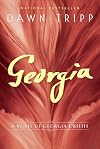
A fictionalized biography that simmers with wry observations and introspection as Georgia O’Keeffe explores her relationship with Alfred Stieglitz in her quest for her personal and professional identity in a time where gender, class, and society provided expectations regardless of individuality.
While I had admired Georgia O’Keeffe’s paintings I knew very little about her life, so when I read the following in the author’s note – “Who was the woman, the artist, who made these show more works? And why was she not recognized for the sheer visionary power of these abstractions during her lifetime?” – I settled in to be immersed in Georgia’s world.
Based on her extensive research – the author writes the storyline in Georgia’s voice as she looks back over her life and decisions. I found myself underlying passages that I think will speak to many as they often look back on past events/situations making this a universal story yet also an intimate look at the essence of Georgia.
“A life is built of lies and magic, illusions bedded down with dreams. And in the end which haunts us most is the recollection of what we failed to see.”
“A bold glamour has begun to come into these small rooms. I’ve been here for less than a year, and already we are seen as an extraordinary couple – the two of us – the old photographer and is daring sibyl, his artist, his young muse, and I begin to see , too- as they can see – how in these deceptively simple images, he comes near to capturing some essence, some manifestations of a universal feminine.”
“There are those moments, always looking back on life, when you can see the points – fully lit in hindsight, real or imagined – where the path split, where you could have made a different choice and the cost of the choice you made.”
“Should I say that I am a landscape artist who has become famous for someone else’s portraits of me? That as my art hit the world it’s been instantaneously recast by those who see what they want, not what is there?”
“He once called our relationship a mixing of souls. But then again, he called it a love story. And it was far more – and less – than that.”
“Years from now, I will understand that this is the moment my life became wholly mine, more mine than it ever was before because I will never again let it be anything else.”
Overall, I savored this beautifully rendered well-crafted story filled with the incredibly raw, edgy emotions that enthralled me until the very last word. This is a wonderful addition to the fictionalized biography genre. show less
While I had admired Georgia O’Keeffe’s paintings I knew very little about her life, so when I read the following in the author’s note – “Who was the woman, the artist, who made these show more works? And why was she not recognized for the sheer visionary power of these abstractions during her lifetime?” – I settled in to be immersed in Georgia’s world.
Based on her extensive research – the author writes the storyline in Georgia’s voice as she looks back over her life and decisions. I found myself underlying passages that I think will speak to many as they often look back on past events/situations making this a universal story yet also an intimate look at the essence of Georgia.
“A life is built of lies and magic, illusions bedded down with dreams. And in the end which haunts us most is the recollection of what we failed to see.”
“A bold glamour has begun to come into these small rooms. I’ve been here for less than a year, and already we are seen as an extraordinary couple – the two of us – the old photographer and is daring sibyl, his artist, his young muse, and I begin to see , too- as they can see – how in these deceptively simple images, he comes near to capturing some essence, some manifestations of a universal feminine.”
“There are those moments, always looking back on life, when you can see the points – fully lit in hindsight, real or imagined – where the path split, where you could have made a different choice and the cost of the choice you made.”
“Should I say that I am a landscape artist who has become famous for someone else’s portraits of me? That as my art hit the world it’s been instantaneously recast by those who see what they want, not what is there?”
“He once called our relationship a mixing of souls. But then again, he called it a love story. And it was far more – and less – than that.”
“Years from now, I will understand that this is the moment my life became wholly mine, more mine than it ever was before because I will never again let it be anything else.”
Overall, I savored this beautifully rendered well-crafted story filled with the incredibly raw, edgy emotions that enthralled me until the very last word. This is a wonderful addition to the fictionalized biography genre. show less
4.5 My last book of the year and my last review and it was a fantastic one. One of the best books about an artist that I have read in several years. Georgia O'Keefe, love her paintings but never knew much about her as a person. In this book Tripp, does an amazing and thorough job fleshing out the woman and showing us her struggles as an artist. Her husband Stieglitz and their relationship, what kept them connected and what separated them. Credited with the discovery of O'Keefe, he was show more already a very successful photographer in his own right. Their relationship was passionate, many sex scenes in the beginning of the novel can attest to this and alternately contentious as O'Keefe fought to acquire an identity as an artist separate from his.
Beautifully written, some of the phrases are just breathtaking, many I read more than once. We learn O'Keefe hopes and dreams, what made her who she is, her disappointments and her joys. We follow her from her first meeting with her husband, to her later years in Taos. Through her changing art forms and her visions, where they came from, where she wanted to take them. Her past life is related in O'Keefe's own thoughts but lightly touched on.
The authors note explains her sources as well as how she became interested in O'Keefe herself. Spent much time on Wiki looking up the various pieces mentioned as well as the photographs taken by her husband.
What an amazing woman, what an amazing full life. Tripp really bought this artist to life for me, as a creator and as a woman. Stunning.
ARC from publisher. show less
Beautifully written, some of the phrases are just breathtaking, many I read more than once. We learn O'Keefe hopes and dreams, what made her who she is, her disappointments and her joys. We follow her from her first meeting with her husband, to her later years in Taos. Through her changing art forms and her visions, where they came from, where she wanted to take them. Her past life is related in O'Keefe's own thoughts but lightly touched on.
The authors note explains her sources as well as how she became interested in O'Keefe herself. Spent much time on Wiki looking up the various pieces mentioned as well as the photographs taken by her husband.
What an amazing woman, what an amazing full life. Tripp really bought this artist to life for me, as a creator and as a woman. Stunning.
ARC from publisher. show less
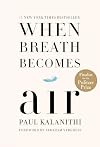
This book just about broke me and there's no way I'm going to be able to adequately capture what it put me through.
Like THE LAST LECTURE by Randy Pausch that came before it, there's so much to take from this book. Dr. Kalanithi has a lot to say and he says it well.
That said, there's quite a few choices that Dr. Kalanithi made that I disagreed with. I don't know that I would continue to work knowing my time was significantly shortened. I fully understand why he did, and I also understand that show more each of us wrestles with our mortality in different ways. And I understand that, had they been as selfish as I invariably would choose to be, we would not have THE LAST LECTURE, we would not have Bowie's Blackstar album, we would not have this book. I, for one, am thankful for each of these sacrifices.
I'm also not a religious person by any stretch of the imagination, so I couldn't quite get behind him rediscovering his faith in the face of a God who would allow something like this to happen (and yeah, I know the arguments...).
But overall, the fact that he reacted as he did—this man that dug through literature and philosophy and made it his life's work to understand our purpose, to understand this engine encased in it bone cage that powered these meat machines, and, in his own words, to look Death in the eyes—was then forced to stare down Death far sooner than anyone could have anticipated.
It's like some cruel cosmic joke, but still, he faced it head on, and was able to capture his thoughts, and make his peace with it, so he could do his best to understand it as he had done with everything before that.
And then to have his wife take up the narrative and carry it forward at the end? Incredible.
This is a gorgeous, heartbreaking, important book. show less
Like THE LAST LECTURE by Randy Pausch that came before it, there's so much to take from this book. Dr. Kalanithi has a lot to say and he says it well.
That said, there's quite a few choices that Dr. Kalanithi made that I disagreed with. I don't know that I would continue to work knowing my time was significantly shortened. I fully understand why he did, and I also understand that show more each of us wrestles with our mortality in different ways. And I understand that, had they been as selfish as I invariably would choose to be, we would not have THE LAST LECTURE, we would not have Bowie's Blackstar album, we would not have this book. I, for one, am thankful for each of these sacrifices.
I'm also not a religious person by any stretch of the imagination, so I couldn't quite get behind him rediscovering his faith in the face of a God who would allow something like this to happen (and yeah, I know the arguments...).
But overall, the fact that he reacted as he did—this man that dug through literature and philosophy and made it his life's work to understand our purpose, to understand this engine encased in it bone cage that powered these meat machines, and, in his own words, to look Death in the eyes—was then forced to stare down Death far sooner than anyone could have anticipated.
It's like some cruel cosmic joke, but still, he faced it head on, and was able to capture his thoughts, and make his peace with it, so he could do his best to understand it as he had done with everything before that.
And then to have his wife take up the narrative and carry it forward at the end? Incredible.
This is a gorgeous, heartbreaking, important book. show less
NB: The original review included pictures and can be found here: http://www.librarything.com/topic/297302#6607581
“I make forms that echo those early abstract forms I made when I was no one, and it occurs to me that art is a separate country, outside the body, outside time, like death or desire, an element beyond our physical selves we are traveling toward. My hand shakes. Small drops of paint have spilled. So human, so flawed and imprecise, and beautiful for that.”
I don’t know art. I show more don’t study it. I don’t always (usually?) get it. But I know what I like, and I like Georgia O’Keeffe. When I was a child, my mother received as a gift, a huge coffee table book of fifty O’Keeffe flower paintings, and I loved to page through it. I loved the colors and the shapes and what I now think of as a kind of motion in the paintings. A few years ago, I went to Santa Fe and happily abandoned my not-interested husband to visit the Georgia O’Keeffe Museum – it was amazing to see her work in person, and I spent a long time in that relatively small space. Earlier this week, I took in some of the galleries at the Metropolitan Museum of Art in New York and came across two O’Keeffes. It inspired me to finally pick up this book, Georgia: A Novel of Georgia O’Keeffe by Dawn Tripp, and I immediately sank into it.
Tripp focuses on O’Keeffe’s relationship with the photographer Alfred Stieglitz, who mentored, seduced, loved, and manipulated her. He photographed her early on in their relationship, and his exhibition of her nude portraits was her introduction to the claustrophobic art world of New York.
When her paintings were finally exhibited, her art was often viewed through the lens provided by Stieglitz’s photos, and O’Keeffe resented it. She resented the gendered terms being used, the reduction of much of her work to sexual expressionism: “I feel heat rising into my face, burning. They are writing me down, this thrall of bow-tied men, straining me into awful, frivolous terms. Every observation they make about my art is linked back to the body of the woman in the photographs.”
O’Keeffe and Stieglitz had a complicated relationship – he wanted to marry, she did not. She wanted a child, he did not. They eventually married and had no children because he convinced her it would interfere with her art. Tripp includes a lot of yearning on O’Keeffe’s part to have a child and the sense of loss when she realizes she won’t. I wondered how much of this was based in the available evidence, to be honest. It seems like such a weirdly conventional and overtly feminine trait to attribute to a woman who rejected so many similar stereotypes for herself.
Tripp writes beautifully, of normal everyday things and of art and artistic inclinations, passions, and frustrations.
“Our mother was cool but not unkind. Her eyes luminous, austere, held a sort of distance we did not belong to, like the line at the end of the sky – that silent point of reference that held everything tethered, the line that seemed to meet the land but never did.”
“The shapes of the world out there are shadowy. Lean and contoured strokes, they glow. The moon shines and cuts the night open.”
Her portrait of a stormy relationship is sensitive and nicely-detailed; she includes small moments to illustrate the push and pull between O’Keeffe and Stieglitz and in so doing makes them very real and sympathetic to the reader. One is simultaneously frustrated and moved by them. In the end, O’Keeffe reclaims herself and her art, and the last sections of the book, where she is an old woman, are beautifully done.
“I will go back to New Mexico. I will walk out into the dry nothingness of the country that I love and paint: sharp-edged flowers, desert abstractions, cow skulls – images of Thanatos. I will title my work and that is what they will see: the subject that fills space and the words that define it. They will not notice that what I am really after – all I was ever really after – is that raw desire of the sky pouring through the windowed socket of a bone.”
Despite plenty of flaws, I really loved this book.
4.5 stars
“When I make a picture of a flower, I don’t paint it as I see it, but as its essence moves me. I eliminate every detail that’s extraneous. I paint it as I want it to be felt.”
“Day after day, it is the desolation of this country that enthralls me. How the wind sweeps the light and throws it into vibrant shifting patterns of color and shadow against the cliffs. I breathe. My mind loosens like a fist and empties. I do not think of him. I drive, I walk, I paint, and I am not the woman that he made.”
And this was fun – this is one of the paintings I saw at the Met on Monday.
“This will be my answer to the men who are always setting out to make the Great American Novel or the Great American Photograph. This will be my joke on them. Lines of red, white, and blue, and that mythic, imperfect cow skull – that piece of country – floating there through the center, the stripped cold strength of that bone that lasts and lasts, rising out of the blue like some crazy American dream. It will be unsalable – who would hang a thing like this? I don’t care. They may not like it, but they’ll notice. Whether they get it or not. They don’t make the country like I do. They don’t see that what is most magical and lush exists where you would never think to look. The bones are not what you imagine. I told Beck this once. Not death. But the life that is left over. When I finish the painting, I study it. It isn’t pretty, but it’s what I want it to be.” show less
“I make forms that echo those early abstract forms I made when I was no one, and it occurs to me that art is a separate country, outside the body, outside time, like death or desire, an element beyond our physical selves we are traveling toward. My hand shakes. Small drops of paint have spilled. So human, so flawed and imprecise, and beautiful for that.”
I don’t know art. I show more don’t study it. I don’t always (usually?) get it. But I know what I like, and I like Georgia O’Keeffe. When I was a child, my mother received as a gift, a huge coffee table book of fifty O’Keeffe flower paintings, and I loved to page through it. I loved the colors and the shapes and what I now think of as a kind of motion in the paintings. A few years ago, I went to Santa Fe and happily abandoned my not-interested husband to visit the Georgia O’Keeffe Museum – it was amazing to see her work in person, and I spent a long time in that relatively small space. Earlier this week, I took in some of the galleries at the Metropolitan Museum of Art in New York and came across two O’Keeffes. It inspired me to finally pick up this book, Georgia: A Novel of Georgia O’Keeffe by Dawn Tripp, and I immediately sank into it.
Tripp focuses on O’Keeffe’s relationship with the photographer Alfred Stieglitz, who mentored, seduced, loved, and manipulated her. He photographed her early on in their relationship, and his exhibition of her nude portraits was her introduction to the claustrophobic art world of New York.
When her paintings were finally exhibited, her art was often viewed through the lens provided by Stieglitz’s photos, and O’Keeffe resented it. She resented the gendered terms being used, the reduction of much of her work to sexual expressionism: “I feel heat rising into my face, burning. They are writing me down, this thrall of bow-tied men, straining me into awful, frivolous terms. Every observation they make about my art is linked back to the body of the woman in the photographs.”
O’Keeffe and Stieglitz had a complicated relationship – he wanted to marry, she did not. She wanted a child, he did not. They eventually married and had no children because he convinced her it would interfere with her art. Tripp includes a lot of yearning on O’Keeffe’s part to have a child and the sense of loss when she realizes she won’t. I wondered how much of this was based in the available evidence, to be honest. It seems like such a weirdly conventional and overtly feminine trait to attribute to a woman who rejected so many similar stereotypes for herself.
Tripp writes beautifully, of normal everyday things and of art and artistic inclinations, passions, and frustrations.
“Our mother was cool but not unkind. Her eyes luminous, austere, held a sort of distance we did not belong to, like the line at the end of the sky – that silent point of reference that held everything tethered, the line that seemed to meet the land but never did.”
“The shapes of the world out there are shadowy. Lean and contoured strokes, they glow. The moon shines and cuts the night open.”
Her portrait of a stormy relationship is sensitive and nicely-detailed; she includes small moments to illustrate the push and pull between O’Keeffe and Stieglitz and in so doing makes them very real and sympathetic to the reader. One is simultaneously frustrated and moved by them. In the end, O’Keeffe reclaims herself and her art, and the last sections of the book, where she is an old woman, are beautifully done.
“I will go back to New Mexico. I will walk out into the dry nothingness of the country that I love and paint: sharp-edged flowers, desert abstractions, cow skulls – images of Thanatos. I will title my work and that is what they will see: the subject that fills space and the words that define it. They will not notice that what I am really after – all I was ever really after – is that raw desire of the sky pouring through the windowed socket of a bone.”
Despite plenty of flaws, I really loved this book.
4.5 stars
“When I make a picture of a flower, I don’t paint it as I see it, but as its essence moves me. I eliminate every detail that’s extraneous. I paint it as I want it to be felt.”
“Day after day, it is the desolation of this country that enthralls me. How the wind sweeps the light and throws it into vibrant shifting patterns of color and shadow against the cliffs. I breathe. My mind loosens like a fist and empties. I do not think of him. I drive, I walk, I paint, and I am not the woman that he made.”
And this was fun – this is one of the paintings I saw at the Met on Monday.
“This will be my answer to the men who are always setting out to make the Great American Novel or the Great American Photograph. This will be my joke on them. Lines of red, white, and blue, and that mythic, imperfect cow skull – that piece of country – floating there through the center, the stripped cold strength of that bone that lasts and lasts, rising out of the blue like some crazy American dream. It will be unsalable – who would hang a thing like this? I don’t care. They may not like it, but they’ll notice. Whether they get it or not. They don’t make the country like I do. They don’t see that what is most magical and lush exists where you would never think to look. The bones are not what you imagine. I told Beck this once. Not death. But the life that is left over. When I finish the painting, I study it. It isn’t pretty, but it’s what I want it to be.” show less
Lists
Awards


You May Also Like


Statistics
- Works
- 6
- Members
- 922
- Popularity
- #27,829
- Rating
- 3.9
- Reviews
- 52
- ISBNs
- 31
- Languages
- 2
- Favorited
- 2
