
Michael Scott (18) (1981–)
Author of Ancient Worlds: A Global History of Antiquity
For other authors named Michael Scott, see the disambiguation page.
About the Author
Irish-born Michael Scott is one of Ireland's most successful and prolific authors. He has over one hundred titles to his credit, spanning a variety of genres, including Fantasy, Science Fiction and Folklore and audiences writing for both adults and young adults. Scott had been published in show more thirty-seven countries, in twenty languages. Scott is considered one of the authorities on Celtic folklore. His collections, Irish Folk & Fairy Tales, Irish Myths & Legends and Irish Ghosts & Hauntings have remained continuously in print for the past twenty years. Scott is the author of the Series Secrets of the Immortal Nicholas Flamel, Tales from the Land of Erin, Tales of the Bard, and De Dannan. Scott also writes historical novels under pen name Anna Dillon. (Bowker Author Biography) show less
Works by Michael Scott
From Democrats to Kings: The Brutal Dawn of a New World from the Downfall of Athens to the Rise of Alexander the Great (2009) 152 copies, 2 reviews
X Marks the Spot: The Story of Archaeology in Eight Extraordinary Discoveries (2023) 64 copies, 3 reviews
Associated Works
Tagged
Common Knowledge
- Birthdate
- 1981
- Gender
- male
- Education
- University of Cambridge
- Occupations
- associate professor
- Organizations
- University of Warwick
- Nationality
- UK
- Places of residence
- England, UK
Greece - Associated Place (for map)
- England, UK
Members
Reviews
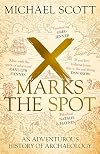
This book covers the evolution of modern archaeology from old colonial expeditions to today's cutting-edge digs. It analyzes eight significant discoveries, some well-known and others more obscure. The title playfully refers to Indiana Jones’s line that “X never, ever marks the spot.” Scott provides minibiographies of both celebrated and forgotten archeologists. He portrays how scientific methods have changed over time and how these finds have added to our understanding of the past.
Scott analyzes factors involved in archeological digs, including geopolitics, financing, academic interests, luck, and obsessions. He examines how the discoveries become objects of modern fascinations. He explores contemporary debates about ownership, restitution, and cultural heritage. He reviews the colonial origins of archaeology and how the field has evolved to incorporate more collaborative and ethical approaches.
The author's enthusiasm for his material is evident. He is hopeful that local peoples and the international community can come together to protect, preserve, and educate. I found it a compelling read that conveys what these types of discoveries can teach us about human history across time and culture.
4.5 show less
- The
- eight include:
- - The Rosetta Stone discovered in 1799 in Rashid, Egypt
- - Early writings from the “Caves of the Thousand Buddhas” in Central Asia
- - Early humans discovered in Olduvai Gorge in Tanzania
- - The Terracotta Warriors
- - Machu Picchu
- - Uluburan bronze age shipwreck off the coast of Türkiye
- - “The Lady” of Ukok and ancient ice chambers in the Altai region of Mongolia
- - The ritual deposition of pieces of pots and figurines on Keros Island in the Aegean Sea
Scott analyzes factors involved in archeological digs, including geopolitics, financing, academic interests, luck, and obsessions. He examines how the discoveries become objects of modern fascinations. He explores contemporary debates about ownership, restitution, and cultural heritage. He reviews the colonial origins of archaeology and how the field has evolved to incorporate more collaborative and ethical approaches.
The author's enthusiasm for his material is evident. He is hopeful that local peoples and the international community can come together to protect, preserve, and educate. I found it a compelling read that conveys what these types of discoveries can teach us about human history across time and culture.
4.5 show less
This rather dense study is as much, if not more so, an examination of Delphi as a player in the international arrangements of its time as it is of a religious & cultural institution. This is going to be a problem for the general reader who might not have a broad enough sense of who the players were over the wide span of time covered by this book. Despite the author's attempt to maintain a colloquial tone I found it something of a slog and I really can't claim that Scott held my interest all show more that well; particularly once he was beyond the zenith of the classical Greek city-states. Still, if one is interested in Delphi, this is probably worth looking at more like a reference book to be dipped into, rather than a narrative to be read cover to cover. show less
It's pretty weird to open up to the first chapter of a book subtitled 'A Global History of Antiquity'-- having read an introduction, which lambasts all other historians for failing to write proper, global history, and declares that the book you're about to read is truly revolutionary in its approach--and find that it's about the Birth of Democracy in Athens. Uh... okay, weird place to start. But it also sets the tone almost perfectly: this is a collection of stories told quite often before show more (founding of Roman Republic, Confucius' life story, Hannibal, the First Emperor, Contantine and Christianity, early Buddhism and Hinduism in India, Buddhism in China), with a few more novel anecdotes thrown in (the pages on Armenia were nice). What holds all this together? The revolutionary method promised in the intro seems to be comparing things from different places, so people in the ancient world(s) all did political stuff, and military stuff, and religious stuff.
Underwhelming, to say the least. This would, on the other hand, be perfect for high school or first year college students, who don't know the stories, or know them only a little. Scott's writing is fine, though, again, underwhelming. And younger readers might also be innocent enough to be excited by the awful contemporary historiographical cliches (here's the opening of one chapter: "One of her hands is placed provocatively on her slender waist, the other caught in a tentative caress of her thigh. Her ample bosom, emphasised by her clinging, flimsy clothers, is turned towards her companion" etc etc... He's describing a coin, but boy was that an exciting way to start a chapter! I'm way more interested in slender waists than I am in the Guptas! Way to trick me, author!)
Skip this, and head straight for the first half of Frankopan's Silk Roads. show less
Underwhelming, to say the least. This would, on the other hand, be perfect for high school or first year college students, who don't know the stories, or know them only a little. Scott's writing is fine, though, again, underwhelming. And younger readers might also be innocent enough to be excited by the awful contemporary historiographical cliches (here's the opening of one chapter: "One of her hands is placed provocatively on her slender waist, the other caught in a tentative caress of her thigh. Her ample bosom, emphasised by her clinging, flimsy clothers, is turned towards her companion" etc etc... He's describing a coin, but boy was that an exciting way to start a chapter! I'm way more interested in slender waists than I am in the Guptas! Way to trick me, author!)
Skip this, and head straight for the first half of Frankopan's Silk Roads. show less

Even though this work is less than 10 years old, it falls firmly in the category of those books which I should have given a pass to. While Scott is to be applauded for his attempt to write a good general world history of antiquity that dusts off the old concept of the "Axial Age," one is left with the sense that the sum of the parts is less than the whole. At the very least I've already read too many books that go into more depth than Scott can spend on any one theme (governance, empire show more building, religion) or culture.
Still, I didn't find this to be a total wash-out, in that the middle section went into enough depth regarding the interactions between the successors to Alexander the Great's empire and the wider world of Central Asia, that I felt that I learned something new.
On the whole, this could still be a useful read for the right individual, say, the sort of person who likes computer games such as "Civilization" or "Assassin's Creed," and is looking for historical background in a digestible form. Scott ends on the now poignant note of wondering whether the regime of globalization that prevailed in the middle of the last decade could be upheld; the answer being, not really. show less
Still, I didn't find this to be a total wash-out, in that the middle section went into enough depth regarding the interactions between the successors to Alexander the Great's empire and the wider world of Central Asia, that I felt that I learned something new.
On the whole, this could still be a useful read for the right individual, say, the sort of person who likes computer games such as "Civilization" or "Assassin's Creed," and is looking for historical background in a digestible form. Scott ends on the now poignant note of wondering whether the regime of globalization that prevailed in the middle of the last decade could be upheld; the answer being, not really. show less
You May Also Like


Associated Authors
Statistics
- Works
- 10
- Also by
- 4
- Members
- 653
- Popularity
- #38,651
- Rating
- 3.8
- Reviews
- 13
- ISBNs
- 797
- Languages
- 22