
David Ross (4)
Author of The Illustrated History of British Steam Railways: The Legacy of the Steam Locomotive
For other authors named David Ross, see the disambiguation page.
About the Author
David Ross is the author of "A Little History of Scotland" and "A Little History of England". (Bowker Author Biography)
Works by David Ross
The Illustrated History of British Steam Railways: The Legacy of the Steam Locomotive (2002) 112 copies
The Golden Age of Sail: An Illustrated Guide to Great Sailing Ships from the Sixteenth to the Twentieth Centuries (2013) 25 copies
Warships from the Golden Age of Steam: An Illustrated Guide to Great Warships from 1860 to 1945 (2014) 13 copies
Great Warships: An Illustrated Guide to the Great Sailing Ships From the Sixteenth to the Twentieth Centuries (2013) 11 copies
Battleships: The World's Greatest Battleships from the 16th Century to the Gulf War (2022) 8 copies, 1 review
Submarines: The World's Greatest Submarines from the 18th Century to the Present (2022) 8 copies, 1 review
Tagged
Common Knowledge
Members
Reviews

Abandoned Train Stations by David Ross is a hauntingly beautiful coffee table book. Definitely an excellent addition to any library as well as living room decor.
The photographs are organized by continents with explanatory captions for each picture. These captions highlight a bit of the history and/or current state of the station and the railway on which it sits.
I tend to enjoy these types of books for a couple of reasons, one of which makes this an excellent book for me. Both for when I have show more guests and, frankly, just because I like to have fun with displaying books, I arrange coffee and end table books with a purpose. Often that purpose is only visible to me, but such is life. I sometimes (usually when I am having guests who tend toward conversation on a range of topics) like to leave one book open to a particularly intriguing photograph, whether because of its beauty or because it hints at some other subject. I then place a couple of related books to that page on the table(s) as well. Because this book has images of desolate abandoned stations as well as urban, completely abandoned as well as reappropriated, I can place books that are on completely different topics nearby based on whether I use an urban or a rural station. I have several urban decay books that would work well, as well as one on the old Domino Sugar plant which would make an interesting juxtaposition.
I would recommend this to anyone with an interest in trains and railroad lines as well as anyone more interested in photography of deserted places and buildings. The variety of stations included keeps this from being a repetitive book, well, aside from the theme of abandoned stations.
Reviewed from a copy made available by the publisher via NetGalley. show less
The photographs are organized by continents with explanatory captions for each picture. These captions highlight a bit of the history and/or current state of the station and the railway on which it sits.
I tend to enjoy these types of books for a couple of reasons, one of which makes this an excellent book for me. Both for when I have show more guests and, frankly, just because I like to have fun with displaying books, I arrange coffee and end table books with a purpose. Often that purpose is only visible to me, but such is life. I sometimes (usually when I am having guests who tend toward conversation on a range of topics) like to leave one book open to a particularly intriguing photograph, whether because of its beauty or because it hints at some other subject. I then place a couple of related books to that page on the table(s) as well. Because this book has images of desolate abandoned stations as well as urban, completely abandoned as well as reappropriated, I can place books that are on completely different topics nearby based on whether I use an urban or a rural station. I have several urban decay books that would work well, as well as one on the old Domino Sugar plant which would make an interesting juxtaposition.
I would recommend this to anyone with an interest in trains and railroad lines as well as anyone more interested in photography of deserted places and buildings. The variety of stations included keeps this from being a repetitive book, well, aside from the theme of abandoned stations.
Reviewed from a copy made available by the publisher via NetGalley. show less
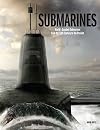
Submarines: The World's Greatest Submarines from the 18th Century to the Present, by David Ross, is a visually engaging as well as informative journey through the history of the submarine.
I will admit to a bit of bias here, I served as a reactor operator aboard a submarine when I was younger and my father was career Navy, so this falls well inside my areas of interest. Though by doing so it does open itself up to perhaps harsher criticism. Fortunately, I found little here to take issue show more with.
While this very specifically highlights specific submarines it also serves as a nice history as well. There are certainly gaps as a history book but I don't get the impression this is really intended as a history book, more of a historical overview, which it does nicely. The illustrations show not only the features but, coupled with each write-up, the innovations that were made and what was carried forward to later vessels.
For those who have a love of submarines there may be some you would have liked included, such is the case with any book that has to make a selection for inclusion. I would have loved a section on the US vessel NR-1. While certainly an important submarine, my interest is also fueled by the fact my division chief had been a crew member and I have heard many stories. It not having an entry, however, does not detract from the wonderful coverage included.
In some ways this is a cross between a Jane's military book and a history book. Unlike Jane's, it is not a comprehensive accounting of current equipment, and unlike a history book it is not written as a narrative. That is not a complaint, it never aspires to be either of those and it succeeds very well as an episodic historical overview using different submarines as each episode. Great as either a reference or a book to read straight through.
Reviewed from a copy made available by the publisher via NetGalley. show less
I will admit to a bit of bias here, I served as a reactor operator aboard a submarine when I was younger and my father was career Navy, so this falls well inside my areas of interest. Though by doing so it does open itself up to perhaps harsher criticism. Fortunately, I found little here to take issue show more with.
While this very specifically highlights specific submarines it also serves as a nice history as well. There are certainly gaps as a history book but I don't get the impression this is really intended as a history book, more of a historical overview, which it does nicely. The illustrations show not only the features but, coupled with each write-up, the innovations that were made and what was carried forward to later vessels.
For those who have a love of submarines there may be some you would have liked included, such is the case with any book that has to make a selection for inclusion. I would have loved a section on the US vessel NR-1. While certainly an important submarine, my interest is also fueled by the fact my division chief had been a crew member and I have heard many stories. It not having an entry, however, does not detract from the wonderful coverage included.
In some ways this is a cross between a Jane's military book and a history book. Unlike Jane's, it is not a comprehensive accounting of current equipment, and unlike a history book it is not written as a narrative. That is not a complaint, it never aspires to be either of those and it succeeds very well as an episodic historical overview using different submarines as each episode. Great as either a reference or a book to read straight through.
Reviewed from a copy made available by the publisher via NetGalley. show less
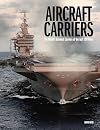
Aircraft Carriers by David Ross is a very interesting look at the development of the ship from refitted battleship to dedicated aircraft carrier, told by looking at specific ships over the past 100 years.
As I did with the Submarines book, I will offer some personal background. I don't remember specifically the first time I saw an aircraft carrier, no doubt at one of my father's duty stations (he was career Navy) while I was young. At that age, even destroyers looked big, so perspective show more carries little meaning into the present. After I completed ET A and C schools, I got temporary duty on a surface ship while waiting to go to Nuclear Power school and prototype then on to my submarine. I was stationed aboard the USS Mount Whitney which at the time was the amphibious command ship for the Atlantic. It was, to my eyes, big. But while in Norfolk either the Kennedy or the Independence came into port and when I visited an old boot camp friend onboard I was really taken aback by the size. Ever since, my interests have largely been submarines and aircraft carriers when it comes to Naval vessels.
The entries in this book do a great job of not just describing each ship but also how it fits into the evolution of the carrier. An extra bonus, for my interests anyway, was the information given about many of the planes that could use each ship. Particularly the older planes, like one with, as I recall, metal for the front half and material covered wood for the back. As is my habit, I went online several times to follow leads of particular interest to me. That is also a positive of the book: it provides quite a bit of information without getting bogged down in any area while giving an interested reader the keywords necessary to dig deeper in whatever might interest them.
While many of the photographs are wonderful, I most enjoyed the drawings that showed cross sections and locations of key elements. Between these pictures and the text, it was easy to understand the rationale behind many of the design changes over the years.
Highly recommended for military history buffs as well as those interested in histories of specific things. I could even imagine someone who likes to create replicas using this, along with additional research, to make realistic models.
Reviewed from a copy made available by the publisher via NetGalley. show less
As I did with the Submarines book, I will offer some personal background. I don't remember specifically the first time I saw an aircraft carrier, no doubt at one of my father's duty stations (he was career Navy) while I was young. At that age, even destroyers looked big, so perspective show more carries little meaning into the present. After I completed ET A and C schools, I got temporary duty on a surface ship while waiting to go to Nuclear Power school and prototype then on to my submarine. I was stationed aboard the USS Mount Whitney which at the time was the amphibious command ship for the Atlantic. It was, to my eyes, big. But while in Norfolk either the Kennedy or the Independence came into port and when I visited an old boot camp friend onboard I was really taken aback by the size. Ever since, my interests have largely been submarines and aircraft carriers when it comes to Naval vessels.
The entries in this book do a great job of not just describing each ship but also how it fits into the evolution of the carrier. An extra bonus, for my interests anyway, was the information given about many of the planes that could use each ship. Particularly the older planes, like one with, as I recall, metal for the front half and material covered wood for the back. As is my habit, I went online several times to follow leads of particular interest to me. That is also a positive of the book: it provides quite a bit of information without getting bogged down in any area while giving an interested reader the keywords necessary to dig deeper in whatever might interest them.
While many of the photographs are wonderful, I most enjoyed the drawings that showed cross sections and locations of key elements. Between these pictures and the text, it was easy to understand the rationale behind many of the design changes over the years.
Highly recommended for military history buffs as well as those interested in histories of specific things. I could even imagine someone who likes to create replicas using this, along with additional research, to make realistic models.
Reviewed from a copy made available by the publisher via NetGalley. show less
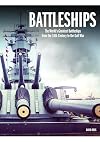
Battleships by David Ross is an attractive and informative look at what used to be the centerpiece of any major naval force.
There is always an interest in books that focus on specific aspects of military armament, from ships and planes to tanks and artillery, and this work fits nicely into that genre. What separates it from many others is the way in which the ships selected, together, tell the history of both battleships and naval warfare. This is a collection of profiles of important ships. show more It is also a history. And if that isn't enough, it makes a nice-looking coffee table book (if warfare is what you want on your coffee table).
What makes this a fun book is that you can read it in several ways. You can mostly flip through, take in the photographs, captions, and sidebars and come away with a nice appreciation for the development of the ship. You can keep it near where you sit and read it in much the same way you do a collection of essays or short stories, one or two ships at a time. Or you can read it straight through and get a very good look at the history of the battleship itself and of naval warfare as a whole.
Reviewed from a copy made available by the publisher via NetGalley. show less
There is always an interest in books that focus on specific aspects of military armament, from ships and planes to tanks and artillery, and this work fits nicely into that genre. What separates it from many others is the way in which the ships selected, together, tell the history of both battleships and naval warfare. This is a collection of profiles of important ships. show more It is also a history. And if that isn't enough, it makes a nice-looking coffee table book (if warfare is what you want on your coffee table).
What makes this a fun book is that you can read it in several ways. You can mostly flip through, take in the photographs, captions, and sidebars and come away with a nice appreciation for the development of the ship. You can keep it near where you sit and read it in much the same way you do a collection of essays or short stories, one or two ships at a time. Or you can read it straight through and get a very good look at the history of the battleship itself and of naval warfare as a whole.
Reviewed from a copy made available by the publisher via NetGalley. show less
You May Also Like


Associated Authors
Statistics
- Works
- 33
- Members
- 583
- Popularity
- #43,004
- Rating
- 3.9
- Reviews
- 11
- ISBNs
- 310
- Languages
- 14