
James Mallory (1) (1945–)
Author of The Outstretched Shadow
For other authors named James Mallory, see the disambiguation page.
Series
Works by James Mallory
Tagged
Common Knowledge
- Legal name
- Mallory, James P.
- Birthdate
- 1945
- Gender
- male
- Short biography
- James Mallory (1) of San Francisco wrote the Merlin trilogy and co-wrote several books with Mercedes Lackey. According to his publisher HarperCollins "James Mallory is the pseudonym of an award-winning author of both adult and children’s books."
- Nationality
- USA
- Birthplace
- San Francisco, California, USA
- Places of residence
- San Francisco, California, USA
Belfast, Northern Ireland, UK - Associated Place (for map)
- USA
Members
Discussions
80s/90s fantasy novel w/ 2 teenage boy heroes, 1 rides dragons, other is mage? defeat evil mage holding dragon captive? in Name that Book (June 2014)
Reviews
The Outstretched Shadow: The Obsidian Trilogy, Book One (The Obsidian Mountain Trilogy 1) by Mercedes Lackey
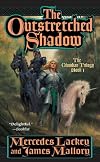
Authors Mercedes Lackey and James Mallory create a wealth of cultures in the world of this trilogy, and the first book, The Outstretched Shadow, has a pleasing sense of fully developed magic, logical consequences, and surprising characters. I’ve not read any of the authors’ books before, but I was quickly hooked on this series, enjoying the story progression of the first book (which could easily be two books), and particularly enjoying the sense of an ending (in the individual book) that show more leaves the reader both satisfied and eager for more.
The world-building is fascinating, the characters are appealingly flawed, and the threat is… well, overwhelming and definitely dark. But there’s natural humor and intriguing food for thought, including a nicely drawn out sense of religion and religious questions. Even the unicorn makes sense! Highly recommended.
Disclosure: I’m hooked! show less
The world-building is fascinating, the characters are appealingly flawed, and the threat is… well, overwhelming and definitely dark. But there’s natural humor and intriguing food for thought, including a nicely drawn out sense of religion and religious questions. Even the unicorn makes sense! Highly recommended.
Disclosure: I’m hooked! show less
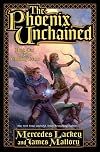
8/10
I thoroughly enjoyed it. The two main characters, Tiercel and Harrier, have a “bantering best buddies” kind of relationship that lays the foundation for their adventures. Yes, it’s a quest of sorts, and yes, these are ordinary young men unexpectedly called to be heroes and no, they don’t exactly know how to do that. There are many typical fantasy creatures—elves, centaurs, dragons, etc.—so I suppose some people might find the story a bit too predictable, but there were enough show more original elements to keep things fresh. I was entertained and am looking forward to continuing the series. show less
I thoroughly enjoyed it. The two main characters, Tiercel and Harrier, have a “bantering best buddies” kind of relationship that lays the foundation for their adventures. Yes, it’s a quest of sorts, and yes, these are ordinary young men unexpectedly called to be heroes and no, they don’t exactly know how to do that. There are many typical fantasy creatures—elves, centaurs, dragons, etc.—so I suppose some people might find the story a bit too predictable, but there were enough show more original elements to keep things fresh. I was entertained and am looking forward to continuing the series. show less
Spoilers ahead. Well, not in my opinion, but I figure I’ll hedge my bets just in case.
I recently picked up an audiobook copy of The Phoenix Unchained by Mercedes Lackey and James Mallory from my local library. I’d never heard of either author, but my friend Ruben asked me to read and review more fantasy, and who am I to turn down such a request? After all, some of my first reading loves were Dragonlance and Forgotten Realms fantasy schtick. Sure, I thought. It’ll be fun—an show more opportunity to get back to my literary roots. What could go wrong?
A lot, it turns out. It only took a few chapters for me to remember why I stopped reading formulaic fantasy bullcrap in the first place. Not to say all fantasy is formulaic bullcrap. I don’t think that at all (and for proof you can see my review of The Chronicles of the Black Company). It’s just that… well, why don’t I tell you a little bit about the plot first and you can see for yourself.
The Phoenix Unchained is the first book of The Enduring Flame trilogy, a sequel to Lackey’s earlier series, The Obsidian Trilogy, which is set roughly a millennium prior to the events in The Phoenix Unchained. Back in the original trilogy a band of heroes vanquished a race of evil creatures known as the Endarkened (this world’s version of the big bad evildoers), ushering in “The Great Flowering” which created an era of peace and prosperity that has lasted for centuries. Since that time the heroes and their exploits have become myths to themselves. Their stories have been told and retold until they have become interwoven with the fabric of the land’s cultural identity.
Enter Tiercel and Harrier, a pair of teenage friends who live the port city of Armathalea. Harrier is the portmaster’s son. Tiercel is the son of an assistant magistrate and a bookworm of the first order. Tiercel accidentally learns that he has the ability to perform “High Magic,” a form of magic that has been dead since the events in The Obsidian Trilogy, but he can’t control it and almost burns his house down as a result. He also becomes sick, and, in order get him better again, the two boys decide to head off on an overland trek to the next city over in order to find a “Wild Mage” to cure him.
Sounds reasonable enough, right? Sure! But then I listened to the last 3/4 of the book, and I wanted to beat my head against the steering wheel until I couldn’t hear anything for all the blood streaming out of my ears. I didn’t do that, though. I persevered. After all, how could I write an accurate review without experiencing the horror to its fullest effect? It’s my sworn duty, you know.
So in the course of their trip the boys meet several personalities who point further and further along an increasingly arduous path. Eventually they learn that there really isn’t a way for Tiercel to be cured of the High Magic after all. He has to learn to use the magic, but since everyone who knew how to use High Magic has been dead for a thousand years, the only place he can go to learn it is the Elven Lands (where the elves withdrew to shortly after the great flowering—helloooooo Tolkein!). They also learn that the Endarkened are coming back thanks to the efforts of a corrupted Wild Mage out in the desert somewhere. So off they go to the Elven Lands, helped along by a magic portal and a dragon (who just so happens to be the same dragon that populates their heroic myths) where they learn that the elves know what’s going on but they won’t help because they don’t want to “point him in the wrong direction.” Whatever that means. Then a couple great Elven heroes sacrifice their lives to allow Tiercel to bond with a dragon and get access to awesome high mage powers, and then it’s time to go to the desert to confront the evil brewing there. Oh yeah, and along the way, Harrier finds out that he’s a Knight Mage (whatever the hell that is) so that he doesn’t feel left out of the magical power circle jerk.
Ugh. Even regurgitating that mess was exhausting. So where do I begin? Well, my main gripe is that, except for a brief battle with some goblins in an abandoned town, the main characters do absolutely nothing. I mean, yeah, they do stuff, but none of it is of consequence, they never solve their own problems, and they just plod along the path that has been laid out for them, collecting new and wonderful powers along the way. They’re passive characters. They don’t do anything; everything is done to them (and even that is few and far between). It’s kinda like Bella Swan from Twilight, and it’s enough to make me wanna puke.
The story is also a repackaged version of the Hero’s Journey. You know, the archetypal pattern that’s been used for hero stories for time immemorial? Star Wars follows the Hero’s Journey model. So do Ender’s Game and Eragon and much older myths like that of Osiris and Prometheus. Hell, scholars have even argued that the story of Christ is a form of the Hero’s Journey. That said, it’s not an inherently bad thing to tell a story in this model. It’s survived for so long because there’s something in our chemical makeup that resonates to that tune across the centuries. But if you’re going to go that route, for God’s sake, mix it up a little bit. Change some details. Don’t make it so bleeding obvious. Don’t have your main characters realize they are the heirs to long-dead magical powers (a la the Force) or have mages get their powers from bonding with dragons (screw you, Eragon!). And for the love of Pete, do elves always have to be better than everyone else in every imaginable way possible? Argh!
Lastly, there’s the whole premise of the setting in general. There’s been a thousand year pax romana ever since the Endarkened were sent to hell, and during that time there hasn’t been one war or rebellion or breakaway republic or, hell, anything. Technology has remained static, and the system of government hasn’t changed one iota. Come on! Really? Everybody just decided to get along and live in peace and harmony because the big-bads were sent packing? That’s just asinine.
On the flip side of the coin, the writing was pretty decent. It wasn’t anything to write home about, but it was at least more competent than most. Lackey and Mallory also did an admirable job developing the characters of Tiercel and Harrier. Of course, they should have, seeing as how the character interactions between the two of them had to carry the book (since nothing else of happened most the time). There were also a few instances in which they made some interesting changes to the typical fantasy tropes, such as with their brand of goblins and the crunchy bits of the magic system they used.
In the end, though, it wasn’t enough to save the book for me. Like I said, I only persevered because… well, that’s what I do. The Phoenix Unchained was lackluster, reheated fantasy, and I give it two stars. Some people might enjoy it, but I didn’t.
http://readabookonce.blogspot.com/2012/02/phoenix-unchained-by-mercedes-lackey.h... show less
I recently picked up an audiobook copy of The Phoenix Unchained by Mercedes Lackey and James Mallory from my local library. I’d never heard of either author, but my friend Ruben asked me to read and review more fantasy, and who am I to turn down such a request? After all, some of my first reading loves were Dragonlance and Forgotten Realms fantasy schtick. Sure, I thought. It’ll be fun—an show more opportunity to get back to my literary roots. What could go wrong?
A lot, it turns out. It only took a few chapters for me to remember why I stopped reading formulaic fantasy bullcrap in the first place. Not to say all fantasy is formulaic bullcrap. I don’t think that at all (and for proof you can see my review of The Chronicles of the Black Company). It’s just that… well, why don’t I tell you a little bit about the plot first and you can see for yourself.
The Phoenix Unchained is the first book of The Enduring Flame trilogy, a sequel to Lackey’s earlier series, The Obsidian Trilogy, which is set roughly a millennium prior to the events in The Phoenix Unchained. Back in the original trilogy a band of heroes vanquished a race of evil creatures known as the Endarkened (this world’s version of the big bad evildoers), ushering in “The Great Flowering” which created an era of peace and prosperity that has lasted for centuries. Since that time the heroes and their exploits have become myths to themselves. Their stories have been told and retold until they have become interwoven with the fabric of the land’s cultural identity.
Enter Tiercel and Harrier, a pair of teenage friends who live the port city of Armathalea. Harrier is the portmaster’s son. Tiercel is the son of an assistant magistrate and a bookworm of the first order. Tiercel accidentally learns that he has the ability to perform “High Magic,” a form of magic that has been dead since the events in The Obsidian Trilogy, but he can’t control it and almost burns his house down as a result. He also becomes sick, and, in order get him better again, the two boys decide to head off on an overland trek to the next city over in order to find a “Wild Mage” to cure him.
Sounds reasonable enough, right? Sure! But then I listened to the last 3/4 of the book, and I wanted to beat my head against the steering wheel until I couldn’t hear anything for all the blood streaming out of my ears. I didn’t do that, though. I persevered. After all, how could I write an accurate review without experiencing the horror to its fullest effect? It’s my sworn duty, you know.
So in the course of their trip the boys meet several personalities who point further and further along an increasingly arduous path. Eventually they learn that there really isn’t a way for Tiercel to be cured of the High Magic after all. He has to learn to use the magic, but since everyone who knew how to use High Magic has been dead for a thousand years, the only place he can go to learn it is the Elven Lands (where the elves withdrew to shortly after the great flowering—helloooooo Tolkein!). They also learn that the Endarkened are coming back thanks to the efforts of a corrupted Wild Mage out in the desert somewhere. So off they go to the Elven Lands, helped along by a magic portal and a dragon (who just so happens to be the same dragon that populates their heroic myths) where they learn that the elves know what’s going on but they won’t help because they don’t want to “point him in the wrong direction.” Whatever that means. Then a couple great Elven heroes sacrifice their lives to allow Tiercel to bond with a dragon and get access to awesome high mage powers, and then it’s time to go to the desert to confront the evil brewing there. Oh yeah, and along the way, Harrier finds out that he’s a Knight Mage (whatever the hell that is) so that he doesn’t feel left out of the magical power circle jerk.
Ugh. Even regurgitating that mess was exhausting. So where do I begin? Well, my main gripe is that, except for a brief battle with some goblins in an abandoned town, the main characters do absolutely nothing. I mean, yeah, they do stuff, but none of it is of consequence, they never solve their own problems, and they just plod along the path that has been laid out for them, collecting new and wonderful powers along the way. They’re passive characters. They don’t do anything; everything is done to them (and even that is few and far between). It’s kinda like Bella Swan from Twilight, and it’s enough to make me wanna puke.
The story is also a repackaged version of the Hero’s Journey. You know, the archetypal pattern that’s been used for hero stories for time immemorial? Star Wars follows the Hero’s Journey model. So do Ender’s Game and Eragon and much older myths like that of Osiris and Prometheus. Hell, scholars have even argued that the story of Christ is a form of the Hero’s Journey. That said, it’s not an inherently bad thing to tell a story in this model. It’s survived for so long because there’s something in our chemical makeup that resonates to that tune across the centuries. But if you’re going to go that route, for God’s sake, mix it up a little bit. Change some details. Don’t make it so bleeding obvious. Don’t have your main characters realize they are the heirs to long-dead magical powers (a la the Force) or have mages get their powers from bonding with dragons (screw you, Eragon!). And for the love of Pete, do elves always have to be better than everyone else in every imaginable way possible? Argh!
Lastly, there’s the whole premise of the setting in general. There’s been a thousand year pax romana ever since the Endarkened were sent to hell, and during that time there hasn’t been one war or rebellion or breakaway republic or, hell, anything. Technology has remained static, and the system of government hasn’t changed one iota. Come on! Really? Everybody just decided to get along and live in peace and harmony because the big-bads were sent packing? That’s just asinine.
On the flip side of the coin, the writing was pretty decent. It wasn’t anything to write home about, but it was at least more competent than most. Lackey and Mallory also did an admirable job developing the characters of Tiercel and Harrier. Of course, they should have, seeing as how the character interactions between the two of them had to carry the book (since nothing else of happened most the time). There were also a few instances in which they made some interesting changes to the typical fantasy tropes, such as with their brand of goblins and the crunchy bits of the magic system they used.
In the end, though, it wasn’t enough to save the book for me. Like I said, I only persevered because… well, that’s what I do. The Phoenix Unchained was lackluster, reheated fantasy, and I give it two stars. Some people might enjoy it, but I didn’t.
http://readabookonce.blogspot.com/2012/02/phoenix-unchained-by-mercedes-lackey.h... show less
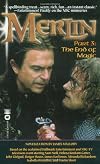
I must have been fourteen or fifteen years old when I first watched the beautiful Hallmark mini-series of Merlin. Being an avid admirer of all things Arthurian from an early age, this particular production remains my favourite rendition of the Arthurian legends.
The Merlin trilogy is an excellent novelization. Even if you have never watched the mini-series, this is a beautiful retelling of the story of Merlin, Arthur, Guinevere, Queen Mab, and all the rest characters we have come to love or show more love to hate over the centuries. Particularly fascinating is all the extra material regarding Guinevere, giving voice and presence to her character, something that doesn't really happen in the series. We enter the mind of Mab and Mordred, Morgan and Frik, Vortigern and Uther, characters that aren't cardboard villains, we are allowed into their thoughts and motives.
A most clever move by Mallory is in the ending, where there is the combination of the Arthurian saga with the beginning of another famous British legend, but this is a story for another book... show less
The Merlin trilogy is an excellent novelization. Even if you have never watched the mini-series, this is a beautiful retelling of the story of Merlin, Arthur, Guinevere, Queen Mab, and all the rest characters we have come to love or show more love to hate over the centuries. Particularly fascinating is all the extra material regarding Guinevere, giving voice and presence to her character, something that doesn't really happen in the series. We enter the mind of Mab and Mordred, Morgan and Frik, Vortigern and Uther, characters that aren't cardboard villains, we are allowed into their thoughts and motives.
A most clever move by Mallory is in the ending, where there is the combination of the Arthurian saga with the beginning of another famous British legend, but this is a story for another book... show less
Lists
You May Also Like


Associated Authors
Statistics
- Works
- 17
- Members
- 7,976
- Popularity
- #3,038
- Rating
- 3.9
- Reviews
- 101
- ISBNs
- 122
- Languages
- 3