
Michael Lind (1) (1962–)
Author of Land of Promise: An Economic History of the United States
For other authors named Michael Lind, see the disambiguation page.
About the Author
Michael Lind, a senior fellow of the New America Foundation lives in Washington, D.C. (Bowker Author Biography)
Image credit: Photo courtesy of the New America Foundation
Works by Michael Lind
Vietnam: The Necessary War: A Reinterpretation of America's Most Disastrous Military Conflict (1999) 163 copies, 1 review
Associated Works
Backstabbers, Crazed Geniuses, and Animals We Hate: The Writers of Slate's "Assessment" Column Tell It Like It Is (2006) — Contributor — 20 copies
Tagged
Common Knowledge
- Canonical name
- Lind, Michael
- Birthdate
- 1962-04-23
- Gender
- male
- Occupations
- journalist
historian
poet - Organizations
- New America Foundation
- Nationality
- USA
- Places of residence
- Austin, Texas, USA
- Associated Place (for map)
- Texas, USA
Members
Discussions
'Heritage Americans' in Pro and Con (November 2025)
Michael Lind on Obama in Pro and Con (December 2008)
Reviews
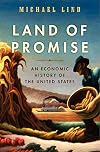
TThis book is a powerfully argued economic/political history of the United States, with a strong point of view. It's an enjoyable read: well written in standard English as opposed to acadamese, but also well documented and indexed. Lefties like me will love it. Those from the other side of the policy debate should give it a read as well, however. It is a serious book, about issues that are critically serious right now.
"Land of Promise" focuses not on economic history per se, but on the show more linkage between economic and political history. The author's thesis is that, in three different periods, technological change led to massive structural changes in the U.S. economy. These in turn produced growing tensions with the existing political system, which had evolved in an earlier (and now bygone) economic framework. In time, the tensions resulted in a major shift in the political order -- first the Civil War, then the expansion of government sparked by the Great Depression, and finally whatever lies ahead of us today.
In the process, the author discerns two fundamental points of view on the proper role of government in the economy. The first, or "Jeffersonian" view, supports small government, free markets, limited regulation, and as little government interference in the economy as possible. The second, or "Hamiltonian" view supports government action through investment and policy to stimulate and in part shape economic growth -- clearly a bigger government, more interventionist view.
These two points of view, he argues, have each remained consistent over time, and are independent of the usual left-right context in which economic policy disagreement tends to be framed. This is an interesting perspective: Hamilton and the rest of the Federalists were clearly to the right of the Jeffersonians on social policy and civil rights, despite the equation we make today between big goverment and social liberalism.
Overall, this book opened up my perspectives on U.S. political history, and taught me a lot about the way in which our economy evolved. I think it makes an important case for a more interventionist, less "free market" approach to economic policy than is generally popular at present. ("Free market" is in quotes, because our current oligopolistic system is a long way from Adam Smith).
Be warned, however, that the author has a strong point of view, and makes no pretense at a balanced presentation. His pro-government stance, ultimately, is less based on economic theories than on social/political concerns. As to theory, he strongly implies that economic theory in any period will have more to do with the interests of economic and political elites in that period -- hence the Keynesianism of 1940-1980, and the monetarist/free market ideology that has prevailed since then.
For him, the real question is the greatest economic good of the greatest number. Government, he believes, has a key role to play in achieving that end -- along with markets, innovators, and hard work. I agree with him, but those who do not are unlikely to be as impressed with this book as I was. They should read it anyway; it never hurts to have your assumptions challenged. show less
"Land of Promise" focuses not on economic history per se, but on the show more linkage between economic and political history. The author's thesis is that, in three different periods, technological change led to massive structural changes in the U.S. economy. These in turn produced growing tensions with the existing political system, which had evolved in an earlier (and now bygone) economic framework. In time, the tensions resulted in a major shift in the political order -- first the Civil War, then the expansion of government sparked by the Great Depression, and finally whatever lies ahead of us today.
In the process, the author discerns two fundamental points of view on the proper role of government in the economy. The first, or "Jeffersonian" view, supports small government, free markets, limited regulation, and as little government interference in the economy as possible. The second, or "Hamiltonian" view supports government action through investment and policy to stimulate and in part shape economic growth -- clearly a bigger government, more interventionist view.
These two points of view, he argues, have each remained consistent over time, and are independent of the usual left-right context in which economic policy disagreement tends to be framed. This is an interesting perspective: Hamilton and the rest of the Federalists were clearly to the right of the Jeffersonians on social policy and civil rights, despite the equation we make today between big goverment and social liberalism.
Overall, this book opened up my perspectives on U.S. political history, and taught me a lot about the way in which our economy evolved. I think it makes an important case for a more interventionist, less "free market" approach to economic policy than is generally popular at present. ("Free market" is in quotes, because our current oligopolistic system is a long way from Adam Smith).
Be warned, however, that the author has a strong point of view, and makes no pretense at a balanced presentation. His pro-government stance, ultimately, is less based on economic theories than on social/political concerns. As to theory, he strongly implies that economic theory in any period will have more to do with the interests of economic and political elites in that period -- hence the Keynesianism of 1940-1980, and the monetarist/free market ideology that has prevailed since then.
For him, the real question is the greatest economic good of the greatest number. Government, he believes, has a key role to play in achieving that end -- along with markets, innovators, and hard work. I agree with him, but those who do not are unlikely to be as impressed with this book as I was. They should read it anyway; it never hurts to have your assumptions challenged. show less
Vietnam: The Necessary War: A Reinterpretation of America's Most Disastrous Military Conflict by Michael Lind
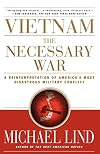
3329. Vietnam The Necessary War / A Reinterpretation of America's Most Disastrous Military Conflict, by Michael Lind (read July 20, 2000) This I found a startling and thought-provoking book, arriving at conclusions not "in vogue" but some of which make sense and some of which disturb. Lind concludes the war was a just, constitutional, and necessary proxy war in the Third World War which was waged by methods that were often counterproductive and sometimes arguably immoral, but that the war show more had to be fought in order to preserve the military and diplomatic creditability of the U.S. in the Cold War. but that when its costs grew excessive the war had to be forfeited in order to preserve the political consensus within the U.S. in favor of the Cold War. A fascinating but disturbing book. show less
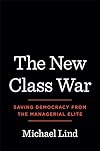
Author's solution (like any good socialist's solution) is unions. Yes. If the system is broken why not keep working within the system to reinforce the system by becoming part of the system.
The academic style of writing made this interesting book harder going than it should have been.
Awards

You May Also Like


Associated Authors
Statistics
- Works
- 17
- Also by
- 3
- Members
- 1,125
- Popularity
- #22,838
- Rating
- 3.7
- Reviews
- 4
- ISBNs
- 53
- Languages
- 2