
Jack Kelly (1) (1949–)
Author of Benjamin Franklin
For other authors named Jack Kelly, see the disambiguation page.
About the Author
Jack Kelly is a journalist, novelist, and historian. He received the Daughters of the American Revolution's History Award Medal for his book Band of Giants. He has contributed to national periodicals, including American Heritage magazine, and is a New York Foundation for the Arts fellow. He has show more appeared on the History Channel and C-SPAN and been interviewed on National Public Radio. He grew up in a town along the Erie Canal and now lives in New York's Hudson Valley. Find out more at HeavensDitch.com. show less
Works by Jack Kelly
The Edge of Anarchy: The Railroad Barons, the Gilded Age, and the Greatest Labor Uprising in America (2019) 108 copies, 1 review
Tagged
Common Knowledge
Members
Reviews
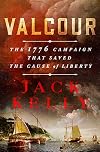
Rating: 4* of five
The Publisher Says: The wild and suspenseful story of one of the most crucial and least known campaigns of the Revolutionary War
During the summer of 1776, a British incursion from Canada loomed. In response, citizen soldiers of the newly independent nation mounted a heroic defense. Patriots constructed a small fleet of gunboats on Lake Champlain in northern New York and confronted the Royal Navy in a desperate three-day battle near Valcour Island. Their effort surprised the show more arrogant British and forced the enemy to call off their invasion.
Jack Kelly's Valcour is a story of people. The northern campaign of 1776 was led by the underrated general Philip Schuyler (Hamilton's father-in-law), the ambitious former British officer Horatio Gates, and the notorious Benedict Arnold. An experienced sea captain, Arnold devised a brilliant strategy that confounded his slow-witted opponents.
America’s independence hung in the balance during 1776. Patriots endured one defeat after another. But two events turned the tide: Washington’s bold attack on Trenton and the equally audacious fight at Valcour Island. Together, they stunned the enemy and helped preserve the cause of liberty.
I RECEIVED A DRC FROM THE PUBLISHER VIA NETGALLEY. THANK YOU.
My Review: I've never really understood how very much the existence of the USA is contingent on the deep stupidity of the British before reading this book. It's shocking just how little we're taught about Arnold's real contribution to the existence of the US. Valcourt, without exaggeration, was central to the success of the war effort as it denied the British possession of an extremely strategic fort.
So why is the name of the battle only a dim clang of a memory-bell in my history-loving brain? Because Arnold won it. And the reputation-destroying politicos in the Continental Congress who feared the success of anyone not named "Washington" would result in disruption of their narrative...and threaten their power...knew it. What they did after Valcourt was inexcusable, but only the first of many such slapdowns issued by politicians to military men. (They were all men; History is not satirized as "his story" for no reason.) Denying Arnold a richly merited promotion was pusillanimous.
This story of Valcourt is heavily slanted towards the naval parts of the story, with mountains of details I never knew I didn't know about ships, their functioning, their strengths and weaknesses in battle, their command structures...it's a lot to take in. I wasn't always sure I cared, while being unwilling to skip over the data because the author's sneaky and uses these facts to good effect in battle anecdotes. An old didactic trick that never fails to trip up the facile reader/student. (In college I had an entire letter knocked off my essay grade because I knew the material, but skipped class the day it was applied to a specific place so did not relate it to that place despite that being clearly stated as part of the requirement.)
Author Kelly is clearly setting a course into microhistory, prioritizing deep-but-narrow slices of the giant, continent-spanning contests facing the British and the French in the wake of their first-ever world war (The Seven Years' War, 1756 to 1763). If Valcour had not stopped the British from failing at Saratoga, it is doubtful Louis XVI would have funded the war for the American revolutionaries. It is easy, then, to see why someone with an historian's eye for the results of a conflict and a novelist's sense of story would light on this underknown event with glee.
It is both strength and weakness in this story. If one is not au fait with the Revolution and its roots already, this is not the place to start that journey. Too much will slow the reader's pace that the author's at pains to set...looking people up, finding out who did what to whom before the events described. As it never pretended to be an introductory text to the conflict I'm only mentioning it as a fact for y'all to be aware of in deciding about the read's suitability for your taste. I felt I knew enough to be fully engaged in the material completely new to me without worrying about the background. It is, in fact, a favorite genre of mine. Microhistories suit my own readerly desire to dig into *why* if I already know *what* happened.
I found the author's use of notes added to my interest but didn't point me in new directions for reading further about the subject. It's the reason I stopped at a fourth star. A five-star history read needs to blow me right away and/or point me in new or unexpected directions. None of that happened here. The notes demonstrated the author's superior command of archives, and his selections from those archives definitely were apt and germane.
On balance I'll recommend the read to those already interested in the Revolutionary War, and familiar with its broad strokes, who seek more colorful aspects of its story. show less
The Publisher Says: The wild and suspenseful story of one of the most crucial and least known campaigns of the Revolutionary War
During the summer of 1776, a British incursion from Canada loomed. In response, citizen soldiers of the newly independent nation mounted a heroic defense. Patriots constructed a small fleet of gunboats on Lake Champlain in northern New York and confronted the Royal Navy in a desperate three-day battle near Valcour Island. Their effort surprised the show more arrogant British and forced the enemy to call off their invasion.
Jack Kelly's Valcour is a story of people. The northern campaign of 1776 was led by the underrated general Philip Schuyler (Hamilton's father-in-law), the ambitious former British officer Horatio Gates, and the notorious Benedict Arnold. An experienced sea captain, Arnold devised a brilliant strategy that confounded his slow-witted opponents.
America’s independence hung in the balance during 1776. Patriots endured one defeat after another. But two events turned the tide: Washington’s bold attack on Trenton and the equally audacious fight at Valcour Island. Together, they stunned the enemy and helped preserve the cause of liberty.
I RECEIVED A DRC FROM THE PUBLISHER VIA NETGALLEY. THANK YOU.
My Review: I've never really understood how very much the existence of the USA is contingent on the deep stupidity of the British before reading this book. It's shocking just how little we're taught about Arnold's real contribution to the existence of the US. Valcourt, without exaggeration, was central to the success of the war effort as it denied the British possession of an extremely strategic fort.
So why is the name of the battle only a dim clang of a memory-bell in my history-loving brain? Because Arnold won it. And the reputation-destroying politicos in the Continental Congress who feared the success of anyone not named "Washington" would result in disruption of their narrative...and threaten their power...knew it. What they did after Valcourt was inexcusable, but only the first of many such slapdowns issued by politicians to military men. (They were all men; History is not satirized as "his story" for no reason.) Denying Arnold a richly merited promotion was pusillanimous.
This story of Valcourt is heavily slanted towards the naval parts of the story, with mountains of details I never knew I didn't know about ships, their functioning, their strengths and weaknesses in battle, their command structures...it's a lot to take in. I wasn't always sure I cared, while being unwilling to skip over the data because the author's sneaky and uses these facts to good effect in battle anecdotes. An old didactic trick that never fails to trip up the facile reader/student. (In college I had an entire letter knocked off my essay grade because I knew the material, but skipped class the day it was applied to a specific place so did not relate it to that place despite that being clearly stated as part of the requirement.)
Author Kelly is clearly setting a course into microhistory, prioritizing deep-but-narrow slices of the giant, continent-spanning contests facing the British and the French in the wake of their first-ever world war (The Seven Years' War, 1756 to 1763). If Valcour had not stopped the British from failing at Saratoga, it is doubtful Louis XVI would have funded the war for the American revolutionaries. It is easy, then, to see why someone with an historian's eye for the results of a conflict and a novelist's sense of story would light on this underknown event with glee.
It is both strength and weakness in this story. If one is not au fait with the Revolution and its roots already, this is not the place to start that journey. Too much will slow the reader's pace that the author's at pains to set...looking people up, finding out who did what to whom before the events described. As it never pretended to be an introductory text to the conflict I'm only mentioning it as a fact for y'all to be aware of in deciding about the read's suitability for your taste. I felt I knew enough to be fully engaged in the material completely new to me without worrying about the background. It is, in fact, a favorite genre of mine. Microhistories suit my own readerly desire to dig into *why* if I already know *what* happened.
I found the author's use of notes added to my interest but didn't point me in new directions for reading further about the subject. It's the reason I stopped at a fourth star. A five-star history read needs to blow me right away and/or point me in new or unexpected directions. None of that happened here. The notes demonstrated the author's superior command of archives, and his selections from those archives definitely were apt and germane.
On balance I'll recommend the read to those already interested in the Revolutionary War, and familiar with its broad strokes, who seek more colorful aspects of its story. show less
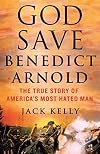
Rating: 4* of five
The Publisher Says: Benedict Arnold committed treason—for more than two centuries, that’s all that most Americans have known about him.
Yet Arnold was much more than a turncoat—his achievements during the early years of the Revolutionary War defined him as the most successful soldier of the era. God Save Benedict Arnold tells the gripping story of Arnold’s rush of audacious feats—his capture of Fort Ticonderoga, his Maine mountain expedition to attack Quebec, the show more famous artillery brawl at Valcour Island, the turning-point battle at Saratoga—that laid the groundwork for our independence.
Arnold was a superb leader, a brilliant tactician, a supremely courageous military officer. He was also imperfect, disloyal, villainous. One of the most paradoxical characters in American history, and one of the most interesting. God Save Benedict Arnold does not exonerate him for his treason—the stain on his character is permanent. But Kelly’s insightful exploration of Arnold’s career as a warrior shines a new light on this gutsy, fearless, and enigmatic figure. In the process, the book offers a fresh perspective on the reasons for Arnold’s momentous change of heart.
I RECEIVED A DRC FROM THE PUBLISHER VIA NETGALLEY. THANK YOU.
My Review: I love this description of Benedict Arnold:
The man behind the victory detailed in [Valcour], and the consequential actions he committed later, comes fully alive in Author Kelly's telling of his subject's character. It's not a biography, in the sense that the focus is not on Arnold the man and his life, but a political biography of the deeds he did and the responses of others that impacted him for good and ill.
I was not at all familiar with the details of the very real grievances Arnold harbored against the men who, I agree, wronged and slighted him. I'm caught up with it now. As a person, the picture of Arnold that I got from the extensive quotations from period sources is of an eighteenth-century Elon Musk, someone who can make enemies much more readily than friends while delivering results. I suspect he was as thin-skinned as he comes across in these pages because he really was a better strategist than tactician.
Ultimately his rage-quit of the Revolutionary War was completely understandable, predictable and preventable. The mediocre men who resented him for his strengths handed him the rope he used to hang himself. His own angry demons led him to use it; what he gained was material, what he lost was the lasting capital of reputation.
As I've come to expect of Author Kelly, he uses period sources galore. I'm impressed with his notes because he is scrupulous in citing the sources of opinions not leaving us to wonder if this is his opinion or something considered to be fact in the period. When it's his opinion, I see it presented as such; when it's his analysis of period opinion the same applies.
I don't suddenly like this traitor to the cause of American independence. I do empathize with him, understand "why" better, and still disapprove of his actions. A man of such tremendous capability and capacity for foresight, undone by the niggling ugliness of his character flaws.
Where have we seen that story repeated here lately....
Not a five-star, blow-me-away read, but a much better than average, really interesting story about an unjustly reviled but still critically flawed man. show less
The Publisher Says: Benedict Arnold committed treason—for more than two centuries, that’s all that most Americans have known about him.
Yet Arnold was much more than a turncoat—his achievements during the early years of the Revolutionary War defined him as the most successful soldier of the era. God Save Benedict Arnold tells the gripping story of Arnold’s rush of audacious feats—his capture of Fort Ticonderoga, his Maine mountain expedition to attack Quebec, the show more famous artillery brawl at Valcour Island, the turning-point battle at Saratoga—that laid the groundwork for our independence.
Arnold was a superb leader, a brilliant tactician, a supremely courageous military officer. He was also imperfect, disloyal, villainous. One of the most paradoxical characters in American history, and one of the most interesting. God Save Benedict Arnold does not exonerate him for his treason—the stain on his character is permanent. But Kelly’s insightful exploration of Arnold’s career as a warrior shines a new light on this gutsy, fearless, and enigmatic figure. In the process, the book offers a fresh perspective on the reasons for Arnold’s momentous change of heart.
I RECEIVED A DRC FROM THE PUBLISHER VIA NETGALLEY. THANK YOU.
My Review: I love this description of Benedict Arnold:
In many ways, he was a typical American—cocky, restless, grasping, perpetually optimistic, quick to take offense. He was a vivid example of the self-reliance and rugged individualism that would be celebrated by Americans from Ralph Wales Emerson to Ronald Reagan. But self-reliance can beget arrogance.
The man behind the victory detailed in [Valcour], and the consequential actions he committed later, comes fully alive in Author Kelly's telling of his subject's character. It's not a biography, in the sense that the focus is not on Arnold the man and his life, but a political biography of the deeds he did and the responses of others that impacted him for good and ill.
I was not at all familiar with the details of the very real grievances Arnold harbored against the men who, I agree, wronged and slighted him. I'm caught up with it now. As a person, the picture of Arnold that I got from the extensive quotations from period sources is of an eighteenth-century Elon Musk, someone who can make enemies much more readily than friends while delivering results. I suspect he was as thin-skinned as he comes across in these pages because he really was a better strategist than tactician.
Ultimately his rage-quit of the Revolutionary War was completely understandable, predictable and preventable. The mediocre men who resented him for his strengths handed him the rope he used to hang himself. His own angry demons led him to use it; what he gained was material, what he lost was the lasting capital of reputation.
As I've come to expect of Author Kelly, he uses period sources galore. I'm impressed with his notes because he is scrupulous in citing the sources of opinions not leaving us to wonder if this is his opinion or something considered to be fact in the period. When it's his opinion, I see it presented as such; when it's his analysis of period opinion the same applies.
I don't suddenly like this traitor to the cause of American independence. I do empathize with him, understand "why" better, and still disapprove of his actions. A man of such tremendous capability and capacity for foresight, undone by the niggling ugliness of his character flaws.
Where have we seen that story repeated here lately....
Not a five-star, blow-me-away read, but a much better than average, really interesting story about an unjustly reviled but still critically flawed man. show less
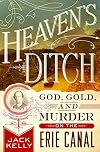
"Historian Kelly weaves together diverse strands of early New York state history for an improbable yet oddly compelling narrative of social, political, and religious visionaries.
At the beginning of the 19th century, around the same time that businessman Jesse Hawley was publishing anonymously 14 essays in the Genesee Messenger spelling out his “favorite, fanciful project of an overland canal” across the state of New York, inventor Robert Fulton sailed the first commercial steamboat up show more the Hudson River, and the future founder of the Mormon sect, Joseph Smith Jr., was born in Vermont to poor tenant farmers who would eventually settle in Palmyra, New York. This period marked the beginning of the Second Great Awakening, sparking outbreaks of religious fervor in unlikely spots. The author explores the lives of itinerant frontier preachers such as Charles Finney, William Miller, and Methodist Lorenzo Dow, among many others, as well as the abduction and probable murder of former Freemason William Morgan, who dared to publish the mysteries of the Freemasons in Batavia, New York, in 1826. Meanwhile, on the hopeful report by New York surveyor James Geddes, Gov. DeWitt Clinton banked his career on spurring financing and construction of the ambitious canal that would link the Hudson and Mohawk rivers at Albany to Lake Erie at Buffalo—360 miles of tangled forests, valleys, and swampland that would open up commerce to an unimaginable degree. Notwithstanding the lack of engineering knowledge, especially about the building of locks, construction got underway by July 4, 1817, requiring horrendous digging by mostly Irish immigrants, and was finally completed in 1825 at the cost of $7 million. As this "psychic highway" flourished and Joseph Smith was embarking on his Book of Mormon, Kelly captures the enormous excitement of these heady days.
An intriguing synthesis of American cultural and economic currents in the early 19th century, all culminating with the completion of the Erie Canal."
(Review from Kirkus) show less
At the beginning of the 19th century, around the same time that businessman Jesse Hawley was publishing anonymously 14 essays in the Genesee Messenger spelling out his “favorite, fanciful project of an overland canal” across the state of New York, inventor Robert Fulton sailed the first commercial steamboat up show more the Hudson River, and the future founder of the Mormon sect, Joseph Smith Jr., was born in Vermont to poor tenant farmers who would eventually settle in Palmyra, New York. This period marked the beginning of the Second Great Awakening, sparking outbreaks of religious fervor in unlikely spots. The author explores the lives of itinerant frontier preachers such as Charles Finney, William Miller, and Methodist Lorenzo Dow, among many others, as well as the abduction and probable murder of former Freemason William Morgan, who dared to publish the mysteries of the Freemasons in Batavia, New York, in 1826. Meanwhile, on the hopeful report by New York surveyor James Geddes, Gov. DeWitt Clinton banked his career on spurring financing and construction of the ambitious canal that would link the Hudson and Mohawk rivers at Albany to Lake Erie at Buffalo—360 miles of tangled forests, valleys, and swampland that would open up commerce to an unimaginable degree. Notwithstanding the lack of engineering knowledge, especially about the building of locks, construction got underway by July 4, 1817, requiring horrendous digging by mostly Irish immigrants, and was finally completed in 1825 at the cost of $7 million. As this "psychic highway" flourished and Joseph Smith was embarking on his Book of Mormon, Kelly captures the enormous excitement of these heady days.
An intriguing synthesis of American cultural and economic currents in the early 19th century, all culminating with the completion of the Erie Canal."
(Review from Kirkus) show less
Ask Americans who Benedict Arnold was and just about every one of them will know that he was a traitor to America during the Revolutionary War. But unless they are students of the Revolutionary time period, they may not realize that Arnold was a well-regarded and accomplished Revolutionary War hero before he betrayed the new nation.
In fact, he was one of our most successful war leaders, taking the fight to the British in Canada, then fending off a British invasion from there. He also played show more a critical role at the battle of Saratoga, a turning point in the war and the first time an entire British army had surrendered.
Historian and author Jack Kelly says at the start of the book that Americans “have hated Benedict Arnold for 250 years”, as he gives us a chance to take another look at both the good and bad of a man whose name is synonymous with “traitor”.
You can find other books, like Nathaniel Philbrick’s Valiant Ambition, that cover much of the same subject matter as God Save Benedict Arnold. Philbrick’s book, like all his books, is an excellent read, but it is a history not a biography of Arnold as Kelly’s book is.
In Kelly’s account we follow Arnold from his boyhood to his days of business success as a high seas trader, and then right onto the battlefields of the Revolution. He puts us at the scene as Arnold narrowly escapes death or serious injury in countless clashes with the British. He provides insights into Arnold’s genius at battle, both in planning and in taking advantage of opportunities once the battle has been joined.
Arnold’s prickly pride and quickness to take offense are also on full display in Kelly’s book. His pride was often wounded by the actions of the Continental Congress, which kept for itself the prerogative of promoting and awarding the officers of the Continental Army. Congress was full of men who did not know battle, and their rationale for their dealings with the Army’s generals were often at odds with the feelings of those leaders - up to and including George Washington himself. Congress’s actions in not promoting Arnold, while they did promote others around him, is seen by many historians as a major contributing factor (given Arnold’s prickly pride) to his eventually turning traitor. In this Kelly seems to particularly blame John Adams.
This is an excellent book, but if Kelly’s hope was that the reader might feel more sympathy for Arnold after reading it, I’m not quite sure he succeeds. Knowing more of his contributions, and the crucial nature of his successes for the American side before he agreed to spy for the British gives me more of an understanding, not less, for why Americans have hated Arnold for 250 years.
RATING: Four Stars ⭐⭐⭐⭐
Rating Comment: A well written and easy to read biography of Benedict Arnold. Worth reading for those who don’t have an understanding of Arnold’s contributions to the Revolution, or those looking for a refresher on the events in the northern colonies during the Revolution.
NOTE: I read an advanced ebook copy courtesy of NetGalley and St. Martin’s Press. The book became available to the public December 5, 2023. show less
In fact, he was one of our most successful war leaders, taking the fight to the British in Canada, then fending off a British invasion from there. He also played show more a critical role at the battle of Saratoga, a turning point in the war and the first time an entire British army had surrendered.
Historian and author Jack Kelly says at the start of the book that Americans “have hated Benedict Arnold for 250 years”, as he gives us a chance to take another look at both the good and bad of a man whose name is synonymous with “traitor”.
You can find other books, like Nathaniel Philbrick’s Valiant Ambition, that cover much of the same subject matter as God Save Benedict Arnold. Philbrick’s book, like all his books, is an excellent read, but it is a history not a biography of Arnold as Kelly’s book is.
In Kelly’s account we follow Arnold from his boyhood to his days of business success as a high seas trader, and then right onto the battlefields of the Revolution. He puts us at the scene as Arnold narrowly escapes death or serious injury in countless clashes with the British. He provides insights into Arnold’s genius at battle, both in planning and in taking advantage of opportunities once the battle has been joined.
Arnold’s prickly pride and quickness to take offense are also on full display in Kelly’s book. His pride was often wounded by the actions of the Continental Congress, which kept for itself the prerogative of promoting and awarding the officers of the Continental Army. Congress was full of men who did not know battle, and their rationale for their dealings with the Army’s generals were often at odds with the feelings of those leaders - up to and including George Washington himself. Congress’s actions in not promoting Arnold, while they did promote others around him, is seen by many historians as a major contributing factor (given Arnold’s prickly pride) to his eventually turning traitor. In this Kelly seems to particularly blame John Adams.
This is an excellent book, but if Kelly’s hope was that the reader might feel more sympathy for Arnold after reading it, I’m not quite sure he succeeds. Knowing more of his contributions, and the crucial nature of his successes for the American side before he agreed to spy for the British gives me more of an understanding, not less, for why Americans have hated Arnold for 250 years.
RATING: Four Stars ⭐⭐⭐⭐
Rating Comment: A well written and easy to read biography of Benedict Arnold. Worth reading for those who don’t have an understanding of Arnold’s contributions to the Revolution, or those looking for a refresher on the events in the northern colonies during the Revolution.
NOTE: I read an advanced ebook copy courtesy of NetGalley and St. Martin’s Press. The book became available to the public December 5, 2023. show less
Lists
Awards


You May Also Like


Statistics
- Works
- 14
- Members
- 1,268
- Popularity
- #20,231
- Rating
- 3.9
- Reviews
- 69
- ISBNs
- 96
- Languages
- 2
