
David Baldwin (1) (1947–)
Author of The Women of the Cousins' War: The Duchess, the Queen, and the King's Mother
For other authors named David Baldwin, see the disambiguation page.
Works by David Baldwin
The Women of the Cousins' War: The Duchess, the Queen, and the King's Mother (2011) 520 copies, 23 reviews
Tagged
Common Knowledge
- Birthdate
- 1947
- Gender
- male
- Map Location
- United Kingdom
Members
Reviews
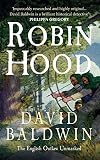
It doesn't matter how good your research is if it's dead wrong.
Let's face it: If you've read a "Robin Hood" story written in the last two hundred years, it's wrong, and even if you go to the proper sources (the half dozen or so ballads known to have been in existence before 1600), they still aren't about a real person.
And even if they were about a real person, it wasn't Roger Godberd, who lived at the wrong time!
Give David Baldwin partial credit: He doesn't pay any attention to the modern show more frippery, but works primarily with the four major ballads: The Gest of Robyn Hode, Robin Hood and the Monk, Robin Hood and the Potter, and Robin Hood and Guy of Gisborne. But the problems start on the very paragraph where he first mentions the "Gest" (which, at 456 stanzas, is the most important Robin Hood source by an order of magnitude). He states without any reservations at all that the "Gest" is a compilation of five other poems.
Most scholars agree that the "Gest" is a composite -- but the number of sources suggested ranges from two to dozens (although, in the latter scenario, most of the sources were mined for only a few lines). It is true that the "Gest" seems to be based on four or five different stories -- but the tale of Robin Hood's Death, for instance, is glossed over so lightly that it appears the "Gest" poet did not know the full tale.
And if the "Gest" does one thing, it establishes clearly that it was set in the date of Edward II. The King is named Edward, Edward II was the only king in the right place at the right time, and numerous small details fit his reign.
Yet Baldwin's conclusion places Robin in the time of Henry III.
And it's all based on four ballads anyway.
It's an interesting book. But the conclusion is simply wrong. There was no single man who inspired the Robin Hood legend, and to look for a "real" Robin Hood is perverse. We would learn far more by looking at the various ballads (which have some rather spectacular disagreements) and see what they tell us about the contexts of their times. show less
Let's face it: If you've read a "Robin Hood" story written in the last two hundred years, it's wrong, and even if you go to the proper sources (the half dozen or so ballads known to have been in existence before 1600), they still aren't about a real person.
And even if they were about a real person, it wasn't Roger Godberd, who lived at the wrong time!
Give David Baldwin partial credit: He doesn't pay any attention to the modern show more frippery, but works primarily with the four major ballads: The Gest of Robyn Hode, Robin Hood and the Monk, Robin Hood and the Potter, and Robin Hood and Guy of Gisborne. But the problems start on the very paragraph where he first mentions the "Gest" (which, at 456 stanzas, is the most important Robin Hood source by an order of magnitude). He states without any reservations at all that the "Gest" is a compilation of five other poems.
Most scholars agree that the "Gest" is a composite -- but the number of sources suggested ranges from two to dozens (although, in the latter scenario, most of the sources were mined for only a few lines). It is true that the "Gest" seems to be based on four or five different stories -- but the tale of Robin Hood's Death, for instance, is glossed over so lightly that it appears the "Gest" poet did not know the full tale.
And if the "Gest" does one thing, it establishes clearly that it was set in the date of Edward II. The King is named Edward, Edward II was the only king in the right place at the right time, and numerous small details fit his reign.
Yet Baldwin's conclusion places Robin in the time of Henry III.
And it's all based on four ballads anyway.
It's an interesting book. But the conclusion is simply wrong. There was no single man who inspired the Robin Hood legend, and to look for a "real" Robin Hood is perverse. We would learn far more by looking at the various ballads (which have some rather spectacular disagreements) and see what they tell us about the contexts of their times. show less
I applaud the attempt at a non partisan biography of this controversial King. Unfortunately it comes across as skimpy in places while going into aspects that don't seem relevant such as the bishops in post during Richard's reign. I wasn't sure also when the author dismissed the possibility of Edward IV's illegitimacy whether he had taken into account the discovery of documentation in France which supported that story and was the subject of a TV documentary on Channel 4 some years ago. show more Disappointing overall, and I can't rate it higher than 3 stars. show less
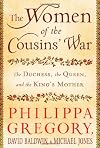
As someone who doesn't read very much nonfiction, I was a little apprehensive about reading The Women of the Cousins' War, but I was so fascinated by Elizabeth Woodville of The White Queen and Margaret Beaufort of The Red Queen, that I was drawn to this book, especially since it comes from Philippa Gregory. For the book, Gregory teamed up with two other historians, David Baldwin and Michael Jones, to explore the real lives of the women behind her novels.
Gregory opens the book was a unique show more introduction that explores the role (or lack thereof) of women in history, as well as Gregory's personal reasons for writing novels about this little-known women. Most interestingly, she gives readers a glimpse into her own writing process, own own motivations for writing what she does, and the difficulties of doing historical research that lead to large holes that are later filled in with fiction.
Gregory takes the lead with the first essay on Jacquetta of Luxembourg, the mother of Elizabeth Woodville. Gregory explains that when she went to research Jacquetta for her novel The Lady of the Rivers, there was no biography available about her, so she had to conduct her own research to learn about Jacquetta. Gregory pens a fascinating account of Jacquetta's life, tracing it from her birth up to her death and through the many complex politics between. Of all the essays in the book, I found Gregory's to be the easiest to read and enjoy, mostly because it pulls on her fiction writing abilities and seems to explore more of her subject's motivations and emotions than the other essays.
Next comes David Baldwin, who pens an essay on the life of Elizabeth Woodville, Jacquetta's daughter. Though filled with precise accuracy, I found it to be a little bit dry and difficult to read. This was probably because my brain had honed into Gregory's style in the previous essay, and Baldwin chose to stick more strongly to fact, and didn't theorize much on what Elizabeth likely thought or felt. While informative, I wouldn't consider Baldwin's essay light reading.
Last, historian Michael Jones chronicles the life of Margaret Beaufort, the virtually unknown matriarch of the Tudor family and grandmother to Henry VIII. Thankfully, Jones' writing reads much more smoothly than Baldwin's, and I particularly enjoyed the fact that Jones went further back than Margaret's birth to discuss the unique origins of the Beaufort family. Giving all this back story really helped to put Margaret and her life into context, and I felt like I had a greater understanding of Margaret's "character." Also, I kind of hate to say it, but I found Jones' short essay on Margaret to be a little more interesting than The Red Queen, which I thought was the weaker of Gregory's first two novels on the Cousins' War.
A must-read for history buffs and hardcore Gregory fans, Women of the Cousins' War helps to reveal who these little-known women were and why their lives are worth the study and interest of people today. Complete with family trees, maps, portraits and other images of the period, the lives of these fascinating women from history fully come to life. show less
Gregory opens the book was a unique show more introduction that explores the role (or lack thereof) of women in history, as well as Gregory's personal reasons for writing novels about this little-known women. Most interestingly, she gives readers a glimpse into her own writing process, own own motivations for writing what she does, and the difficulties of doing historical research that lead to large holes that are later filled in with fiction.
Gregory takes the lead with the first essay on Jacquetta of Luxembourg, the mother of Elizabeth Woodville. Gregory explains that when she went to research Jacquetta for her novel The Lady of the Rivers, there was no biography available about her, so she had to conduct her own research to learn about Jacquetta. Gregory pens a fascinating account of Jacquetta's life, tracing it from her birth up to her death and through the many complex politics between. Of all the essays in the book, I found Gregory's to be the easiest to read and enjoy, mostly because it pulls on her fiction writing abilities and seems to explore more of her subject's motivations and emotions than the other essays.
Next comes David Baldwin, who pens an essay on the life of Elizabeth Woodville, Jacquetta's daughter. Though filled with precise accuracy, I found it to be a little bit dry and difficult to read. This was probably because my brain had honed into Gregory's style in the previous essay, and Baldwin chose to stick more strongly to fact, and didn't theorize much on what Elizabeth likely thought or felt. While informative, I wouldn't consider Baldwin's essay light reading.
Last, historian Michael Jones chronicles the life of Margaret Beaufort, the virtually unknown matriarch of the Tudor family and grandmother to Henry VIII. Thankfully, Jones' writing reads much more smoothly than Baldwin's, and I particularly enjoyed the fact that Jones went further back than Margaret's birth to discuss the unique origins of the Beaufort family. Giving all this back story really helped to put Margaret and her life into context, and I felt like I had a greater understanding of Margaret's "character." Also, I kind of hate to say it, but I found Jones' short essay on Margaret to be a little more interesting than The Red Queen, which I thought was the weaker of Gregory's first two novels on the Cousins' War.
A must-read for history buffs and hardcore Gregory fans, Women of the Cousins' War helps to reveal who these little-known women were and why their lives are worth the study and interest of people today. Complete with family trees, maps, portraits and other images of the period, the lives of these fascinating women from history fully come to life. show less
An interesting and convincing account of the life of Elizabeth Woodville, who despite being a much reviled figure of the Wars of the Roses era, does not have a society dedicated to reassessing her life as does Richard III. The alleged rapaciousness of her and her family is simply not supported by the historical evidence. Worth a read, though in places it does rather read like a "life and times" rather than a biography, something the author says in the introduction to the book that he wishes show more to avoid, but which is more difficult to avoid in the case of most Medieval personages, whose personal lives are very often very or fairly closed books. The only slight downer is the sometimes quite lengthy extracts from contemporary sources which are not translated into more modern English and are quite difficult to read. show less
You May Also Like


Associated Authors
Statistics
- Works
- 8
- Members
- 891
- Popularity
- #28,764
- Rating
- 3.6
- Reviews
- 34
- ISBNs
- 78
- Languages
- 3

