
Amy Licence
Author of In Bed with The Tudors: From Elizabeth of York to Elizabeth I
Series
Works by Amy Licence
Living Like a Tudor: Woodsmoke and Sage: A Sensory Journey Through Tudor England (2021) 59 copies, 1 review
Living in Squares, Loving in Triangles: The Lives and Loves of Viginia Woolf and the Bloomsbury Group (2015) 46 copies, 3 reviews
Bohemian Lives: Three Extraordinary Women: Ida Nettleship, Sophie Brzeska and Fernande Olivier (2017) 11 copies
Henry VIII's Controversial Aunt, Honor Lisle: Her Life, Letters and influence on The Tudor Court (2025) 7 copies, 1 review
False Mistress: Anne Boleyn plots to become queen... (The Marwood Family Tudor Saga Book 3) (2024) 4 copies, 1 review
His True Wife: Is it all over for Catherine of Aragon...? (The Marwood Family Tudor Saga Book 5) (2026) 1 copy
Tagged
Common Knowledge
- Gender
- female
- Occupations
- historian
- Short biography
- Amy Licence is an historian of women's lives in the medieval and early modern period, from Queens to commoners. Her particular interest lies in the late fifteenth and early sixteenth century, in gender relations, Queenship and identity, rites of passage, pilgrimage, female orthodoxy and rebellion, superstition, magic, fertility and childbirth.
Amy has written for The Guardian, the BBC Website, The English Review, The London Magazine, The Times Literary Supplement and is a regular contributor to the New Statesman and The Huffington Post. She has been interviewed for BBC 5 Live and Irish Newstalk radio and made her TV debut in 2013, in a BBC documentary on The White Queen. You can follow Amy on twitter @PrufrocksPeach or like her facebook page In Bed With the Tudors. She also has a personal blog authorherstorianparent.blogspot.com
Amy lives in the medieval city of Canterbury, England with her husband and two sons. [from Amazon.com Author page, retrieved 8/11/2014] - Nationality
- UK
- Places of residence
- Canterbury, Kent, England, UK
- Associated Place (for map)
- England, UK
Members
Reviews
Troubled Queen: A gripping saga set in the Anne Boleyn era (The Marwood Family Tudor Saga Book 2) by Amy Licence
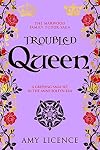
1528 and Thomasin Marwood is working as part of the household of the Queen of England. The household is loyal to their mistress but very tense, Henry the King is infatuated with a woman called Anne and rather than just keep her as his mistress he wants to repudiate Queen Catherine. Catherine is beyond childbearing years and Henry needs a son to carry on his succession so his political allies are trying to get him a divorce. Anne is already acting above her station and Thomasin is caught in show more the intrigue.
As far as historical fiction goes this is a great setting, the King's great issue is examined from the perspective of those loyal to Catherine which is different to the usual viewpoint. The tone is very anti-Boleyn but in line with the thoughts and feelings of many of the populace at the time. So far so good. My only slight quibble with this novel was the character of Thomasin who seems a little bland and her romantic exploits somewhat saccharine but for every extended dance or illness section there is a really good examination of the history! show less
As far as historical fiction goes this is a great setting, the King's great issue is examined from the perspective of those loyal to Catherine which is different to the usual viewpoint. The tone is very anti-Boleyn but in line with the thoughts and feelings of many of the populace at the time. So far so good. My only slight quibble with this novel was the character of Thomasin who seems a little bland and her romantic exploits somewhat saccharine but for every extended dance or illness section there is a really good examination of the history! show less
Henry VIII's Controversial Aunt, Honor Lisle: Her Life, Letters and influence on The Tudor Court by Amy Licence
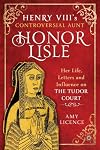
Born to minor gentry in the West Country, Honor Bassett was destined to make a marriage and live a quiet life near the rest of her wider family. However, after the death of her first husband, Honor married Arthur Plantagenet, illegitimate uncle of Henry VIII and was propelled to life in society. After attending the King, Honor's husband was created Viscount Lisle and given the role of overseeing English interests in Calais, the remaining possession in France. As politics in England moved show more along, the Lisle's lived their life but Catholic sympathies and financial overstretching meant tragedy was to follow.
This is a terrific biography of an almost forgotten character. Even though Honor was actually only the step-aunt of Henry, her story is incredibly interesting. Based on the vast correspondence from Honor to her family and interests in England, the book gives a really detailed portrait of the life of an expatriate family in the 16th Century. Combined with the role the Lisle's played on the margins of court life during the key moments from the rise of Anne Boleyn to the death of Catherine Howard it gives another perspective to the events. show less
This is a terrific biography of an almost forgotten character. Even though Honor was actually only the step-aunt of Henry, her story is incredibly interesting. Based on the vast correspondence from Honor to her family and interests in England, the book gives a really detailed portrait of the life of an expatriate family in the 16th Century. Combined with the role the Lisle's played on the margins of court life during the key moments from the rise of Anne Boleyn to the death of Catherine Howard it gives another perspective to the events. show less
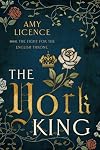
NOTE: I was given early access to this novel in exchange for writing an impartial review. Thank you Lume Books. Scheduled Publication: March 3, 2022
This historical novel-- Book Two in author Amy Licence's HOUSE OF YORK trilogy -- focuses on a chunk of the Wars of the Roses: British history between 1464 (when King Edward IV of England had been on the throne for three years) until 1471 (when he defeats King Henry VI for the second and final time). I'd award it 3.5 stars if I could, though not show more four.
The book begins at a moment I have seldom seen included in novels about this period. It's the moment when 22-year-old King Edward IV meets Lady Eleanor Talbot and promises to marry her. If you know Edward's story you know that this promise becomes VERY significant after Edward dies in 1483. Because at this time period, a promise to marriage was as legally binding as the ceremony itself. So, IF Edward did promise to marry Eleanor, he was not free to marry Elizabeth Woodville in 1464, making ALL ten of his children with Elizabeth illegitimate and unable to inherit the throne.
Included in this novel is the story of how Edward meets Elizabeth Woodville, how he marries her against the wishes of his chief advisor (Richard, Earl of Warwick), and how the ambitious Warwick and Edward's younger brother George (Duke of Clarence) then continue the Wars of the Roses in an increasingly desperate attempt to wield power. It's an interesting story, in part because it also involves the King Edward's own struggle as he weighs loyalty to family against wise policy.
The issue I had with the book was the level of detail the very knowledgeable Amy Licence includes about daily life at this time period. It was just too much for me and I felt it made the story overly dense, even slow. At times, it felt more like part historical fiction and part history textbook. As a journalist, historian, and award-winning author, Licence has written many, many books about medieval and Tudor England. And I felt that she simply tried too hard to include too much of her impressive knowledge into her descriptions of meals, battles, and situations. I personally would have been happier if she'd spent more time with the internal psychology of Edward, Warwick, and George -- who are for me three of the most fascinating characters from history. show less
This historical novel-- Book Two in author Amy Licence's HOUSE OF YORK trilogy -- focuses on a chunk of the Wars of the Roses: British history between 1464 (when King Edward IV of England had been on the throne for three years) until 1471 (when he defeats King Henry VI for the second and final time). I'd award it 3.5 stars if I could, though not show more four.
The book begins at a moment I have seldom seen included in novels about this period. It's the moment when 22-year-old King Edward IV meets Lady Eleanor Talbot and promises to marry her. If you know Edward's story you know that this promise becomes VERY significant after Edward dies in 1483. Because at this time period, a promise to marriage was as legally binding as the ceremony itself. So, IF Edward did promise to marry Eleanor, he was not free to marry Elizabeth Woodville in 1464, making ALL ten of his children with Elizabeth illegitimate and unable to inherit the throne.
Included in this novel is the story of how Edward meets Elizabeth Woodville, how he marries her against the wishes of his chief advisor (Richard, Earl of Warwick), and how the ambitious Warwick and Edward's younger brother George (Duke of Clarence) then continue the Wars of the Roses in an increasingly desperate attempt to wield power. It's an interesting story, in part because it also involves the King Edward's own struggle as he weighs loyalty to family against wise policy.
The issue I had with the book was the level of detail the very knowledgeable Amy Licence includes about daily life at this time period. It was just too much for me and I felt it made the story overly dense, even slow. At times, it felt more like part historical fiction and part history textbook. As a journalist, historian, and award-winning author, Licence has written many, many books about medieval and Tudor England. And I felt that she simply tried too hard to include too much of her impressive knowledge into her descriptions of meals, battles, and situations. I personally would have been happier if she'd spent more time with the internal psychology of Edward, Warwick, and George -- who are for me three of the most fascinating characters from history. show less
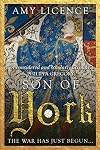
‘’We fight our own battles.’’
One of the most well-known and fascinating monarchs in English History is Edward IV, brother to Richard III. In a land where most monarchs have made their mark- in a positive or negative way- his popularity certainly speaks for itself. His life, marriage and political acuteness have made him a figure that inspired some of the finest lines by Shakespeare in Richard III and became the focus of many books in the Historical fiction genre. Amy Licence’s Son show more of York is one more example.
Edward’s significance becomes more important when we consider that he was actually the first king of England to come from the York family. He married Elizabeth Woodville, causing a great scandal and produced many children who became notable figures in English History. He was believed to be an expert in strategic matters and he brought order to the realms after the long feud between the Houses of York and Lancaster. He was a lover of the Arts and acquired a significant collection manuscripts. Now, this very important man surely provides the material for a good Historical novel, doesn't he? Well, the answer is yes. Almost.
We find ourselves in 1455, when Edward is a boy of thirteen. He is the fearless, fiery, abrupt son of Richard Plantagenet and Cecily, while his favourite brother, Edmund, is the dreamer, the sensible one, the voice of reason. The focus of the story is the way this young man became a king and I found that very clever. The young boy who became king shows all the signs of his future self and Licence creates a very believable,well-composed Edward. All the characters that are in the centre of the narration are interesting and realistically portrayed and the historical events are depicted extremely accurately. This was a very welcome change from what usually happens in books, films and TV series that decide to butcher well-established historical characters just for the sake of viewership and readership. The fact that Licence is a historian certainly helped in retaining a level of historical accuracy that is respectable.The battles and tournament scenes are impactful and well-written and I particularly enjoyed the inclusion of Loveday, an event that has always intrigued me. The romance element is not overwhelming, but it is there and it isn't successful, in my opinion.The women Edward is interested in are not interesting or memorable at all.On the contrary, a relationship that is well-structured and consistent is the one between Richard and Cecily who was my favourite character in the novel.
So, why 3 stars? If you follow my reviews, you’ll have noticed by now that a feature that can make or break a book for me is dialogue. Now, with Historical Fiction, language is a difficult thing to master. It may appear pompous or inappropriately modern. Here, it was a mediocre combination of the two. I had many problems with it, to be honest. From the early stages of the story,the dialogue seems wooden and uninspired, as if the writer took pieces of sentences from The Tudors -or any other pseudo-historical TV shows and films with dubious historical accuracy- and created this. In addition, she attempts to remind the readers of past events by including them in the dialogue only a few pages after said events have taken place right before our eyes. I mean, we don’t forget THAT easily (I hope…) This results in interactions that are awkward, unnatural and, frankly, almost cringeworthy. The constant bickering between York and Edward over matters that have been discussed again and again was too tiring and the frequent use of the phrase ''she-devil'' to refer to Margaret of Anjou was extremely bothersome. It was a pity, really, because the descriptive passages were well-composed, presenting facts naturally and not as a History lesson and the pace was consistent throughout. Perhaps, dialogue isn’t the writer’s strong point.
This was an interesting novel, quite enjoyable and faithful to the people and the events depicted, but it was nothing that we haven’t seen before. When one has much experience by being an avid reader of Historical Fiction, the standards are too high, the expectations too many and Son of York didn’t meet them to the fullest.
Many thanks to Endeavour Press and NetGalley for providing me with an ARC copy in exchange for an honest review. show less
One of the most well-known and fascinating monarchs in English History is Edward IV, brother to Richard III. In a land where most monarchs have made their mark- in a positive or negative way- his popularity certainly speaks for itself. His life, marriage and political acuteness have made him a figure that inspired some of the finest lines by Shakespeare in Richard III and became the focus of many books in the Historical fiction genre. Amy Licence’s Son show more of York is one more example.
Edward’s significance becomes more important when we consider that he was actually the first king of England to come from the York family. He married Elizabeth Woodville, causing a great scandal and produced many children who became notable figures in English History. He was believed to be an expert in strategic matters and he brought order to the realms after the long feud between the Houses of York and Lancaster. He was a lover of the Arts and acquired a significant collection manuscripts. Now, this very important man surely provides the material for a good Historical novel, doesn't he? Well, the answer is yes. Almost.
We find ourselves in 1455, when Edward is a boy of thirteen. He is the fearless, fiery, abrupt son of Richard Plantagenet and Cecily, while his favourite brother, Edmund, is the dreamer, the sensible one, the voice of reason. The focus of the story is the way this young man became a king and I found that very clever. The young boy who became king shows all the signs of his future self and Licence creates a very believable,well-composed Edward. All the characters that are in the centre of the narration are interesting and realistically portrayed and the historical events are depicted extremely accurately. This was a very welcome change from what usually happens in books, films and TV series that decide to butcher well-established historical characters just for the sake of viewership and readership. The fact that Licence is a historian certainly helped in retaining a level of historical accuracy that is respectable.The battles and tournament scenes are impactful and well-written and I particularly enjoyed the inclusion of Loveday, an event that has always intrigued me. The romance element is not overwhelming, but it is there and it isn't successful, in my opinion.The women Edward is interested in are not interesting or memorable at all.On the contrary, a relationship that is well-structured and consistent is the one between Richard and Cecily who was my favourite character in the novel.
So, why 3 stars? If you follow my reviews, you’ll have noticed by now that a feature that can make or break a book for me is dialogue. Now, with Historical Fiction, language is a difficult thing to master. It may appear pompous or inappropriately modern. Here, it was a mediocre combination of the two. I had many problems with it, to be honest. From the early stages of the story,the dialogue seems wooden and uninspired, as if the writer took pieces of sentences from The Tudors -or any other pseudo-historical TV shows and films with dubious historical accuracy- and created this. In addition, she attempts to remind the readers of past events by including them in the dialogue only a few pages after said events have taken place right before our eyes. I mean, we don’t forget THAT easily (I hope…) This results in interactions that are awkward, unnatural and, frankly, almost cringeworthy. The constant bickering between York and Edward over matters that have been discussed again and again was too tiring and the frequent use of the phrase ''she-devil'' to refer to Margaret of Anjou was extremely bothersome. It was a pity, really, because the descriptive passages were well-composed, presenting facts naturally and not as a History lesson and the pace was consistent throughout. Perhaps, dialogue isn’t the writer’s strong point.
This was an interesting novel, quite enjoyable and faithful to the people and the events depicted, but it was nothing that we haven’t seen before. When one has much experience by being an avid reader of Historical Fiction, the standards are too high, the expectations too many and Son of York didn’t meet them to the fullest.
Many thanks to Endeavour Press and NetGalley for providing me with an ARC copy in exchange for an honest review. show less
Lists
You May Also Like


Associated Authors
Statistics
- Works
- 30
- Members
- 791
- Popularity
- #32,199
- Rating
- 3.7
- Reviews
- 15
- ISBNs
- 61