
Richard Wiseman (1) (1966–)
Author of 59 Seconds: Think a Little, Change a Lot
For other authors named Richard Wiseman, see the disambiguation page.
About the Author
Richard Wiseman, Ph.D. is Professor of Public Understanding of Psychology at the University of Hertfordshire
Works by Richard Wiseman
Associated Works
Tagged
Common Knowledge
- Canonical name
- Wiseman, Richard
- Legal name
- Wiseman, Richard John
- Birthdate
- 1966
- Gender
- male
- Education
- University College London (Psychology)
University of Edinburgh (PhD|Psychology) - Occupations
- professor
psychologist
magician
speaker
television commentator
radio commentator (show all 7)
creative consultant - Organizations
- Committee for Skeptical Inquiry
University of Hertfordshire
British Science Association
The Inner Magic Circle - Awards and honors
- CSICOP (Public Education in Science Award ∙ 2000)
BAAS (Joseph Lister Award ∙ 2002)
NESTA DreamTime Fellowship (2004) - Short biography
- Richard Wiseman, based at the University of Hertfordshire in the United Kingdom, is Britain's only professor for the Public Understanding of Psychology and has an international reputation for his research in unusual areas, including deception, luck, humor and the paranormal. A passionate advocate for science, Wiseman is well-known for his media appearances, high-profile talks, live demonstrations, and mass-participation studies. Wiseman also regularly acts as a creative consultant for print, broadcast, and new media. He is the psychologist most frequently quoted by the British media, and his research has been featured in more than one hundred fifty television programs in the United Kingdom. [adapted from 59 Seconds (2009)]
- Nationality
- UK
- Birthplace
- London, England, UK
- Places of residence
- London, England, UK
Edinburgh, Scotland, UK - Associated Place (for map)
- UK
Members
Reviews
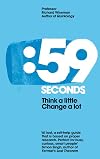
Why not invest a minute to be happier? Because that's not really what is being offered--that's just the marketing. If we were really doing science, we should follow up with the actual time it would take and statistics on how many readers of this book actually changed their lives
I started reading this for the dubious reason of wanting to see what another author I was reviewing recommended. I'm not an unhappy person, nor a wildly happy one--I'm not really sure what the abstraction "happiness" show more means even though others are comfortable giving an exact number from 1 to 10. I'd probably be happier if I were one of those others. I'd think less and smile more.
Also, I'm not eager to change anything about myself. One would think the author could understand why. He cites research that people who won the lottery didn't become happier. (Let's ignore for the moment that their experiment didn't control for people who wouldn't ever play the lottery--scientists who understand that it's a tax on those who are bad at math.) My take away from the experiment wasn't the official one--that an influx of cash doesn't create happiness--it was that that people are wrong about what they imagine will make them happy (e.g. winning money). And yet this book regularly assumes the reader knows in advance how they want to change or how they will feel about it afterwards. What about "Be careful what you wish for"?
Since he early on quotes from a Woody Allen movie, let me do the same. In Annie Hall, a happy couple accounts for their success with both people saying "I'm very shallow and empty and I have no ideas and nothing interesting to say." These people are his ideal readership (or would be but they're already happy.) The author doesn't seem to believe that people are complicated--just misinformed on the science.
In one of the first experiments he writes about, the data shows that nursing home residents given a plant to care for reported themselves happier (and lived longer--a rare example of objective data) than those given plants that would be cared for by the staff. I assumed his conclusion would be that an experience of caring makes one happier, but no--it was that giving people more control over their lives makes them happier.
This is science?
How about that attitude of gratitude? (And does repeating those rhyming words really help matters?) I imagine feeling pure unadulterated gratitude must feel great. I have to imagine because for me, gratitude is usually mixed with a host of other feelings. Am I the only one who is complicated this way? Am I supposed to repress the other feelings? No, because that just strengthens them, says the research. Evidently science thinks that people's actual feelings are identical to those expressed on a greeting card. And how can it be better to give than receive when that decrease the opportunities to feel gratitude?
I'm also one of those who believe in what Wiseman calls "the myth of active listening." Science has shown that couples don't have to listen to each other. The presumption of the listening exercises is that members of a couple actually want to empathize with each other. Forcing them to do so against their will isn't really the purpose, but if you think behavioristically, science is only about what you do.
Writing is better than thinking because you organize your thoughts and give them a structure. I always suspected I'd hate a book like this but felt I should give it a chance and now I can hate it in a deeper structured way. I played several games of chess online before writing this review which is supposed to reinforce the logical thought that went into the ideas expressed herein. I just skimmed the last half which may mean I missed the most worthwhile parts but it made me happy to be done with it and isn't happiness the goal?
The research suggests that I'd probably have felt a lot better giving this book more than one star though my actual experience suggests otherwise. show less
I started reading this for the dubious reason of wanting to see what another author I was reviewing recommended. I'm not an unhappy person, nor a wildly happy one--I'm not really sure what the abstraction "happiness" show more means even though others are comfortable giving an exact number from 1 to 10. I'd probably be happier if I were one of those others. I'd think less and smile more.
Also, I'm not eager to change anything about myself. One would think the author could understand why. He cites research that people who won the lottery didn't become happier. (Let's ignore for the moment that their experiment didn't control for people who wouldn't ever play the lottery--scientists who understand that it's a tax on those who are bad at math.) My take away from the experiment wasn't the official one--that an influx of cash doesn't create happiness--it was that that people are wrong about what they imagine will make them happy (e.g. winning money). And yet this book regularly assumes the reader knows in advance how they want to change or how they will feel about it afterwards. What about "Be careful what you wish for"?
Since he early on quotes from a Woody Allen movie, let me do the same. In Annie Hall, a happy couple accounts for their success with both people saying "I'm very shallow and empty and I have no ideas and nothing interesting to say." These people are his ideal readership (or would be but they're already happy.) The author doesn't seem to believe that people are complicated--just misinformed on the science.
In one of the first experiments he writes about, the data shows that nursing home residents given a plant to care for reported themselves happier (and lived longer--a rare example of objective data) than those given plants that would be cared for by the staff. I assumed his conclusion would be that an experience of caring makes one happier, but no--it was that giving people more control over their lives makes them happier.
This is science?
How about that attitude of gratitude? (And does repeating those rhyming words really help matters?) I imagine feeling pure unadulterated gratitude must feel great. I have to imagine because for me, gratitude is usually mixed with a host of other feelings. Am I the only one who is complicated this way? Am I supposed to repress the other feelings? No, because that just strengthens them, says the research. Evidently science thinks that people's actual feelings are identical to those expressed on a greeting card. And how can it be better to give than receive when that decrease the opportunities to feel gratitude?
I'm also one of those who believe in what Wiseman calls "the myth of active listening." Science has shown that couples don't have to listen to each other. The presumption of the listening exercises is that members of a couple actually want to empathize with each other. Forcing them to do so against their will isn't really the purpose, but if you think behavioristically, science is only about what you do.
Writing is better than thinking because you organize your thoughts and give them a structure. I always suspected I'd hate a book like this but felt I should give it a chance and now I can hate it in a deeper structured way. I played several games of chess online before writing this review which is supposed to reinforce the logical thought that went into the ideas expressed herein. I just skimmed the last half which may mean I missed the most worthwhile parts but it made me happy to be done with it and isn't happiness the goal?
The research suggests that I'd probably have felt a lot better giving this book more than one star though my actual experience suggests otherwise. show less
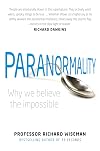
An exploration of supposedly supernatural phenomena from mind-reading to prophetic dreams to ghosts, by someone who is way more fascinated by the psychology of why we seemingly experience these phenomena than in postulating otherworldly explanations for them. Most of what's in here wasn't particularly new to me, but some of the examples and specific details were, and overall I found it an interesting, entertaining read, anyway. Wiseman's writing is breezy, friendly, and laced with humor. show more It's also a pleasantly interactive experience, as he includes some little tests and exercises and such for the reader and offers light-hearted but genuine advice for things like how to make a table move at a seance or how to induce an out of body experience. (The book is, sadly, slightly less interactive now than it was ten years ago when it was published, though, as it includes a bunch of links and QR codes intended to take you to videos containing supplemental material like interviews and demonstrations of psychic readings, which no longer work. Well, I didn't try the QR codes, but the links provided with them just take you to the front page of Wiseman's Wordpress site now, not to the relevant material. One of the hazards of tying an ephemeral medium to a more permanent one. Fortunately, none of them seem remotely essential, anyway.)
Wiseman does, along the way, talk about some rather dark things, such as the brief history of Jonestown in a section on cults, but overall it's a nice demonstration of the fact that skepticism and science can be just as fun and full of wonder and fascination as any tale of the supernatural, and it teaches readers some interesting stuff about human psychology along the way. You could do a lot worse as an introduction to to this sort of deeper thinking about the paranormal. show less
Wiseman does, along the way, talk about some rather dark things, such as the brief history of Jonestown in a section on cults, but overall it's a nice demonstration of the fact that skepticism and science can be just as fun and full of wonder and fascination as any tale of the supernatural, and it teaches readers some interesting stuff about human psychology along the way. You could do a lot worse as an introduction to to this sort of deeper thinking about the paranormal. show less

Think of your typical self-help book. Now remove all the pseudo-scientific unproven babble and replace it with documented information complete with references to actual scientific studies. Add an entertaining, conversational writing style and more than a dash of humor and then you have this book. Not perfect by any means, but very good
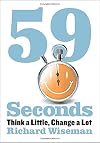
I don't have a lot of respect for self-help books in general. My feeling is that they tend to be based around platitudes, wishful thinking, and a desire on the author's part to make a quick buck, often with a generous helping of psuedoscience in the mix. Richard Wiseman doesn't talk about them in terms anywhere near that strong, but he does point out that, according to scientific research, a lot of the most beloved ideas embraced by self-help gurus are incorrect. So in this book, he looks show more what the experimental evidence says about how human psychology actually works and offers some quick and simple self-help tips and exercises based on that.
Which sounds like a great idea to me, but I did have some mixed feelings about the execution. Wiseman has some decent bits of advice for dealing with certain specific situations and for altering your general approach to achieving your goals. (Examples: If you need help, ask people one at a time rather than appealing to a big group, because people in crowds tend to mill around waiting for someone else to step forward. And if you want your kids to be successful, praise them for trying hard when they do well, rather than telling them that doing well means they're smart. They'll be more likely to try hard and do well next time, too.) A lot of the self-help exercises seemed a bit contrived and gimmicky to me, though. And while altering your behavior based on ideas with some scientific support is obviously better than doing so based on ideas that are clearly wrong, a lot of the experimental conclusions here seem to be a bit iffy, offering interesting suggestive indications rather than concrete proof. The human mind, after all, is extremely complex, and altering tiny details in how you conduct experiments on it can lead to big differences in results. Wiseman does acknowledge that, but not quite as much as I'd like.
If you're interested in learning where lots of self-help books go wrong, though, or in reading about interesting, quirky little psychology experiments, this one is worth a look. show less
Which sounds like a great idea to me, but I did have some mixed feelings about the execution. Wiseman has some decent bits of advice for dealing with certain specific situations and for altering your general approach to achieving your goals. (Examples: If you need help, ask people one at a time rather than appealing to a big group, because people in crowds tend to mill around waiting for someone else to step forward. And if you want your kids to be successful, praise them for trying hard when they do well, rather than telling them that doing well means they're smart. They'll be more likely to try hard and do well next time, too.) A lot of the self-help exercises seemed a bit contrived and gimmicky to me, though. And while altering your behavior based on ideas with some scientific support is obviously better than doing so based on ideas that are clearly wrong, a lot of the experimental conclusions here seem to be a bit iffy, offering interesting suggestive indications rather than concrete proof. The human mind, after all, is extremely complex, and altering tiny details in how you conduct experiments on it can lead to big differences in results. Wiseman does acknowledge that, but not quite as much as I'd like.
If you're interested in learning where lots of self-help books go wrong, though, or in reading about interesting, quirky little psychology experiments, this one is worth a look. show less
Lists
Awards


You May Also Like


Associated Authors
Statistics
- Works
- 22
- Also by
- 1
- Members
- 3,753
- Popularity
- #6,752
- Rating
- 3.7
- Reviews
- 74
- ISBNs
- 188
- Languages
- 16
- Favorited
- 2