
George MacDonald (1) (1824–1905)
Author of The Princess and the Goblin
For other authors named George MacDonald, see the disambiguation page.
About the Author
George MacDonald was born on December 10, 1824 in Huntley, Aberdeenshire, Scotland. He attended University in Aberdeen in 1840 and then went on to Highbury College in 1848 where he studied to be a Congregational Minister, receiving his M. A. After being a minister for several years, he became a show more lecturer in English literature at Kings College in London before becoming a full-time writer. He wrote fiction, non-fiction, and poetry. In 1955, he wrote his first important original work, a long religious poem entitled Within and Without. He is best known for his fantasy novels Phantastes, The Princess and the Goblin, At the Back of the North Wind, and Lilith and fairy tales including The Light Princess, The Golden Key, and The Wise Woman. In 1863, he published David Eiginbrod, the first of a dozen novels that were set in Scotland and based on the lives of rural Scots. He died on September 18. 1905. (Bowker Author Biography) show less
Series
Works by George MacDonald
At the Back of the North Wind, The Princess and the Goblin, The Princess and Curdie (1979) 224 copies, 3 reviews
The Maiden's Bequest, the Minister's Restoration, the Laird's Inheritance: Three Novels in One Volume (1998) 95 copies, 1 review
The George McDonald Treasury: Princess and the Goblin, Princess and Curdie, Light Princess, Phantastes, Giant's Heart, At the Back of the North Wind, Golden Key, and Lilith (1863) 90 copies, 2 reviews
Fantasy Stories of George Macdonald (4 vols., The Wise Woman, The Golden Key, The Gray Wolf, The Light Princess) (1980) 85 copies
The Light Princess and Other Fairy Tales (George Macdonald Original Works) (1993) 82 copies, 2 reviews
Wee Sir Gibbie of the Highlands (George Macdonald Classics for Young Readers) (1990) 77 copies, 1 review
The Gospel in George MacDonald: Selections from His Novels, Fairy Tales, and Spiritual Writings (The Gospel in Great Writers) (2016) 61 copies, 7 reviews
The Highlander's Last Song / The Gentlewoman's Choice (The George MacDonald Classics Series, Retold for Today's Reader) (1987) 34 copies, 1 review
The Adventures of Ranald Bannerman (George Macdonald Classics for Young Readers, Book 4) (1991) 33 copies
World of George Macdonald: Selections from His Novels (The Wheaton literary series) (1978) 28 copies
The Tragedie of Hamlet, Prince of Denmark: A Study with the Text of the Folio of 1623 (1995) 28 copies, 1 review
George MacDonald Fantasy Classics Collection: Phantastes, The Light Princess, The Princess and the Goblin, Lilith (2021) 22 copies
20 Masterpieces of Fantasy Fiction Vol. 1: Peter Pan, Alice in Wonderland, The Wonderful Wizard of Oz, Tarzan of the Apes...... (2021) 21 copies
George MacDonald: The Complete Fantasy Collection - 8 Novels & 30 Short Stories and Fairy Tales (Illustrated): The Princess and the Goblin, Lilith, Phantastes, ... Dealings with… (2015) 19 copies, 1 review
The Gifts of the Child Christ: Fairy Tales and Stories for the Childlike, Volume 1 (1973) 18 copies, 1 review
20 Classic Fantasy Works You Should Read (Golden Deer Classics): Peter Pan, Alice in Wonderland, The Wonderful Wizard of Oz, The Man Who Was Thursday... (2017) 15 copies
Unspoken Sermons (Sea Harp Timeless series): Series I, II, and III (Complete and Unabridged) (2022) 14 copies
The Marshmallows Trilogy: A Quiet Neighborhood, The Seaboard Parish, The Vicar's Daughter (1985) 13 copies
Disciple and Other Poems (Sunrise Centenary Editions of the Works of George Macdonald : Poems) (1989) 12 copies
Wisdom to Live By (Sunrise Centenary Editions of the Works of George MacDonald: Quotations) (1996) 11 copies
The Stories of George MacDonald: The Lost Princess, The Princess and the Goblin, The Princess and Curdie, The Golden Key and Other Stories (1979) 10 copies
The Complete Works of George MacDonald (Illustrated Edition): The Princess and the Goblin, Phantastes, At the Back of the North Wind, Lilith… (2017) 10 copies
Consuming Fire: The Inexorable Power of God's Love: A Devotional Version of Unspoken Sermons (2015) 9 copies
The Complete Works of George MacDonald (Illustrated Edition): The Princess and the Goblin, Phantastes, At the Back of the North Wind, Lilith… (2017) 8 copies
The Fantastic Imagination of George MacDonald, Volume II: Phantastes, The Carasoyn, The Wise Woman, Lilith (2008) 7 copies, 1 review
The Fantastic Imagination of George MacDonald, Volume I: Essays, The Portent, At the Back of the North Wind, The Flight of the Shadow (2008) 7 copies
THE PARISH TRILOGY: Annals of a Quiet Neighbourhood, The Seaboard Parish & The Vicar's Daughter (Complete Edition) (2018) 6 copies
The Curate's Awakening, The Lady's Confession & The Baron's Apprenticeship (Complete Trilogy) (2017) 5 copies
The George MacDonald Scottish Collection: Four Tales From His Homeland by the Grandfather of Modern Fantasy (Unabridged, with Illustrations) (2023) 4 copies
A Dish of Orts Annotated Edition: Chiefly Papers on the Imagination, and on Shakespeare (2022) 3 copies
What's Mine's Mine - Volume 1 3 copies
George MacDonald's Fantasy Novels (Complete and Unabridged) Including: The Light Princess, Cross Purposes, Phantastes and Lilith (2013) 3 copies
Thomas Wingfold, Curate, Volume 1 2 copies
A Scottish Collection: The Maiden's Request, The Minister's Restoration, The Laird's Inheritance 2 copies
Cross Purposes, and The Carasoyn 2 copies
The Giant's Heart 2 copies
Scottish Children's Fantasy : The Princess and the Goblin, Prince Prigio and Prince Ricardo, The Wise Woman and Other Stories (2014) 2 copies
The Castle 2 copies
What's Mine's Mine - Volume 2 2 copies
Chamber Dramas for Children 2 copies
The Fairy Fleet 2 copies
The Day Boy and the Night Girl (Annotated): Illustrated | Newer Edition of the Original 1882 Publication (2019) 2 copies
Unspoken Sermons, Series Two 1 copy
The George MacDonald Short Story Collection: Five Classic Tales By The Man Who Inspired The Inklings 1 copy
George MacDonald's Transformational Theology of the Christian Faith: Sermons of Prophetic Vision 1 copy
George MacDonald Original Works: Series VIII: Unspoken Sermons (Series 1, 2, 3), Wilfrid Cumbermede, Thomas Wingfold, St (2004) 1 copy
The Complete Fairy Tales 1 copy
George MacDonald Original Works Series III: Colour Plates: Ranald Bannerman's Boyhood, Princess and the Goblin, Princess (1998) 1 copy
Nanny's Dream 1 copy
Diamond's Dream 1 copy
There and back 1 copy
Stephen Archer, the Gifts of the Child Christ, The History of Photogen and Nycteris, Port in a Storm, and If I Had a Father (2014) 1 copy
AT THE BACK OF THE NORTH WIND By George MacDonald - No 250C (Instructor Literature Series) (1905) 1 copy
The Seaboard Parish, Vol. 1 1 copy
George MacDonald Manuscripts 1 copy
Men and Women 1 copy
Malcom Vol. II 1 copy
Malcom Vol. III 1 copy
At the Back of the North Wind Including : The Princess and the Goblin: Illustrated by Maria L. Kirk and Jessie Willcox Smith (2017) 1 copy
Gathered grace: a short selection of George Macdonald's poems, with a biographical sketch (1938) 1 copy
Phantastes - Introduced by Michael Phillips (The Cullen Collection Volume 1) (2018) — Author — 1 copy
Good Words for the Young 1 copy
The Fishermans's Lady 1 copy
The Curates's Awakening 1 copy
The Baron's Apprentice 1 copy
Stephen Archer 1 copy
The Wow o'Riven 1 copy
Justice 1 copy
Phantasies and Lilith 1 copy
Selections From the Writings of George Macdonald, or Helps for Weary Souls (Classic Reprint) (2017) 1 copy
A Quiet neighbourhood 1 copy
Fantasy, Faeries and Ghosts 1 copy
Associated Works
Spells of Enchantment: The Wondrous Fairy Tales of Western Culture (1991) — Contributor — 604 copies, 5 reviews
Beyond the Looking Glass: Extraordinary Works of Fairy Tale & Fantasy (1985) — Contributor — 182 copies, 7 reviews
Tales Before Narnia: The Roots of Modern Fantasy and Science Fiction (2008) — Contributor — 126 copies, 3 reviews
In the Shadow of Edgar Allan Poe: Classic Tales of Horror, 1816-1914 (2015) — Contributor — 107 copies, 3 reviews
The Graphic Canon of Children's Literature: The World's Greatest Kids' Lit as Comics and Visuals (2014) — Contributor — 101 copies, 1 review
The Dedalus Book of British Fantasy: 19th Century (European Literary Fantasy Anthologies) (1991) — Contributor — 47 copies
From Isles of Dream: Visionary Stories and Poems of the Celtic Renaissance (1993) — Contributor — 41 copies
Tales of the Wandering Jew: A Collection of Contemporary and Classic Stories (1991) — Contributor — 29 copies
Terrifying Transformations: An Anthology of Victorian Werewolf Fiction, 1838-1896 (2012) — Contributor — 22 copies
More ghosts and marvels,: A selection of uncanny tales from Sir Walter Scott to Michael Arlen, (The World's classics) (1934) — Contributor — 10 copies
To the Land of Fair Delight-Three Victorian Tales of the Imagination (1960) — Contributor — 7 copies
Shirley Temple Storybook Collection: The Princess and the Goblins / Madeline (2008) — Original story — 4 copies, 1 review
Wakacje Wśród Duchów — Contributor — 2 copies
Shadows from a Veiled Creation: Classic Tales of Supernatural Fiction in the Christian Tradition (2006) — Contributor — 2 copies
The Princess and the Goblins [1961 Shirley Temple Storybook TV episode] (1961) — Original book — 1 copy
Tagged
Common Knowledge
- Birthdate
- 1824-12-10
- Date of death
- 1905-09-18
- Gender
- male
- Education
- University of Aberdeen (MA|1845)
Highbury Theological College (M.Div|1850) - Occupations
- pastor
teacher
editor
poet
novelist - Relationships
- Macdonald, Greville (son)
MacDonald, Philip (grandson)
MacDonald, Ronald (son) - Nationality
- UK
- Birthplace
- Huntley, Aberdeenshire, Scotland, UK
- Places of residence
- Huntley, Aberdeenshire, Scotland, UK
Ashstead, Surrey, England, UK
London, Middlesex, England, UK
Bordighera, Italy - Place of death
- Ashstead, Surrey, England, UK
- Burial location
- Bordighera, Imperia, Liguria, Italy
- Map Location
- Scotland, UK
Members
Discussions
Phantastes & Lilith by George MacDonald (reviewd by lilyfyrestorm) in Reviews reviewed (June 2011)
Reviews
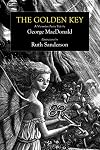
Fascinated by a tale told him by his great-aunt about a golden key hidden by the fairies at the end of the rainbow, a boy sees a rainbow in the woods at sundown and goes to investigate. Fearful that the three bears of her story book are at her door a girl escapes from her bedroom window and runs into the woods. Thus Mossy the boy and Tangle the girl embark on their adventure in Fairyland.
Their fairy tale quest is also a surreal and metaphysical tale of recurring existence, filled with hints show more of Christian metaphors. Three times is often the charm for MacDonald beginning with the reference to the folktale Silverhair (more commonly known now as Goldilocks and the three bears). The protagonists, Mossy, the boy and Tangle, the girl, encounter three men in various stages of their lives: old, young, and infant. These men or boys aid them on their way. Mossy and Tangle themselves also experience these three ages, but like their three guides, it’s not necessarily in the usual chronological order, indicating that the fairyland through which they journey is outside the bounds of time and space. It is a place of reoccurrence and resurrection and also one of separation and reunion. And as Yolen points out in the afterword, it’s also “an extended metaphor of life and death.” show less
Their fairy tale quest is also a surreal and metaphysical tale of recurring existence, filled with hints show more of Christian metaphors. Three times is often the charm for MacDonald beginning with the reference to the folktale Silverhair (more commonly known now as Goldilocks and the three bears). The protagonists, Mossy, the boy and Tangle, the girl, encounter three men in various stages of their lives: old, young, and infant. These men or boys aid them on their way. Mossy and Tangle themselves also experience these three ages, but like their three guides, it’s not necessarily in the usual chronological order, indicating that the fairyland through which they journey is outside the bounds of time and space. It is a place of reoccurrence and resurrection and also one of separation and reunion. And as Yolen points out in the afterword, it’s also “an extended metaphor of life and death.” show less

This has all the lyrical prose of a Victorian Children’s Fairy Tale, whimsical and wholesome. It dangerously approached saccharine sermonizing – if not for the North Wind. Sometimes a Tall Woman with Dark Hair, sometimes a Wolf, or a Fairy, or an Unseen Breath, she is the most intriguing character in a fairy tale I have encountered in some time. Biden by her unnamed Master, she often does what seems cruel, causing pain, suffering, and even death. And yet, in the end, is it revealed that show more all she does is for the healing, the betterment, and the good fortune of people. She is neither callous nor wanton in her destruction, but precise and obedient, doing her duty with a single-minded service to her master. A the Back of the North Wind is a place, a place she cannot see or visit, but a place she often takes those she is bidden to carry there. It seems a place where neither time nor illness nor hungry nor suffering dwell.
Daylight is a bit too cherubic for my taste, but I related to his constant out-of-place nature. He doesn’t fit in but doesn’t seem to notice. It is thought Daylight was modeled after MacDonald’s own son, as a tribute to the boy. His angelic goodness is off-set by the secondary characters, rough-and-tumble crowd, cabbies and street urchins, drunks and benevolent gentlemen. They seem real in a way Daylight does not. But perhaps that is the point.
This is a fantastic fairy tale, whimsical and imaginative, but with a somber ending that makes this far more than just a gossamer tale of nonsense for children. To understand that pain and death are important teachers, vital to our life and growth, is a lesson worth teaching our children. MacDonald’s story helps explain this concept to children in a way that makes sense to them. And may help adults understand a concept that seems so contrary to our minds. show less
Daylight is a bit too cherubic for my taste, but I related to his constant out-of-place nature. He doesn’t fit in but doesn’t seem to notice. It is thought Daylight was modeled after MacDonald’s own son, as a tribute to the boy. His angelic goodness is off-set by the secondary characters, rough-and-tumble crowd, cabbies and street urchins, drunks and benevolent gentlemen. They seem real in a way Daylight does not. But perhaps that is the point.
This is a fantastic fairy tale, whimsical and imaginative, but with a somber ending that makes this far more than just a gossamer tale of nonsense for children. To understand that pain and death are important teachers, vital to our life and growth, is a lesson worth teaching our children. MacDonald’s story helps explain this concept to children in a way that makes sense to them. And may help adults understand a concept that seems so contrary to our minds. show less
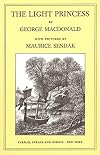
One thing I love about British literature---and just British culture, in general---is the quirky sense of humor we often see in their books and entertainment. Those in the British Empire have a way with words, and it often takes some deeper thinking about words to understand their puns and symbolism. I'll test the waters here a bit by saying that I think they've got "proper" English down, and reading something written by a British writer always challenges my vocabulary.
George MacDonald's, show more The Light Princess, is such a fun little book to read because it's just full of puns and nonsensical things and wonderful plays on words that make all the nonsensical things ok because the whole thing is brilliantly written. MacDonald seems to me to be a fantastic mixture of his contemporary and student, Lewis Carroll, and our more modern Roald Dahl.
MacDonald was a Scottish writer and Christian minister who lived from 1824-1905. He was a major literary influence on some of our favorite authors like J.R.R. Tolkien, C.S. Lewis, and Madeleine L'Engle. He was the author of over 60 published works, including poetry, fantasy, realistic fiction and nonfiction.
Inspired by the tale of Sleeping Beauty, The Light Princess tells the story of a princess who was cursed at birth and lost her "gravity". Throughout the story, she deals with issues of gravity---both as a state of being and in the sense of physics. When someone is willing to make the ultimate sacrifice for her comfort, good overcomes evil and she learns lessons in true love.
There are so many fun literary elements in, The Light Princess. Readers will encounter allusions to nursery rhymes, as well as laugh-out-loud jokes that only an adult would understand. "The King told stories and the Queen listened to them," is one of my favorite lines! Symbolism and witticisms abound. It's such a great story because it's obvious how much fun MacDonald had writing it.
Whether you are a youth, studying the book as an assignment, or an adult, reading and researching for fun, there's neat things to be found for everyone in this short story that's long on character. show less
George MacDonald's, show more The Light Princess, is such a fun little book to read because it's just full of puns and nonsensical things and wonderful plays on words that make all the nonsensical things ok because the whole thing is brilliantly written. MacDonald seems to me to be a fantastic mixture of his contemporary and student, Lewis Carroll, and our more modern Roald Dahl.
MacDonald was a Scottish writer and Christian minister who lived from 1824-1905. He was a major literary influence on some of our favorite authors like J.R.R. Tolkien, C.S. Lewis, and Madeleine L'Engle. He was the author of over 60 published works, including poetry, fantasy, realistic fiction and nonfiction.
Inspired by the tale of Sleeping Beauty, The Light Princess tells the story of a princess who was cursed at birth and lost her "gravity". Throughout the story, she deals with issues of gravity---both as a state of being and in the sense of physics. When someone is willing to make the ultimate sacrifice for her comfort, good overcomes evil and she learns lessons in true love.
There are so many fun literary elements in, The Light Princess. Readers will encounter allusions to nursery rhymes, as well as laugh-out-loud jokes that only an adult would understand. "The King told stories and the Queen listened to them," is one of my favorite lines! Symbolism and witticisms abound. It's such a great story because it's obvious how much fun MacDonald had writing it.
Whether you are a youth, studying the book as an assignment, or an adult, reading and researching for fun, there's neat things to be found for everyone in this short story that's long on character. show less
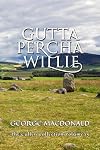
Summary: The story of a young boy who gives himself to discover his own work within God’s work and how he finds his vocation.
This story is a kind of Horatio Alger story with a spiritual twist. Willie Macmichael is the son of a country doctor, beloved by his patients. The doctor has an interesting educational philosophy, letting Willie learn on his own until he’s ready and motivated to go to school. So Willie explores about the village. Conversations with a widow who knits and sews show more persuade him that it might be time to find some worthy work to do. As he discusses her contention that we work but God doesn’t need to with his father, he is persuaded that God is always working and that the work of people is found within that work.
So he goes about exploring the world of work, trying shoe-making, carpentry, and blacksmithing, becoming proficient in each and making friends with those who taught him. He figures out on his own how to read, reading to Hector, the shoe-maker. Then he is ready for school, in which he delights.
He and a friend discover an old well. Willie, endlessly clever, devises a way to pump water to irrigate his parent’s garden, and then makes a Rube Goldberg alarm to wake himself up to stargaze at night. When his Granny needs to move in, he determines to make one of the rooms in the nearby ruins of an old building habitable. Spelman, the carpenter helps him, and he helps Spelman with water from the well, which seems to have healing properties.
That brings us to another aspect of Willie’s character. He has a tender heart. He wants to save his mother waking to feed his baby sister. Later, when Agnes wishes she were a bird that could perch in the trees, Willie works unbeknownst to her to create a place in the trees, safely reached. He moves to give his grandmother room, and later, an ill tradesman.
But it is a conversation with the town clergy that plays a key part in Willie finding his vocation. And it is not as a minister. Rather, it will involve the old ruins, the well, and a partnership with his father. None of what Willie has done is wasted. Instead, it weaves into good work beyond what Willie could have imagined.
I have to admit, Willie seems to be too good to be true. This was written while MacDonald was editing Good Words for the Young and is the second of his boy’s novels. He makes a few mistakes in his inventions, but, if I recall correctly, is guilty of no deliberate wrongdoing. Unlike Pilgrim’s Process, there seems to be no straying from the path that makes one chastened but wiser. I can’t help wondering if boys might have better identified with Willie if there had been a bit of mischief.
That said, while probably not one of the best of MacDonald’s stories, it is diverting and delightful. It points us toward the practical truth that we find our vocation as we faithfully do the work at hand. And with that, we find that we indeed work within the work of God. show less
This story is a kind of Horatio Alger story with a spiritual twist. Willie Macmichael is the son of a country doctor, beloved by his patients. The doctor has an interesting educational philosophy, letting Willie learn on his own until he’s ready and motivated to go to school. So Willie explores about the village. Conversations with a widow who knits and sews show more persuade him that it might be time to find some worthy work to do. As he discusses her contention that we work but God doesn’t need to with his father, he is persuaded that God is always working and that the work of people is found within that work.
So he goes about exploring the world of work, trying shoe-making, carpentry, and blacksmithing, becoming proficient in each and making friends with those who taught him. He figures out on his own how to read, reading to Hector, the shoe-maker. Then he is ready for school, in which he delights.
He and a friend discover an old well. Willie, endlessly clever, devises a way to pump water to irrigate his parent’s garden, and then makes a Rube Goldberg alarm to wake himself up to stargaze at night. When his Granny needs to move in, he determines to make one of the rooms in the nearby ruins of an old building habitable. Spelman, the carpenter helps him, and he helps Spelman with water from the well, which seems to have healing properties.
That brings us to another aspect of Willie’s character. He has a tender heart. He wants to save his mother waking to feed his baby sister. Later, when Agnes wishes she were a bird that could perch in the trees, Willie works unbeknownst to her to create a place in the trees, safely reached. He moves to give his grandmother room, and later, an ill tradesman.
But it is a conversation with the town clergy that plays a key part in Willie finding his vocation. And it is not as a minister. Rather, it will involve the old ruins, the well, and a partnership with his father. None of what Willie has done is wasted. Instead, it weaves into good work beyond what Willie could have imagined.
I have to admit, Willie seems to be too good to be true. This was written while MacDonald was editing Good Words for the Young and is the second of his boy’s novels. He makes a few mistakes in his inventions, but, if I recall correctly, is guilty of no deliberate wrongdoing. Unlike Pilgrim’s Process, there seems to be no straying from the path that makes one chastened but wiser. I can’t help wondering if boys might have better identified with Willie if there had been a bit of mischief.
That said, while probably not one of the best of MacDonald’s stories, it is diverting and delightful. It points us toward the practical truth that we find our vocation as we faithfully do the work at hand. And with that, we find that we indeed work within the work of God. show less
Lists
Out of Copyright (1)
Folio Society (1)
Victorian Period (1)
Books for Tori (1)
Book wishlist (1)
4th Grade Books (1)
1870s (1)
Princess Tales (4)
Ambleside Books (3)
Elevenses (2)
Ambleside Y3 (2)
Five star books (2)
Ambleside Year 3 (2)
19th Century (2)
Sonlight Books (2)
Awards


You May Also Like


Associated Authors
Statistics
- Works
- 386
- Also by
- 64
- Members
- 39,212
- Popularity
- #457
- Rating
- 3.9
- Reviews
- 433
- ISBNs
- 2,659
- Languages
- 19
- Favorited
- 125


