
Alexander Walker (1) (1930–2003)
Author of Audrey: Her Real Story
For other authors named Alexander Walker, see the disambiguation page.
About the Author
Alexander Walker is the author of over twenty books. (Bowker Author Biography)
Image credit: Alexander Walker, 29 août 1963
Works by Alexander Walker
Associated Works
Tagged
Common Knowledge
- Birthdate
- 1930-03-23
- Date of death
- 2003-07-15
- Gender
- male
- Education
- Queen's University, Belfast, Northern Ireland, UK
College of Europe, Bruges, Belgium
University of Michigan - Occupations
- film critic
- Organizations
- Evening Standard (Journalist, 1960-2003)
Birmingham Post (Journalist, 1953- )
British Screen Advisory Council (Membre, 1977-1992)
British Film Institute (Membre du conseil d'administration, 1989-1995) - Awards and honors
- Chevalier de l'ordre des Arts et des Lettres (1981)
- Nationality
- UK
- Birthplace
- Portadown, Armagh, Ireland
- Places of residence
- Belfast, Northern Ireland, UK
Bruges, Belgium
Michigan, USA - Place of death
- London, England
- Map Location
- Royaume-Uni
Members
Reviews

Harrowing insight into the mind of brilliant actress Rachel Roberts through the diaries she kept in the last 18 months of her life and the words of her closest friends. Not remembered as she should be today -- and she's as much to blame for this as anything: how much time and talent did she waste in her life and untimely death? -- but she emerged as one of the most promising and respected actresses of her generation on the stage and in landmark British New Wave films Saturday Night & Sunday show more Morn...more Harrowing insight into the mind of brilliant actress Rachel Roberts through the diaries she kept in the last 18 months of her life and the words of her closest friends. Not remembered as she should be today -- and she's as much to blame for this as anything: how much time and talent did she waste in her life and untimely death? -- but she emerged as one of the most promising and respected actresses of her generation on the stage and in landmark British New Wave films Saturday Night & Sunday Morning and This Sporting Life, playing women of simmering sexual desire and lonely resignation with rare vitality and intensity. During the filming of This Sporting Life, she became Rex Harrison's fourth wife, and too much of her potential and sanity were lost to that relationship and the mark it left on her.
I dispute and rather resent the subtitle "A Fatal Passion of Unrequited Love" (omitted from my own edition, happily), because, aside from sounding quite tawdry, it's fair to neither party to suggest the divorce was the cause of all her problems or the whole reason she ultimately took her own life. The same drives and behaviors and fears existed before Harrison came into her life; she wonders and comes to various conclusions as to whether she would have ended in the same nightmare of alcoholism and incapacitating self-doubt with or without him.
In her writing -- lucid if increasingly desperate right up to the eve of her death -- it is clear she was also a wit and a talented writer: more than once she remarks that only her writing keeps her alive, and with the help she needed perhaps she could have been an accomplished novelist, too. With apparently an intention of having it published in some form, and partly as a therapeutic tool, she uses her journal to examine her life from birth with brutal honesty and almost completely devoid of accusation and defense. She recognizes her yearning for the fame and glamour her particular talents and looks never could have earned her; her need for love and assurance her inveterate promiscuity could not garner her; her wild behavior and desperation to be the life of the party, but more crucially, and harder for her to achieve, to feel "a part of things"; her ongoing hope, even as she acknowledges the impossibility, that life could be the idyll she once had and was later exiled from in Portofino -- all recounted in excruciating detail, exaggerated by an increasingly unstable and masochistic mind, distorted in memory by the filter of pills and alcohol. Well -- it's exhausting to read.
By the end, she gives up the therapeutic and more literary journal format in favor of keeping a contemporaneous diary. At the same time, she begins to speak more seriously and persistently about suicide. What comes before is difficult, but the writer seems essentially in control. The last few months are desperately sad, spiraling through past and present, increasingly certain of what afflicts her but also increasingly hopeless anything could save her from it. She searches for and is increasingly detached from the "little Ray" she was, the "Rachel Roberts, distinguished actress" she was. Even in these final days, her words are so clear one can almost understand how it might feel to, helpless but without self-pity, feel so entirely separate from life and self and others that going on is actually impossible.
Still, it is not easy to reconcile all this with the woman I've loved on the screen: so intense, so vibrant, passionate, powerful; nor to the woman her friends describe as infinitely giving and funny and energetic. Despite her problems, she fooled many -- and what remains, wonderfully and tragically, is the work of an astonishing actress. I wish this world could have given such a woman what she needed -- whatever that may have been -- to live in it, to feel finally a part of things, to thrive. What a sad thing, and what a waste, that there isn't more on the level of This Sporting Life to appreciate her in. She could have had that: but she denied herself that, she lost faith in that, she wasted that -- life, too, took that away from her. But I'm grateful for every moment that did come to life, and does survive, from this hauntingly sad, fascinating woman, from this almost peerlessly brilliant, almost forgotten actress. show less
I dispute and rather resent the subtitle "A Fatal Passion of Unrequited Love" (omitted from my own edition, happily), because, aside from sounding quite tawdry, it's fair to neither party to suggest the divorce was the cause of all her problems or the whole reason she ultimately took her own life. The same drives and behaviors and fears existed before Harrison came into her life; she wonders and comes to various conclusions as to whether she would have ended in the same nightmare of alcoholism and incapacitating self-doubt with or without him.
In her writing -- lucid if increasingly desperate right up to the eve of her death -- it is clear she was also a wit and a talented writer: more than once she remarks that only her writing keeps her alive, and with the help she needed perhaps she could have been an accomplished novelist, too. With apparently an intention of having it published in some form, and partly as a therapeutic tool, she uses her journal to examine her life from birth with brutal honesty and almost completely devoid of accusation and defense. She recognizes her yearning for the fame and glamour her particular talents and looks never could have earned her; her need for love and assurance her inveterate promiscuity could not garner her; her wild behavior and desperation to be the life of the party, but more crucially, and harder for her to achieve, to feel "a part of things"; her ongoing hope, even as she acknowledges the impossibility, that life could be the idyll she once had and was later exiled from in Portofino -- all recounted in excruciating detail, exaggerated by an increasingly unstable and masochistic mind, distorted in memory by the filter of pills and alcohol. Well -- it's exhausting to read.
By the end, she gives up the therapeutic and more literary journal format in favor of keeping a contemporaneous diary. At the same time, she begins to speak more seriously and persistently about suicide. What comes before is difficult, but the writer seems essentially in control. The last few months are desperately sad, spiraling through past and present, increasingly certain of what afflicts her but also increasingly hopeless anything could save her from it. She searches for and is increasingly detached from the "little Ray" she was, the "Rachel Roberts, distinguished actress" she was. Even in these final days, her words are so clear one can almost understand how it might feel to, helpless but without self-pity, feel so entirely separate from life and self and others that going on is actually impossible.
Still, it is not easy to reconcile all this with the woman I've loved on the screen: so intense, so vibrant, passionate, powerful; nor to the woman her friends describe as infinitely giving and funny and energetic. Despite her problems, she fooled many -- and what remains, wonderfully and tragically, is the work of an astonishing actress. I wish this world could have given such a woman what she needed -- whatever that may have been -- to live in it, to feel finally a part of things, to thrive. What a sad thing, and what a waste, that there isn't more on the level of This Sporting Life to appreciate her in. She could have had that: but she denied herself that, she lost faith in that, she wasted that -- life, too, took that away from her. But I'm grateful for every moment that did come to life, and does survive, from this hauntingly sad, fascinating woman, from this almost peerlessly brilliant, almost forgotten actress. show less

I've read this at a leisurely pace, but it's pretty straightforwardly chronological, so easy enough to read this way. I have, of course, seen Leigh's major roles: Scarlett O'Hara in Gone with the Wind, Blanche DuBois in A Streetcar Named Desire, the lead in Anna Karenina, and the unfortunate woman in Waterloo Bridge. I wasn't as aware of her career on the stage, but that was at least as important in terms of the time she spent appearing there and her reputation during her lifetime. Walker show more repeatedly makes the point that Leigh's talent, while versatile and adaptable, was no match for the towering talent of her famous (second) husband, Laurence Olivier.
Together, the two were 'the Oliviers,' epitomizing talent, looks, glamor, and fame before, during, and after World War II. And there is no doubt that they loved each other passionately; each of them had to divorce a spouse before they could be married. However, their marriage could not survive her illness.
Ultimately, the book is most illuminating on the subject of Vivien's illness; I knew that she suffered from bipolar disorder, but it was a bit harrowing to read of her frequent electroshock treatments. Still, I don't know that the portrait painted by Walker would have brought home to me the devastating nature of the disease if I had not experienced it more or less firsthand (a friend and former boss suffers from it). Vivien's extravagant shopping expeditions could have been no more than generosity to others and the result of her high income, rather than the manic symptom that I know they are.
One more small point: the author mentions that the South American tour for a play Vivien was in started in Mexico City; this error made me suspect other details. I'm sure his research into her life and work was painstaking, but such minor but easily correctable errors of fact affect my opinion of the work as a whole.
The overall impression left by the book is of a woman who was beautiful (yet who resented being complimented on her beauty, as if that were all she had to offer), talented (though not as talented as her famous husband), determined (yes--it was rather remarkable that an almost-unknown British actress should nab the plum role of Scarlett O'Hara against so much competition for the role), funny (apparently she had a very bawdy sense of humor), and tortured (as anyone would be by her disease). She wasn't much of a mother to her one daughter (with first husband Leigh Holman), but her daughter seemed to accept her ambitious mother and Holman, whom she left for Olivier, remained a lifelong friend whom she continued to visit. As much as her beauty, her taste and charm seemed to endear her to others, along with a genuine desire to please--she was a popular hostess if sometimes less than restful. show less
Together, the two were 'the Oliviers,' epitomizing talent, looks, glamor, and fame before, during, and after World War II. And there is no doubt that they loved each other passionately; each of them had to divorce a spouse before they could be married. However, their marriage could not survive her illness.
Ultimately, the book is most illuminating on the subject of Vivien's illness; I knew that she suffered from bipolar disorder, but it was a bit harrowing to read of her frequent electroshock treatments. Still, I don't know that the portrait painted by Walker would have brought home to me the devastating nature of the disease if I had not experienced it more or less firsthand (a friend and former boss suffers from it). Vivien's extravagant shopping expeditions could have been no more than generosity to others and the result of her high income, rather than the manic symptom that I know they are.
One more small point: the author mentions that the South American tour for a play Vivien was in started in Mexico City; this error made me suspect other details. I'm sure his research into her life and work was painstaking, but such minor but easily correctable errors of fact affect my opinion of the work as a whole.
The overall impression left by the book is of a woman who was beautiful (yet who resented being complimented on her beauty, as if that were all she had to offer), talented (though not as talented as her famous husband), determined (yes--it was rather remarkable that an almost-unknown British actress should nab the plum role of Scarlett O'Hara against so much competition for the role), funny (apparently she had a very bawdy sense of humor), and tortured (as anyone would be by her disease). She wasn't much of a mother to her one daughter (with first husband Leigh Holman), but her daughter seemed to accept her ambitious mother and Holman, whom she left for Olivier, remained a lifelong friend whom she continued to visit. As much as her beauty, her taste and charm seemed to endear her to others, along with a genuine desire to please--she was a popular hostess if sometimes less than restful. show less
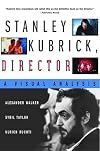
Ulrich Ruchti provides a wonderful visual analysis of ALL of Stanley Kubrick's films. What I like most about this book is the fact that Ruchti definitely supplies intense film criticism for each film, but does not lose himself in highfalutin and bombastic academic prose that many film critics tend to do.
Ruchti also provides many stills from Kubrick's movies to aid in the analyses that are made throughout the book. One of the highlights is the section devoted to Kubrick's use of color in his show more films. It is a small section that is presented in full color, but the analytical breakdowns that are provided with it truly show the artistic quality that Kubrick possessed as a filmmaker.
Trust me, this book will not disappoint any person who is a lover of film and film criticism, and it is definitely a MUST READ for all Kubrick lovers. show less
Ruchti also provides many stills from Kubrick's movies to aid in the analyses that are made throughout the book. One of the highlights is the section devoted to Kubrick's use of color in his show more films. It is a small section that is presented in full color, but the analytical breakdowns that are provided with it truly show the artistic quality that Kubrick possessed as a filmmaker.
Trust me, this book will not disappoint any person who is a lover of film and film criticism, and it is definitely a MUST READ for all Kubrick lovers. show less

This book purports to tell the story of Audrey Hepburn from wartorn Europe to University ambassador via her films.
As such it does a good job and I enjoyed the telling. At times she does come across as someone who got her own way and could be difficult to work with but this was often glossed over and I feel could have been gone into in more depth. I would have liked more about her early life rather than what felt at times like an endless cycle of who she was filming with.
A great book for any fan
As such it does a good job and I enjoyed the telling. At times she does come across as someone who got her own way and could be difficult to work with but this was often glossed over and I feel could have been gone into in more depth. I would have liked more about her early life rather than what felt at times like an endless cycle of who she was filming with.
A great book for any fan
Lists
TBR (1)
You May Also Like


Associated Authors
Statistics
- Works
- 22
- Also by
- 1
- Members
- 1,163
- Popularity
- #22,093
- Rating
- 3.9
- Reviews
- 11
- ISBNs
- 114
- Languages
- 6

