
Paul Kane (2) (1973–)
Author of Cursed: An Anthology of Dark Fairy Tales
For other authors named Paul Kane, see the disambiguation page.
About the Author
Image credit: Paul Kane
Works by Paul Kane
Beyond Rue Morgue Anthology: Further Tales of Edgar Allan Poe's 1st Detective (2013) — Editor — 57 copies, 3 reviews
The Secret Romantic's Book of Magic: Twelve Spellbinding Romantasy Stories (2025) — Editor — 36 copies, 1 review
Of Darkness and Light 5 copies
Creakers 2 copies
The RED Trilogy 1 copy
Shells [short fiction] 1 copy
Grief Stricken (short story) 1 copy
Halflife 1 copy
Rare Breeds 1 copy
Pain Cages [short story] 1 copy
Associated Works
Nemonymous 1: A Megazanthus for Parthenogenic Fiction and Late Labelling (2007) — Contributor — 5 copies, 1 review
Tagged
Common Knowledge
- Birthdate
- 1973
- Gender
- male
- Education
- Chesterfield College
Sheffield Hallam University (BA)
Sheffield Hallam University (MA) - Relationships
- O'Regan, Marie (spouse)
- Short biography
- He lives in the Midlands with his wife – the horror writer Marie O’Regan – his family and a black cat called Mina
- Nationality
- UK
- Birthplace
- Chesterfield, Derbyshire, England, UK
- Places of residence
- Midlands, England, UK
- Associated Place (for map)
- England, UK
Members
Reviews
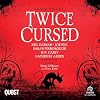
Sixteen stories about curses, the cursed and those who curse, told in a wide variety of styles. Some of the best revisit fairytales, showing them for the nightmare warnings they were before they were sanitised and made child-safe. A few are in classic horror locations: a carnival, a circus, a Music Hall theatre, where the line between illusion and magic can be crossed unnoticed.
Five of the stories stood out for me: Neil Gaiman's take on Snow White from the (allegedly) evil queen's point of show more view; Angela Slatter's travelling circus with a covert agenda. Mark Chadbourn's reflection on the hate and rage needed to sustain a curse; Joe Hill's story of drunken teenagers dooming themselves at a carousel that is more than it seems to be and A. C. Wise's blood-soaked take on the Red Shoes and the women who wear them.
I've commented on each story below in the order they appear in the collection.
THE BELL by Joanne Harris ★★★
A classic 'fairy tale as a warning to the young' story. The moral seems to be - don't trust the rich - they're not like you and me. A timely lesson I think.
SNOW, GLASS, APPLES by Neil Gaiman ★★★★★
A dark but deeply plausible retelling of Snow White, told from the "evil" queen's point of view. This is not the Snow White of Disney but it's one the Brothers Grimm would have nodded at I think. The dispassionate tone of the queen's voice makes the story even darker when you understand how it's going to end. It also has the creepiest Prince Charming I've ever encountered. I don't think Pixar will be buying the screen rights.
THE TISSOT FAMILY CIRCUS by Angela Slatter ★★★★
An original 'Creepy Carnival' story that didn't go where I expected it to. The idea behind the Tissot Family Circus is very powerful. The need for its existence is horrifying but what it does brings hope. I loved the slow reveal. The more I learned, the more steeped in sorrow the story became. The shepherd's decision provided the perfect ending.
MR THIRTEEN by M. R. Carey ★★
This was disappointing. An original take on curses and the cursed. The potential for something tense and terrifying. Yet all that energy drained away into nothing, earthed by an I'm-not-taking-this-seriously-except-as-a-thought-experiment that left me feeling I'd wasted my time reading the story.
THE CONFESSOR'S TALE by Sarah Pinborough ★★
I couldn't connect with this. It was strange and as hard to ignore as a bad smell but it felt pointless to me. The concept of boy whose tongue has been taken becoming a confessor who is also a catalyst for evil was powerful. The storytelling style was as distant as a Norse saga. The evil was graphic but mundane. And the boy himself was a void. I didn't get the point of this or perhaps I was expecting a point the author felt no need to impose.
THE OLD STORIES HIDE SECRETS DEEP INSIDE THEM by Mark Chadbourn ★★★★
Hard-hitting andsurprising, this captured perfectly the hate, rage and malice at the heart of ancient curses. Setting the story in modern day academia showed that misogyny hasn't changed or lost its power over the centuries. Which led to the satisfying idea that maybe the power women once used to protect themselves can still be tapped into. I loved the mix of mystery, malice, misogyny and a whisper of magic.
AWAKE by Laura Purcell ★★★
A novel rwit on Snow White's happily eerafter, where the ever after goes on for ever and the happily part never shows up. I liked the tone, the pace and stoic resignation of the main character.
PRETTY MAIDS ALL IN A ROW by Christina Henry ★★★
I liked the dissonance between the mundane tone of the story and the menace of the content. I wasn't sure if the curse and its effects were all in the old woman's head or whether they were real. Then I thought that what mattered was that the woman thought they were real. All of which distracted from thinking about the origin of the curse until the old woman finally had to confront it.
THE VIRAL VOYAGE OF BIRD MAN by Katherine Arden ★★★
The cursed sailor from Coleridge's 'RIme of the Ancient Mariner', survives to the present day, telling his tale again and again until, one day, a video of his recounting goes viral. I liked how his humanity eroded over centuries as he resigned himself to his curse of being unable to die but living only to be endlessly compelled to give his warninging "Heed me or become me'. The narration was well done. The emotion was strong. Having the mariner become a walking warning for Extinction Rebellion didn't quite work,
THE ANGELS OF LONDON by Adam L. G. Nevill ★★★
A grim little tale that unfolds slowly and mercilessly. It's a little static in the telling perhaps but the desperation behind the central idea and the nature of the main character's final choice make up for that. I wondered if Nevill saw this a metaphor for what capitalism does to those who have no capital? Was the real curse here being poor?
A CURSE IS A CURSE by Helen Grant ★★★
I liked the voice of the main character: straightforward, intelligent but with little knowledge of the world beyond her village. Not that that stops her from knowing what she wants and how to get it. The fable of the curse is nicely told. It has the feel of something passed down as part of an oral tradion. The phrases are a smooth a river-worn stones and as static. It sparked all kinds of speculation as to what really happened. The point, of course, is in the title, it doesn't matter exactly what happened or how what happened it labelled - a curse is a curse.
DARK CAROUSEL by Joe Hill ★★★★
The form and the tone of this story are compelling. It's classic horror: a slasher dynamic with a carousel nightmare twist. The imagery is vivid, the violence is palpable, and the outcome is grim. There's a gossamer-thin veil of ambiguity that substitutes mental illness for malevolent magic, suggesting that they may be indistinguishable. But it felt emotionally muted. I couldn't connect with the characters. Having this first-person account from a native of Maine delivered in an English accent, however well performed, added a distancing dissonance.
SHOES AS RED AS BLOOD by A. C. Wise ★★★★★
This was wonderful: complex, measured, truthful and engaging. It strips the glamour from fairytales, most of which are designed as warnings that girls who want more than they've been given will be punished. I liked how it showed that curses masquerade as promises, delivering punishment and pain as the price of happily ever after. It wasn't strident or overtly didactic. It nurtured suspicion into anger and anger into rage.
I want more of A. C. Wise's writing so I've downloaded her short story collection 'The Kissing Booth Girl and Other Stories'
JUST YOUR STANDARD HAUNTED DOLL DRAMA by Kelley Armstrong - DNF
I abandoned this as soon as I saw that it was about the two characters from Kelley Armstrong's 'Cursed Luck' series. 'Cursed Luck' (2021) is the only Kelley Armstrong book I've ever set aside. It's paranormal romance pap. I didn't want to spend any more time in the company of Kennedy and Aiden both of whom raise my hackles just by existing.
ST DIABLO'S TRAVELLING MUSIC SHOW by A. K. Benedict ★★★
This is a tale of revenge. It's dark, original and quietly gleeful at the harm done to those who deserve it. This is a wishfulfillment story for any woman who has ever been abused by a man.
THE MUSIC BOX by L. L. McKinney★★★
I saw the ending of this story coming but that didn't lessen it's impact. It's an extrapolation of the idea that those old women who preach to young aspiring ballerinas that "Beauty is grace and beauty is pain" are predators hiding in plain sight. show less
Five of the stories stood out for me: Neil Gaiman's take on Snow White from the (allegedly) evil queen's point of show more view; Angela Slatter's travelling circus with a covert agenda. Mark Chadbourn's reflection on the hate and rage needed to sustain a curse; Joe Hill's story of drunken teenagers dooming themselves at a carousel that is more than it seems to be and A. C. Wise's blood-soaked take on the Red Shoes and the women who wear them.
I've commented on each story below in the order they appear in the collection.
THE BELL by Joanne Harris ★★★
A classic 'fairy tale as a warning to the young' story. The moral seems to be - don't trust the rich - they're not like you and me. A timely lesson I think.
SNOW, GLASS, APPLES by Neil Gaiman ★★★★★
A dark but deeply plausible retelling of Snow White, told from the "evil" queen's point of view. This is not the Snow White of Disney but it's one the Brothers Grimm would have nodded at I think. The dispassionate tone of the queen's voice makes the story even darker when you understand how it's going to end. It also has the creepiest Prince Charming I've ever encountered. I don't think Pixar will be buying the screen rights.
THE TISSOT FAMILY CIRCUS by Angela Slatter ★★★★
An original 'Creepy Carnival' story that didn't go where I expected it to. The idea behind the Tissot Family Circus is very powerful. The need for its existence is horrifying but what it does brings hope. I loved the slow reveal. The more I learned, the more steeped in sorrow the story became. The shepherd's decision provided the perfect ending.
MR THIRTEEN by M. R. Carey ★★
This was disappointing. An original take on curses and the cursed. The potential for something tense and terrifying. Yet all that energy drained away into nothing, earthed by an I'm-not-taking-this-seriously-except-as-a-thought-experiment that left me feeling I'd wasted my time reading the story.
THE CONFESSOR'S TALE by Sarah Pinborough ★★
I couldn't connect with this. It was strange and as hard to ignore as a bad smell but it felt pointless to me. The concept of boy whose tongue has been taken becoming a confessor who is also a catalyst for evil was powerful. The storytelling style was as distant as a Norse saga. The evil was graphic but mundane. And the boy himself was a void. I didn't get the point of this or perhaps I was expecting a point the author felt no need to impose.
THE OLD STORIES HIDE SECRETS DEEP INSIDE THEM by Mark Chadbourn ★★★★
Hard-hitting andsurprising, this captured perfectly the hate, rage and malice at the heart of ancient curses. Setting the story in modern day academia showed that misogyny hasn't changed or lost its power over the centuries. Which led to the satisfying idea that maybe the power women once used to protect themselves can still be tapped into. I loved the mix of mystery, malice, misogyny and a whisper of magic.
AWAKE by Laura Purcell ★★★
A novel rwit on Snow White's happily eerafter, where the ever after goes on for ever and the happily part never shows up. I liked the tone, the pace and stoic resignation of the main character.
PRETTY MAIDS ALL IN A ROW by Christina Henry ★★★
I liked the dissonance between the mundane tone of the story and the menace of the content. I wasn't sure if the curse and its effects were all in the old woman's head or whether they were real. Then I thought that what mattered was that the woman thought they were real. All of which distracted from thinking about the origin of the curse until the old woman finally had to confront it.
THE VIRAL VOYAGE OF BIRD MAN by Katherine Arden ★★★
The cursed sailor from Coleridge's 'RIme of the Ancient Mariner', survives to the present day, telling his tale again and again until, one day, a video of his recounting goes viral. I liked how his humanity eroded over centuries as he resigned himself to his curse of being unable to die but living only to be endlessly compelled to give his warninging "Heed me or become me'. The narration was well done. The emotion was strong. Having the mariner become a walking warning for Extinction Rebellion didn't quite work,
THE ANGELS OF LONDON by Adam L. G. Nevill ★★★
A grim little tale that unfolds slowly and mercilessly. It's a little static in the telling perhaps but the desperation behind the central idea and the nature of the main character's final choice make up for that. I wondered if Nevill saw this a metaphor for what capitalism does to those who have no capital? Was the real curse here being poor?
A CURSE IS A CURSE by Helen Grant ★★★
I liked the voice of the main character: straightforward, intelligent but with little knowledge of the world beyond her village. Not that that stops her from knowing what she wants and how to get it. The fable of the curse is nicely told. It has the feel of something passed down as part of an oral tradion. The phrases are a smooth a river-worn stones and as static. It sparked all kinds of speculation as to what really happened. The point, of course, is in the title, it doesn't matter exactly what happened or how what happened it labelled - a curse is a curse.
DARK CAROUSEL by Joe Hill ★★★★
The form and the tone of this story are compelling. It's classic horror: a slasher dynamic with a carousel nightmare twist. The imagery is vivid, the violence is palpable, and the outcome is grim. There's a gossamer-thin veil of ambiguity that substitutes mental illness for malevolent magic, suggesting that they may be indistinguishable. But it felt emotionally muted. I couldn't connect with the characters. Having this first-person account from a native of Maine delivered in an English accent, however well performed, added a distancing dissonance.
SHOES AS RED AS BLOOD by A. C. Wise ★★★★★
This was wonderful: complex, measured, truthful and engaging. It strips the glamour from fairytales, most of which are designed as warnings that girls who want more than they've been given will be punished. I liked how it showed that curses masquerade as promises, delivering punishment and pain as the price of happily ever after. It wasn't strident or overtly didactic. It nurtured suspicion into anger and anger into rage.
I want more of A. C. Wise's writing so I've downloaded her short story collection 'The Kissing Booth Girl and Other Stories'
JUST YOUR STANDARD HAUNTED DOLL DRAMA by Kelley Armstrong - DNF
I abandoned this as soon as I saw that it was about the two characters from Kelley Armstrong's 'Cursed Luck' series. 'Cursed Luck' (2021) is the only Kelley Armstrong book I've ever set aside. It's paranormal romance pap. I didn't want to spend any more time in the company of Kennedy and Aiden both of whom raise my hackles just by existing.
ST DIABLO'S TRAVELLING MUSIC SHOW by A. K. Benedict ★★★
This is a tale of revenge. It's dark, original and quietly gleeful at the harm done to those who deserve it. This is a wishfulfillment story for any woman who has ever been abused by a man.
THE MUSIC BOX by L. L. McKinney★★★
I saw the ending of this story coming but that didn't lessen it's impact. It's an extrapolation of the idea that those old women who preach to young aspiring ballerinas that "Beauty is grace and beauty is pain" are predators hiding in plain sight. show less
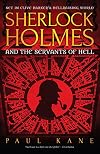
Corre el año 1895. Sherlock Holmes, sumido en un tedio existencial tras su regreso de la "muerte", se enfrenta a un enigma que su lógica no puede desentrañar: la desaparición de personas en circunstancias que desafían toda explicación física. El rastro le conduce hasta una misteriosa caja de puzles, la Configuración del Lamento, un artefacto que promete placeres y dolores más allá de la comprensión humana. Lo que comienza como una investigación criminal en los bajos fondos de show more Londres pronto arrastra a Holmes y al doctor Watson a una dimensión de pesadilla, donde deberán enfrentarse a los Cenobitas y a un viejo enemigo que ha encontrado en el Infierno su nuevo tablero de ajedrez.
Paul Kane es una de las figuras más respetadas del panorama fantástico y de terror en el Reino Unido. Con más de sesenta libros a sus espaldas, Kane se ha consolidado como un experto en la mitología de Hellraiser, habiendo publicado ensayos de referencia como "The Hellraiser Films and Their Legacy". Su versatilidad le permite saltar del terror visceral a la ciencia ficción postapocalíptica o el género negro, siempre con una voz capaz de dotar de nueva vida a iconos culturales. En esta obra, Kane demuestra su maestría al unir dos legados británicos fundamentales: el racionalismo de Conan Doyle y el horror metafísico de Clive Barker.
Kane logra una fusión sorprendentemente orgánica entre el Londres victoriano y la cosmogonía barkeriana. Lo más destacable es cómo utiliza el escepticismo de Holmes como escudo ante un horror que debería volverlo loco; la lucha del detective por aplicar el método deductivo a la geometría imposible del Infierno es el motor que sostiene la narración.
No obstante, debo admitir que prefiero con creces la primera mitad de la novela, la parte puramente holmesiana, a la resolución en los dominios de Barker. Mientras Holmes investiga en Baker Street, la tensión es palpable y la atmósfera de misterio resulta exquisita. Sin embargo, cuando la trama se traslada por completo al Infierno, el exceso de acción y la imaginería gore de los Cenobitas diluyen el rasgo más distintivo del detective: su mente. Holmes es un cirujano del pensamiento; lanzarlo a una batalla campal entre demonios y máquinas de tortura lo desdibuja ligeramente, convirtiendo un duelo de ingenios en una coreografía de horror visceral que, aunque bien escrita, pierde la elegancia intelectual que tanto apreciamos en el canon original. Con todo, es una lectura audaz y necesaria para los amantes del género. show less
Paul Kane es una de las figuras más respetadas del panorama fantástico y de terror en el Reino Unido. Con más de sesenta libros a sus espaldas, Kane se ha consolidado como un experto en la mitología de Hellraiser, habiendo publicado ensayos de referencia como "The Hellraiser Films and Their Legacy". Su versatilidad le permite saltar del terror visceral a la ciencia ficción postapocalíptica o el género negro, siempre con una voz capaz de dotar de nueva vida a iconos culturales. En esta obra, Kane demuestra su maestría al unir dos legados británicos fundamentales: el racionalismo de Conan Doyle y el horror metafísico de Clive Barker.
Kane logra una fusión sorprendentemente orgánica entre el Londres victoriano y la cosmogonía barkeriana. Lo más destacable es cómo utiliza el escepticismo de Holmes como escudo ante un horror que debería volverlo loco; la lucha del detective por aplicar el método deductivo a la geometría imposible del Infierno es el motor que sostiene la narración.
No obstante, debo admitir que prefiero con creces la primera mitad de la novela, la parte puramente holmesiana, a la resolución en los dominios de Barker. Mientras Holmes investiga en Baker Street, la tensión es palpable y la atmósfera de misterio resulta exquisita. Sin embargo, cuando la trama se traslada por completo al Infierno, el exceso de acción y la imaginería gore de los Cenobitas diluyen el rasgo más distintivo del detective: su mente. Holmes es un cirujano del pensamiento; lanzarlo a una batalla campal entre demonios y máquinas de tortura lo desdibuja ligeramente, convirtiendo un duelo de ingenios en una coreografía de horror visceral que, aunque bien escrita, pierde la elegancia intelectual que tanto apreciamos en el canon original. Con todo, es una lectura audaz y necesaria para los amantes del género. show less
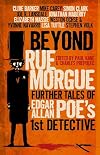
Either you’re already familiar with Poe’s “The Murders in the Rue Morgue” or you’re not. If not, that’s easily rectified, as it has long been in the public domain and a copy is included in this volume. It is often credited as being the first detective story – I’ve seen arguments made for a couple of earlier works, but let’s not be pedantic – even though the term “detective” had not yet been coined at the time of its writing. Poe himself described “Rue Morgue” as a show more “tale of ratiocination.” The protagonist, the Chevalier C. Auguste Dupin, a man of almost unparalleled intellect and insight, serves as the prototype for many of his succeeding and better known detectives, such as Holmes and Poirot. Dupin also reappears in two other Poe stories not collected here but those are also easily available. There’s little point to me reviewing such a well-known tale as “Rue Morgue,” so I will simply say that Dupin’s methods involve Poe’s “ratiocination,” the application of careful observation, along with inductive reasoning, to draw conclusions based on minute and seemingly trivial observations. You’ve seen Holmes do it a million times, but Dupin did it first. This is a collection of short stories that attempt to extend Poe’s work on Dupin, either directly (by offering some further adventures of Dupin himself) or indirectly, by writing in Poe’s style and usually describing a descendant of Dupin’s dealing with a similar, seemingly impossible and outré crime.
Contents of this collection are as follows:
Introduction by the editors, Paul Kane and Charles Prepolec
Edgar Allan Poe’s “The Murders in the Rue Morgue”
Mike Carey, “The Sons of Tammany”
Simon Clark, “The Unfathomed Darkness”
Weston Ochse and Yvonne Navarro, “The Weight of a Dead Man”
Jonathan Maberry, “The Vanishing Assassin”
Joe R. Lansdale, “The Gruesome Affair of the Electric Blue Lightning”
Elizabeth Massie, “From Darkness, Emerged, Returned”
Lisa Tuttle, “After the End”
Stephen Volk, “The Purloined Face”
Clive Barker, “New Murders in the Rue Morgue” (other than “Rue Morgue” itself, this is the only reprint in the volume)
Now, on to the new stories (I promise not to wreck any of the mysteries for you):
Mike Carey, “The Sons of Tammany”: Dupin travels to Boss Tweed’s New York City in 1870 and quickly runs afoul of that city’s corrupt political machine as he investigates the strange deaths of some workers constructing the Brooklyn Bridge. The transposition of the mannerly Dupin to the rough-and-tumble New York setting works very well, though at times he comes off as a bit too much of a caricature. The mystery is well done though, and the dialogue occasionally very funny.
Simon Clark, “The Unfathomed Darkness”: An excellent mystery in the precise mold of Poe’s creation. Clark probably captures Poe’s voice, the character of Dupin, and the style of Dupin’s mysteries better than any other writer in the collection. Dupin must solve the mystery of a corpse found facedown in the snow, with – seemingly impossibly – no footprints or any marks visible around the corpse. I hope that Clark plans more Dupin pastiches, because he really nailed the tone and language perfectly.
Weston Ochse and Yvonne Navarro, “The Weight of a Dead Man”: This story was well written, but a bit far out there, perhaps straying too far from the original. It’s a mystery solved by Dupin’s grandson, Nate Dupes, in the Wild West on the Mexican border in 1895. Decent story, but only a tenuous connection to Dupin.
Jonathan Maberry, “The Vanishing Assassin”: Well-written piece concerning the savage murder of a dealer in Japanese antiquities. The more Dupin learns about the victim, the more his sympathies lie with the killer.
Joe R. Lansdale, “The Gruesome Affair of the Electric Blue Lightning”: I actually really like Lansdale’s work and don’t think I’ve ever seen anything of his that doesn’t work well. How could you not love a story involving an ape, the Necronomicon, and some bizarre science fiction gadgetry? Any story that connects Poe with Grimm’s fairy tales, Frankenstein, and the Cthulhu Mythos has got to be a good one! Could only have been conceived of my Joe Lansdale.
Elizabeth Massie, “From Darkness, Emerged, Returned”: Like the Ochse/Navarro story, this one is a short piece about a distant relative of Dupin’s, in this case his great-granddaughter Molly, who lives in Brooklyn in the early twentieth century. Molly is a bit of a shut-in who observes life outside her apartment windows all day, including the aftermath of her love interest’s murder. It’s not at all a bad story, it’s actually kind of fun, but it has only the most tenuous connection to Dupin.
Lisa Tuttle, “After the End”: A very melancholic little piece about Dupin’s last case involving a serial killer who savages his victims in the style of a wolf, as revealed through a medium at a séance. The premise and prose in the story were both very well done; this is probably the darkest and most chilling of the stories in the collection, and might have been something that Poe himself might have conceived. No spoilers, but I just don’t care for the resolution of the story or Tuttle’s portrayal of Dupin.
Stephen Volk, “The Purloined Face”: This is a bit of an odd duck for me, a story that I’m not quite sure works. A young Sherlock Holmes is informally apprenticed to an old Poe, who apparently faked his own death (!) and is living in Paris masquerading as Dupin, solving crimes the Paris police are unable to. The pair gets caught up in a series of acid-throwing disfigurements at a Parisian theater in a story mimicking The Phantom of the Opera. It was jarring to me to see Holmes depicted as a pretty clueless and bumbling young man, almost useless in the face of the persnickety old Poe’s genius. Perhaps I’m simply complaining about this story as a Sherlock Holmes purist; there’s nothing inherently wrong with the story, per se, it just doesn’t ring true for me. If you go into this one less wedded to the idea of what a young Sherlock Holmes should be like, you might appreciate it more than I have.
Clive Barker, “New Murders in the Rue Morgue” : A truly dark and melancholic story – not surprising, given its author – about Dupin’s great-nephew Lewis investigating a series of crimes and strange events that seem closely tied in, or at least sharply reminiscent of, the original Rue Morgue murders. The resolution is pretty twisted and not for the faint of heart, but I liked it.
All in all, this collection was a little bit of a mixed bag when it came to the quality of the stories it contains, but that’s not unusual for an anthology. I’d have liked to see a few of the stories attempt more of a pastiche of Poe’s Dupin mysteries, rather than just use the basic concept as a springboard for a very different kind of story, but there’s little to complain about here. Each story had merit, and some were downright excellent. There’s clearly still plenty of room available for more actual stories of Dupin’s hitherto unrecorded adventures, and I hope Titan Books or another publisher takes up that challenge. If you’re at all intrigued by the character of Dupin and his unique brand of “ratiocination,” and appreciate the idea of a man of reason tangling with the unknown, then I’d highly recommend this collection.
Review copyright © 2014 J. Andrew Byers show less
Contents of this collection are as follows:
Introduction by the editors, Paul Kane and Charles Prepolec
Edgar Allan Poe’s “The Murders in the Rue Morgue”
Mike Carey, “The Sons of Tammany”
Simon Clark, “The Unfathomed Darkness”
Weston Ochse and Yvonne Navarro, “The Weight of a Dead Man”
Jonathan Maberry, “The Vanishing Assassin”
Joe R. Lansdale, “The Gruesome Affair of the Electric Blue Lightning”
Elizabeth Massie, “From Darkness, Emerged, Returned”
Lisa Tuttle, “After the End”
Stephen Volk, “The Purloined Face”
Clive Barker, “New Murders in the Rue Morgue” (other than “Rue Morgue” itself, this is the only reprint in the volume)
Now, on to the new stories (I promise not to wreck any of the mysteries for you):
Mike Carey, “The Sons of Tammany”: Dupin travels to Boss Tweed’s New York City in 1870 and quickly runs afoul of that city’s corrupt political machine as he investigates the strange deaths of some workers constructing the Brooklyn Bridge. The transposition of the mannerly Dupin to the rough-and-tumble New York setting works very well, though at times he comes off as a bit too much of a caricature. The mystery is well done though, and the dialogue occasionally very funny.
Simon Clark, “The Unfathomed Darkness”: An excellent mystery in the precise mold of Poe’s creation. Clark probably captures Poe’s voice, the character of Dupin, and the style of Dupin’s mysteries better than any other writer in the collection. Dupin must solve the mystery of a corpse found facedown in the snow, with – seemingly impossibly – no footprints or any marks visible around the corpse. I hope that Clark plans more Dupin pastiches, because he really nailed the tone and language perfectly.
Weston Ochse and Yvonne Navarro, “The Weight of a Dead Man”: This story was well written, but a bit far out there, perhaps straying too far from the original. It’s a mystery solved by Dupin’s grandson, Nate Dupes, in the Wild West on the Mexican border in 1895. Decent story, but only a tenuous connection to Dupin.
Jonathan Maberry, “The Vanishing Assassin”: Well-written piece concerning the savage murder of a dealer in Japanese antiquities. The more Dupin learns about the victim, the more his sympathies lie with the killer.
Joe R. Lansdale, “The Gruesome Affair of the Electric Blue Lightning”: I actually really like Lansdale’s work and don’t think I’ve ever seen anything of his that doesn’t work well. How could you not love a story involving an ape, the Necronomicon, and some bizarre science fiction gadgetry? Any story that connects Poe with Grimm’s fairy tales, Frankenstein, and the Cthulhu Mythos has got to be a good one! Could only have been conceived of my Joe Lansdale.
Elizabeth Massie, “From Darkness, Emerged, Returned”: Like the Ochse/Navarro story, this one is a short piece about a distant relative of Dupin’s, in this case his great-granddaughter Molly, who lives in Brooklyn in the early twentieth century. Molly is a bit of a shut-in who observes life outside her apartment windows all day, including the aftermath of her love interest’s murder. It’s not at all a bad story, it’s actually kind of fun, but it has only the most tenuous connection to Dupin.
Lisa Tuttle, “After the End”: A very melancholic little piece about Dupin’s last case involving a serial killer who savages his victims in the style of a wolf, as revealed through a medium at a séance. The premise and prose in the story were both very well done; this is probably the darkest and most chilling of the stories in the collection, and might have been something that Poe himself might have conceived. No spoilers, but I just don’t care for the resolution of the story or Tuttle’s portrayal of Dupin.
Stephen Volk, “The Purloined Face”: This is a bit of an odd duck for me, a story that I’m not quite sure works. A young Sherlock Holmes is informally apprenticed to an old Poe, who apparently faked his own death (!) and is living in Paris masquerading as Dupin, solving crimes the Paris police are unable to. The pair gets caught up in a series of acid-throwing disfigurements at a Parisian theater in a story mimicking The Phantom of the Opera. It was jarring to me to see Holmes depicted as a pretty clueless and bumbling young man, almost useless in the face of the persnickety old Poe’s genius. Perhaps I’m simply complaining about this story as a Sherlock Holmes purist; there’s nothing inherently wrong with the story, per se, it just doesn’t ring true for me. If you go into this one less wedded to the idea of what a young Sherlock Holmes should be like, you might appreciate it more than I have.
Clive Barker, “New Murders in the Rue Morgue” : A truly dark and melancholic story – not surprising, given its author – about Dupin’s great-nephew Lewis investigating a series of crimes and strange events that seem closely tied in, or at least sharply reminiscent of, the original Rue Morgue murders. The resolution is pretty twisted and not for the faint of heart, but I liked it.
All in all, this collection was a little bit of a mixed bag when it came to the quality of the stories it contains, but that’s not unusual for an anthology. I’d have liked to see a few of the stories attempt more of a pastiche of Poe’s Dupin mysteries, rather than just use the basic concept as a springboard for a very different kind of story, but there’s little to complain about here. Each story had merit, and some were downright excellent. There’s clearly still plenty of room available for more actual stories of Dupin’s hitherto unrecorded adventures, and I hope Titan Books or another publisher takes up that challenge. If you’re at all intrigued by the character of Dupin and his unique brand of “ratiocination,” and appreciate the idea of a man of reason tangling with the unknown, then I’d highly recommend this collection.
Review copyright © 2014 J. Andrew Byers show less
the weirdest thing about this is that it’s available at bookstores rather than on ao3?
okay in all seriousness, this started out pretty strong and just really got less good as it went on, unfortunately. the first third of the book is from watson’s perspective and is written in the style of one of his first person accounts (though it is apparently a journal he is writing to work his own feelings out & intends to burn afterwards), the second is a third person narrative from holmes’ show more perspective, and the third alternates between the two perspectives.
the first third is by far the strongest, and got me super excited for this rather ridiculous crossover. the second third is also pretty consistent in quality, i have no major complaints about it. but the final act, which ought to have been the payoff for it all, was frankly just kind of tedious.
each chapter alternates between watson’s first person narrative and the third person narrative that follows holmes, but the vast majority of these chapters overlap so you end up retreading the same ground over & over.
i can see where that kind of perspective layering could actually be pretty interesting but with the chapters from holmes’ perspective not even being first person it just doesn’t have that much of an impact? and if i can be 100% honest it truly started to feel like padding, as if the author needed each of the three parts of the book to be roughly equal in length or something. idk.
again a lot of this is actually super compelling and a whole lot of fun to read, it just badly overstays its welcome and that ended up contributing quite a bit to my impression of the book since the more tedious bits of it are what determined what kind of taste was left in my mouth. i know it’s not entirely fair, but neither is solving a rubiks cube and then getting tortured for eternity, so. show less
okay in all seriousness, this started out pretty strong and just really got less good as it went on, unfortunately. the first third of the book is from watson’s perspective and is written in the style of one of his first person accounts (though it is apparently a journal he is writing to work his own feelings out & intends to burn afterwards), the second is a third person narrative from holmes’ show more perspective, and the third alternates between the two perspectives.
the first third is by far the strongest, and got me super excited for this rather ridiculous crossover. the second third is also pretty consistent in quality, i have no major complaints about it. but the final act, which ought to have been the payoff for it all, was frankly just kind of tedious.
each chapter alternates between watson’s first person narrative and the third person narrative that follows holmes, but the vast majority of these chapters overlap so you end up retreading the same ground over & over.
i can see where that kind of perspective layering could actually be pretty interesting but with the chapters from holmes’ perspective not even being first person it just doesn’t have that much of an impact? and if i can be 100% honest it truly started to feel like padding, as if the author needed each of the three parts of the book to be roughly equal in length or something. idk.
again a lot of this is actually super compelling and a whole lot of fun to read, it just badly overstays its welcome and that ended up contributing quite a bit to my impression of the book since the more tedious bits of it are what determined what kind of taste was left in my mouth. i know it’s not entirely fair, but neither is solving a rubiks cube and then getting tortured for eternity, so. show less
Lists
Awards


You May Also Like


Associated Authors
Statistics
- Works
- 79
- Also by
- 18
- Members
- 1,591
- Popularity
- #16,217
- Rating
- 3.5
- Reviews
- 54
- ISBNs
- 148
- Languages
- 2