

Halldór Laxness (1902–1998)
Author of Independent People
About the Author
When presenting the 1955 Nobel Prize to Laxness, the Swedish Academy of Letters cited "his vivid writing, which has renewed the Icelandic narrative art." Laxness has been by turns a Catholic convert, a socialist, and a target of the radical press, some of whom accused Laxness of a class ambivalence show more the Saturday Review summarized this way: "Though Laxness came to believe that the novelist's best material is to be found in the proletariat, his rejection of middle-class concerns was never complete, and the ambiguity of his attitude toward the conflict of cultural values accounts for the mixture of humor and pathos that is characteristic of all his novels." Independent People (1934--35) was a bestseller in this country; Paradise Reclaimed Reclaimed (1960), based in part on Laxness's own experiences in the United States, is a novel about a nineteenth-century Icelandic farmer and his travels and experiences, culminating in his conversion to the Mormon church. Laxness owes much to the tradition of the sagas and writes with understated restraint, concentrating almost entirely on external details, from which he extracts the utmost in absurdity. An Atlantic writer found that The Fish Can Sing (1957), the adventures of a young man in 1900 who wants to be a singer, "simmers with an ironic, disrespectful mirth which gives unexpected dimensions to the themes of lost innocence and the nature of art." (Bowker Author Biography) show less
Series
Works by Halldór Laxness
Eldur í Kaupinhafn = Brand i Köpenhamn : tredje delen av trilogin Islands klocka (1946) 11 copies, 1 review
Gerska ævintýrið 6 copies
N.Tryggvadottir: Serenity and Power 6 copies
Þjóðhátíðarrolla 6 copies
Seiseijú, mikil ósköp 6 copies
Heiman eg fór : sjálfsmynd œskumanns 5 copies
Dagleið á fjöllum; greinar 5 copies
Dagur í senn 4 copies
Vettvángur dagsins : ritgerðir 4 copies
Straumrof 4 copies
Þættir 4 copies
Ásta Sóllilja 4 copies
Við heygarðshornið 4 copies
Yfirskyggðir staðir 4 copies
JOHANNES SVEINSSON KJARVAL 4 copies
Gjörníngabók 4 copies
Silfurtúnglið, 4 copies
Og árin líða 3 copies
Sjálfsagðir hlutir 3 copies
Napoleon Bonaparte 3 copies
Úa 3 copies
De islandske sagaer og andre essays 3 copies
Snæfríður Íslandssól 3 copies
Fuglinn í fjörunni 3 copies
Upphaf mannúðarstefnu 3 copies
Dúfnaveislan 3 copies
Norðanstúlkan 3 copies
Strompleikurinn 2 copies
Noveller 2 copies
Af skáldum 2 copies
Af menníngarástandi 2 copies
Himlens skn̜hed 2 copies
Drei Erzählungen 2 copies
Sommerlandets Slot 2 copies
Höll sumarlandsins 2 copies
Fløjtespilleren - 4 Noveller 2 copies
Opere 1 copy
Salka Valka 1 copy
Paradísarheimt 1 copy
Frie menn : Første del 1 copy
Fish can sing, The 1 copy
Utsaga 1 copy
Islandsk saga 1 copy
Í austurvegi 1 copy
Sjöstafa kverið 1 copy
Zuchwaliada 1 copy
Liv og lagnad i Brekkukot 1 copy
Ásmundur Sveinsson 1 copy
*ANY 1 copy
O întîmplare la Reykjavik 1 copy
Thjohatidarrolla 1 copy
Thu Vinvidur Hreini 1 copy
Laxdæla Saga 1 copy
Het licht der wereld 1 copy
Piplekaren : noveller 1 copy
Atomstationen : roman 1 copy
Nokkrar sögur 1 copy
Dagleið á fjöllum 1 copy
Skáldatími 1 copy
Íslendíngaspjall 1 copy
Vínlandspúnktar 1 copy
Hús Skáldsins 1 copy
Fegurð Heimsins 1 copy
Lesebuch 1 copy
Nína í krafti og birtu 1 copy
Menntaskólaljóð 1 copy
Associated Works
The Ends of the Earth: An Anthology of the Finest Writing on the Arctic and the Antarctic (2007) — Contributor — 136 copies, 8 reviews
Dialogue: A Journal of Mormon Thought - Volume 11, Number 2 (Summer 1978) (1978) — Illustrator — 1 copy
Tagged
Common Knowledge
- Canonical name
- Laxness, Halldór
- Legal name
- Guthdjonsson, Halldór (birth)
- Other names
- Laxness, Halldór Kiljan
- Birthdate
- 1902-04-23
- Date of death
- 1998-02-08
- Gender
- male
- Education
- Reykjavík Lyceum
- Occupations
- novelist
screenwriter
playwright - Awards and honors
- Nobel Prize (Literature, 1955)
World Peace Council Literary Prize (1952)
Sonning Prize (1969) - Short biography
- Halldor Laxness, an Icelandic author, received world-wide recognition after being awarded the 1955 Nobel Prize in Literature. According to the Nobel Prize committee, he received this coveted award "for his vivid epic power which has renewed the great narrative art of Iceland." By 1948 he had received from literary scholars from around the world 25 nominations for the Nobel candidacy. As of 2021, he is the only Nobel Prize recipient from Iceland. During his writing career, he authored more than 60 works including novels, poems, plays, essays, short stories, memoirs, and travel books.
- Cause of death
- Alzheimer's disease
- Nationality
- Iceland
- Birthplace
- Reykjavík, Danish Iceland
- Places of residence
- Mosfellssveit, Iceland
- Place of death
- Reykjavík, Iceland
- Burial location
- Mosfellskirkjugarður Mosfellsbæ, Mosfellsbaer, Höfuðborgarsvæði, Iceland
- Map Location
- Iceland
Members
Discussions
July 2015: Halldor Laxness in Monthly Author Reads (July 2015)
Group Read, June 2015: Independent People in 1001 Books to read before you die (June 2015)
Group Read of Independent People by Halldór Laxness in Club Read 2014 (April 2014)
Ligiloj: eo.Wikipedia - epo in Esperanto! (March 2012)
Reviews
(...)
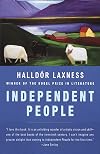
Bjartur is of the strong, silent type, and he buries his stillborn children without tears. This is not to say there is no longing or love in these pages. The relationship between him and Asta Sollilja, Bjartur’s daughter who is not of his own blood, is touching, and a sharp portrayal of a time and a culture wherein people were ill-informed about their own psychology, reluctant to express themselves, and as a result much more lonely than they need have been.
Laxness’ naturalist novel show more is a triumph as it lures people in with a promising title, seemingly waving the banner of meritocracy, but slowly shows true independence does not exist, not at all, and it turns out nobody even knows what ‘freedom’ is. It all culminates in the fleeting moment Bjartur and his fellow Icelandic farmers make heaps of money because World War 1 has driven up the demand for their mutton and their wool: their success the result of other people’s misery.
(...)
Full review on Weighing A Pig Doesn't Fatten It show less
Bjartur is of the strong, silent type, and he buries his stillborn children without tears. This is not to say there is no longing or love in these pages. The relationship between him and Asta Sollilja, Bjartur’s daughter who is not of his own blood, is touching, and a sharp portrayal of a time and a culture wherein people were ill-informed about their own psychology, reluctant to express themselves, and as a result much more lonely than they need have been.
Laxness’ naturalist novel show more is a triumph as it lures people in with a promising title, seemingly waving the banner of meritocracy, but slowly shows true independence does not exist, not at all, and it turns out nobody even knows what ‘freedom’ is. It all culminates in the fleeting moment Bjartur and his fellow Icelandic farmers make heaps of money because World War 1 has driven up the demand for their mutton and their wool: their success the result of other people’s misery.
(...)
Full review on Weighing A Pig Doesn't Fatten It show less
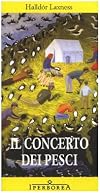
Gli scrittori del grande nord non finiscono mai di stupirmi, e non finiscono mai di farmi venire voglia di leggerne ancora e ancora.
Laxness è stato premio Nobel per la letteratura nel 1955, eppure la sua scrittura, aiutata da una traduzione magnifica, è viva, fresca, fa sentire "l'odore della torba e dell'ossifraga".
Il romanzo è una specie di quadro fiammingo che descrive nei minimi dettagli l'infanzia e l'adolescenza di un piccolo figlio di nessuno, che cresce nell'ultimo ricovero show more gratuito rimasto al mondo, assieme a dei nonni che non sono i suoi nonni, ma non per questo lo amano di meno, e a tutta una umanità minimale, eppure piena di saggezza e di humour, finché il piccolo anatroccolo non diventerà un cigno, e ripercorrerà, questa volte senza menzogne, la strada del suo "parente", il più famoso cantante lirico islandese.
Un libro semplicemente meraviglioso. show less
Laxness è stato premio Nobel per la letteratura nel 1955, eppure la sua scrittura, aiutata da una traduzione magnifica, è viva, fresca, fa sentire "l'odore della torba e dell'ossifraga".
Il romanzo è una specie di quadro fiammingo che descrive nei minimi dettagli l'infanzia e l'adolescenza di un piccolo figlio di nessuno, che cresce nell'ultimo ricovero show more gratuito rimasto al mondo, assieme a dei nonni che non sono i suoi nonni, ma non per questo lo amano di meno, e a tutta una umanità minimale, eppure piena di saggezza e di humour, finché il piccolo anatroccolo non diventerà un cigno, e ripercorrerà, questa volte senza menzogne, la strada del suo "parente", il più famoso cantante lirico islandese.
Un libro semplicemente meraviglioso. show less
Set in rural Iceland in the early 20th century, this is a sweeping multi-generational family saga focused on protagonist Bjartur of Summerhouse’s obsessive quest for independence and its impact on his family. He lives in a remote region with brutal climate and rugged terrain. In Iceland, the cost of autonomy is high, and Bjartur pays the price. Along the way, the reader learns much about raising sheep (perhaps more than I ever needed to know) and the ups and downs of the Icelandic economy show more of the era.
Bjartur is an unpleasant person with a gruff and abrasive personality. Fortunately, his strong-willed daughter, Ásta Sóllilja, is easy to like. Like her father, she desires independence, which leads, of course, to conflict between the two. I was particularly impressed by the portrayal of the relationship between Bjartur and his daughter. I wish she had been an even bigger part of the narrative.
It is long and densely written. It contains a great deal of suffering and tragedy. It includes elements of Icelandic myths and superstitions, along with observations on religion and politics. The beauty of the prose is striking. It is poetic and atmospheric. I read the English translation by James Anderson Thompson. After reading this book, it is easy to see why Laxness was awarded a Nobel Prize in Literature. show less
Bjartur is an unpleasant person with a gruff and abrasive personality. Fortunately, his strong-willed daughter, Ásta Sóllilja, is easy to like. Like her father, she desires independence, which leads, of course, to conflict between the two. I was particularly impressed by the portrayal of the relationship between Bjartur and his daughter. I wish she had been an even bigger part of the narrative.
It is long and densely written. It contains a great deal of suffering and tragedy. It includes elements of Icelandic myths and superstitions, along with observations on religion and politics. The beauty of the prose is striking. It is poetic and atmospheric. I read the English translation by James Anderson Thompson. After reading this book, it is easy to see why Laxness was awarded a Nobel Prize in Literature. show less
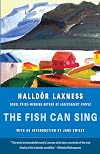
An endearing coming-of-age story, told with Icelandic restraint and irony. This would make a great introductory book to anyone looking to try Halldór Laxness, or book to read while travelling in Iceland. In this story, young Álfgrímur grows up and tries to find his place in the world, prefers to be a simple lumpfisherman, but is sent off to school by his ‘grandfather’ nonetheless. He is drawn to a relation (possibly his father), Garðar Hólm, who has become a recognized ‘world show more singer’, but who always seems to disappoint when he returns home.
There is a parallel with both men (Álfgrímur and Garðar) to Iceland as a nation trying to forge an identity for itself, being a small country little known in the world, and following centuries of Danish domination. There is also a parallel to Laxness himself, who became a world celebrity when he had won the Nobel Prize in 1955, two years before The Fish Can Sing was published.
The novel highlights the hidden, quiet virtues of ordinary Icelanders, those without ambition or ego, and has some great chapters which serve as vignettes of Álfgrímur’s experiences. It also evokes some of the interesting aspects of life in Iceland, just a few of which were open cesspools near houses, which ‘drowned more Icelanders than the sea’, low ceilinged living rooms with windows of coarse, slightly blue glass with air bubbles and other flaws in it, and the practice of trying to cure headaches by stopping up one’s nostrils with cow dung. Yikes. Oh, and this one: “the only insult that can really rile an Icelander is to be called a Dane”.
Quotes:
On memories:
“Curiosity can be called a virtue or a vice, depending on what kind of elementary ethics one reads; in our house at Brekkukot, curiosity was considered on a par with thievishness. But now, when all the parties to these confidences are gone elsewhere and that world is no more, and I am the only one left, the spirits rise up from the well of oblivion. People and pictures from a vanished world are reincarnated and assume a significance which was hidden at the time.”
And this one:
“Oh, most of the things I am told about fame and such-like go right over my head, although I’m rather fond of singing. I’m so bound to Brekkukot, somehow. I have always hoped to be allowed to become a lumpfisherman; and I know that when I am ninety and have lost all sight, hearing, sense of smell, taste, and feeling, I shall sit in a corner somewhere and think about when I was seeing to the lumpfish-nets with my grandfather in Skerjafjordur late in the winter before another living soul was up and about, and there was no glimmer of light anywhere except in one little cottage on Alftanes.”
On money:
“I think that our own standard had its origins in my grandfather’s conviction that the money which people consider theirs by right was unlawfully accumulated, or counterfeit, if it exceeded the average income of the working man; and therefore that all great wealth was inconsistent with common sense. I can remember him saying often that he would never accept more money than he had earned.”
On oneness, this from the ‘superintendent’, who leads a very humble life by choice:
“I sold up all my possessions in order to pursue this vocation. I know you will understand, when you start to think about it, that I cannot find it disgusting work to pursue a vocation from a good god. The only disgusting work there is, is badly done work. The world is One, and mankind is One, and therefore work too is only One; there can be a difference in workmanship, but not in work.”
On parents, or in this case, his ‘grandmother’, who raised him:
“All the same, it was probably she who brought me up, so far as I have been brought up at all; at least, I believe that she had a greater part than several other people in making me the way I am. But it was not until after I was fully grown that I noticed her sufficiently to feel that I really saw her. Suddenly one day I simply felt that she was probably closer to me than anyone else and despite the fact that she had been in her grave for some time by then. It is anything but easy trying to speak of a person one knows so little about but who is nevertheless so close to one.”
On religion:
“Or did people perhaps become pastors in Iceland on the sober advice of some grandfather who, because of some caprice of the history of religion, read Vidalin’s Book of Sermons on Sundays instead of sacrificing to the bird Colibri, the bull Apis, or the idol Ra?” show less
There is a parallel with both men (Álfgrímur and Garðar) to Iceland as a nation trying to forge an identity for itself, being a small country little known in the world, and following centuries of Danish domination. There is also a parallel to Laxness himself, who became a world celebrity when he had won the Nobel Prize in 1955, two years before The Fish Can Sing was published.
The novel highlights the hidden, quiet virtues of ordinary Icelanders, those without ambition or ego, and has some great chapters which serve as vignettes of Álfgrímur’s experiences. It also evokes some of the interesting aspects of life in Iceland, just a few of which were open cesspools near houses, which ‘drowned more Icelanders than the sea’, low ceilinged living rooms with windows of coarse, slightly blue glass with air bubbles and other flaws in it, and the practice of trying to cure headaches by stopping up one’s nostrils with cow dung. Yikes. Oh, and this one: “the only insult that can really rile an Icelander is to be called a Dane”.
Quotes:
On memories:
“Curiosity can be called a virtue or a vice, depending on what kind of elementary ethics one reads; in our house at Brekkukot, curiosity was considered on a par with thievishness. But now, when all the parties to these confidences are gone elsewhere and that world is no more, and I am the only one left, the spirits rise up from the well of oblivion. People and pictures from a vanished world are reincarnated and assume a significance which was hidden at the time.”
And this one:
“Oh, most of the things I am told about fame and such-like go right over my head, although I’m rather fond of singing. I’m so bound to Brekkukot, somehow. I have always hoped to be allowed to become a lumpfisherman; and I know that when I am ninety and have lost all sight, hearing, sense of smell, taste, and feeling, I shall sit in a corner somewhere and think about when I was seeing to the lumpfish-nets with my grandfather in Skerjafjordur late in the winter before another living soul was up and about, and there was no glimmer of light anywhere except in one little cottage on Alftanes.”
On money:
“I think that our own standard had its origins in my grandfather’s conviction that the money which people consider theirs by right was unlawfully accumulated, or counterfeit, if it exceeded the average income of the working man; and therefore that all great wealth was inconsistent with common sense. I can remember him saying often that he would never accept more money than he had earned.”
On oneness, this from the ‘superintendent’, who leads a very humble life by choice:
“I sold up all my possessions in order to pursue this vocation. I know you will understand, when you start to think about it, that I cannot find it disgusting work to pursue a vocation from a good god. The only disgusting work there is, is badly done work. The world is One, and mankind is One, and therefore work too is only One; there can be a difference in workmanship, but not in work.”
On parents, or in this case, his ‘grandmother’, who raised him:
“All the same, it was probably she who brought me up, so far as I have been brought up at all; at least, I believe that she had a greater part than several other people in making me the way I am. But it was not until after I was fully grown that I noticed her sufficiently to feel that I really saw her. Suddenly one day I simply felt that she was probably closer to me than anyone else and despite the fact that she had been in her grave for some time by then. It is anything but easy trying to speak of a person one knows so little about but who is nevertheless so close to one.”
On religion:
“Or did people perhaps become pastors in Iceland on the sober advice of some grandfather who, because of some caprice of the history of religion, read Vidalin’s Book of Sermons on Sundays instead of sacrificing to the bird Colibri, the bull Apis, or the idol Ra?” show less
Lists
Country Life (1)
Allie's Wishlist (1)
Magic Realism (1)
Down on the Farm (1)
1940s (1)
to get (1)
. (1)
. (1)
A Novel Cure (2)
Favourite Books (1)
Arctic novels (1)
Sense of place (1)
Reading Globally (1)
Classics (1)
1930s (1)
Awards


You May Also Like


Associated Authors
Statistics
- Works
- 123
- Also by
- 5
- Members
- 8,022
- Popularity
- #3,019
- Rating
- 4.0
- Reviews
- 245
- ISBNs
- 340
- Languages
- 21
- Favorited
- 49

