
Andrew Davidson (1) (1969–)
Author of The Gargoyle
For other authors named Andrew Davidson, see the disambiguation page.
Works by Andrew Davidson
Tagged
Common Knowledge
- Canonical name
- Davidson, Andrew
- Birthdate
- 1969-04-12
- Gender
- male
- Education
- University of British Columbia (BA, English Literature, 1995)
- Occupations
- teacher
writer (English lessons for Japanese Web sites)
novelist - Short biography
- Andrew Davidson was born in Pinawa, Manitoba, and graduated in 1995 from the University of British Columbia with a B.A. in English literature. He has worked as a teacher in Japan, where he has lived on and off, and as a writer of English lessons for Japanese Web sites. The Gargoyle, the product of seven years' worth of research and composition, is his first book. Davidson lives in Winnipeg, Manitoba.
- Nationality
- Canada
- Birthplace
- Pinawa, Manitoba, Canada
- Places of residence
- Winnipeg, Manitoba, Canada
- Associated Place (for map)
- Manitoba, Canada
Members
Discussions
The Gargoyle in Book talk (March 2024)
Reviews
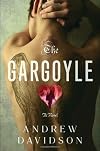
I'll be completely honest with you, I only picked up this book because the cover seduced me. A woman's back is a lovely thing, and I dig tattoos, so sue me. I surely did not expect to find the story I read within the pages of this book. Right off the bat, I commend the author for creating such a moving love story wherein sex is nowhere to be found. Don't get me wrong, I love bumpity-bump as much as the next warm-blooded individual, but having it be the foundation of a relationship is a show more foolish venture. Anyway, for everything I loved about this book, a few things irritated me. I'll start with those.
Our narrator (unnamed, for some reason) speaks of the female lead, always, as Marianne Engel. Never simply Marianne, but her entire name. It gets old really quick, as the narrator doesn't speak of anyone else in their full name. I know it's a nitpick, but it's my nitpick, so shut up. Next, the author has a horrible habit of telling us about conversations without letting his characters talk for themselves. This has to be the worst form of telling instead of showing that I've come across in years. There is more explanation of dialogue than there is actual dialogue in this novel. Things like: He told me that he didn't want to do this, so I said he shouldn't. That isn't an excerpt from the book, but you get the idea. Lastly, I never once believed in the narrator's addiction to morphine. He never showed signs of his abuse of the drug, nor did he react properly when the drug was denied him. Still, the section of the book when he beats the "bitchsnake" was the best part to me. Not because of his battle with addiction but... well, you'll see.
Now, onto the good stuff. I read Dante's Inferno in high school, as, I'm sure, several of you did as well. For the most part, it was lost on me. After finishing THE GARGOYLE, I want to reread Inferno. The section I mentioned above, where our narrator defeats the "bitchsnake" living in his spine (you'll have to read the book to understand what that means), sees the MC traversing Dante's version of Hell. The visuals alone gave me a mental boner. I know that sounds crude, but it's the truth. I think the only other book to produce such strikingly vivid images in mind was Pessl's NIGHT FILM, wherein Scott becomes trapped in the box, or meets the entity on the bridge. These are images not known to the average reader, meaning, we have nothing real to base these images on, no real-life comparison, and we can only go by what the author describes. Andrew Davidson took me into Dante's Hell better than Dante did, and for that, I applaud him.
Reading THE GARGOYLE reminded me of entering the worlds of the Brothers Grimm and Aesop, when I was child. At times whimsical, other times dark, the stories Marianne tells our narrator are on par with some of the greatest tales ever told. (Note: If Davidson rehashed old wives' tales and made them his own, I don't know, but I've never heard of these stories before). In fact, the fables were my second favorite part of this book. I couldn't wait for another story from Marianne. And when every tale was intertwined to create Davidson's own version of redemption, I quite possibly squeed. Full-on flailing fangirl, was I. I love when an author comes full circle with a story, making every part of the tale important to the body of work. THE GARGOYLE is masterful, and stunning in the fact that it's Davidson's first book.
Now onto the section of this book where my opinion turns biased. Marianne Engle works herself into collapse several times throughout the novel, attempting to uncover and release pent up grotesques from their stone prisons. I understand that mindset. I can write for days at a time, forgetting to eat, ignoring my surroundings, neglecting those I love, simply to finish my vision. It's not a conscious decision, but one I make all the same. I know what it feels like working to an end and never seeing that end because my attention is instantly called elsewhere, to yet another story needing to be told. Sometimes it feels as if I cannot write fast enough. Other days, I don't wish to write any faster than I currently am because I enjoy my fictitious world far more than everyday life. Davidson describes this compulsion to perfection, and I read about myself in these pages.
In summation: Andrew Davidson's THE GARGOYLE is a feat to be experienced. If you speed read, put away your Reeboks for a moment and enjoy the scenery. Davidson is descriptive without being heavily verbose, and that's one of the reasons I will read everything he produces, I only wish that he allowed his characters to do more of the talking. What he's managed to accomplish with THE GARGOYLE has left me looking inward, wondering how I can be a better man... you know, without losing my dick in a fire.
show less
Our narrator (unnamed, for some reason) speaks of the female lead, always, as Marianne Engel. Never simply Marianne, but her entire name. It gets old really quick, as the narrator doesn't speak of anyone else in their full name. I know it's a nitpick, but it's my nitpick, so shut up. Next, the author has a horrible habit of telling us about conversations without letting his characters talk for themselves. This has to be the worst form of telling instead of showing that I've come across in years. There is more explanation of dialogue than there is actual dialogue in this novel. Things like: He told me that he didn't want to do this, so I said he shouldn't. That isn't an excerpt from the book, but you get the idea. Lastly, I never once believed in the narrator's addiction to morphine. He never showed signs of his abuse of the drug, nor did he react properly when the drug was denied him. Still, the section of the book when he beats the "bitchsnake" was the best part to me. Not because of his battle with addiction but... well, you'll see.
Now, onto the good stuff. I read Dante's Inferno in high school, as, I'm sure, several of you did as well. For the most part, it was lost on me. After finishing THE GARGOYLE, I want to reread Inferno. The section I mentioned above, where our narrator defeats the "bitchsnake" living in his spine (you'll have to read the book to understand what that means), sees the MC traversing Dante's version of Hell. The visuals alone gave me a mental boner. I know that sounds crude, but it's the truth. I think the only other book to produce such strikingly vivid images in mind was Pessl's NIGHT FILM, wherein Scott becomes trapped in the box, or meets the entity on the bridge. These are images not known to the average reader, meaning, we have nothing real to base these images on, no real-life comparison, and we can only go by what the author describes. Andrew Davidson took me into Dante's Hell better than Dante did, and for that, I applaud him.
Reading THE GARGOYLE reminded me of entering the worlds of the Brothers Grimm and Aesop, when I was child. At times whimsical, other times dark, the stories Marianne tells our narrator are on par with some of the greatest tales ever told. (Note: If Davidson rehashed old wives' tales and made them his own, I don't know, but I've never heard of these stories before). In fact, the fables were my second favorite part of this book. I couldn't wait for another story from Marianne. And when every tale was intertwined to create Davidson's own version of redemption, I quite possibly squeed. Full-on flailing fangirl, was I. I love when an author comes full circle with a story, making every part of the tale important to the body of work. THE GARGOYLE is masterful, and stunning in the fact that it's Davidson's first book.
Now onto the section of this book where my opinion turns biased. Marianne Engle works herself into collapse several times throughout the novel, attempting to uncover and release pent up grotesques from their stone prisons. I understand that mindset. I can write for days at a time, forgetting to eat, ignoring my surroundings, neglecting those I love, simply to finish my vision. It's not a conscious decision, but one I make all the same. I know what it feels like working to an end and never seeing that end because my attention is instantly called elsewhere, to yet another story needing to be told. Sometimes it feels as if I cannot write fast enough. Other days, I don't wish to write any faster than I currently am because I enjoy my fictitious world far more than everyday life. Davidson describes this compulsion to perfection, and I read about myself in these pages.
In summation: Andrew Davidson's THE GARGOYLE is a feat to be experienced. If you speed read, put away your Reeboks for a moment and enjoy the scenery. Davidson is descriptive without being heavily verbose, and that's one of the reasons I will read everything he produces, I only wish that he allowed his characters to do more of the talking. What he's managed to accomplish with THE GARGOYLE has left me looking inward, wondering how I can be a better man... you know, without losing my dick in a fire.
show less
Note: I am physically disabled and have bipolar disorder aka manic depression aka the (or one of the) mood disorder that the love interest has in this book. Why is this important? Because the main character is disabled--he's been severely burned--and the love interest, Marianne, has schizophrenia or bipolar disorder (or both). And it's like Andrew Davidson read a one-sentence summary of bipolar and went, "oh! I got it!" and wrote this ableist-as-hell book.
This is perhaps the most distasteful show more wreck of a novel I've ever finished--and I only did finish because I wanted to see if it ever got better. Or to see how much worse it could get. It's obvious this wasn't ever meant to be disability representation. Rather, it's meant for able-bodied, neurotypical readers to read about us disabled people and go, "oh wow, look at these strange crazy things, haha!"
Book content warnings:
ableism!!
ableist slurs
sexism
racism
racist slurs
homophobia (& homophobic violence)
suicide
self harm
drug addiction
(probably more; forgive me if I forgot anything!)
The nameless protagonist, a past porn star, wakes up in the burn ward of a hospital after a car crash. His once flawless skin is covered with burns; his penis has to be removed. He slumps into deep depression until Marianne Engel, a mentally ill woman comes to visit, telling him stories of love and of a past he and she supposedly shared together in the 1300s. The more she visits, the more he learns about love and the more he begins to see life and his body in a new way.
I picked this book up in the hopes that it would somehow be like Tarsem Singh's masterpiece movie The Fall (in which a suicidal disabled man in the hospital is visited by a little girl; he tells her stories, and they grow to be good friends and learn more about hope and love, etc.).
Unfortunately, no such luck here.
The nasty stuff starts right away--as early as p.17. "I had no idea whether she was Chinese or Japanese or Vietnamese; she just had Asian skin color and eyes and she was barely as tall as I."
. . . Asian skin color and eyes. I . . . don't even know how to deal with the ignorance and racism of this phrase. I'm not even sure Andrew Davidson knows what countries are included in Asia to be honest (Asia doesn't consist of just Eastern-Asian countries . . . but also of countries like India, Thailand, Cambodia, etc.), which are home to many darker-skinned people . . .
The very unlikable protagonist also calls a Japanese woman by a racist slur, and then backpedals for a huge half-page paragraph in his internal monologue, going into why he chose that particular slur, why he's not racist really, etc. etc. etc. It sounds exactly like that insensitive friend who you call out for being an asshole and then who (doesn't really) apologizes by explaining their motivations for being an asshole rather than actually apologizing and meaning that apology.
Our nameless protagonist is also a sexist, misogynistic dick whose views on women are never actually challenged and whose opinions never change throughout the book. Let's take a look at these grotesques:
"Jack Meredith was more like the cartoon of a woman who wished that she were a man."
"Fat, but not water balloon fat; with flesh not flabby, but round like it's looking for a place to explode. Age, fifties? Hard to tell, but probably. She didn't have wrinkles; her face was too spherical. Cropped hair, too much rouge on her cheeks . . ."
Almost every woman this guy sees is critically evaluated and found wanting. The narration literally stops so he can point out all their flaws.
"She was not what anyone would call a classic beauty. Her teeth were perhaps a little too small for her mouth, but I've always found microdentia rather sexy. I suppose her eyebrows might be too bushy for some men but, to be frank, those men are idiots. The only acceptable point of contention would be her nose, which was not too large, mind you, but certainly not delicate. A small bump on the bridge indicated that there had been a break at one time, but I thought it gave her character. A case could be made that her nostrils were slightly too flared, but any reasonable judge would have thrown that case out of court."
Lord. Shut this guy up. Is he capable of describing a woman without critique? In any case, the description doesn't even make sense. If he didn't think those things (her nostrils weren't too flared), then he wouldn't have mentioned it. He's so full of shit--and the fact the author found this funny or witty to include is so telling of his character.
The homophobia. Why does Andrew Davidson include mentions of gay people when all he does with these mentions is turn them into jokes, tragedies, or . . . really strange homophobic statements? I bet (just like him writing about mental illness), he assumed he was being "diverse".
When talking about his past porn career, the narrator always talks about the men who was willing to do "homosexual work" as being sooooo brave (because wtf does that even mean?)--and then immediately goes on to mentioning bestiality . . . because that's comparable (it's not).
One of the stories Marianne tells the narrator is about a gay Viking who falls in love with a married man. Eventually, one night these two men drink and the gay Viking confesses. What happens? WELL, of course the other guy suddenly becomes enraged and beats the gay Viking to nearly death. And then the gay Viking dies in the house fire the married Viking starts. Lovely. Love this gay representation (not).
There's also this: "All the men in my life have been such shits that while Ted [her son] was growing up, I secretly wished he'd turn out gay."
. . . .
I'm sorry, but men do not stop being men, even if they are gay? The volumes this statement says . . . yikes.
Okay, now to the main event! Ableism! Joy.
The main character is covered in burn scars, and is of course disabled. He suffers from a lot of internalized ableism, which is understandable (so do I!). It's a hard thing to get over. But there are many mentions of penance, which makes me incredibly uncomfortable, especially as a disabled person, because we are constantly fed the idea that we have somehow done something to deserve our disabilities. At the end, the narrator accepts that he is serving his penance here on Earth. Bile literally crawls up my throat at this.
Marianne Engel has mystery wrapped around her the entire book, and it's left that way even after you're done reading. Is she really a woman who was born in the 1300s with thousands of hearts? Or is she only a woman with schizophrenia and/or bipolar disorder? The book doesn't leave you with one or the other (think Inception). But in doing so, it treats these conditions (and real mentally ill people) abysmally! You thought this was representation? Ha, no. She was a woman treated unfairly by those "EVIL" psychiatrists.
Marianne's psychiatrist, Gregor, a man who claims often he can't tell the narrator too much, often tells him way too damn much! I don't think Andrew Davidson knows anything about mental health practice. Gregor apparently is able to tell the narrator about things Marianne has done--when she last was admitted because she was seen "talking to ghosts". He also says "It beats me what's wrong with Marianne." What's WRONG with Marianne! There is no way in hell a psychiatrist should say something like this about a patient!! Also--if you think this way, you should educate yourself about mental illnesses and neuro-atypical conditions. If you do not have mental illnesses, you aren't normal. You aren't the right, and we are not the wrong. We clear??
"They let schizophrenics drive? Apparently so."
ha ha, you're right, sorry. All mentally ill people are useless crazies who should be institutionalized, sorry.
"The woman had looked at us and thought Marianne was the normal one."
Good lord.
I can't believe this book passed so many eyes, so many conscious people who read it and thought, "Yeah, this seems okay to publish". I'm ashamed at how many people rate it highly on this site. Reading it made me more ashamed to be who I am, and that's not okay. I can't recommend it to anyone. show less
This is perhaps the most distasteful show more wreck of a novel I've ever finished--and I only did finish because I wanted to see if it ever got better. Or to see how much worse it could get. It's obvious this wasn't ever meant to be disability representation. Rather, it's meant for able-bodied, neurotypical readers to read about us disabled people and go, "oh wow, look at these strange crazy things, haha!"
Book content warnings:
ableism!!
ableist slurs
sexism
racism
racist slurs
homophobia (& homophobic violence)
suicide
self harm
drug addiction
(probably more; forgive me if I forgot anything!)
The nameless protagonist, a past porn star, wakes up in the burn ward of a hospital after a car crash. His once flawless skin is covered with burns; his penis has to be removed. He slumps into deep depression until Marianne Engel, a mentally ill woman comes to visit, telling him stories of love and of a past he and she supposedly shared together in the 1300s. The more she visits, the more he learns about love and the more he begins to see life and his body in a new way.
I picked this book up in the hopes that it would somehow be like Tarsem Singh's masterpiece movie The Fall (in which a suicidal disabled man in the hospital is visited by a little girl; he tells her stories, and they grow to be good friends and learn more about hope and love, etc.).
Unfortunately, no such luck here.
The nasty stuff starts right away--as early as p.17. "I had no idea whether she was Chinese or Japanese or Vietnamese; she just had Asian skin color and eyes and she was barely as tall as I."
. . . Asian skin color and eyes. I . . . don't even know how to deal with the ignorance and racism of this phrase. I'm not even sure Andrew Davidson knows what countries are included in Asia to be honest (Asia doesn't consist of just Eastern-Asian countries . . . but also of countries like India, Thailand, Cambodia, etc.), which are home to many darker-skinned people . . .
The very unlikable protagonist also calls a Japanese woman by a racist slur, and then backpedals for a huge half-page paragraph in his internal monologue, going into why he chose that particular slur, why he's not racist really, etc. etc. etc. It sounds exactly like that insensitive friend who you call out for being an asshole and then who (doesn't really) apologizes by explaining their motivations for being an asshole rather than actually apologizing and meaning that apology.
Our nameless protagonist is also a sexist, misogynistic dick whose views on women are never actually challenged and whose opinions never change throughout the book. Let's take a look at these grotesques:
"Jack Meredith was more like the cartoon of a woman who wished that she were a man."
"Fat, but not water balloon fat; with flesh not flabby, but round like it's looking for a place to explode. Age, fifties? Hard to tell, but probably. She didn't have wrinkles; her face was too spherical. Cropped hair, too much rouge on her cheeks . . ."
Almost every woman this guy sees is critically evaluated and found wanting. The narration literally stops so he can point out all their flaws.
"She was not what anyone would call a classic beauty. Her teeth were perhaps a little too small for her mouth, but I've always found microdentia rather sexy. I suppose her eyebrows might be too bushy for some men but, to be frank, those men are idiots. The only acceptable point of contention would be her nose, which was not too large, mind you, but certainly not delicate. A small bump on the bridge indicated that there had been a break at one time, but I thought it gave her character. A case could be made that her nostrils were slightly too flared, but any reasonable judge would have thrown that case out of court."
Lord. Shut this guy up. Is he capable of describing a woman without critique? In any case, the description doesn't even make sense. If he didn't think those things (her nostrils weren't too flared), then he wouldn't have mentioned it. He's so full of shit--and the fact the author found this funny or witty to include is so telling of his character.
The homophobia. Why does Andrew Davidson include mentions of gay people when all he does with these mentions is turn them into jokes, tragedies, or . . . really strange homophobic statements? I bet (just like him writing about mental illness), he assumed he was being "diverse".
When talking about his past porn career, the narrator always talks about the men who was willing to do "homosexual work" as being sooooo brave (because wtf does that even mean?)--and then immediately goes on to mentioning bestiality . . . because that's comparable (it's not).
One of the stories Marianne tells the narrator is about a gay Viking who falls in love with a married man. Eventually, one night these two men drink and the gay Viking confesses. What happens? WELL, of course the other guy suddenly becomes enraged and beats the gay Viking to nearly death. And then the gay Viking dies in the house fire the married Viking starts. Lovely. Love this gay representation (not).
There's also this: "All the men in my life have been such shits that while Ted [her son] was growing up, I secretly wished he'd turn out gay."
. . . .
I'm sorry, but men do not stop being men, even if they are gay? The volumes this statement says . . . yikes.
Okay, now to the main event! Ableism! Joy.
The main character is covered in burn scars, and is of course disabled. He suffers from a lot of internalized ableism, which is understandable (so do I!). It's a hard thing to get over. But there are many mentions of penance, which makes me incredibly uncomfortable, especially as a disabled person, because we are constantly fed the idea that we have somehow done something to deserve our disabilities. At the end, the narrator accepts that he is serving his penance here on Earth. Bile literally crawls up my throat at this.
Marianne Engel has mystery wrapped around her the entire book, and it's left that way even after you're done reading. Is she really a woman who was born in the 1300s with thousands of hearts? Or is she only a woman with schizophrenia and/or bipolar disorder? The book doesn't leave you with one or the other (think Inception). But in doing so, it treats these conditions (and real mentally ill people) abysmally! You thought this was representation? Ha, no. She was a woman treated unfairly by those "EVIL" psychiatrists.
Marianne's psychiatrist, Gregor, a man who claims often he can't tell the narrator too much, often tells him way too damn much! I don't think Andrew Davidson knows anything about mental health practice. Gregor apparently is able to tell the narrator about things Marianne has done--when she last was admitted because she was seen "talking to ghosts". He also says "It beats me what's wrong with Marianne." What's WRONG with Marianne! There is no way in hell a psychiatrist should say something like this about a patient!! Also--if you think this way, you should educate yourself about mental illnesses and neuro-atypical conditions. If you do not have mental illnesses, you aren't normal. You aren't the right, and we are not the wrong. We clear??
"They let schizophrenics drive? Apparently so."
ha ha, you're right, sorry. All mentally ill people are useless crazies who should be institutionalized, sorry.
"The woman had looked at us and thought Marianne was the normal one."
Good lord.
I can't believe this book passed so many eyes, so many conscious people who read it and thought, "Yeah, this seems okay to publish". I'm ashamed at how many people rate it highly on this site. Reading it made me more ashamed to be who I am, and that's not okay. I can't recommend it to anyone. show less
The mother of the nameless protagonist dies in childbirth, so he goes to live with his grandmother who doesn't really want him. His grandmother soon dies and so he goes to live with his drug addicted aunt & uncle, who basically leave him to his own devices. His aunt & uncle soon die so he goes to live in a "home" with other children that have no families...
He's a good looking kid and as he matures he starts to "enjoy" the women around him. Eventually he is old enough to be on his own and show more must leave the "home" - but there are only 2 things he knows how to do well: drugs and sex. He chooses the later and becomes a porn star... Now we come to the opening of the book... He is driving home in his car. He's on cocaine and drinking bourbon from a bottle. He starts to have hallucinations and swerves to avoid what he sees, spills the bottle of bourbon all over his lap and steers his car off an embankment, rolling over multiple times on the way down until he is upside down and the car catches on fire. First place to burn - where he spilled the bourbon (alcohol and fire don't play well together!) Before he is 'saved' from the burning car, he is horribly burned over most of his body - and definitely no more porn star.
His life is basically over in his eyes, and while he is in the burn unit of the hospital where they are trying to 'save' him, he contemplates how he is going to commit suicide once he is out. This would all be very funny except we are told blow by blow how his injuries occurred in the present tense, and we learn graphically how a burn patient with extended injuries is treated. It made my stomach a bit queazy to read some of the procedures, but then in walks Marianne Engel. This is where the story becomes magical....
Marianne Engel walks into the hospital room of our protagonist and proclaims that they were lovers in 14th century Germany. Marianne Engel was also a patient in the hospital - a psychiatricl patient. But where all of his friends from 'the business' are repulsed by his appearance, Marianne is not and visits him often. And while she visits she tells these marvelous tales of love and life in medieval times where she was a nun in the famed monastery Engelthal and he was a badly injured mercenary that she nursed back to health. And she recounts other tales that span vast continents and times
We start to look forward to the visits and the tales as much as he does. And slowly we all fall in love with Marianne Engel....
It's a love story from ages ago and a love story in the present. Is true love bound by time & place?
The writing is wonderful, but the love stories are what really make the book shine. They alone could be scooped up from the pages and put down in their own book. I would say that if you read Pillars of the Earth by Ken Follett and liked it, you will like this book as well. A bizarre & wonderful read all mixed together! show less
He's a good looking kid and as he matures he starts to "enjoy" the women around him. Eventually he is old enough to be on his own and show more must leave the "home" - but there are only 2 things he knows how to do well: drugs and sex. He chooses the later and becomes a porn star... Now we come to the opening of the book... He is driving home in his car. He's on cocaine and drinking bourbon from a bottle. He starts to have hallucinations and swerves to avoid what he sees, spills the bottle of bourbon all over his lap and steers his car off an embankment, rolling over multiple times on the way down until he is upside down and the car catches on fire. First place to burn - where he spilled the bourbon (alcohol and fire don't play well together!) Before he is 'saved' from the burning car, he is horribly burned over most of his body - and definitely no more porn star.
His life is basically over in his eyes, and while he is in the burn unit of the hospital where they are trying to 'save' him, he contemplates how he is going to commit suicide once he is out. This would all be very funny except we are told blow by blow how his injuries occurred in the present tense, and we learn graphically how a burn patient with extended injuries is treated. It made my stomach a bit queazy to read some of the procedures, but then in walks Marianne Engel. This is where the story becomes magical....
Marianne Engel walks into the hospital room of our protagonist and proclaims that they were lovers in 14th century Germany. Marianne Engel was also a patient in the hospital - a psychiatricl patient. But where all of his friends from 'the business' are repulsed by his appearance, Marianne is not and visits him often. And while she visits she tells these marvelous tales of love and life in medieval times where she was a nun in the famed monastery Engelthal and he was a badly injured mercenary that she nursed back to health. And she recounts other tales that span vast continents and times
We start to look forward to the visits and the tales as much as he does. And slowly we all fall in love with Marianne Engel....
It's a love story from ages ago and a love story in the present. Is true love bound by time & place?
The writing is wonderful, but the love stories are what really make the book shine. They alone could be scooped up from the pages and put down in their own book. I would say that if you read Pillars of the Earth by Ken Follett and liked it, you will like this book as well. A bizarre & wonderful read all mixed together! show less
The narrator of The Gargoyle (I'm pretty sure we never learn his name) begins his story with a horrific car crash that leaves him burned beyond recognition. He hasn't lived the best life: he's selfish, addicted to drugs, and a porn star. His beautiful, sexy "friends" take one look at him after the accident and never come back. But one day a woman, Marianne Engel, shows up in his room. He's never met her before, but she knows things about him that he's never told anyone, and she claims that show more theirs is a love going back seven hundred years.
I'm not entirely sure what I just read. This was a group read this month for The Next Best Book Club. I'm dying to go over there and see what others have to say, but I try very hard to write my reviews before reading other reviews or discussions. I want my thoughts to be my own, and I'm afraid that sneaking a peek somewhere else will change my own honest feelings. For what it's worth, here they are.
I really, really, really liked this, but there was a lot going on and there's still a lot left for me to think about. Don't you hate it when you know your review is never going to convey everything that you're thinking and feeling? That's what's going on here.
Marianne is a character that I won't forget anytime soon. She's a gifted carver of gargoyles, a gifted linguist, a gifted storyteller, and a woman with infinite love to give away. She teaches the cynical narrator about the true meaning of love through a series of stories about her friends, and a long narrative about the first time they met and loved. He sees what she means when she lives what she teaches as she cares for this burn victim whom she's never met before and even the staff and other patients at the hospital that is caring for him. Her stories and her actions are beautiful.
You know how everyone seems to think that Jane Austen has the best declarations of love ever written? I believe Andrew Davidson topped her. Yes, it was that good.
There's quite a bit about God and the nature of forgiveness and penance in here too. That was secondary, for me at least, to all the ways that people can find to truly love each other.
I know we aren't supposed to judge books by their covers, but let's face it--we all do. And I just love this cover. It's even better in person than in the picture.
I really think that's the best I can do. Mostly, you just need to read this soon if you're interested in it at all. But if you're a reader who needs a beginning, middle and end with no deviation from the storyline, this probably won't be a book for you. The scenes describing the crash and his initial treatment are fairly graphic, so the squeamish might want to stay away also. But if you don't mind some sort-of-tangents, a meandering plot, and plenty of food for thought, I really think you should pick this up. I mean all of that in the best possible way. show less
I'm not entirely sure what I just read. This was a group read this month for The Next Best Book Club. I'm dying to go over there and see what others have to say, but I try very hard to write my reviews before reading other reviews or discussions. I want my thoughts to be my own, and I'm afraid that sneaking a peek somewhere else will change my own honest feelings. For what it's worth, here they are.
I really, really, really liked this, but there was a lot going on and there's still a lot left for me to think about. Don't you hate it when you know your review is never going to convey everything that you're thinking and feeling? That's what's going on here.
Marianne is a character that I won't forget anytime soon. She's a gifted carver of gargoyles, a gifted linguist, a gifted storyteller, and a woman with infinite love to give away. She teaches the cynical narrator about the true meaning of love through a series of stories about her friends, and a long narrative about the first time they met and loved. He sees what she means when she lives what she teaches as she cares for this burn victim whom she's never met before and even the staff and other patients at the hospital that is caring for him. Her stories and her actions are beautiful.
You know how everyone seems to think that Jane Austen has the best declarations of love ever written? I believe Andrew Davidson topped her. Yes, it was that good.
There's quite a bit about God and the nature of forgiveness and penance in here too. That was secondary, for me at least, to all the ways that people can find to truly love each other.
I know we aren't supposed to judge books by their covers, but let's face it--we all do. And I just love this cover. It's even better in person than in the picture.
I really think that's the best I can do. Mostly, you just need to read this soon if you're interested in it at all. But if you're a reader who needs a beginning, middle and end with no deviation from the storyline, this probably won't be a book for you. The scenes describing the crash and his initial treatment are fairly graphic, so the squeamish might want to stay away also. But if you don't mind some sort-of-tangents, a meandering plot, and plenty of food for thought, I really think you should pick this up. I mean all of that in the best possible way. show less
Lists
Awards


You May Also Like


Associated Authors
Statistics
- Works
- 2
- Members
- 4,497
- Popularity
- #5,572
- Rating
- 4.0
- Reviews
- 295
- ISBNs
- 83
- Languages
- 15
- Favorited
- 4
