
Henry Williamson (1) (1895–1977)
Author of Tarka the Otter
For other authors named Henry Williamson, see the disambiguation page.
Series
Works by Henry Williamson
The Ackymals 7 copies
The Lone Swallows and Other Essays 3 copies
The Wild Red Deer of Exmoor: A Digression on the Logic and Ethics and Economics of Stag-Hunting in England To-day (1931) 2 copies
Devon Holiday 2 copies
Sun brothers 2 copies
Diary of a Norfolk Farm 1 copy
The linhay on the downs 1 copy
The Trapper's Mates 1 copy
Stumberleap and Other Devon Writings: Contributions to the " Daily Express " and " Sunday Express " , 1915-1935 (2005) 1 copy
Scribbling Lark 1 copy
Associated Works
Richard Jefferies: Selections of His Work with Details of His Life and Circumstances, His Death and Immortality (1947) — Editor — 5 copies
Then and Now. A Selection of Articles, Stories & Poems, Taken from the First Fifty Numbers of ‘Now & Then’, 1921–35. Together with Some Illustrations, etc. (1935) — Contributor — 2 copies
Stories for girls — Contributor — 1 copy
Tagged
Common Knowledge
- Other names
- Tonson, Jacob
Madison, William
Williamson, Harry - Birthdate
- 1895-12-01
- Date of death
- 1977-08-13
- Gender
- male
- Education
- Colfe's School
- Occupations
- naturalist
- Organizations
- British Union of Fascists
- Nationality
- UK
- Birthplace
- Brockley, London, England
- Places of residence
- Georgeham, Devon, UK
- Associated Place (for map)
- UK
Members
Reviews
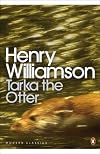
This is the most uncompromisingly "animal" of all animal stories, more like a TV nature documentary than a novel. On the one hand, the writing itself is as beautiful as the place it describes: north Devon with its deep wooded valleys and rich farmland, its high moors where wild ponies graze under huge skies, its headland-fringed coast with the tallest sea-cliffs anywhere in England, are lovingly described by a Londoner who came to know every inch of it. But on the other hand, there's no show more moral, no "lesson", just life in the raw the way it really is for a wild animal: cubs, parents and mates disappear from the narrative and are simply never mentioned again.
It's not a book about hunting. None of its otters die of disease or old age, most are killed and most of those by people - by the otter-hunt, or in gin-traps, or cornered and battered to death as "vermin"; yet Williamson's own attitude was to some extent contradictory. He admired the huntsmen themselves for their knowledge of otters and of Nature in general - he got to know them and followed the hunt himself; but in Tarka he also managed to get down on paper, better than almost anyone else I've read, the numbed outrage I feel at senseless cruelty to animals.
Environmental campaigners such as Rachel Carson have taken inspiration from this book - and, for all I know, Tarka may even have helped to save the otter itself because much has happened since 1927 when it was written. Their numbers declined for decades until otters finally disappeared completely from most of England in the 1960s (due as much to pesticides running into rivers as to hunting) and they even made it into the Red Book as "vulnerable to extinction". But then in 1978 hunting was banned, and in 1981 the landmark Wildlife and Countryside Act was passed into law, with otters as one of the first animals to come under its protection. These days they're making a comeback and the future looks bright.
Tarka isn't really about all that either though, neither about hunting nor conservation; in fact just for once, refreshingly, here we have a novel which isn't about us at all - and I think maybe that at least partly explains its enduring appeal. It's a story in which humans are peripheral figures, absent altogether for much of the time and only periodically erupting into Tarka's life like just another incomprehensible destructive phenomenon, like storms, like bad luck, like winter. And in the interludes we get glimpses of a different Earth (my favourite passage in the book: Tarka and a raven playing together), the way it must have been throughout almost all its history: no "moral", no "point" to it all, just life. show less
It's not a book about hunting. None of its otters die of disease or old age, most are killed and most of those by people - by the otter-hunt, or in gin-traps, or cornered and battered to death as "vermin"; yet Williamson's own attitude was to some extent contradictory. He admired the huntsmen themselves for their knowledge of otters and of Nature in general - he got to know them and followed the hunt himself; but in Tarka he also managed to get down on paper, better than almost anyone else I've read, the numbed outrage I feel at senseless cruelty to animals.
Environmental campaigners such as Rachel Carson have taken inspiration from this book - and, for all I know, Tarka may even have helped to save the otter itself because much has happened since 1927 when it was written. Their numbers declined for decades until otters finally disappeared completely from most of England in the 1960s (due as much to pesticides running into rivers as to hunting) and they even made it into the Red Book as "vulnerable to extinction". But then in 1978 hunting was banned, and in 1981 the landmark Wildlife and Countryside Act was passed into law, with otters as one of the first animals to come under its protection. These days they're making a comeback and the future looks bright.
Tarka isn't really about all that either though, neither about hunting nor conservation; in fact just for once, refreshingly, here we have a novel which isn't about us at all - and I think maybe that at least partly explains its enduring appeal. It's a story in which humans are peripheral figures, absent altogether for much of the time and only periodically erupting into Tarka's life like just another incomprehensible destructive phenomenon, like storms, like bad luck, like winter. And in the interludes we get glimpses of a different Earth (my favourite passage in the book: Tarka and a raven playing together), the way it must have been throughout almost all its history: no "moral", no "point" to it all, just life. show less

"Pity acts through the imagination, the higher light of the world, and imagination arises from the world of things, as a rainbow from the sun."
Starting with his birth, the book takes us almost day by day through Tarka's life — learning to swim and fish, wrestling and sliding down riverbanks with his sisters and mother, before heading off alone to find himself a mate, around the estuaries of Devon.
This is one of the best known nature novels but its not a sanitised Disneyesque nature. There show more is beauty is everywhere but there is also danger everywhere. Everything tries to eat everything else and the local farmers and water-bailiffs hunt otters, which they see as vermin. The sub-title of the novel, 'His Joyful Water-Life and Death' , tells us what the inevitable ending will be but beforehand gives a highly realistic insight into an otter’s life, its joys and perils. Williamson spent years tramping the riverways of Devon studying otters so whilst this is fiction its based on fact and close observation.
The writing is beautiful, in particular when Tarka was in the water, I could almost visualise it. Its sometime easy to think of otters as cute fish eating creatures but we mustn't forget that they are carnivores that will eat birds, frogs and other mammals as well. The book was first published in 1927 and thankfully attitudes have changed and despite the ending is neither sad nor depressing. It's a classic for a reason. My only real grumble was the constant use of local slang for many of the creatures that featured, whilst he initially tells us what the proper name is when they reoccurred later on I had forgotten it. The glossary could have been more expansive I felt.
“Time flowed with the sunlight of the still green place. The summer drake-flies, whose wings were as the most delicate transparent leaves, hatched from their cases on the water and danced over the shadowed surface.” show less
Starting with his birth, the book takes us almost day by day through Tarka's life — learning to swim and fish, wrestling and sliding down riverbanks with his sisters and mother, before heading off alone to find himself a mate, around the estuaries of Devon.
This is one of the best known nature novels but its not a sanitised Disneyesque nature. There show more is beauty is everywhere but there is also danger everywhere. Everything tries to eat everything else and the local farmers and water-bailiffs hunt otters, which they see as vermin. The sub-title of the novel, 'His Joyful Water-Life and Death' , tells us what the inevitable ending will be but beforehand gives a highly realistic insight into an otter’s life, its joys and perils. Williamson spent years tramping the riverways of Devon studying otters so whilst this is fiction its based on fact and close observation.
The writing is beautiful, in particular when Tarka was in the water, I could almost visualise it. Its sometime easy to think of otters as cute fish eating creatures but we mustn't forget that they are carnivores that will eat birds, frogs and other mammals as well. The book was first published in 1927 and thankfully attitudes have changed and despite the ending is neither sad nor depressing. It's a classic for a reason. My only real grumble was the constant use of local slang for many of the creatures that featured, whilst he initially tells us what the proper name is when they reoccurred later on I had forgotten it. The glossary could have been more expansive I felt.
“Time flowed with the sunlight of the still green place. The summer drake-flies, whose wings were as the most delicate transparent leaves, hatched from their cases on the water and danced over the shadowed surface.” show less

"With a feeling of strange fascination he saw her turning over, lying on her belly, slowly drawing herself over the seaweed towards him, until the mermaid was clasping his feet with her hands, thrusting her head between his ankles, kissing one foot, then the other foot, and winding her arms round his knees and clasping him in stillness and in silence until with her warmth his being shed its phosphorescence of decay, and his blood was thrilling with her soft wet mouth; he must turn away, lie show more with his back to the moon, concealing his desire in shadow. O beautiful human life!" show less
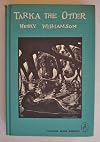
This is a brutal read, written during less sensitive times. Interpret that as you may, but if you are like me completely enjoys David Attenborough nature documentaries but still has the need to fast forward past the animals killing each other sequences, then this book probably isn't for you. It's not even the hunting itself that is bothersome, it is more the portrayal of cruelty as sport (something that certain classed of the British still seem to enjoy) that is most troubling.
Lists
Folio Society (1)
Elevenses (1)
Awards


You May Also Like


Associated Authors
Statistics
- Works
- 72
- Also by
- 13
- Members
- 2,108
- Popularity
- #12,209
- Rating
- 3.9
- Reviews
- 25
- ISBNs
- 181
- Languages
- 5
- Favorited
- 2