
Russell Hoban (1925–2011)
Author of Bread and Jam for Frances
About the Author
Russell Hoban was born in Lansdale, Pennsylvania on February 4, 1925. He attended art school in Philadelphia and during World War II, he served in the Army and earned a Bronze Star. He taught art in New York and Connecticut, and also worked as an advertising copywriter and a freelance illustrator show more before beginning his career as a writer. He began publishing children's books in the late 1950s, including What Does It Do and How Does It Work?, Bedtime for Frances and the six other books featuring Frances, The Story of Hester Mouse Who Became a Writer, What Happened When Jack and Daisy Tried to Fool the Tooth Fairies, and The Mouse and His Child, which was adapted as an animated film in 1977. In 1973, he published his first adult novel, The Lion of Boaz-Jachin and Jachin-Boaz. His other books for adults include Turtle Diary, Pilgermann, and Ridley Walker. He received the John W. Campbell Memorial Award and the Australian Science Fiction Achievement Award for Ridley Walker. He died on December 13 at the age of 86. In 2015 he made the Kate Greenaway Medal shortlist for his title Jim's Lion wth illlustrator Alexis Deacon. (Bowker Author Biography) show less
Series
Works by Russell Hoban
Riddley Walker / The Medusa Frequency 45 copies
What Happened When Jack and Daisy Tried to Fool the Tooth Fairies (1965) — Author — 30 copies, 1 review
How Tom Beat Captain Najork and His Hired Sportsmen & A Near Thing For Captain Najork (1988) 14 copies
The roar of the crowd; conversations with an ex-big-leaguer (1964) — Illustrator — 9 copies, 1 review
EMMET OTTERS JUG - BAND 4 copies
What does it do and how does it work? Power shovel, dump truck, and other heavy machines (1959) 4 copies
The Second Mrs Kong 2 copies
A BARGAIN FOR THE FRANCES 1 copy
Bernard Le Clochard 1 copy
A Bargain for Frances ; Best Friends for Frances ; Egg Thoughts & other Frances Songs ; Glynis Johns 1 copy
How Tom Beat Captain Najork and His Hired Sportsmen (Captain Najork 1) by Russell Hoban (2013-11-07) 1 copy
Dark Oliver 1 copy
Associated Works
The 20th-Century Children's Book Treasury: Picture Books and Stories to Read Aloud (1998) — Contributor — 1,838 copies, 14 reviews
The Vintage Book of Amnesia: An Anthology of Writing on the Subject of Memory Loss (2000) — Contributor — 228 copies, 2 reviews
Cricket Magazine, Vol. 4, No. 1, September 1976 — Contributor — 2 copies
Turtle Diary [1985 film] — Original story — 1 copy
The Marizipan Pig [1990 TV episode] — Original book — 1 copy
Tagged
Common Knowledge
- Legal name
- Hoban, Russell Conwell
- Birthdate
- 1925-02-04
- Date of death
- 2011-12-13
- Gender
- male
- Education
- Philadelphia Museum School of Industrial Art
- Occupations
- novelist
advertising artist
advertising copywriter
children's book author
TV art director
illustrator (show all 7)
librettist - Organizations
- United States Army (WWII)
- Awards and honors
- Bronze Star
Whitbread Book Award (1974)
John W. Campbell Memorial Award for Best Science Fiction Novel (1982) - Relationships
- Hoban, Lillian (wife)
Hoban, Brom (son)
Hoban, Tana (sister)
Hoban, Phoebe (daughter)
Hoban, Wieland (son) - Cause of death
- congestive heart failure
- Nationality
- USA
- Birthplace
- Lansdale, Pennsylvania, USA
- Places of residence
- London, Middlesex, England, UK
Lansdale, Pennsylvania, USA
Wilton, Connecticut, USA - Place of death
- London, Middlesex, England, UK
- Burial location
- Mortlake Crematorium, London, Middlesex, England, UK
- Associated Place (for map)
- USA
Members
Discussions
Young Reader series, about a family of skunks or badgers? in Name that Book (January 2012)
Children's book about clockwork mice in Name that Book (April 2009)
Reviews
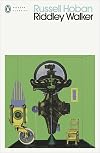
From the first paragraph of this remarkable novel, you know you're in for a ride:
On my naming day when I come 12 I gone front spear and kilt a wyld boar he parbly ben the las wyld pig on the Bundel Downs any how there hadnt ben none for a long time before him nor I aint looking to see none agen. He dint make the groun shake nor nothing like that when he come on to my spear he wernt all that big plus he lookit poorly. He done the reqwyrt he ternt and stood and clattert his teef and made his show more rush and there we wer then. Him on 1 end of the spear kicking his life out and me on the other end watching him dy. I said, 'Your tern now my tern later.'
Post-apocalytic dystopia, coming-of-age novel, survival thriller – it is a genre-breaking feat, written in a degenerate, demotic English spoken by those who populate the ragged bands and settlements that have survived the "1 big 1" and the "Master Chaynjis" which followed. It's not an easy read (although the language repays being read out loud) but is utterly compelling.
The fractured, post-nuclear, landscape which Riddley Walker, the eponymous narrator, moves across is a haunting remnant of a future England, bleakly and beautifully described. The social landscape, no less bleak and beautiful, is built through Riddley's encounters, nightmarish or absurd, and through the telling and retelling of myths – attempts to make sense of the world through a partially-rendered bricolage of genuine history, folk tales, misremembered science, puppet shows, religion and art. Violence is always very close to the surface – although the novel asks us to wonder about the possibility of transcending our violent nature, of finding and taming and using only for good what lies at the heart of things (the Littl Shyning Man, the Addom) or reaching and making peace with the idea that lurks at the heart of the self, "lorn and loan and oansome".
Riddley Walker is intense, richly textured, tragic and wonderful. I can't recommend it highly enough. show less
On my naming day when I come 12 I gone front spear and kilt a wyld boar he parbly ben the las wyld pig on the Bundel Downs any how there hadnt ben none for a long time before him nor I aint looking to see none agen. He dint make the groun shake nor nothing like that when he come on to my spear he wernt all that big plus he lookit poorly. He done the reqwyrt he ternt and stood and clattert his teef and made his show more rush and there we wer then. Him on 1 end of the spear kicking his life out and me on the other end watching him dy. I said, 'Your tern now my tern later.'
Post-apocalytic dystopia, coming-of-age novel, survival thriller – it is a genre-breaking feat, written in a degenerate, demotic English spoken by those who populate the ragged bands and settlements that have survived the "1 big 1" and the "Master Chaynjis" which followed. It's not an easy read (although the language repays being read out loud) but is utterly compelling.
The fractured, post-nuclear, landscape which Riddley Walker, the eponymous narrator, moves across is a haunting remnant of a future England, bleakly and beautifully described. The social landscape, no less bleak and beautiful, is built through Riddley's encounters, nightmarish or absurd, and through the telling and retelling of myths – attempts to make sense of the world through a partially-rendered bricolage of genuine history, folk tales, misremembered science, puppet shows, religion and art. Violence is always very close to the surface – although the novel asks us to wonder about the possibility of transcending our violent nature, of finding and taming and using only for good what lies at the heart of things (the Littl Shyning Man, the Addom) or reaching and making peace with the idea that lurks at the heart of the self, "lorn and loan and oansome".
Riddley Walker is intense, richly textured, tragic and wonderful. I can't recommend it highly enough. show less
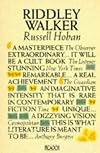
_Riddley Walker_ is the book that put Russell Hoban on the map (inasmuch as he is on the map…he is criminally neglected as an author) and will likely be the one work for which he will be remembered (sadly he passed away in late 2011). So far I have read three other Hoban novels and while I have thoroughly enjoyed all of them I must admit that I think this one is his very best.
Many, upon reading the first page, will dismiss the book as “gimmicky” (I am growing to hate that term as show more applied to books) due to the style in which Hoban writes. Admittedly his language isn’t easy to slip right into given that he has created his own broken, not quite phonetic, future version of English that is further complicated for many readers by being based on the Kentish dialect. Thus we have as our introduction to Riddley and his world:
Our hero, the eponymous Riddley Walker, is a young boy just coming of age at a moment when his world stands at a crossroads, change is either going to sweep humanity forward or back into the dustbin of history. Riddley truly is the crux of the novel (both thematically through the role he plays in the plot and stylistically given that the narrative is his own first-person account), the centre around which it revolves and also the primary element upon which it succeeds or fails for the reader. For me his character is an unqualified success. He is an everyman who harbours within himself unknown potential. He is a realist not given to self-delusion and yet in him is a belief in the human spirit, a sense of the positive, that is uplifting without being cloying. Through Riddley we are given an effective melding of hopelessness and hopefulness: a picture of a world steeped in melancholy and loss that may be the dying gasp of humanity or its first step forward out of the ashes.
Riddley's world is a grey one, painted in the broad strokes of grizzled rain, decaying edifices of the past, and a hard life of scrounging amidst the muck and ruins in search of the bare necessities of survival. Despite this bleak setting Hoban still presents us with a fully realized world of warmth, humanity, danger, and loss. It is obviously a post-apocalyptic world that stands on the far edge of the fall: the ‘Bad Time’ of fire and destruction is now only a distant legend (as is the world that preceded it), as opposed to those ‘survivalist’ post-apocalyptic books that take place while the horror of loss and oblivion is still a fresh wound. As is to be expected Riddley’s world is not an easy one. He lives in an Iron Age society in an England that had been bombed back to the Stone Age and is slowly clawing its way back up the ladder. The old ways are starting to die out as the nomadic, foraging lifestyle is gradually being replaced by the more settled life of farming. The old tales and stories of our own lost time are perpetuated primarily through the existence of a modified Punch and Judy show. This puppet show is a government-sponsored propaganda machine wherein the main character is Eusa (a degraded and highly modified version of St. Eustace), a stand-in for the perpetrators of Armageddon, in which old knowledge and new superstition are mixed together to create a truly unique experience. Through the Eusa Show and the legends it spawned we come to see the hum drum aspects of our own age both through the eyes of wonder and awe, a sort of golden age when giants walked the earth, and through the lens of condemnation: how could those so wise have been so foolish? How could the god-like beings humans had once been have allowed Armageddon to have occurred? ”O what we ben! And what we come to!” laments Riddley at one point. These people are keenly aware of their loss. Whether it is through fluid medium of stories and legends or the more concrete witness of the ruins of burnt out cities and the hulks of dead machines, the ghost of the past lives on in Riddley’s present and is carried on the backs of those that remain as both a reminder and a deadly weight.
Government lackeys travel from place to place and perform their ‘Eusa Shows’ based on a memorized approved text, usually in order to give a government spin on recent events and enforce the accepted truths of what has been and what will be. In the midst of this endless round of ‘business as usual’ there is beginning to grow a renewed interest in the “cleverness” of the old ways and knowledge, especially that which revolves around power and destruction (known in Riddley’s vernacular as the “1 Little 1” and the ”1 Big 1”)…it’s a common theme in this type of literature: the human fascination with the worst side of our nature that seems inevitably to lead us to commit the same horrible mistakes time and time again no matter how harsh the lessons taught us (see Miller’s [b:A Canticle for Leibowitz|164154|A Canticle for Leibowitz|Walter M. Miller Jr.|http://photo.goodreads.com/books/1329408540s/164154.jpg|250975] for another example of this; these two books would actually make for a good paired reading).
Of course the huge stumbling block for this book is obvious, it jumps out at you once you flip to the first page: the language itself. Is this degraded form of English nothing more than a gimmick? There will I suppose always be those for whom the answer is “yes”, but for me that isn’t the case…or at least it could have been simply a gimmick if it didn’t work, if there wasn’t more to the text than a degraded phonetic spelling. Luckily the language is built around a great story with much thoughtfulness on the human condition and human nature. Who are we and why do we act as we do? What does it mean to be human at all? Why do we live, and what is the purpose of our seemingly unimportant little lives? How do we connect with each other, and what are the things in life that are truly worth cultivating? How much of our life is determined and how much is freely chosen? All of these questions and more are asked in the text and while precious few answers may be given the possibilities that are presented give much food for thought. The language also allows the required distance between our world and this one of the far off future to be built and emphasized. Perhaps most importantly it allows us to zero in on what matters as we are forced to pay close attention not only to what is said, but how it is said. The strangeness of the language forces you to look at the familiar in a new way, to see things with new eyes as you work your way towards an understanding of what exactly is being discussed or viewed. Finally it also lets us inhabit the mind of our narrator and protagonist Riddley (as well as his world) in a uniquely engaging way.
This book is one of my favourites and it is highly recommended. The labour expended in reading it will be amply repaid as we go “roading thru that rainy dark” with Riddley Walker. show less
Many, upon reading the first page, will dismiss the book as “gimmicky” (I am growing to hate that term as show more applied to books) due to the style in which Hoban writes. Admittedly his language isn’t easy to slip right into given that he has created his own broken, not quite phonetic, future version of English that is further complicated for many readers by being based on the Kentish dialect. Thus we have as our introduction to Riddley and his world:
On my naming day when I come 12 I gone front spear and kilt a wyld boar he parbly ben the las wyld pig on the Bundel Downs any how there hadnt ben none for a long time befor him nor I aint looking to see none agen.That’s definitely one of the easier passages and things get more complicated when words and phrases are elided or significantly changed when they refer to things from the deep past (our present), and concepts that people in Riddley’s day don’t fully comprehend or whose meaning has changed in their time. Still, for me _Riddley Walker_ is probably the non plus ultra of post-apocalyptic fiction. Sure there are many others out there that are excellent, and I have by no means read in the genre exhaustively (I still have to read classics like [b:The Death of Grass|941731|The Death of Grass|John Christopher|http://photo.goodreads.com/books/1309962069s/941731.jpg|797220] and [b:Earth Abides|93269|Earth Abides|George R. Stewart|http://photo.goodreads.com/books/1320505234s/93269.jpg|1650913]), but there is something about Hoban’s work that seems to define the genre for me. His ability to capture a world that is at the same time horrifying and homely, a world that shows humanity utterly changed and yet exactly the same as we’ve always been is superlative.
Our hero, the eponymous Riddley Walker, is a young boy just coming of age at a moment when his world stands at a crossroads, change is either going to sweep humanity forward or back into the dustbin of history. Riddley truly is the crux of the novel (both thematically through the role he plays in the plot and stylistically given that the narrative is his own first-person account), the centre around which it revolves and also the primary element upon which it succeeds or fails for the reader. For me his character is an unqualified success. He is an everyman who harbours within himself unknown potential. He is a realist not given to self-delusion and yet in him is a belief in the human spirit, a sense of the positive, that is uplifting without being cloying. Through Riddley we are given an effective melding of hopelessness and hopefulness: a picture of a world steeped in melancholy and loss that may be the dying gasp of humanity or its first step forward out of the ashes.
Riddley's world is a grey one, painted in the broad strokes of grizzled rain, decaying edifices of the past, and a hard life of scrounging amidst the muck and ruins in search of the bare necessities of survival. Despite this bleak setting Hoban still presents us with a fully realized world of warmth, humanity, danger, and loss. It is obviously a post-apocalyptic world that stands on the far edge of the fall: the ‘Bad Time’ of fire and destruction is now only a distant legend (as is the world that preceded it), as opposed to those ‘survivalist’ post-apocalyptic books that take place while the horror of loss and oblivion is still a fresh wound. As is to be expected Riddley’s world is not an easy one. He lives in an Iron Age society in an England that had been bombed back to the Stone Age and is slowly clawing its way back up the ladder. The old ways are starting to die out as the nomadic, foraging lifestyle is gradually being replaced by the more settled life of farming. The old tales and stories of our own lost time are perpetuated primarily through the existence of a modified Punch and Judy show. This puppet show is a government-sponsored propaganda machine wherein the main character is Eusa (a degraded and highly modified version of St. Eustace), a stand-in for the perpetrators of Armageddon, in which old knowledge and new superstition are mixed together to create a truly unique experience. Through the Eusa Show and the legends it spawned we come to see the hum drum aspects of our own age both through the eyes of wonder and awe, a sort of golden age when giants walked the earth, and through the lens of condemnation: how could those so wise have been so foolish? How could the god-like beings humans had once been have allowed Armageddon to have occurred? ”O what we ben! And what we come to!” laments Riddley at one point. These people are keenly aware of their loss. Whether it is through fluid medium of stories and legends or the more concrete witness of the ruins of burnt out cities and the hulks of dead machines, the ghost of the past lives on in Riddley’s present and is carried on the backs of those that remain as both a reminder and a deadly weight.
Government lackeys travel from place to place and perform their ‘Eusa Shows’ based on a memorized approved text, usually in order to give a government spin on recent events and enforce the accepted truths of what has been and what will be. In the midst of this endless round of ‘business as usual’ there is beginning to grow a renewed interest in the “cleverness” of the old ways and knowledge, especially that which revolves around power and destruction (known in Riddley’s vernacular as the “1 Little 1” and the ”1 Big 1”)…it’s a common theme in this type of literature: the human fascination with the worst side of our nature that seems inevitably to lead us to commit the same horrible mistakes time and time again no matter how harsh the lessons taught us (see Miller’s [b:A Canticle for Leibowitz|164154|A Canticle for Leibowitz|Walter M. Miller Jr.|http://photo.goodreads.com/books/1329408540s/164154.jpg|250975] for another example of this; these two books would actually make for a good paired reading).
You can get jus as dead from a kick in the head as you can from the 1 Littl 1 but its tha natur of it gets people as cited. I mean your foot is all ways on the end of your leg innit. So if youre going to kick some 1 to death it aint all that thrilling is it. This other tho youve got to have the Nos. of the mixter then youve got to fynd your gready mints then youve got to do the mixing of the mixter and youve got to say the fissional seakerts of the act befor you kil some body its all that chemistery and fizzics of it you see. Its some thing new. Which ever way you look at it I dont think Aunty and her red eyed rat be too far from us.
Of course the huge stumbling block for this book is obvious, it jumps out at you once you flip to the first page: the language itself. Is this degraded form of English nothing more than a gimmick? There will I suppose always be those for whom the answer is “yes”, but for me that isn’t the case…or at least it could have been simply a gimmick if it didn’t work, if there wasn’t more to the text than a degraded phonetic spelling. Luckily the language is built around a great story with much thoughtfulness on the human condition and human nature. Who are we and why do we act as we do? What does it mean to be human at all? Why do we live, and what is the purpose of our seemingly unimportant little lives? How do we connect with each other, and what are the things in life that are truly worth cultivating? How much of our life is determined and how much is freely chosen? All of these questions and more are asked in the text and while precious few answers may be given the possibilities that are presented give much food for thought. The language also allows the required distance between our world and this one of the far off future to be built and emphasized. Perhaps most importantly it allows us to zero in on what matters as we are forced to pay close attention not only to what is said, but how it is said. The strangeness of the language forces you to look at the familiar in a new way, to see things with new eyes as you work your way towards an understanding of what exactly is being discussed or viewed. Finally it also lets us inhabit the mind of our narrator and protagonist Riddley (as well as his world) in a uniquely engaging way.
This book is one of my favourites and it is highly recommended. The labour expended in reading it will be amply repaid as we go “roading thru that rainy dark” with Riddley Walker. show less

"Harley Mole and his son Delver did straight mole work. They tunneled and they dug and they brought home the groceries." So begins this immensely engaging Christmas story devoted to the doings of the solidly working class Mole family. A brooder or a thinker, depending upon whether you asked his mother or father, young Delver had a curiosity about the world around him, a curiosity that found its focus when he learned of the far-distant stars, and conceived of a desire to see them. But how show more could a mole, who lived underground and who was terribly nearsighted, ever see these shimmering celestial bodies? By using a telescope, of course! And how was he to obtain that telescope? By asking the fat man in a red suit, who visited the people aboveground once a year with gifts. And so began a process whereby the entire Mole family worked hard to make Delver's dream come true, laboring to build a chimney for this odd gift-giver, while evading the claws of Ephraim the Owl...
Having simply adored Russell and Lillian Hoban's stories about Frances the badger when I was a little girl - Bread and Jam for Frances was a particular favorite, although I loved them all - I was more than willing to give The Mole Family's Christmas a try, when it came so highly recommended by my goodreads friend Miriam. I'm glad that I did, because I discovered a true gem! The narrative here is immensely entertaining - humorous in that delightfully deadpan way I have come to associate with the Hobans. I chuckled aloud at the mouse's description of the odd human customs involving the fat man in a red suit, and his conclusion that "it's quite an odd thing, really, but he does it only once a year, and nobody seems to mind." The best of animal fiction can convince you that you are truly getting a different species' perspective, often making the familiar seem unfamiliar in thought-provoking ways, something Russell Hoban manages here with wit and charm. I appreciated that the animal characters in The Mole Family's Christmas are not depicted as if they live in some sort of woodland utopia - in this fictional world, as in the real one, owls hunt mice and moles - but that the predator animal isn't completely vilified. He even gets his own gift from Santa! When I compare this title to the more recent Waiting for Santa, a picture-book I read a few days ago, which features lots of unlikely cross-species friendship amongst a group of animals waiting for Santa, I can't help but conclude that the Hobans display, through stories such as this, so much more respect for their young readers, than the creators of sweeter fare. Which isn't to say that there isn't sweetness here, because there is... it's just leavened with salt.
The artwork by Lillian Hoban is every bit as appealing and the text by Russell, capturing the talpine charm of the main characters - right down to their wonderful work outfits! - and the beauty and enchantment of the world around them, whether underground, above ground, or high above ground (in the sky). Here are Harley and Delver heading off to work:
All in all, a delightful book, one I would recommend to all young children who enjoy animal stories, to all Hoban fans, and to anyone searching for engaging, slightly quirky Christmas titles. show less
Having simply adored Russell and Lillian Hoban's stories about Frances the badger when I was a little girl - Bread and Jam for Frances was a particular favorite, although I loved them all - I was more than willing to give The Mole Family's Christmas a try, when it came so highly recommended by my goodreads friend Miriam. I'm glad that I did, because I discovered a true gem! The narrative here is immensely entertaining - humorous in that delightfully deadpan way I have come to associate with the Hobans. I chuckled aloud at the mouse's description of the odd human customs involving the fat man in a red suit, and his conclusion that "it's quite an odd thing, really, but he does it only once a year, and nobody seems to mind." The best of animal fiction can convince you that you are truly getting a different species' perspective, often making the familiar seem unfamiliar in thought-provoking ways, something Russell Hoban manages here with wit and charm. I appreciated that the animal characters in The Mole Family's Christmas are not depicted as if they live in some sort of woodland utopia - in this fictional world, as in the real one, owls hunt mice and moles - but that the predator animal isn't completely vilified. He even gets his own gift from Santa! When I compare this title to the more recent Waiting for Santa, a picture-book I read a few days ago, which features lots of unlikely cross-species friendship amongst a group of animals waiting for Santa, I can't help but conclude that the Hobans display, through stories such as this, so much more respect for their young readers, than the creators of sweeter fare. Which isn't to say that there isn't sweetness here, because there is... it's just leavened with salt.
The artwork by Lillian Hoban is every bit as appealing and the text by Russell, capturing the talpine charm of the main characters - right down to their wonderful work outfits! - and the beauty and enchantment of the world around them, whether underground, above ground, or high above ground (in the sky). Here are Harley and Delver heading off to work:
All in all, a delightful book, one I would recommend to all young children who enjoy animal stories, to all Hoban fans, and to anyone searching for engaging, slightly quirky Christmas titles. show less
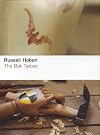
Let Me tell you something about Russel Hoban.
First off, he is dead and has been for a while. He was a very successful children's author long before he lowered his standards to write for adults. He was very popular in the 1970's and 1980's although he wrote well outside these eras.
Secondly, he wrote one of the 2 best books I have ever read in my life, that book is Riddley Walker and it is completely different from anything else he wrote.
Modern Readers with lists of triggers and fragile show more sensibilities would not enjoy any of his books.
One of the things he does that I like is to research his characters and their lives then bring that research into the narrative.
For example, one his characters has a "carrying book" that he carries when in public. That may not be the book the character is reading but its contents will provide a context to what is happening in the story.
He will mention in great detail the music playing in the background and where it fits in this cosmic accident we call reality. He will name objects and list their provenance. If anyone else did that you'd think they were being a pretentious wanker and a bore, but no he actually pulls it off and adds subtext to the narrative, he may do this several times in a story so you have these subliminal threads all going along sometimes in the foreground and other times in the background. Also in some cases from book to book. You could call them universal themes I guess? He creates intelligent, aware characters.
His books have sometimes been described and magic realism but I tend to think they are more "enhanced realism". There's no magic in this one. He ascribes contemporary personalities to concepts and ideologies and has conversations with them kind of ....
If you have't guessed already that I am a fan of his writing then I'll come right out and say it. He creates 3D stories and I love them. I haven't found another writer that does this in the same way.
And so to The Bat Tattoo. One of his later novels that carry his indelible method and rhythm. When you start you have no idea where the story is going or indeed if it is going anywhere at all. Ostensibly a story of two people at crossroads in their lives who both have a bat tattoo on their bodies. show less
First off, he is dead and has been for a while. He was a very successful children's author long before he lowered his standards to write for adults. He was very popular in the 1970's and 1980's although he wrote well outside these eras.
Secondly, he wrote one of the 2 best books I have ever read in my life, that book is Riddley Walker and it is completely different from anything else he wrote.
Modern Readers with lists of triggers and fragile show more sensibilities would not enjoy any of his books.
One of the things he does that I like is to research his characters and their lives then bring that research into the narrative.
For example, one his characters has a "carrying book" that he carries when in public. That may not be the book the character is reading but its contents will provide a context to what is happening in the story.
He will mention in great detail the music playing in the background and where it fits in this cosmic accident we call reality. He will name objects and list their provenance. If anyone else did that you'd think they were being a pretentious wanker and a bore, but no he actually pulls it off and adds subtext to the narrative, he may do this several times in a story so you have these subliminal threads all going along sometimes in the foreground and other times in the background. Also in some cases from book to book. You could call them universal themes I guess? He creates intelligent, aware characters.
His books have sometimes been described and magic realism but I tend to think they are more "enhanced realism". There's no magic in this one. He ascribes contemporary personalities to concepts and ideologies and has conversations with them kind of ....
If you have't guessed already that I am a fan of his writing then I'll come right out and say it. He creates 3D stories and I love them. I haven't found another writer that does this in the same way.
And so to The Bat Tattoo. One of his later novels that carry his indelible method and rhythm. When you start you have no idea where the story is going or indeed if it is going anywhere at all. Ostensibly a story of two people at crossroads in their lives who both have a bat tattoo on their bodies. show less
Lists
Reading LIst (8)
1960s (1)
Unread books (1)
Backlisted (1)
al.vick-series (1)
Five star books (1)
SF Masterworks (1)
Best Dystopias (1)
Favourite Books (1)
1980 great books (1)
Read These Too (1)
1970s (2)
Sonlight Books (2)
Christmas Books (3)
Ambleside Books (4)
Best First Lines (1)
Awards


You May Also Like


Associated Authors
Statistics
- Works
- 111
- Also by
- 29
- Members
- 30,633
- Popularity
- #647
- Rating
- 4.0
- Reviews
- 494
- ISBNs
- 717
- Languages
- 14
- Favorited
- 62

