
Jun'ichirō Tanizaki (1886–1965)
Author of In Praise of Shadows
About the Author
Works by Jun'ichirō Tanizaki
痴人の愛 (角川文庫) 3 copies
当世鹿もどき 3 copies
The Two Acolytes 3 copies
乱菊物語 3 copies
細雪 下 2 copies
蓼喰う虫 2 copies
梦之浮桥 (谷崎润一郎作品系列) 2 copies
細雪 上 2 copies
Cuentos crueles 2 copies
Insel der Puppen Roman 2 copies
Lofzang op de schaduw essay 2 copies
細雪 中 2 copies
京の夢大阪の夢 2 copies
谷崎 潤一郎 I (現代日本文学館 16) 1 copy
La croce buddista 1 copy
文章讀本 1 copy
細雪 1 copy
Paix dans les cuisines 1 copy
日本文学全集〈第21〉谷崎潤一郎集 1 copy
Short Fiction 1 copy
Kunci 1 copy
Nero su bianco 1 copy
හද දොර යතුරු 1 copy
谷崎潤一郎集 1 copy
日本の文学: 谷崎潤一郎 (三) 1 copy
日本の文学: 谷崎潤一郎 (二) 1 copy
Yume No Ukihashi 1 copy
Sedam japanskih priča 1 copy
Eloge de l'ombre 1 copy
Шут 1 copy
Narratori giapponesi moderni 1 copy
痴人の愛 1 copy
La clau 1956 1 copy
Sasame yuki 2 (細雪 中) 1 copy
Sasame yuki 1 (細雪 上) 1 copy
Somliga tycker om nässlor 1 copy
İhtiyar Çılgın 1 copy
Professor Rado [short story] 1 copy
乱菊物語 = rankikumonogatari 1 copy
Το πόδι της Φούμικο 1 copy
Opowieść o miłości okrutnej 1 copy
Jurnalul unui bătrân nebun 1 copy
Sasame yuki 3 (細雪 下) 1 copy
L'amore Di Uno Sciocco 1 copy
Most snů 1 copy
Šunkinin portret 1 copy
Ca Tụng Bóng Tối 1 copy
التاريخ السري لأمير موساشي 1 copy
مديح الظل 1 copy
Τό ἐγκώμιο τῆς σκιᾶς 1 copy
El gust de les ortigues 1 copy
Associated Works
Great Short Stories: Russian, Japanese, American, Irish, French, English (2007) — Contributor — 36 copies
Three-Dimensional Reading: Stories of Time and Space in Japanese Modernist Fiction, 1911-1932 (2013) — Contributor — 11 copies
Hoog zomerboek : dertien romans, novellen en lange verhalen van Gabriel García Márquez, Roald Dahl, Herman Koch, David (1994) — Contributor — 3 copies
月の文学館 月の人の一人とならむ — Contributor — 1 copy
花の名随筆 4 四月の花 — Contributor — 1 copy
Kodansha's Fiction Sampler, Extraordinary Writers from Japan — Contributor — 1 copy
釣魚の迷宮―怪異幻魚譚~ファンに贈る傑作集 — Contributor — 1 copy
Tagged
Common Knowledge
- Canonical name
- Tanizaki, Jun'ichirō
- Legal name
- 谷崎 潤一郎
- Other names
- Tanizaki Jun'ichirō
- Birthdate
- 1886-07-24
- Date of death
- 1965-07-30
- Gender
- male
- Education
- Tokyo Imperial University (Literature | dropped out)
- Occupations
- novelist
short story writer
playwright
screenwriter - Awards and honors
- Order of Culture (1949)
Foreign Honorary Member, American Academy of Arts and Letters (1964)
Asahi Prize (1948)
Person of Cultural Merit (文化功労者, bunka kōrōsha)(1952) - Cause of death
- heart attack
- Nationality
- Japan
- Birthplace
- Nihonbashi, Tokyo, Japan
- Places of residence
- Tokyo, Japan
Yokohama, Japan (1922)
Kyoto, Japan (1923)
Odowara, Japan
Kobe, Japan - Place of death
- Yugawara, Kanagawa, Japan
- Burial location
- Hōnen-in Temple, Shikagaya, Sakyo-ku, Kyoto, Japan
- Map Location
- Japan
Members
Discussions
2nd edn Winner Discussion: In Praise of Shadows in Consensus Press (January 14)
Reviews
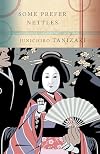
Marital oddness in late 20’s Japan. Kaname and Misako no longer love each other, but they don’t hate each other either. After 10 years and one kid, all the emotion has leached out of their relationship, leaving an inanimate husk, a replica marriage like the puppets Misako’s father likes to watch. He has a wife 30 years his junior and treats her like a puppet/doll, but she’s no such thing, unlike the preternaturally passive Kaname. Misako’s involved with someone else, but all she show more and Kaname really care about is how to get divorced with a minimum of upset to their son, her dad, and society in general.
The centerpiece of the novel is a fascinating rural puppet show attended, but largely ignored, by all the village, kids playing and peeing while the dwarf-sized, stringless puppets act out their classical tragedies and romances. I loved the final scene too, and the ending (as in The Makioka Sisters) is striking. Similar East-West themes here, too, but the couple’s predicament ultimately seems absurd. show less
The centerpiece of the novel is a fascinating rural puppet show attended, but largely ignored, by all the village, kids playing and peeing while the dwarf-sized, stringless puppets act out their classical tragedies and romances. I loved the final scene too, and the ending (as in The Makioka Sisters) is striking. Similar East-West themes here, too, but the couple’s predicament ultimately seems absurd. show less
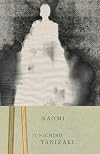
This is a bit like a Japanese 'Lolita'. Very cinematic. The story of a man - Jōji - and his infatuation with a Eurasian looking teenage girl, Naomi. Upon meeting and getting to know one another, both characters bond over their mutual fascination with the West. Soon, Naomi becomes Jōji's protégé and she moves in with him. He is intent on nurturing her into a 'respectable young lady'. His adoration takes form in lavishing her with clothes and expensive meals. Naomi quickly becomes spoiled show more and distasteful traits begin to show. We discover her mischievousness and unfaithfulness - the bane and ruin of Jōji's life. His love (however unhealthy the reader may deem it) for Naomi, is unwavering. This novel was very atmospheric and transported me to another culture and climate. It was, however, rather stifling to read - both in terms of the circumstances at hand and also in terms of the writing style. I felt myself trying to rush through and get to the point of a few scenes. The whole relationship is unhealthy and weird and I didn't find myself rooting for anyone. A feminist and PC attitude would obviously sympathise with Naomi - a young woman groomed and made subject to an older man's overpowering and constricting infatuation. However, I couldn't help but ever so slightly sympathise with Jōji - who I imagine to be a meek and rather pathetic brown-suited man - a man who subsequently has to resort to 'buying' his love from women through supplying their addiction to materialism. Naomi clearly walks all over him and he allows it because he is so hopelessly in love with her (or merely obsessed?). show less
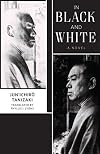
In Black and White is one of Tanizaki's lesser known works, apparently so obscure that most Japanese and English scholars of Japanese literature are not aware of this work's existence. So, we English readers are lucky to be ahead for the first time...👏🏻
Adding to its mysterious allure, this book is about a writer, Mizuno, who lives a hedonistic life (cough, that cliché of the artist, cough) and is constantly broke. One day, he sends in his latest work, a murder mystery, and accidently show more writes in the name of an acquaintance into the manuscript, which is very similar to the fictitious name. Suddenly seized by fear that a murder will actually occur, he rushes to stop the printing press, but finds out that he's too late. What happens next is a series of fateful events that pulls him into a self-perpetuating web of paranoia and confusion, with reality soon echoing the fiction of his work.
The murder mystery soon flourishes into a familiar theme familiar to all writers and artists, especially those who look to their own lives for inspiration: is the art fully representative of the person who created it, and if it is, where is the distinction between art and real life?
This was a highly enjoyable read as Tanizaki's depiction of debilitating anxiety is VERY realistic, and you find yourself unknowingly infected with it. show less
Adding to its mysterious allure, this book is about a writer, Mizuno, who lives a hedonistic life (cough, that cliché of the artist, cough) and is constantly broke. One day, he sends in his latest work, a murder mystery, and accidently show more writes in the name of an acquaintance into the manuscript, which is very similar to the fictitious name. Suddenly seized by fear that a murder will actually occur, he rushes to stop the printing press, but finds out that he's too late. What happens next is a series of fateful events that pulls him into a self-perpetuating web of paranoia and confusion, with reality soon echoing the fiction of his work.
The murder mystery soon flourishes into a familiar theme familiar to all writers and artists, especially those who look to their own lives for inspiration: is the art fully representative of the person who created it, and if it is, where is the distinction between art and real life?
This was a highly enjoyable read as Tanizaki's depiction of debilitating anxiety is VERY realistic, and you find yourself unknowingly infected with it. show less
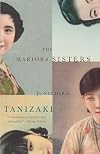
“The ancients waited for cherry blossoms, grieved when they were gone, and lamented their passing in countless poems. How very ordinary the poems had seemed to Sachiko when she read them as a girl, but now she knew, as well as one could know, that grieving over fallen cherry blossoms was more than a fad or convention.”
The Makioka Sisters by Junichiro Tanizaki revolves around the once aristocratic and wealthy Makioka family, namely the sisters Tsuruko, Sachiko, Yukiko, Taeko (fondly show more referred to as “Koi-san” as per custom, meaning “small daughter”), who despite having lost most of their wealth over time, strive to maintain a way of life and uphold the traditional customs of an era slowly fading into history. The novel spans the period between the autumn of 1936 to April 1941. It is a slow-paced and detail-oriented depiction of life in Japanese polite society in the years leading up to WW2. The narrative alludes to historically significant events occurring in that period such as the “China Incident” namely the Second Sino-Japanese War, the Kobe flood of 1938, and the references to the tensions in Europe.
“Meanwhile the world was shaken by new developments in Europe. In May came the German invasion of the Low Countries and the tragedy of Dunkirk, and in June, upon the French surrender, an armistice was signed at Compiègne.”
The eldest Makioka sister, Tsuruko is married to Tatsuo, who works in a bank and after her father’s demise is the head of the family as per Japanese custom. He has also taken the Makioka name. They constitute the “main house” in Osaka and are traditionally regarded as the head of the family who yields authority over the other branches. Sachiko, the second eldest sister is married to Teinosuke, an accountant who has also taken the Makioka name. Together they maintain the Ashiya house on the outskirts of Osaka. Most of the story is described from Sachiko’s perspective. Though tradition dictates that the unmarried sisters live in the “main house”, both Yukiko and Taeko prefer to live with Sachiko’s family in Ashiya, where they are welcome though this is a matter that leads to some tense interactions between Sachiko and her older sister. As per custom, Taeko cannot marry before her elder sister Yukiko who is pushing thirty at the beginning of the novel . Yukiko is yet to find a husband mostly on account of the Makiokas rejecting multiple proposals because the prospective grooms' families were not found suitable in stature, a condition that they are forced to relax in the subsequent years as the proposals for Yukiko’s hand in marriage dwindle over time. The focal point of this novel is the search for a suitable groom for Yukiko - a match that meets the Makioka’s standards, the selection, the meetings, in-depth background investigations and familial consent of the main house.
The author paints a vivid picture of the customs, beliefs, traditions, gender roles as well as the temperament, vanity and class consciousness that was representative of that era. The characterizations of the sisters is superb. The two older sisters, married and settled remain stuck in tradition and prioritize their family standing and all its glory which has long since dimmed considerably. As the story progresses we see a moment when Yukiko is rejected by a suitor that it dawns on Sachiko that their fortunes have truly changed with the realization that they would have to change with the times.
“Never before had the Makiokas been so humbled. Always they had felt that the advantage was with them, that the other side was courting their favor—always it had been their role to judge the man and find him lacking. This time their position had been weak from the start. For the first time they were branded the losers.”
Yukiko, whose marriage (or rather search for a groom) is the focal point of the novel is a graceful quiet, obedient sister whose presence is felt but whose voice is either unheard or drowned out by those of her more vocal sisters. She is also bound by tradition, trusting her elder sisters and brothers-in-law with the responsibility of finding a suitable match and sits through a miai (a formal meeting between a prospective bride and groom) several times. However, despite her fine manners and quiet nature she can convey much through her “tepid” responses and often surprising non-cooperation in interacting with her prospective grooms. Takeo, the youngest who has never experienced the full fame and wealth of the family, is more willful than the other sisters. She has a mind of her own and does not hesitate to do as she pleases and is often the cause of much embarrassment and concern for her older sisters. One incident that is referred to a few times in the narrative is the “newspaper incident” - when the local newspapers carried the story of her elopement with her beau, Okubata but got her name mixed up with Yukiko’s (which was later clarified). The family assumes this to be another reason for which Yukiko’s proposals are fewer than expected. Taeko is ambitious and industrious and attempts to carve a profession for herself - be it earning a living doll making or training as a seamstress , while juggling her romantic relationships. She embodies a modern spirit that is in stark contrast with the mindset of her more traditional sisters and is representative of the changing times and the shift in societal norms and strictures.
Junichiro Tanizaki’s The Makioka Sisters is a beautiful novel, meant to be read slowly. Vivid imagery and fluid narrative make this an easy if quiet read. Though it might seem tedious for many readers, I enjoyed the detailed depictions of the contrasting personalities, the beautiful descriptions of the different places, the cherry blossoms and dragonflies,Japanese culture and customs and the relationship between the sisters. This is a novel I had been meaning to read for a long time and I am glad I finally picked it up. show less
The Makioka Sisters by Junichiro Tanizaki revolves around the once aristocratic and wealthy Makioka family, namely the sisters Tsuruko, Sachiko, Yukiko, Taeko (fondly show more referred to as “Koi-san” as per custom, meaning “small daughter”), who despite having lost most of their wealth over time, strive to maintain a way of life and uphold the traditional customs of an era slowly fading into history. The novel spans the period between the autumn of 1936 to April 1941. It is a slow-paced and detail-oriented depiction of life in Japanese polite society in the years leading up to WW2. The narrative alludes to historically significant events occurring in that period such as the “China Incident” namely the Second Sino-Japanese War, the Kobe flood of 1938, and the references to the tensions in Europe.
“Meanwhile the world was shaken by new developments in Europe. In May came the German invasion of the Low Countries and the tragedy of Dunkirk, and in June, upon the French surrender, an armistice was signed at Compiègne.”
The eldest Makioka sister, Tsuruko is married to Tatsuo, who works in a bank and after her father’s demise is the head of the family as per Japanese custom. He has also taken the Makioka name. They constitute the “main house” in Osaka and are traditionally regarded as the head of the family who yields authority over the other branches. Sachiko, the second eldest sister is married to Teinosuke, an accountant who has also taken the Makioka name. Together they maintain the Ashiya house on the outskirts of Osaka. Most of the story is described from Sachiko’s perspective. Though tradition dictates that the unmarried sisters live in the “main house”, both Yukiko and Taeko prefer to live with Sachiko’s family in Ashiya, where they are welcome though this is a matter that leads to some tense interactions between Sachiko and her older sister. As per custom, Taeko cannot marry before her elder sister Yukiko who is pushing thirty at the beginning of the novel . Yukiko is yet to find a husband mostly on account of the Makiokas rejecting multiple proposals because the prospective grooms' families were not found suitable in stature, a condition that they are forced to relax in the subsequent years as the proposals for Yukiko’s hand in marriage dwindle over time. The focal point of this novel is the search for a suitable groom for Yukiko - a match that meets the Makioka’s standards, the selection, the meetings, in-depth background investigations and familial consent of the main house.
The author paints a vivid picture of the customs, beliefs, traditions, gender roles as well as the temperament, vanity and class consciousness that was representative of that era. The characterizations of the sisters is superb. The two older sisters, married and settled remain stuck in tradition and prioritize their family standing and all its glory which has long since dimmed considerably. As the story progresses we see a moment when Yukiko is rejected by a suitor that it dawns on Sachiko that their fortunes have truly changed with the realization that they would have to change with the times.
“Never before had the Makiokas been so humbled. Always they had felt that the advantage was with them, that the other side was courting their favor—always it had been their role to judge the man and find him lacking. This time their position had been weak from the start. For the first time they were branded the losers.”
Yukiko, whose marriage (or rather search for a groom) is the focal point of the novel is a graceful quiet, obedient sister whose presence is felt but whose voice is either unheard or drowned out by those of her more vocal sisters. She is also bound by tradition, trusting her elder sisters and brothers-in-law with the responsibility of finding a suitable match and sits through a miai (a formal meeting between a prospective bride and groom) several times. However, despite her fine manners and quiet nature she can convey much through her “tepid” responses and often surprising non-cooperation in interacting with her prospective grooms. Takeo, the youngest who has never experienced the full fame and wealth of the family, is more willful than the other sisters. She has a mind of her own and does not hesitate to do as she pleases and is often the cause of much embarrassment and concern for her older sisters. One incident that is referred to a few times in the narrative is the “newspaper incident” - when the local newspapers carried the story of her elopement with her beau, Okubata but got her name mixed up with Yukiko’s (which was later clarified). The family assumes this to be another reason for which Yukiko’s proposals are fewer than expected. Taeko is ambitious and industrious and attempts to carve a profession for herself - be it earning a living doll making or training as a seamstress , while juggling her romantic relationships. She embodies a modern spirit that is in stark contrast with the mindset of her more traditional sisters and is representative of the changing times and the shift in societal norms and strictures.
Junichiro Tanizaki’s The Makioka Sisters is a beautiful novel, meant to be read slowly. Vivid imagery and fluid narrative make this an easy if quiet read. Though it might seem tedious for many readers, I enjoyed the detailed depictions of the contrasting personalities, the beautiful descriptions of the different places, the cherry blossoms and dragonflies,Japanese culture and customs and the relationship between the sisters. This is a novel I had been meaning to read for a long time and I am glad I finally picked it up. show less
Lists
Cats in Fiction (1)
Shaking a Leg (1)
Awards


You May Also Like


Associated Authors
Statistics
- Works
- 193
- Also by
- 41
- Members
- 12,628
- Popularity
- #1,853
- Rating
- 3.9
- Reviews
- 287
- ISBNs
- 531
- Languages
- 26
- Favorited
- 64


