
About the Author
Works by Andrew R. MacAndrew
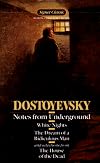
Notes from Underground; White Nights; The Dream of a Ridiculous Man; and: White Nights Dream Ridiculous Man and selections from The House of the Dead (Signet classics) (1961) — Translator and Afterword — 977 copies, 13 reviews
Associated Works
Tagged
Common Knowledge
- Other names
- MacAndrew, Andrew Robert
- Birthdate
- 1911-09-03
- Date of death
- 2001-05-15
- Gender
- male
- Nationality
- USA
- Associated Place (for map)
- USA
Members
Reviews
Notes from Underground; White Nights; The Dream of a Ridiculous Man; and: White Nights Dream Ridiculous Man and selections from The House of the Dead by Fyodor Dostoyevsky
“Man everywhere and at all times, whoever he may be, has preferred to act as he chose and not in the least as his reason and advantage dictated. And one may choose what is contrary to one's own interests.”
Not what I expected. Notes from the Underground is a philosophical musing on the nature of humankind and why the ideals of a utopian society are doomed to fail. Why do people say they value reason but act irrationally? Does free will exist? Why do people build things but find they are show more dissatisfied once the project is completed? And so on. It seems to be a diatribe against determinism.
The premise is that an unnamed “underground man” living St. Petersburg, Russia is engaging in a monologue (though it is written as if he is talking directly to readers). He makes statements and asks questions. Later sections cover his meeting with a woman named Liza, and disagreements with a man that leads to the challenge to a duel. Topics include suffering, morality, vice, reason, revenge, justice, truth, civilization, boredom, spite, freedom, and other such universal topics. It touches on many subjects but does not delve deeply into any of them.
Published in 1864, it is considered a classic that lays the groundwork for future forays into dystopian societies. I didn’t hate it, but I cannot say I got much pleasure from reading it, either. My version included three short stories, which I enjoyed more than the titular novella. I think I will stick to Dostoevsky’s novels. He needs more room to expand on these thoughts, and my personal preference is to incorporate them into more of a storyline. show less
Not what I expected. Notes from the Underground is a philosophical musing on the nature of humankind and why the ideals of a utopian society are doomed to fail. Why do people say they value reason but act irrationally? Does free will exist? Why do people build things but find they are show more dissatisfied once the project is completed? And so on. It seems to be a diatribe against determinism.
The premise is that an unnamed “underground man” living St. Petersburg, Russia is engaging in a monologue (though it is written as if he is talking directly to readers). He makes statements and asks questions. Later sections cover his meeting with a woman named Liza, and disagreements with a man that leads to the challenge to a duel. Topics include suffering, morality, vice, reason, revenge, justice, truth, civilization, boredom, spite, freedom, and other such universal topics. It touches on many subjects but does not delve deeply into any of them.
Published in 1864, it is considered a classic that lays the groundwork for future forays into dystopian societies. I didn’t hate it, but I cannot say I got much pleasure from reading it, either. My version included three short stories, which I enjoyed more than the titular novella. I think I will stick to Dostoevsky’s novels. He needs more room to expand on these thoughts, and my personal preference is to incorporate them into more of a storyline. show less
Notes from Underground, White Nights, The Dream of a Ridiculous Man, and selections from The House of the Dead by Fyodor Dostoyevsky

I picked this collection up because I remembered enjoying Notes from Underground when I read it in high school; the prospect of other Dostoevsky was an added bonus, as all else I'd read was a chapter of The Brothers Karamazov. I don't know if his passive-aggressive over-philosophizing protagonists are supposed to be taken seriously, but I found them delightfully comic. The introduction claims these selections show the development of Dostoevsky's views on human nature, and I don't know if show more that's true or not, but the narrators certainly progress. The one in White Nights does his best to engage with society, but cannot do it naturally like everyone else, and so has to make do with poor emulations. But then the one in Notes from Underground might go through the motions, but he does not actually want to do it, participating mostly out of some perverse desire to aggravate other people, to mimic their actions. And then the one in The Dream of a Ridiculous Man does not even seem to try at all. I enjoyed all three of these stories (White Nights best of all); the world that Dostoevsky describes seems to be in perpetual darkness, but it is strangely beautiful all the same. The three chapters excerpted from The House of the Dead, on the other hand, just did not seem to work outside of their context, though a couple of them amused at least. show less
Notes from Underground ; White Nights ; the Dream of a Ridiculous Man And Selections from the House of the Dead by Fyodor Dostoyevsky

Dostoyevsky's characters are complex, lively, sympathetic, and quotable. The short story "White Nights" alone has some classic quotes. Whether it's the narrator's view of the world: "It has been a sad drizzly day, without relief - just like my future senility" or his unrequited love's grasp of reality when it comes to career planning: " You know what? Perhaps I'll give private lessons. First I'll learn something myself, then I'll teach it," their words reveal their true nature.
Despite long show more philosphical discourses, the writing shines. The language, or at least the translation, is current enough that it is jarring to read a reference to the ongoing American Civil War.
Dostoyevsky's characters are tormented in various ways. The same narrator that says "I'm suspicious and easily offended, like a dwarf or a hunchback" and claims "The trouble with man is that he's stupid. Phenomenally stupid," also believes in marriage, children, and that "Love is a divine mystery." show less
Despite long show more philosphical discourses, the writing shines. The language, or at least the translation, is current enough that it is jarring to read a reference to the ongoing American Civil War.
Dostoyevsky's characters are tormented in various ways. The same narrator that says "I'm suspicious and easily offended, like a dwarf or a hunchback" and claims "The trouble with man is that he's stupid. Phenomenally stupid," also believes in marriage, children, and that "Love is a divine mystery." show less

Excellent translations! Especially impressed with the Turgenev. Given the pub date these were translated about the time of the Prague Spring in 1968. Interesting choice for Bantam to bring out at that time.
So many other cultures seem to have a real body of short novels in their literature; why not American literature? These novels are exactly long enough for a plane ride. They're sticky, like all good fiction, and they're superbly structured. The best example of this genre in American lit. show more that I can think of is The Hours, Michael Cunningham's lovely appreciation of Mrs. Dalloway by Virginia Woolf. So it's present in the abilities of American writers...why not so much the readers? show less
So many other cultures seem to have a real body of short novels in their literature; why not American literature? These novels are exactly long enough for a plane ride. They're sticky, like all good fiction, and they're superbly structured. The best example of this genre in American lit. show more that I can think of is The Hours, Michael Cunningham's lovely appreciation of Mrs. Dalloway by Virginia Woolf. So it's present in the abilities of American writers...why not so much the readers? show less
You May Also Like


Associated Authors
Statistics
- Works
- 6
- Also by
- 7
- Members
- 1,060
- Popularity
- #24,289
- Rating
- 4.0
- Reviews
- 14
- ISBNs
- 7