
Rick Atkinson
Author of An Army at Dawn: The War in North Africa, 1942–1943
About the Author
Rick Atkinson holds a master of arts degree in English literature from the University of Chicago and is a Pulitzer-Prize winning author and military historian Atkinson is the author of the highly-acclaimed Liberation Trilogy, The Long Gray Line, In the Company of Soldiers and Crusade. Atkinson show more received the Pulitzer Prize for the first volume of the Liberation Trilogy, An Army at Dawn: The War in North Africa, 1942-1943. The second volume, The Day of Battle: The War in Sicily and Italy, 1943-1944, drew praise as well. Atkinson also received the 1982 Pulitzer Prize for national reporting; and the 1999 Pulitzer Prize for public service, awarded to the Washington Post for a series of investigative articles directed and edited by Atkinson on shootings by the District of Columbia police department. He is winner of the 1989 George Polk Award for national reporting, the 2003 Society for Military History Distinguished Book Award, the 2007 Gerald R. Ford Award for Distinguished Reporting on National Defense, and the 2010 Pritzker Military Library Literature Award for Lifetime Achievement in Military Writing. Atkinson has served as the Gen. Omar N. Bradley Chair of Strategic Leadership at the U.S. Army War College. In 2014 his title The Guns at Last Light made The New York Times Best Seller List. (Bowker Author Biography) show less
Image credit: Rick Atkinson speaks on the HIstory and Biography Stage at the National Book Festival, August 31, 2019. Photo by Shawn Miller/Library of Congress.
Series
Works by Rick Atkinson
The British Are Coming: The War for America, Lexington to Princeton, 1775-1777 (2019) 1,497 copies, 43 reviews
The Long Gray Line: The American Journey of West Point's Class of 1966 (1989) 742 copies, 10 reviews
The Fate of the Day: The War for America, Fort Ticonderoga to Charleston, 1777-1780 (2025) 498 copies, 11 reviews
Associated Works
My Bookstore: Writers Celebrate Their Favorite Places to Browse, Read, and Shop (2012) — Contributor — 618 copies, 16 reviews
Reader's Digest Today's Best Nonfiction 08 1990: The Long Gray Line / My Turn / A Place for Us / Funny Business (1990) 21 copies
MHQ: The Quarterly Journal of Military History — Autumn 2007 (2007) — Author "The Archangel Michael, Here and Everywhere" — 11 copies
MHQ: The Quarterly Journal of Military History — Summer 2013 (2013) — Author "The Worst Place of Any — 3 copies
A Bridge Too Far, The Longest Day, and Other World War II Writings — Editor — 1 copy
Tagged
Common Knowledge
- Canonical name
- Atkinson, Rick
- Legal name
- Atkinson, Lawrence Rush, IV
- Birthdate
- 1952-11-16
- Gender
- male
- Education
- East Carolina University (BA|1974)
University of Chicago (MA|1976) - Occupations
- reporter
editor
writer - Organizations
- Kansas City Times
The Washington Post
American Academy in Berlin
Barsanti Military History Center
Society of American Historians
American Antiquarian Society - Awards and honors
- Pulitzer Prize (1982, 1999, 2003)
Gerald R. Ford Award for Distinguished Reporting on National Defense (2007)
Pritzker Literature Award (2010)
George Polk Award (1989)
Society for Military History Distinguished Book Award (2003)
New York Military Affairs Symposium award for lifetime achievement (2013) (show all 12)
Samuel Eliot Morison Prize for lifetime achievement from the Society for Military History (2014)
Peggy V. Helmerich Distinguished Author Award (2015)
George Washington Prize (2020)
Barbara and David Zalaznick Book Prize (2020)
“Excellence in American History Book Award” of the Daughters of the American Revolution (2020)
Fraunces Tavern Museum Book Award (2020) - Nationality
- USA (born in Germany to American parents)
- Birthplace
- Munich, Germany
- Places of residence
- Washington, D.C., USA
Berlin, Germany - Associated Place (for map)
- Germany
Members
Reviews
The Fate of the Day: The War for America, Fort Ticonderoga to Charleston, 1777-1780 (Revolution Trilogy, 2) by Rick Atkinson
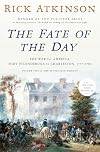
The Fate of the Day is the second book in Rick Atkinson's Revolution Trilogy. It covers the years 1777-1780, including the major and minor battles and what life was like in the colonies (and elsewhere) during the American War for Independence. During these years, George Washington's Continental Army faced exhausting conditions and many challenges. They struggled to obtain and keep funding, troops, and supplies. It opens in France, with Benjamin Franklin trying to convince Marie Antoinette show more and Louis XVI to support the colonists.
Rick Atkinson is a top rate storyteller, and he provides the context, strategy, and actions for each event, filling in the gaps with analysis of the people involved, motivations, anecdotes, and well-selected quotes. It is well researched, organized, and brilliantly written. Atkinson excels at providing the perspectives of all participants, including the Rebels, Loyalists, Slaves, British, French, Indian tribes, and Hessians.
The narrative contains an extremely detailed description of the era. It covers so many topics it would hardly be possible to list them all. For example, I enjoyed learning the specifics of the many currencies and the impact of both devaluation and inflation. It covers aspects I have not often considered, such as how many candles would be needed or the many requirements to take care of the horses.
This book clearly paints the horrors of war, with vivid descriptions of battle scenes and gruesome wounds. It also focuses on the wide-ranging logistics and covers skirmishes that took place on the seas. I particularly enjoyed the segments that took place in the Caribbean, and the account of John Paul Jones fighting off the coast of Scotland.
I always enjoy Rick Atkinson’s approach to history. It is compelling, flows well, and is a welcome addition to the compendium of historical literature about this period. If you are looking for history that is informative, educational, and entertaining, you can’t go wrong here. I recommend starting with the first book, The British are Coming. Both books are exceptional. show less
Rick Atkinson is a top rate storyteller, and he provides the context, strategy, and actions for each event, filling in the gaps with analysis of the people involved, motivations, anecdotes, and well-selected quotes. It is well researched, organized, and brilliantly written. Atkinson excels at providing the perspectives of all participants, including the Rebels, Loyalists, Slaves, British, French, Indian tribes, and Hessians.
The narrative contains an extremely detailed description of the era. It covers so many topics it would hardly be possible to list them all. For example, I enjoyed learning the specifics of the many currencies and the impact of both devaluation and inflation. It covers aspects I have not often considered, such as how many candles would be needed or the many requirements to take care of the horses.
This book clearly paints the horrors of war, with vivid descriptions of battle scenes and gruesome wounds. It also focuses on the wide-ranging logistics and covers skirmishes that took place on the seas. I particularly enjoyed the segments that took place in the Caribbean, and the account of John Paul Jones fighting off the coast of Scotland.
I always enjoy Rick Atkinson’s approach to history. It is compelling, flows well, and is a welcome addition to the compendium of historical literature about this period. If you are looking for history that is informative, educational, and entertaining, you can’t go wrong here. I recommend starting with the first book, The British are Coming. Both books are exceptional. show less
The British Are Coming: The War for America, Lexington to Princeton, 1775-1777 (The Revolution Trilogy) by Rick Atkinson
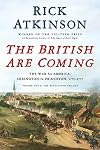
If you're going to insist on laser focus, it really helps to focus on the right thing.
Rick Atkinson has clearly set out to supply one of the most detailed overviews of the American Revolution yet available; this book is more than 550 pages long, not counting notes and index (not supplied in my advance reader's edition), yet it covers less than the first two years of the war. Presumably the goal is to write a three volume set covering the entire war.
Or rather, all the battles of the war. Want show more to understand the war? I'm not sure you will learn much here. That's because there is absolutely no discussion of politics. For practical purposes, the only mention of the Continental Congress is when they flee from Philadelphia. We have no insight into their deliberations; we don't know how many representatives were there; we don't know what laws they passed. We hear a little about British politics, mostly focused on George III himself, but not enough to realize that there was a major faction in parliament which didn't like what was going on. You can't tell the history of a war without telling the background!
Also, you never really feel that, in this vast, sprawling war, which involved areas from Florida to Quebec plus the British Isles themselves, more than one thing could happen at one time. The war opens in Boston. There is a brief side excursion toward Canada in upstate New York (with a short side look at Maine and another at the southern states). The fight shifts to New York, then New Jersey. And that's it. It's like someone took a chronology in multiple columns and cut up the columns and pasted them in another book one column after another.
And why waste all the time talking about Benjamin Franklin when he never actually does anything in this period? We don't need to know how he got to Paris; his real activity came later, and could be covered when it mattered. In this book, it's a pure dead end.
Also, although this book is clearly intended for the American market rather than the British, I think it a little too pro-American. It talks a lot about how ill-kept the American troops were, but doesn't really bring home the depth of this preventable disaster. It once calls General Howe "able," even though it makes it clear that, had Howe had any initiative at all, he would have stamped out Washington's army in 1776 and won the war. And it gives a clear impression that Trenton and Princeton were war-turning events. They really weren't; they just burned British fingers a little, encouraging General Howe to maintain the inertia he surely would have maintained anyway. The turning point came the following year, at Saratoga (which finally gave Franklin something to talk about in Paris).
That said, the result is readable, and mostly accurate except for some slips that I would hope will be corrected by a copy editor, plus some mistakes about disease (smallpox variolation is not immunization, and malaria is not a "winter malady" in areas where there is frost to kill off mosquitoes!). This truly feels like part of a really good book -- the other part being, of course, the politics. But, without its other half, you really can't understand the Revolution. I know everyone hates politics right now; I know I'm disgusted by all the people in the Federal Government who put political party ahead of nation! But one of the big purposes of politics is to prevent war. Leave it out, and... this is what is left. show less
Rick Atkinson has clearly set out to supply one of the most detailed overviews of the American Revolution yet available; this book is more than 550 pages long, not counting notes and index (not supplied in my advance reader's edition), yet it covers less than the first two years of the war. Presumably the goal is to write a three volume set covering the entire war.
Or rather, all the battles of the war. Want show more to understand the war? I'm not sure you will learn much here. That's because there is absolutely no discussion of politics. For practical purposes, the only mention of the Continental Congress is when they flee from Philadelphia. We have no insight into their deliberations; we don't know how many representatives were there; we don't know what laws they passed. We hear a little about British politics, mostly focused on George III himself, but not enough to realize that there was a major faction in parliament which didn't like what was going on. You can't tell the history of a war without telling the background!
Also, you never really feel that, in this vast, sprawling war, which involved areas from Florida to Quebec plus the British Isles themselves, more than one thing could happen at one time. The war opens in Boston. There is a brief side excursion toward Canada in upstate New York (with a short side look at Maine and another at the southern states). The fight shifts to New York, then New Jersey. And that's it. It's like someone took a chronology in multiple columns and cut up the columns and pasted them in another book one column after another.
And why waste all the time talking about Benjamin Franklin when he never actually does anything in this period? We don't need to know how he got to Paris; his real activity came later, and could be covered when it mattered. In this book, it's a pure dead end.
Also, although this book is clearly intended for the American market rather than the British, I think it a little too pro-American. It talks a lot about how ill-kept the American troops were, but doesn't really bring home the depth of this preventable disaster. It once calls General Howe "able," even though it makes it clear that, had Howe had any initiative at all, he would have stamped out Washington's army in 1776 and won the war. And it gives a clear impression that Trenton and Princeton were war-turning events. They really weren't; they just burned British fingers a little, encouraging General Howe to maintain the inertia he surely would have maintained anyway. The turning point came the following year, at Saratoga (which finally gave Franklin something to talk about in Paris).
That said, the result is readable, and mostly accurate except for some slips that I would hope will be corrected by a copy editor, plus some mistakes about disease (smallpox variolation is not immunization, and malaria is not a "winter malady" in areas where there is frost to kill off mosquitoes!). This truly feels like part of a really good book -- the other part being, of course, the politics. But, without its other half, you really can't understand the Revolution. I know everyone hates politics right now; I know I'm disgusted by all the people in the Federal Government who put political party ahead of nation! But one of the big purposes of politics is to prevent war. Leave it out, and... this is what is left. show less
 This review was written for LibraryThing Early Reviewers.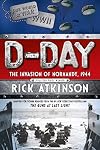
I feel that any words I might use to describe how magnificently well Rick Atkinson writes will be inadequate and pale in comparison to his command of language. Some of his ability to make history so accessible probably comes from his background as a journalist, as opposed to say, a Ph.D.-holder or professor who is writing to scholarly peers. I have read other books by Mr. Atkinson, including his Pulitzer Prize-winning “An Army at Dawn.” With this read, I am even more impressed with the show more author for his ability to write vivid and scholarly books for adults and also a book that is accessible to someone as young as 10 years old, if intellectually advanced, without any hint of condescension. I am curious about the role of Kate Waters, who is credited only once on the title page and whom the internet reveals to be a non-fiction editor and children’s book author.
At just over 200 pages, this is adapted from “The Guns at Last Light,” a nearly 900-page tome. Though aimed at youth, I took great delight in reading this and would recommend it to any adult whose reading time is limited or whose interest in WWII is present but mild. I even learned many things from the “extras” about which I was previously ignorant, such as the symbolism of the SHAEF patch, which I have seen countless times and sell in my current place of employment.
I will reluctantly begin with my only significant disappointment in this book. On page 162, the reader finds an image ubiquitous in our world: a sailor kissing a nurse in Times Square in 1945. However, here it is mislabeled as having occurred on Victory in Europe Day in May, when it actually took place on Victory in Japan day a few months later, in August.
With the bad news out of the way, I will attempt to show restraint in my laudatory review of “D-Day.” An early hint about the audience to which the book is geared is found in the author’s note to readers, which provides brief biographical information on Atkinson and states, “Whether or not your great-grandfather or great-grandmother served in the military…” (page XIX) I am in my mid-30’s and both of my grandfathers served in WWII. The “great-s” are the appropriate generation for adolescents. On page 11, he writes that General Montgomery’s notes were “written in his tidy cursive.” I know that generation wrote in cursive, but this is something that should be pointed out to an audience that overwhelmingly types or chooses print on the rare occasion of writing by hand. A subtle way that Atkinson modifies his writing style for the younger audience lies in his use of languages other than English. Because of the global stage of his books, the author frequently uses languages such as French. In his adult books, he offers no translation of the phrases, but has lofty expectations of a multi-lingual audience, or at least one with an initiative for research. He offers English translations immediately following the foreign phrases in this book, such as on page 138, even though the phrases are simple and contain cognates (e.g. “gloire est arrive).
There exists a splendid dance of images throughout the pages. The cover is riveted, has illustrations of dog tags and paratroopers, and boasts a photograph of the beaches at Normandy from the viewpoint of the landing craft on D-Day. Popular propaganda posters fill the interior covers and punctuate the main text. (I was a tad miffed that these are included here but not the adult version. Does this imply that art is “childish” or “unscholarly?”) Illustrated silhouettes of things like soldiers, battleships, tanks, and bombs appear throughout the book, especially at section transitions. Dozens of photographs bring the book to life, enhanced by riveted captions. War is not sugar-coated for youth; photographs of the dead are included.
I particularly enjoyed the anomaly of the section “On the Other Side of the Line: Field Marshal Erwin Rommel.” While the book is written from the American perspective, even glossing over the perspective of our British allies, it is important to include diverse perspectives. This section on the enemy includes invaluable photographs. In addition to this “extra,” the supporting sections, lists, appendices, and illustrations of the main text are simply the best I have ever seen. Following is the laundry list of such, from the Contents page: List of Maps; Map Legend; Allied Countries and Chain of Command; Axis Countries and Chain of Command; World War II Timeline; Key Players; A Note to Readers; Epilogue: The Days that Followed; The U.S. Declaration of War on Germany; The Five Greatest Tanks of the War; The Largest Battleships of the War; The Most Effective Bombers of the War; Weapons Carried by U.S., U.K., Canadian, and German Ground Troops; Carrier Pigeons; Operation Fortitude: The Inflatable Army; Caring for the Wounded; Clothing and Equipment Issued to a New GI in 1943; Monthly Pay for an American GI in 1940; What They Carried – U.S. Airborne Divisions; What They Carried – U.S. Ground Assault Troops; K Rations: Food on the Go for American Troops; Numbers Tell Part of the Story; Operation Overlord Timeline; Glossary; Places to Visit; For More Information; Bibliography; Image Credits; Index. This book is amazing and I emphatically endorse it for nearly any human to read. show less
At just over 200 pages, this is adapted from “The Guns at Last Light,” a nearly 900-page tome. Though aimed at youth, I took great delight in reading this and would recommend it to any adult whose reading time is limited or whose interest in WWII is present but mild. I even learned many things from the “extras” about which I was previously ignorant, such as the symbolism of the SHAEF patch, which I have seen countless times and sell in my current place of employment.
I will reluctantly begin with my only significant disappointment in this book. On page 162, the reader finds an image ubiquitous in our world: a sailor kissing a nurse in Times Square in 1945. However, here it is mislabeled as having occurred on Victory in Europe Day in May, when it actually took place on Victory in Japan day a few months later, in August.
With the bad news out of the way, I will attempt to show restraint in my laudatory review of “D-Day.” An early hint about the audience to which the book is geared is found in the author’s note to readers, which provides brief biographical information on Atkinson and states, “Whether or not your great-grandfather or great-grandmother served in the military…” (page XIX) I am in my mid-30’s and both of my grandfathers served in WWII. The “great-s” are the appropriate generation for adolescents. On page 11, he writes that General Montgomery’s notes were “written in his tidy cursive.” I know that generation wrote in cursive, but this is something that should be pointed out to an audience that overwhelmingly types or chooses print on the rare occasion of writing by hand. A subtle way that Atkinson modifies his writing style for the younger audience lies in his use of languages other than English. Because of the global stage of his books, the author frequently uses languages such as French. In his adult books, he offers no translation of the phrases, but has lofty expectations of a multi-lingual audience, or at least one with an initiative for research. He offers English translations immediately following the foreign phrases in this book, such as on page 138, even though the phrases are simple and contain cognates (e.g. “gloire est arrive).
There exists a splendid dance of images throughout the pages. The cover is riveted, has illustrations of dog tags and paratroopers, and boasts a photograph of the beaches at Normandy from the viewpoint of the landing craft on D-Day. Popular propaganda posters fill the interior covers and punctuate the main text. (I was a tad miffed that these are included here but not the adult version. Does this imply that art is “childish” or “unscholarly?”) Illustrated silhouettes of things like soldiers, battleships, tanks, and bombs appear throughout the book, especially at section transitions. Dozens of photographs bring the book to life, enhanced by riveted captions. War is not sugar-coated for youth; photographs of the dead are included.
I particularly enjoyed the anomaly of the section “On the Other Side of the Line: Field Marshal Erwin Rommel.” While the book is written from the American perspective, even glossing over the perspective of our British allies, it is important to include diverse perspectives. This section on the enemy includes invaluable photographs. In addition to this “extra,” the supporting sections, lists, appendices, and illustrations of the main text are simply the best I have ever seen. Following is the laundry list of such, from the Contents page: List of Maps; Map Legend; Allied Countries and Chain of Command; Axis Countries and Chain of Command; World War II Timeline; Key Players; A Note to Readers; Epilogue: The Days that Followed; The U.S. Declaration of War on Germany; The Five Greatest Tanks of the War; The Largest Battleships of the War; The Most Effective Bombers of the War; Weapons Carried by U.S., U.K., Canadian, and German Ground Troops; Carrier Pigeons; Operation Fortitude: The Inflatable Army; Caring for the Wounded; Clothing and Equipment Issued to a New GI in 1943; Monthly Pay for an American GI in 1940; What They Carried – U.S. Airborne Divisions; What They Carried – U.S. Ground Assault Troops; K Rations: Food on the Go for American Troops; Numbers Tell Part of the Story; Operation Overlord Timeline; Glossary; Places to Visit; For More Information; Bibliography; Image Credits; Index. This book is amazing and I emphatically endorse it for nearly any human to read. show less
The Guns at Last Light: The War in Western Europe 1944-1945 (The Liberation Trilogy) by Rick Atkinson
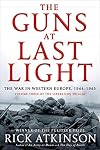
“Twelve years and four months after it began, the Thousand-Year Reich had ended. Humanity would require decades, perhaps centuries, to parse the regime’s inhumanity, and to comprehend how a narcissistic beerhall demagogue had wrecked a nation, a continent, and nearly a world.”
The third book in the Liberation Trilogy, Rick Atkinson covers the last year of World War II in France, Luxembourg, Belgium, parts of the Netherlands, and Germany. It covers the Allied invasion at Normany, show more liberation of Paris, Operation Market Garden, Battle of the Bulge, Yalta Conference, liberation of the death camps, and the final signing of the surrender document. It covers everything from the leaders’ strategic decisions (and disagreements) to the personal thoughts of the soldier on the battlefield, as written in letters to loved ones at home. Hitler’s decisions and those of his field marshals are not neglected, though not covered in as much detail.
Rick Atkinson is a gifted writer who knows how to turn a phrase:
This book is non-fiction at its best. Atkinson’s researched sources and notes cover 235 pages of content in the appendix. Numerous helpful maps are included. It will appeal to anyone seeking to fathom not only the sweeping advances of the Allied forces, but also the human components of war. The many factors are examined, such as psychological factors, decision-making with incomplete information, competing priorities, balancing the viewpoints of many countries’ leaders, and the immense physical and ethical damage to both soldiers and civilians. All these are conveyed in vivid detail. Anyone who wants to know what truly happened in WWII should read this trilogy. show less
The third book in the Liberation Trilogy, Rick Atkinson covers the last year of World War II in France, Luxembourg, Belgium, parts of the Netherlands, and Germany. It covers the Allied invasion at Normany, show more liberation of Paris, Operation Market Garden, Battle of the Bulge, Yalta Conference, liberation of the death camps, and the final signing of the surrender document. It covers everything from the leaders’ strategic decisions (and disagreements) to the personal thoughts of the soldier on the battlefield, as written in letters to loved ones at home. Hitler’s decisions and those of his field marshals are not neglected, though not covered in as much detail.
Rick Atkinson is a gifted writer who knows how to turn a phrase:
• On the Normandy Invasion – Omaha Beach:
“They remembered the shapeless dead, sprawled on the strand like smears of divine clay, or as flotsam on the making tide, weltering, with their life belts still cinched. All this they would remember, from the beaten zone called Omaha.”
• On the Battle of the Bulge:
“To be sure, there were clues, omens, auguries. Just as surely, they were missed, ignored, explained away. For decades after the death struggle called the Battle of the Bulge, generals, scholars, and foot soldiers alike would ponder the worst U.S. intelligence failure since Pearl Harbor and the deadliest of the war. Only from the high ground of history could perfect clarity obtain, and even then the simplest, truest answer remained the least satisfying: mistakes were made and many men died.”
• On Yalta and the damage to Russia:
“Soon a weaving convoy of sedans and buses followed the unpaved road to Yalta, eighty miles and five hours away. No photograph or Movietone footage could have more vividly conveyed to the Western Allies the intensity of the war being waged by their eastern comrades: mile upon mile of gutted buildings, barns, crofts, trains, tanks, trucks. Peasant women in shawls and knee boots waved from barren fields and from orchards reduced to flinders. Except for a few sheep, no livestock could be seen, or farm machinery, or men for that matter.”
This book is non-fiction at its best. Atkinson’s researched sources and notes cover 235 pages of content in the appendix. Numerous helpful maps are included. It will appeal to anyone seeking to fathom not only the sweeping advances of the Allied forces, but also the human components of war. The many factors are examined, such as psychological factors, decision-making with incomplete information, competing priorities, balancing the viewpoints of many countries’ leaders, and the immense physical and ethical damage to both soldiers and civilians. All these are conveyed in vivid detail. Anyone who wants to know what truly happened in WWII should read this trilogy. show less
Lists
THE WAR ROOM (4)
Wishlist (1)
Awards


You May Also Like


Associated Authors
Statistics
- Works
- 23
- Also by
- 6
- Members
- 11,452
- Popularity
- #2,051
- Rating
- 4.3
- Reviews
- 264
- ISBNs
- 178
- Languages
- 6
- Favorited
- 23


