
Wesley McNair
Author of The Maine Poets: A Verse Anthology
About the Author
Image credit: Wesley McNair
Works by Wesley McNair
Mapping the Heart: Reflections on Place and Poetry (Carnegie Mellon Poets in Prose Series) (2003) 2 copies
The dissonant heart 2 copies
My Life In Cars. 1 copy
Associated Works
A Healing Touch: True Stories of Life, Death, and Hospice (2008) — Contributor — 50 copies, 3 reviews
Tagged
Common Knowledge
- Gender
- male
- Education
- Keene State College
Middlebury College - Occupations
- poet
writer
editor - Organizations
- University of Maine at Farmington
- Nationality
- USA
- Birthplace
- New Hampshire, USA
- Places of residence
- New Hampshire, USA
Mercer, Maine, USA - Associated Place (for map)
- USA
Members
Reviews
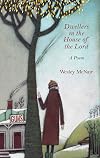
In McNair’s latest, he offers us a narrative poem that tells the intimate story of his often troubled and struggling sister Aimee, living in Virginia with a difficult husband; but also reaches further into his family in New England, the inner dynamics and history, before bringing us into the present. I wasn’t sure I’d like this long, narrative poem; a poem that seems to inhabit some nuanced interstitial space between what we commonly think of as poetry and a longer prose piece of show more personal content. Not my usual thing, but I like McNair’s other stuff, and once I stepped into it and let it’s current move me forward, I was hooked.
This is McNair’s attempt to understand his clearly much-loved but troubled sister and her Trump-loving husband. The sister seems lost much of the time, searching for something she lost or never had, and we see the roots of her need in early family dynamics and history. We learn about her husband, a Polish immigrant as a child (or perhaps born here; it’s not entirely clear) and Navy veteran. McNair moves back and forth in time effortlessly and the loose rhythm draws us along. For me, I found the intimacy of his search for understanding and the pervading compassion in it, well, both moving and addictive. In the end the poet and the poem offers us hope; hope which we badly need in these trying times. show less
This is McNair’s attempt to understand his clearly much-loved but troubled sister and her Trump-loving husband. The sister seems lost much of the time, searching for something she lost or never had, and we see the roots of her need in early family dynamics and history. We learn about her husband, a Polish immigrant as a child (or perhaps born here; it’s not entirely clear) and Navy veteran. McNair moves back and forth in time effortlessly and the loose rhythm draws us along. For me, I found the intimacy of his search for understanding and the pervading compassion in it, well, both moving and addictive. In the end the poet and the poem offers us hope; hope which we badly need in these trying times. show less
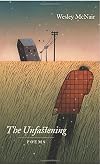
I’ve had a harder time settling into books since the pandemic. I’ve abandoned as many books as I’ve read. I’m not sure if there is specific kind of book I need these days or what, but this volume of poetry was with several others and a fair number of novels, crammed spine up in an old wooden doll’s cradle my great grandfather made for my Nana around 1893 or so—which looking back somehow seems appropriate—and the volume was just what I needed.
These poems are mostly about grief show more and loss, some personal, some not, but also their is alook back with the perspective that comes of age. McNair is considered a “poet of place,” in this case, Northern New England, so he often writes about things and uses motifs, I’m familiar with, although his poetry speaks beyond territorial boundaries. The poetry I found most appealing in this volume (this go around; is a volume of poetry ever “finished”?) were those that moved away from grief and offers insights and affirmation. Here, I offer two favorites….
Praise Song
There was no stopping the old pear tree
in our back yard. After we released it
from a staked cord, it stood on the lawn
for a month as if coming to its decision
to lie back down on the ground again.
All winter we left it for dead, but in the spring
it law in an island of unmowed grass
blooming beside its mate, and this May,
when I separate their branches
and look in, I find new shoots and flowers.
At the end of my life I want to lie down
in the long grass with one arm by my side
lifting me up as I read out to her with all the others
and she reaches back. I want to know nothing
but the humming and fumbling of bees
carrying seed dust on their bellies from my blossoms
to hier blossoms in the dome of green shade.
Telephone Poles
Like our cars, which have our faces,
and our houses, which look down
on us under their folded hats,
these resemble us, though nothing
we have made seems so steadfast.
Exiled to the roadside,
they stand in all weather, ignored
except for the rows of swallows
that remember them in springtime,
and the occasional tree holding up
a hole workmen have cut
to let the lines through. Yet they go on
balancing cables on their shoulders
and passing them to the next
and the next, this one extending
a wire to a farmhouse, that one
at the corner sending lines
four ways at once, until miles
away where the road widens,
and the tallest poles rise,
bearing streetlamp high above
the doors of the town, arriving
by going nowhere at all, each
like the others that brought them here,
making its way by accepting
what’s given, and holding on,
and standing still. show less
These poems are mostly about grief show more and loss, some personal, some not, but also their is alook back with the perspective that comes of age. McNair is considered a “poet of place,” in this case, Northern New England, so he often writes about things and uses motifs, I’m familiar with, although his poetry speaks beyond territorial boundaries. The poetry I found most appealing in this volume (this go around; is a volume of poetry ever “finished”?) were those that moved away from grief and offers insights and affirmation. Here, I offer two favorites….
Praise Song
There was no stopping the old pear tree
in our back yard. After we released it
from a staked cord, it stood on the lawn
for a month as if coming to its decision
to lie back down on the ground again.
All winter we left it for dead, but in the spring
it law in an island of unmowed grass
blooming beside its mate, and this May,
when I separate their branches
and look in, I find new shoots and flowers.
At the end of my life I want to lie down
in the long grass with one arm by my side
lifting me up as I read out to her with all the others
and she reaches back. I want to know nothing
but the humming and fumbling of bees
carrying seed dust on their bellies from my blossoms
to hier blossoms in the dome of green shade.
Telephone Poles
Like our cars, which have our faces,
and our houses, which look down
on us under their folded hats,
these resemble us, though nothing
we have made seems so steadfast.
Exiled to the roadside,
they stand in all weather, ignored
except for the rows of swallows
that remember them in springtime,
and the occasional tree holding up
a hole workmen have cut
to let the lines through. Yet they go on
balancing cables on their shoulders
and passing them to the next
and the next, this one extending
a wire to a farmhouse, that one
at the corner sending lines
four ways at once, until miles
away where the road widens,
and the tallest poles rise,
bearing streetlamp high above
the doors of the town, arriving
by going nowhere at all, each
like the others that brought them here,
making its way by accepting
what’s given, and holding on,
and standing still. show less

A very expensive book to read. Not an expensive book to buy, mind you, but expensive to read, because you're going to wind up on Amazon or Abe looking to buy a lot of the poets whose works are anthologized herein – especially once you get beyond the basics like Longfellow, Millay, Sarton, and E.A. Robinson.
4½**** rather than 5*****, though, because there are always going to be a few entries in any anthology of this sort that won't catch your fancy. I particularly liked being introduced to show more Elizabeth Coatsworth and Betsy Sholl. show less
4½**** rather than 5*****, though, because there are always going to be a few entries in any anthology of this sort that won't catch your fancy. I particularly liked being introduced to show more Elizabeth Coatsworth and Betsy Sholl. show less
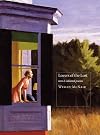
I've been following Wesley McNair since the early 90s. He from my home state, but nationally known, albeit under-recognized by the general reading public. His poetry is clear, straightforward, thoughtful, and wonderfully-wrought. He writes about the extraordinary in the every day; beauty in a common moment, if you will. His poetry is reminiscent of that by Billy Collins, particularly in its accessibility. They are very much contemporaries, both born in 1941, and both writing about some of show more the same subjects around getting older.
I'd love to share a very funny poem that both my husband and I thought very clever and funny, titled "The Characters of Dirty Jokes," but I thought some might be offended (so, you'll have to buy the book! ha ha!). There is another one titled "Smoking", about Bogart & Bacall smoking on screen, that reminded me just a little of Billy Collins's "The Last Cigarette" - same wistfulness (it's too long to transcribe here). McNair has several poems in this collection related to hair, and the losing of it. "The Bald Spot," "On Losing My Hair," and this one:
Hymn to the Comb-Over
How the thickest of them erupt just
above the ear, cresting in waves so stiff
no wind can move them. Let us praise them
in all of their varieties, some skinny
as the bands of headphones, some rising
from a part that extnds halfway around
the head, others four or five strings
stretched so taut the scalp resembles
a musical instrument. Let us praise the sprays
that hold them, and the combs that coax
such abundance to the front of the head
in the mirror, the combers entirely forget
the back. And let us celebrate the combers,
who address the old sorrow of time's passing
day after day, bringing out of the barrenness
of mid-life this ridiculous and wonderful
harvest, no wishful flag of hope but, thick
or thin, the flag itself, unfurled for us all
in subways, office and mall across America.
Not only do I love the humor in this, but also the wistfulness and the sounds—the music of it is just wonderful. These are not his only subjects, of course. show less
I'd love to share a very funny poem that both my husband and I thought very clever and funny, titled "The Characters of Dirty Jokes," but I thought some might be offended (so, you'll have to buy the book! ha ha!). There is another one titled "Smoking", about Bogart & Bacall smoking on screen, that reminded me just a little of Billy Collins's "The Last Cigarette" - same wistfulness (it's too long to transcribe here). McNair has several poems in this collection related to hair, and the losing of it. "The Bald Spot," "On Losing My Hair," and this one:
Hymn to the Comb-Over
How the thickest of them erupt just
above the ear, cresting in waves so stiff
no wind can move them. Let us praise them
in all of their varieties, some skinny
as the bands of headphones, some rising
from a part that extnds halfway around
the head, others four or five strings
stretched so taut the scalp resembles
a musical instrument. Let us praise the sprays
that hold them, and the combs that coax
such abundance to the front of the head
in the mirror, the combers entirely forget
the back. And let us celebrate the combers,
who address the old sorrow of time's passing
day after day, bringing out of the barrenness
of mid-life this ridiculous and wonderful
harvest, no wishful flag of hope but, thick
or thin, the flag itself, unfurled for us all
in subways, office and mall across America.
Not only do I love the humor in this, but also the wistfulness and the sounds—the music of it is just wonderful. These are not his only subjects, of course. show less
Lists
Awards


You May Also Like


Associated Authors
Statistics
- Works
- 26
- Also by
- 5
- Members
- 243
- Popularity
- #93,556
- Rating
- 3.9
- Reviews
- 9
- ISBNs
- 35