
Edward Marston
Author of The Railway Detective
About the Author
Marston also wrote under the pseudonym The Amateur Angler.
Disambiguation Notice:
aka Conrad Allen, Martin Inigo, Keith Miles, A.E. Marston
Series
Works by Edward Marston
Wraak! 3 copies
Old Bag Dad 2 copies
Virus 2 copies
The St. Valentine's Day Massacre 2 copies
Overdose 2 copies
Suzie hat's gesehen 1 copy
Skip 1 copy
Blind Eyes 1 copy
Safe & Sound [Short Story] 1 copy
War Hath Made All Friends 1 copy
Bon Voyage 1 copy
Asesinato a medida 1 copy
A Gift From God 1 copy
The Madwoman of Usk 1 copy
The End of an Era 1 copy
The End of the Line 1 copy
Associated Works
Crime Through Time: Original Tales of Historical Mystery (1997) — Contributor — 137 copies, 2 reviews
The Mammoth Book of Locked-Room Mysteries and Impossible Crimes (2000) — Contributor — 135 copies, 1 review
Malice Domestic 06: An Anthology of Original Mystery Stories (1997) — Contributor — 99 copies, 3 reviews
Tagged
Common Knowledge
- Legal name
- Miles, Keith
- Other names
- Inigo, Martin
Allen, Conrad
Marston, A. E.
Garland, David
Mountjoy, Christopher
Marston, Edward - Birthdate
- 1940
- Gender
- male
- Education
- University of Oxford (Modern History)
- Occupations
- novelist
- Organizations
- Crime Writers Association
- Relationships
- Cutler, Judith (wife)
- Short biography
- Keith Miles, aka Edward Marston and Martin Inigo, came from Wales to read Modern History at Oxford. He has been a university lecturer, radio, television, and theatre dramatist, and in addition to writing has worked as an actor, director, and dramatist. He is the author of two mystery series, one Elizabethan in background, the other revolving around the Domesday census of 1086 A.D., and has written mysteries with golf and sports backgrounds under his real name as well as Murder in Prespective, 1997. His Elizabethan novel, The Roaring Boy, was a 1996 Edgar Allan Poe Award nominee for Best Novel. The author is a well known host and raconteur at mystery events and is the 1997 Chairman of the Crime Writers Association. When not travelling or fulfilling speaking engagements, he lives in rural isolation in Kent.
- Nationality
- UK
- Birthplace
- Wales, UK
- Places of residence
- Wales, UK
Kent, England, UK - Disambiguation notice
- aka Conrad Allen, Martin Inigo, Keith Miles, A.E. Marston
- Associated Place (for map)
- UK
Members
Reviews
Blood on the Line: The bestselling Victorian mystery series (Railway Detective Book 8) by Edward Marston
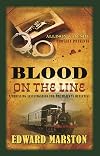
This is the eighth novel in the Railway Detective series set in the mid 19th century. Somewhat to my surprise, this has actually been my favourite of the series so far. This one concerned a Bonny and Clyde type couple on the run after they brutally kill two policemen so that the man, Jeremy Oxley, can escape custody. They are clever and cunning and elude their pursuers for a long time, but our heroes Inspector Colbeck and Sergeant Leeming of course close in on them eventually after a show more dramatic chase across the Atlantic and a stand off in New York. Colbeck's superior Inspector Tallis comes across as more human and rounded here too, as a mistake he makes costs the life of one of his men at the hands of the killers, and causes him to question, at least temporarily, his role and approach. I really enjoyed this story and the recurring characters' ongoing traits that I initially found annoying I now find rather endearing. At the end it also looks like Colbeck may at last marry his sweetheart Madeleine Andrews. There will be a shorter gap before I read book 9. show less
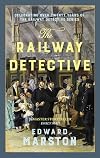
In 1850′s England railways were expanding all over the countryside and were being lauded by authorities as a safe, fast form of transport. So when the London to Birmingham mail train is robbed and its driver badly bashed and left to die Detective Inspector Robert Colbeck is immediately dispatched to uncover the culprits and return Britain’s faith in its rail system.
The first thing I always look for in historical fiction is interesting period details and this book is brimming with them. show more Clever use has been made of real events from the time, such as London’s Great Exhibition of 1851, and there are loads more tidbits as well. I was particularly struck by the realism of such things as the fact that the train driver was never consigned to a hospital despite his severe injuries and the descriptions of Devil’s Acre, London’s darkest and seediest corner at the time. For steam train enthusiasts there are plenty of wonderful details of locomotives and the various companies that were in operation during this era and overall it’s a jolly good depiction of the era.
Robert Colbeck is a fairly stereotypical super-sleuth: well-educated, more intelligent than everyone around him and impossibly knowledgeable about a wide variety of subjects. But he’s not arrogant about it and he does have some foibles to make him more human and I thoroughly enjoyed meeting him. He is ably assisted by Sergeant Leeming who unquestioningly does whatever is asked of him, including riding on the railways he doesn’t much care for. There is, of course, the somewhat bumbling senior officer for Colbeck to contend with but on the bright side there’s a hint of romance for him too so life is not all bad for him. The villain of the story is also quite thoughtfully depicted and lent a bit of gravity to the light tale.
The story rips along at a cracking pace and while the resolution to the mystery is not particularly complicated it all hangs together properly and there are a few unexpected twists. I enjoyed both the way the book depicted a general opposition to technological change which seems to happen repeatedly in human history and the wealth of historical detail to become lost in. Highly recommended as a ‘summer read’ for the historically inclined. show less
The first thing I always look for in historical fiction is interesting period details and this book is brimming with them. show more Clever use has been made of real events from the time, such as London’s Great Exhibition of 1851, and there are loads more tidbits as well. I was particularly struck by the realism of such things as the fact that the train driver was never consigned to a hospital despite his severe injuries and the descriptions of Devil’s Acre, London’s darkest and seediest corner at the time. For steam train enthusiasts there are plenty of wonderful details of locomotives and the various companies that were in operation during this era and overall it’s a jolly good depiction of the era.
Robert Colbeck is a fairly stereotypical super-sleuth: well-educated, more intelligent than everyone around him and impossibly knowledgeable about a wide variety of subjects. But he’s not arrogant about it and he does have some foibles to make him more human and I thoroughly enjoyed meeting him. He is ably assisted by Sergeant Leeming who unquestioningly does whatever is asked of him, including riding on the railways he doesn’t much care for. There is, of course, the somewhat bumbling senior officer for Colbeck to contend with but on the bright side there’s a hint of romance for him too so life is not all bad for him. The villain of the story is also quite thoughtfully depicted and lent a bit of gravity to the light tale.
The story rips along at a cracking pace and while the resolution to the mystery is not particularly complicated it all hangs together properly and there are a few unexpected twists. I enjoyed both the way the book depicted a general opposition to technological change which seems to happen repeatedly in human history and the wealth of historical detail to become lost in. Highly recommended as a ‘summer read’ for the historically inclined. show less
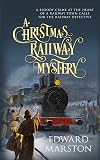
This is the fifteenth novel in the Railway Detective series set in the mid nineteenth century. I thought this was an improvement on its immediate predecessor The Circus Train Conspiracy. A naked and trussed up headless body is discovered in a railway engineering plant in Swindon. After he is identified as the pugnacious and sometimes drunken Frank Rodman, Colbeck and Leeming eventually focus on five suspects with a range of motives, though prominent among them is the earlier rivalry between show more several of them years before for the affections of Betty, the wife of the murdered man. Eventually, however, the killer is unmasked rather suddenly as someone else, with a new motive introduced, and an earlier one relating to life in Swindon which struck me as a very weak motive for murder.
This narrative was supplemented by a more unusual and intriguing sub-plot. Superintendent Tallis takes the weekend off to go to a regimental reunion, but is kidnapped and held prisoner. His temporary replacement is the incompetent and arrogant Inspector Grosvenor who, distracted from his wish to bully and distract Colbeck and Leeming, has to lead the manhunt for the kidnappers, which he fails to do. Our heroes solve the murder and then race back to rescue Tallis from the clutches of his captors. show less
This narrative was supplemented by a more unusual and intriguing sub-plot. Superintendent Tallis takes the weekend off to go to a regimental reunion, but is kidnapped and held prisoner. His temporary replacement is the incompetent and arrogant Inspector Grosvenor who, distracted from his wish to bully and distract Colbeck and Leeming, has to lead the manhunt for the kidnappers, which he fails to do. Our heroes solve the murder and then race back to rescue Tallis from the clutches of his captors. show less
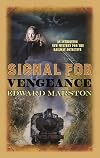
This is the thirteenth novel in the Railway Detective series set in the mid nineteenth century. The body of a railway policeman John Bedloe is discovered draped across the tracks in Dorset and, as usual Colbeck and Leeming are sent for, though Colbeck has conflicting loyalties as his wife Madeleine is about to give birth to their first child. As usual, the local police resent the intrusion of detectives from London, and a local bigwig is keen to solve the murder mostly so he can make show more political capital out of it. There are some colourful and plausible suspects and some interestingly sinister and sympathetic characters in this one, and I enjoyed it a lot. Despite the as ever slightly grating constant repetition of the main characters' idiosyncrasies, I like them and Superintendent Tallis was given a bit more of a human side here in terms of his feeling for Colbeck's need to be with his wife at this time. There were two substantial, and two or three lesser, red herrings for the murder with a range of motives, all of whom turned out to be innocent of the murder, albeit in most cases guilty of other things, and the final culprit only exposed in the last few pages and I'm not surely it felt entirely credible. I am increasingly enjoying this series. show less
Lists
Awards


You May Also Like


Associated Authors
Statistics
- Works
- 161
- Also by
- 35
- Members
- 10,217
- Popularity
- #2,324
- Rating
- 3.5
- Reviews
- 248
- ISBNs
- 880
- Languages
- 6
- Favorited
- 16
