
Søren Kierkegaard (1813–1855)
Author of Fear and Trembling
About the Author
Born in Copenhagen, Denmark, Søren Kierkegaard was the son of a wealthy middle-class merchant. He lived all his life on his inheritance, using it to finance his literary career. He studied theology at the University of Copenhagen, completing a master's thesis in 1841 on the topic of irony in show more Socrates. At about this time, he became engaged to a woman he loved, but he broke the engagement when he decided that God had destined him not to marry. The years 1841 to 1846 were a period of intense literary activity for Kierkegaard, in which he produced his "authorship," a series of writings of varying forms published under a series of fantastic pseudonyms. Parallel to these, he wrote a series of shorter Edifying Discourses, quasi-sermons published under his own name. As he later interpreted it in the posthumously published Point of View for My Work as an Author, the authorship was a systematic attempt to raise the question of what it means to be a Christian. Kierkegaard was persuaded that in his time people took the meaning of the Christian life for granted, allowing all kinds of worldly and pagan ways of thinking and living to pass for Christian. He applied this analysis especially to the speculative philosophy of German idealism. After 1846, Kierkegaard continued to write, publishing most works under his own name. Within Denmark he was isolated and often despised, a man whose writings had little impact in his own day or for a long time afterward. They were translated into German early in the twentieth century and have had an enormous influence since then, on both Christian theology and the existentialist tradition in philosophy. (Bowker Author Biography) show less
Series
Works by Søren Kierkegaard
Purity of Heart Is To Will One Thing : Spiritual Preparation for the Office of Confession (1847) 938 copies, 7 reviews
Philosophical Fragments, or, A Fragment of Philosophy ; Johannes Climacus, or, De omnibus dubitandum est. (1844) — Author — 755 copies, 5 reviews
For Self-Examination/Judge for Yourselves : Kierkegaard's Writings, Vol 21 (1968) 363 copies, 3 reviews
The Point of View for My Work as an Author: A Report to History, and Related Writings (Harper torchbooks. The Cloister library) (1977) 274 copies, 2 reviews
Spiritual Writings: A New Translation and Selection (Harperperennial Modern Thought) (2010) 133 copies, 2 reviews
On authority and revelation: The book on Adler, or A Cycle of ethico-religious essays (1965) — Author — 108 copies
The Witness of Kierkegaard: Selected Writings on How to Become a Christian (An Association Press Reflection Book) (1960) 26 copies
Meditations from Kierkegaard 20 copies
Armed Neutrality, and an Open Letter : with Relevant Selections from His Journals and Papers (1969) 19 copies
Stadia op de levensweg : studiën door verschillende personen, bijeengebracht, bezorgd en uitgegeven door Hilarius Boekbinder. 1 (1845) 17 copies
Diapsálmata ; Repercusión de la tragedia antigua en la moderna ; La validez estética del matrimonio ; Temor y temblor (2015) 17 copies, 1 review
Stadia op de levensweg : studiën door verschillende personen, bijeengebracht, bezorgd en uitgegeven door Hilarius Boekbinder. 2 (1845) 16 copies
Einübung im Christentum · Zwei kurze ethisch-religiöse Abhandlungen · Das Buch Adler oder Der Begriff des Auserwählten (1977) — Author — 14 copies
Thoughts on crucial situations in human life;: Three discourses on imagined occasions, (1941) 14 copies
Ou bien... ou bien : La reprise, Stades sur le chemin de la vie, La maladie à la mort (1993) 8 copies
Apuntes sobre la filosof{acute}ia de la revelaci{acute}on de F. W. J. Schelling (1841-1842) (2001) 8 copies
As Obras do Amor. Algumas Considerações Cristãs em Forma de Discurso (Em Portuguese do Brasil) (2013) 8 copies
Die Leidenschaft des Religiösen : eine Auswahl aus Schriften und Tagebüchern (1993) — Author — 7 copies
Samlede Værker Bind 5 & 6 4 copies
Samlede Værker Bind 4 4 copies
Søren Kierkegaard 4 copies
Die Wiederholung; Die Krise und eine Krise im Leben einer Schauspielerin, EVA-Taschenbuch, Bd. 22 (2005) 4 copies
Søren Kierkegaard een kennismaking door een keuze uit dagboekteksten, brieven en werken (1987) 4 copies
Soren Kierkegaard's Journals and Papers, vol. 5: Autobiographical, part 1: 1829-1848 (1978) 4 copies
Soren Kierkegaard's Journals and Papers, vol. 6: Autobiographical, part 2: 1848-1855 (1978) 4 copies
The Journals 4 copies
Die Wiederholung der Krise - Werke II - Mit Erinnerungern an Kierkegaard von Hans Bröchner, (1961) 4 copies
Œuvres (Tome 1) I. Ou bien... ou rien, incluant Le journal du séducteur ; La reprise ; Crainte et tremblement ; Miettes philosophiques (2018) 4 copies
L'inquietudine della fede 3 copies
The Concept of Irony, with Continual Reference to Socrates/Notes of Schelling's Berlin Lectures 3 copies
Stages on Life’s Way 3 copies
Søren Kierkegaards dagbøger 3 copies
The gospel of our sufferings;: Christian discourses, being the third part of Edifying discourses in a different vein, (1964) 3 copies
Samlede Værker Bind 18 & 19 3 copies
Samlede Værker Bind 16 & 17 3 copies
Samlede Værker Bind 13, 14 & 15 3 copies
Samlede Værker Bind 11 & 12 3 copies
Purity of Heart is to Will One Thing 3 copies
Samlede Værker Bind 2 & 3 3 copies
Frygt og bæven (Danish Edition) 2 copies
FRIKË DHE DRITHËRIMË / PËRSËRITJA 2 copies
Edifying Discourses: Volume IV 2 copies
Kartus ja vin ; Meeliendavad ked 2 copies
Korte Stykker af Søren Kierkegaard 2 copies
Kierkegaards udødelige Tanker 2 copies
Søren Kierkegaards Røst 2 copies
De leerschool van het lijden 2 copies
Oeuvres complètes, volume 2. Le concept d'ironie - Johannes Climacus ou de omnibus dubitandum est - Confession publique (1984) 2 copies
Der Pfahl im Fleisch 2 copies
Gesammelte Werke / Sören Kierkegaard 2 copies
Opbouwende toespraken 1843-1845 2 copies
Nieuwe keur uit de werken 2 copies
Over de naastenliefde 2 copies
The Classic Collection of Soren Kierkegaard: Fear and Trembling, Philosophical Fragments, Sickness Unto Death (2023) 2 copies
Discorsi cristiani 1 copy
Gift dig, gift dig ikke, du vil fortryde begge dele - og andre korte tankevækkende tekster (2012) 1 copy
Preghiere 1 copy
Meseller 1 copy
Over de naastenliefde 1 copy
Søren Kierkegaards dagbøger 1 copy
Samlede Værker 1 copy
Værker i Udvalg 1 copy
Tagebücher, Dritter Band 1 copy
Tagebücher, Zweiter Band 1 copy
Čovek i duh 1 copy
TRATADO DE LA DESESPERACIÓN 1 copy
8: 1850-1851 1 copy
Udvalgte Skrifter 1 copy
Skrifter i urval 1 copy
Soren Kierkegaard : una reflexión sobre la existencia humana / Luis Guerrero Martínez coordinador. (2009) 1 copy
2: 1834-1839 1 copy
Erstlingsschriften 1 copy
Either/Or:Vol 1 1 copy
Søren Kierkegaard i udvalg 1 copy
Gesammelte Werke. 6, Philosophische Brocken. Abschließende unwissenschaftliche Nachschrift : T. 1 1 copy
Leben und Walten der Liebe 1 copy
Soren Kierkegaard: A Selection of Writings from Fear and Trembling, Either Or, and The Present Moment (2018) 1 copy
3: 1840-1847 1 copy
Stages on Life 1 copy
Sermon: "On the Edification Implied in the Thought That Over Against God WE Are Always in the Wrong" 1 copy
OBRAS Y PAPELES DE SOREN KIERKEGAARD, VIII: Estudios estéticos I Diapsalmata y El erotismo musical 1 copy
DIE WIEDERHOLUNG DIE KRISE 1 copy
DER BEGRIFF ANGST 1 copy
Dnevnici i zapisi 1 copy
Critique of Practical Reason 1 copy
Šelingova pozna filozofija 1 copy
PARA UN EXAMEN DE CONCIENCIA 1 copy
Œuvres complètes, tome 2 1 copy
Osvrt na moje delo 1 copy
Entweder - Oder : 1. Teil 1 copy
Kritik der gegenwart 1 copy
Complete Works 1 copy
Traité du désespoir - Idées 1 copy
Christ 1 copy
Lặp lại 1 copy
4: 1847-1848 1 copy
Søren Kierkegaards dagbøger 1 copy
Kierkegaard [opere di] 1 copy
Een mogelijkheid 1 copy
Title Not Given 1 copy
Antologia kierkegaardiana 1 copy
12: 1854-1855, Indici 1 copy
11: 1854-1855 1 copy
10: 1853-1854 1 copy
9: 1851-1852 1 copy
5: 1848-1849 1 copy
Knight of Faith 1 copy
Samlede værker bind 1-19 1 copy
The Unchangeableness of God 1 copy
Two Edifying Discourses 1 copy
Strah i drhtanje 1 copy
kierkegaard - os pensadores 1 copy
Either/or 1 copy
La neutralità armata 1 copy
THE JOURNALS 1 copy
Die Tagebücher 1834 - 1855 1 copy
”Skyldig” – ”Ikke Skyldig” 1 copy
Journals 1 copy
Livsvisdom 1 copy
Die Dialektik der ethischen und der ethisch-religiösen Mitteilung. Ein Vorlesungsentwurf aus dem Jahr 1847 (1997) 1 copy
Freude in der Anfechtung 1 copy
Søren Kierkegaards værker 8 - En Literair Anmeldelse - Opbyggelige Taler i forskjellig Aand (2017) 1 copy
Oeuvres complètes, volume 11. Post-scriptum définitif et non scientifique aux miettes philosophiques (1979) 1 copy
Søren Kierkegaards værker 12 - Indøvelse i christendom - En opbyggelig tale - To taler ved altergangen om fredagen (2019) 1 copy
Essential Kierkegaard 1 copy
Diario: edizione ridotta 1 copy
Der Begriff des auserwählten 1 copy
Leben im Geist 1 copy
Enkeling en menigte 1 copy
Opere. 2, Briciole di filosofia. Postilla conclusiva non scientifica alle Briciole di filosofia (1995) 1 copy
Due discorsi edificanti del maggio 1843. I. L'attesa della fede. II. Ogni dono buono e perfetto viene dall'alto (2000) 1 copy
Journal 1 copy
Søren Kierkegaards værker 5 - Opbyggelige taler 1843 - Opbyggelige taler 1844 - Tre taler ved tænkte leiligheder (2015) 1 copy
Auswahl aus dem Gesamtwerk 1 copy
Søren Kierkegaards værker 14 - Bladartikler 1834-36 - Bladartikler 1842-51 - Bladartikler 1854-55 (2019) 1 copy
Kierkegaard I urval 1 copy
Samlede værker : bind 1-20 1 copy
Søren Kierkegaards værker 13 - Om min Forfatter-Virksomhed - Til Selvprøvelse Samtiden m.fl. (2019) 1 copy
Samlede Værker Bind 13 1 copy
Udødelige Tanker - I. bind 1 copy
Udødelige Tanker - II. Bind 1 copy
Either / Or, Volume I 1 copy
Indøvelse i christendom 1 copy
Øieblikket Nr. 1-9 1 copy
Either/Or 1 copy
Diario del seduttore 1 copy
Either/Or 1 copy
Samlede Værker Bind 15 1 copy
Samlede Værker Bind 6 : Philosophiske Smuler - Begrebet Angst - Tre Taler ved tænkte Leiligheder 1 copy
Selvvidnesbyrd Bind 34 1 copy
Either/Or. Part II 1 copy
Either/Or, Volume 1 1 copy
Kierkegaard. L'Existence : . Textes traduits par P.-H. Paul-H. Tisseau et choisis par Jean Brun 1 copy
CHRISTLICHE REDE 1 copy
Samlede værker - Bind 9 & 10 1 copy
Riens philosophiques : Par Soeren Kierkegaard. Traduit du danois par Knud Ferlov et Jean J. Gateau (1937) 1 copy
Colección Papeles de Kierkegaard: Diarios Volumen VII, diciembre de 1844-1845 (Spanish Edition) (2022) 1 copy
Samlede Værker / Bind 15 : Tvende ethisk-religieuse Smaa-Afhandlinger ; Sygdommen til Døden (1991) 1 copy
Samlede værker - Bind 7 & 8 1 copy
Dagbg̜er 1 copy
Samlede værker - Bind 5 & 6 1 copy
Samlede værker - Bind 4 1 copy
Temor e Tremor 1 copy
Antingen-eller Vol.2 1 copy
Antingen-eller Vol.1 1 copy
L'existence textes choisis. 1 copy
Associated Works
Watch for the Light: Readings for Advent and Christmas (2004) — Contributor — 896 copies, 10 reviews
The Philosopher's Handbook: Essential Readings from Plato to Kant (2000) — Contributor — 234 copies, 1 review
Philosopher of the Heart: The Restless Life of Søren Kierkegaard (2020) — Associated Name — 207 copies, 3 reviews
Dansk litterær kritik fra Anders Sørensen Vedel til Sophus Claussen — Author, some editions — 3 copies, 1 review
Tagged
Common Knowledge
- Canonical name
- Kierkegaard, Søren
- Legal name
- Kierkegaard, Søren Aabye
- Other names
- Constantius, Constantin
Haufniensis, Vigilius
Notabene, Nicolaus
Bookbinder, Hilarius
Anti-Climacus
Inter et Inter (show all 8)
Climacus, Johannes (pseudonym for first book)
Eremita, Victor - Birthdate
- 1813-05-05
- Date of death
- 1855-11-11
- Gender
- male
- Education
- University of Copenhagen
- Occupations
- philosopher
theologian - Cause of death
- tuberculosis (specifically Pott disease)
- Nationality
- Denmark
- Birthplace
- Copenhagen, Denmark
- Places of residence
- Copenhagen, Denmark
- Place of death
- Copenhagen, Denmark
- Burial location
- Assistens Cemetery, Copenhagen, Denmark
- Associated Place (for map)
- Copenhagen, Denmark
Members
Reviews
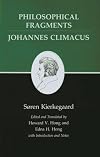
Two interesting works, though both require a fairly hefty amount of background knowledge, and a willingness to wade through K's more-Hegel-than-Hegel style, which is... well, it's as bad as Hegel.
Johannes Climacus, the second work here, was written first, and not finished. The point is fairly clear, nonetheless: it's meant to be a practical refutation of the idea that philosophy should 'begin with doubt.' In vulgar historical terms, Descartes decided that that was how philosophy should be show more done; K is here attacking that vulgar understanding. And fair enough.
As a work of fiction--which is purports to be--JC is a funny portrait of the earnest, alienated young philosopher, who tries to understand what the older philosophers around him are saying. If philosophy begins with doubt, he wonders, what could that mean? Does it mean 'modern philosophy begins from doubt'? But then, if this philosophy is modern, doesn't that suggest that there is something prior to it, and that therefore modern philosophy begins by doubting something in particular (i.e., pre-modern philosophy), and doesn't that mean that philosophy doesn't begin with doubt, but with something else? Perhaps they just mean "some modern philosophers begin with doubt," which is fine, but that's not what they say--they say modern philosophy, not philosophers. And in doing so they seem to suggest that modern philosophy is both a historical event (inasmuch as it's 'modern') and eternal, since modern philosophy is modern inasmuch as it's correct and systematic--but if it's correct and systematic, then it must also be correct for all time and all places. But that can't be, since there just is philosophy that begins with wonder or faith.
Perhaps they really do mean that *all* philosophy begins with doubt? But that would be self-contradictory, since then he, young philosopher, would have to doubt those who say that all should start from doubt, and start from something else instead. Unless just one philosopher could be said to be the origin in some way, so that "a particular philosopher had doubted for all just as Christ suffered for all," so we didn't have to doubt for ourselves anymore? That doesn't seem right. The young philosopher finds only two options here: either he will let someone else have done the doubting for him, in which case he isn't really a philosopher; or he will do the doubting himself, but then has to doubt the doubting--so he is a philosopher, but there is no philosophy, because he can't accept anything as such.
The outcomes are: first, this is a fine parody of Hegelian thought, but also a legitimate example of Hegelian dialectics. Second, philosophers obviously don't begin with doubt, really, but only say they do, and as such are hypocrites. Finally, it's left unclear whether Johannes' thought here is doubting, or not, or philosophy, or not. It seems fairly obvious to me that JC is, in fact, doing philosophy while he wonders about how he can start doing philosophy. But perhaps not.
*
The longer work in this volume is 'Philosophical Fragments,' which, in true Kierkegaardian fashion, aren't read very often, while his 'Conclusion Unscientific Postscript to the Philosophical Fragments' is one of his best known works (in philosophy departments). PF asks, more or less, what the relationship is between Socratic education (as depicted in Meno and so on) and Christianity, in what Kierkegaard takes to be the good sense. It's an odd book, but essentially K suggests that the story of Christ's incarnation can be told just as coherently as the story of Socratic coming-to-wisdom, with the caveat that the incarnation, Christ, conversion, and Christianity itself are all paradoxical. But that's okay, because at heart the acquisition of knowledge, too, is a paradox: "to want to discover something that thought itself cannot think." If it can already be thought, we are not acquiring knowledge; if we are content to leave anything outside thought, then we are not acquiring that knowledge. Most of the interest here is really theological: what is Christ, what is God, how do people relate to them? It turns out to be harder than you might expect.
I have no idea who, other than me, would find this interesting, but obviously some people do. show less
Johannes Climacus, the second work here, was written first, and not finished. The point is fairly clear, nonetheless: it's meant to be a practical refutation of the idea that philosophy should 'begin with doubt.' In vulgar historical terms, Descartes decided that that was how philosophy should be show more done; K is here attacking that vulgar understanding. And fair enough.
As a work of fiction--which is purports to be--JC is a funny portrait of the earnest, alienated young philosopher, who tries to understand what the older philosophers around him are saying. If philosophy begins with doubt, he wonders, what could that mean? Does it mean 'modern philosophy begins from doubt'? But then, if this philosophy is modern, doesn't that suggest that there is something prior to it, and that therefore modern philosophy begins by doubting something in particular (i.e., pre-modern philosophy), and doesn't that mean that philosophy doesn't begin with doubt, but with something else? Perhaps they just mean "some modern philosophers begin with doubt," which is fine, but that's not what they say--they say modern philosophy, not philosophers. And in doing so they seem to suggest that modern philosophy is both a historical event (inasmuch as it's 'modern') and eternal, since modern philosophy is modern inasmuch as it's correct and systematic--but if it's correct and systematic, then it must also be correct for all time and all places. But that can't be, since there just is philosophy that begins with wonder or faith.
Perhaps they really do mean that *all* philosophy begins with doubt? But that would be self-contradictory, since then he, young philosopher, would have to doubt those who say that all should start from doubt, and start from something else instead. Unless just one philosopher could be said to be the origin in some way, so that "a particular philosopher had doubted for all just as Christ suffered for all," so we didn't have to doubt for ourselves anymore? That doesn't seem right. The young philosopher finds only two options here: either he will let someone else have done the doubting for him, in which case he isn't really a philosopher; or he will do the doubting himself, but then has to doubt the doubting--so he is a philosopher, but there is no philosophy, because he can't accept anything as such.
The outcomes are: first, this is a fine parody of Hegelian thought, but also a legitimate example of Hegelian dialectics. Second, philosophers obviously don't begin with doubt, really, but only say they do, and as such are hypocrites. Finally, it's left unclear whether Johannes' thought here is doubting, or not, or philosophy, or not. It seems fairly obvious to me that JC is, in fact, doing philosophy while he wonders about how he can start doing philosophy. But perhaps not.
*
The longer work in this volume is 'Philosophical Fragments,' which, in true Kierkegaardian fashion, aren't read very often, while his 'Conclusion Unscientific Postscript to the Philosophical Fragments' is one of his best known works (in philosophy departments). PF asks, more or less, what the relationship is between Socratic education (as depicted in Meno and so on) and Christianity, in what Kierkegaard takes to be the good sense. It's an odd book, but essentially K suggests that the story of Christ's incarnation can be told just as coherently as the story of Socratic coming-to-wisdom, with the caveat that the incarnation, Christ, conversion, and Christianity itself are all paradoxical. But that's okay, because at heart the acquisition of knowledge, too, is a paradox: "to want to discover something that thought itself cannot think." If it can already be thought, we are not acquiring knowledge; if we are content to leave anything outside thought, then we are not acquiring that knowledge. Most of the interest here is really theological: what is Christ, what is God, how do people relate to them? It turns out to be harder than you might expect.
I have no idea who, other than me, would find this interesting, but obviously some people do. show less
Kierkegaard is often called the first existential philosopher. In this short review of this book, I will show why he is called this, and also why I disagree.
Fear and trembling is a book on the Biblical story of Abraham who sets out to sacrifice his son Isaac. God has spoken to Abraham to do this: this horrible command, even sinful command is what Abraham describes as an ordeal . With three questions about the story, Kierkegaard gives us an elaborate reading on what is happening here - and show more why Abraham's choice deserves respect rather than ridicule. His general thesis is:
What can we make of these words? Kierkegaard speaks long and lively, borrowing from imagery in literature and myths. The picture that he sketches, as I understand it, is the following. Religion has often been grasped as the need for the individual to go up in the universal. Tragic heroes have sacrificed themselves for others, died because they saw a good greater than themselves which it was worth dying for. Faith was the sacrificing of your individuality in order to be open for God. What Abraham does goes beyond this universality. His actions can even be considered sinful, for he goes against a fundamental bidding of God to respect your children. Moreover, he cannot explain his actions in universal terms. Whom could he have spoken to, to lessen his grieve, his torment? No one can understand his actions, but himself - and even he cannot grasp entirely what the task before him must mean. It is only in the absurd that one can find meaning in the sacrificing of Isaac. What Abraham does, is moving beyond what faith is in the universal, into the individual struggle, which can only ever be justified by virtue of the absurd. In metaphysical terms, he moves beyond what can be made sense of, and suffers precisely because he knows that we he is about to do can never make sense. Kierkegaard's reading is a unique one, warning us for the superficial justification through the universal, opening a world of faith which lies in ourselves.
This is why he is often been read as an existential philosopher. There is nothing universal that can help us when it comes to questions of faith. No words can soothe us, no other can guide us or show us the way. The most fundamental struggle of the human being takes place within the absurd. This is related to later existential thought, because it shows that in the end, all that the human being has to hold on to is his own bare existence. Questions asked here can only be solved in bitter loneliness, and no answer can ever make sense. I am grateful that Kierkegaard has opened to us this way of believing, but I think that he in fact was not entirely an existentialist yet.
My trouble with this work, is very similar to the qualms I have about Dostojevski's books. Pretending to be a work of deep doubt about faith, it is in its core still religious propaganda. Just like Alyosha cannot find any reason to believe Dmitri's stories, through the virtue of the absurd, he is still right in believing his brother. Though Abraham cannot find any reason to comply with God's strange wish, he is justified in doing so, by virtue of the absurd. What Kierkegaard promotes is a defense of religion beyond everything that can be said about it; still trusting in the truth of its absurdity. This is not existential in my reading, because it means relying on something unknown, rather than just on our own existence. Whereas Nietzsche and Heidegger underscore the importance of the mere individual struggle, cut loose from the everyday and the force of religion, Kierkegaard suggest that this struggle still takes place within Christian faith. This I cannot except. Hoping on the absurd to save you is a denial of your own power to save yourself. For me, the virtue lies in the endless senseless struggle - which is just as big a paradox as Kierkegaard's, and not in the deus ex machina.
I would like to end this review with the note that this is the first work of Kierkegaard I've studied, along with some secondary literature on Fear and Trembling . That is, don't be discouraged by my words to read Kierkegaard yourself. This sensitive Dane has a lot of wisdom and clever psychology to offer, reading him is definitely worth the while. show less
Fear and trembling is a book on the Biblical story of Abraham who sets out to sacrifice his son Isaac. God has spoken to Abraham to do this: this horrible command, even sinful command is what Abraham describes as an ordeal . With three questions about the story, Kierkegaard gives us an elaborate reading on what is happening here - and show more why Abraham's choice deserves respect rather than ridicule. His general thesis is:
either there is a paradox, that the single individual as the single individual stands in an absolute relation to the absolute, or Abraham is lost.
What can we make of these words? Kierkegaard speaks long and lively, borrowing from imagery in literature and myths. The picture that he sketches, as I understand it, is the following. Religion has often been grasped as the need for the individual to go up in the universal. Tragic heroes have sacrificed themselves for others, died because they saw a good greater than themselves which it was worth dying for. Faith was the sacrificing of your individuality in order to be open for God. What Abraham does goes beyond this universality. His actions can even be considered sinful, for he goes against a fundamental bidding of God to respect your children. Moreover, he cannot explain his actions in universal terms. Whom could he have spoken to, to lessen his grieve, his torment? No one can understand his actions, but himself - and even he cannot grasp entirely what the task before him must mean. It is only in the absurd that one can find meaning in the sacrificing of Isaac. What Abraham does, is moving beyond what faith is in the universal, into the individual struggle, which can only ever be justified by virtue of the absurd. In metaphysical terms, he moves beyond what can be made sense of, and suffers precisely because he knows that we he is about to do can never make sense. Kierkegaard's reading is a unique one, warning us for the superficial justification through the universal, opening a world of faith which lies in ourselves.
This is why he is often been read as an existential philosopher. There is nothing universal that can help us when it comes to questions of faith. No words can soothe us, no other can guide us or show us the way. The most fundamental struggle of the human being takes place within the absurd. This is related to later existential thought, because it shows that in the end, all that the human being has to hold on to is his own bare existence. Questions asked here can only be solved in bitter loneliness, and no answer can ever make sense. I am grateful that Kierkegaard has opened to us this way of believing, but I think that he in fact was not entirely an existentialist yet.
My trouble with this work, is very similar to the qualms I have about Dostojevski's books. Pretending to be a work of deep doubt about faith, it is in its core still religious propaganda. Just like Alyosha cannot find any reason to believe Dmitri's stories, through the virtue of the absurd, he is still right in believing his brother. Though Abraham cannot find any reason to comply with God's strange wish, he is justified in doing so, by virtue of the absurd. What Kierkegaard promotes is a defense of religion beyond everything that can be said about it; still trusting in the truth of its absurdity. This is not existential in my reading, because it means relying on something unknown, rather than just on our own existence. Whereas Nietzsche and Heidegger underscore the importance of the mere individual struggle, cut loose from the everyday and the force of religion, Kierkegaard suggest that this struggle still takes place within Christian faith. This I cannot except. Hoping on the absurd to save you is a denial of your own power to save yourself. For me, the virtue lies in the endless senseless struggle - which is just as big a paradox as Kierkegaard's, and not in the deus ex machina.
I would like to end this review with the note that this is the first work of Kierkegaard I've studied, along with some secondary literature on Fear and Trembling . That is, don't be discouraged by my words to read Kierkegaard yourself. This sensitive Dane has a lot of wisdom and clever psychology to offer, reading him is definitely worth the while. show less

Kierkegaard's Either / Or is very much a work of two parts: the first volume focuses on the Aesthetic, and the second on the Ethical. What is unusual is that the work is presented as a collection of papers of various styles and on various subjects, that have been written by two different people: one with an aesthetic outlook, the other with the ethical. The preface states that the papers were found in a secret compartment of a cabinet that was bought by the author (who acts under a third show more psuedonym), who sorted out the papers and edited them before publishing them. Though this use of pseudonyms is primarily a narrative device to give more than one point of view, it also had the practical motive of distancing Kierkegaard from the conflicting thoughts that the two opposing characters have, to reduce his risk of experiencing hostility from contemporary society; some of what is written within is controversial. What Kierkegaard does with the written word in many senses resembles what Plato does with the conversation.
This first volume is on the aesthetic, and consists of 8 separate works, ranging from a piece on the character of Don Juan, an analysis of the ancient tragic motif in the modern, an essay on "social prudence", and a lecture given before a society devoted to the appreciation of melancholy. Half of the volume seems to be about love.
Not only does Kierkegaard make an eloquent case for the aesthetic viewpoint in this work, but he also makes the case against by deftly interspersing the volume with parody and tongue-in-cheek mockery of what else has been written on such subjects. As with Plato, an unexperienced reader might think that the author is in fact advocating the very things he is writing against, because the irony is subtle. The skill with which Kierkegaard achieves this is not only highly entertaining, but gives one the satisfaction of realising that what is prima facie earnest yet ridiculous poeticism, pretentious, or vacuous sentimentalism, actually turns out to be a rather clever denunciation of these literary vices.
What makes some philosophers difficult to read is that they take themselves too seriously, but the difficulty that some may find with Kierkegaard is that he doesn't take himself seriously enough, and so it is difficult to decide when he means what he writes or the opposite. On the other hand, working this out adds much joy to the reading of a book, as it necessitates thinking. I look forward to reading the second volume, yet I somehow don't expect it to be quite as much fun. show less
This first volume is on the aesthetic, and consists of 8 separate works, ranging from a piece on the character of Don Juan, an analysis of the ancient tragic motif in the modern, an essay on "social prudence", and a lecture given before a society devoted to the appreciation of melancholy. Half of the volume seems to be about love.
Not only does Kierkegaard make an eloquent case for the aesthetic viewpoint in this work, but he also makes the case against by deftly interspersing the volume with parody and tongue-in-cheek mockery of what else has been written on such subjects. As with Plato, an unexperienced reader might think that the author is in fact advocating the very things he is writing against, because the irony is subtle. The skill with which Kierkegaard achieves this is not only highly entertaining, but gives one the satisfaction of realising that what is prima facie earnest yet ridiculous poeticism, pretentious, or vacuous sentimentalism, actually turns out to be a rather clever denunciation of these literary vices.
What makes some philosophers difficult to read is that they take themselves too seriously, but the difficulty that some may find with Kierkegaard is that he doesn't take himself seriously enough, and so it is difficult to decide when he means what he writes or the opposite. On the other hand, working this out adds much joy to the reading of a book, as it necessitates thinking. I look forward to reading the second volume, yet I somehow don't expect it to be quite as much fun. show less
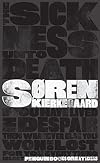
A short book that feels like a marathon, Søren Kierkegaard's The Sickness Unto Death looks and is daunting. It is a dense philosophical treatise that goes deep into notions of despair, the self and existence – hardly crowd-pleasers – and also topics that are deeply unfashionable nowadays like faith and the state of Christianity. It is a book that can inflict on us passages like the following, which is by no means the only example:
"If the relation which relates to itself has been show more established by something else, then of course the relation is the third term, but then this relation, the third term, is a relation which relates in turn to that which has established the whole relation." (pg. 10)
And yet, alongside all this academic wordiness and dry dialectic, Kierkegaard can also deliver lines such as "with despair a fire takes hold in something that cannot burn" (pg. 18). The best example of the headache-inducing yet ultimately nourishing nature of the book, and perhaps of philosophy in general, is when Kierkegaard delivers the maddening line "To understand and to understand; are these then two different things? Certainly" (pg. 111), only to follow this up with a clear and interesting discussion of what he means by this, namely that there is a "distinction between not being able to understand and being unwilling to understand" (pg. 117).
Of course, no one is coming to philosophy, particularly philosophy of the calibre of Kierkegaard, with a view to finding their next beach read. Even so, the dense and gloomy nature of the book can be fatiguing, even though Kierkegaard can turn a phrase occasionally, and is bracingly critical of Christendom the church as opposed to Christianity the creed. Even when the book is uplifting it is hard-earned; you have to follow it closely in order to appreciate the positive, uplifting aspect of what he is writing about. Despair, Kierkegaard argues, is not discouraging but uplifting, "since it views every man with regard to the highest demand that can be made of him: to be spirit." (pp21-22)
For all the toughness of the meat, and the difficulty in hunting down the kill, there is plenty that is nourishing and satisfying for a reader in Kierkegaard. My feelings with regard to The Sickness Unto Death – and largely why I'm open to reading philosophy in general – is encapsulated in something speculative Kierkegaard writes on page 149: "To be a particular human being is [perhaps] to be nothing; just think – and then you are the whole of humanity." show less
"If the relation which relates to itself has been show more established by something else, then of course the relation is the third term, but then this relation, the third term, is a relation which relates in turn to that which has established the whole relation." (pg. 10)
And yet, alongside all this academic wordiness and dry dialectic, Kierkegaard can also deliver lines such as "with despair a fire takes hold in something that cannot burn" (pg. 18). The best example of the headache-inducing yet ultimately nourishing nature of the book, and perhaps of philosophy in general, is when Kierkegaard delivers the maddening line "To understand and to understand; are these then two different things? Certainly" (pg. 111), only to follow this up with a clear and interesting discussion of what he means by this, namely that there is a "distinction between not being able to understand and being unwilling to understand" (pg. 117).
Of course, no one is coming to philosophy, particularly philosophy of the calibre of Kierkegaard, with a view to finding their next beach read. Even so, the dense and gloomy nature of the book can be fatiguing, even though Kierkegaard can turn a phrase occasionally, and is bracingly critical of Christendom the church as opposed to Christianity the creed. Even when the book is uplifting it is hard-earned; you have to follow it closely in order to appreciate the positive, uplifting aspect of what he is writing about. Despair, Kierkegaard argues, is not discouraging but uplifting, "since it views every man with regard to the highest demand that can be made of him: to be spirit." (pp21-22)
For all the toughness of the meat, and the difficulty in hunting down the kill, there is plenty that is nourishing and satisfying for a reader in Kierkegaard. My feelings with regard to The Sickness Unto Death – and largely why I'm open to reading philosophy in general – is encapsulated in something speculative Kierkegaard writes on page 149: "To be a particular human being is [perhaps] to be nothing; just think – and then you are the whole of humanity." show less
Lists
Awards


You May Also Like


Associated Authors
Statistics
- Works
- 623
- Also by
- 15
- Members
- 32,966
- Popularity
- #587
- Rating
- 3.9
- Reviews
- 203
- ISBNs
- 1,327
- Languages
- 28
- Favorited
- 125


