
E. D. deBirmingham
Author of The Rise and Fall of D.O.D.O.
About the Author
Works by E. D. deBirmingham
Associated Works
Tagged
Common Knowledge
- Legal name
- Galland, Nicole
- Other names
- deBirmingham, E. D.
- Birthdate
- 1965
- Gender
- female
- Education
- Harvard University (comparative religion and theater)
- Occupations
- screenwriter
editor
teacher - Organizations
- Shakespeare for the Masses, Co-founder
- Agent
- Liz Darhansoff
- Relationships
- Meleady, Billy (husband)
- Nationality
- USA
- Places of residence
- Martha's Vineyard, Massachusetts, USA
California, USA
New York, New York, USA - Associated Place (for map)
- USA
Members
Reviews
Boy: A Vibrant and Thought-Provoking Historical Tale of Love, Intrigue, and Gender Roles in Shakespeare's Elizabethan London by Nicole Galland

What a lark of a story! In Shakespearean London an apprentice teenager has risen to fame acting female roles, invited into the homes–and beds–of society. But Sander is discovering his feelings toward his childhood friend Joan in changing.
Joan “has the mind of a philosopher but no access to much learning,” so they come up with a plan. Sander appropriates clothing from the theater wardrobe and Joan dresses as a boy–Jack–and as Sander’s servant is taken into the home of Francis show more Bacon. Joan is soon discovered, but Bacon is impressed with her mind and arranges for her to help with his experiments.
Meanwhile, Joan and Sander have admitted their feelings and engage in a passionate affair.
Sander’s future after his apprenticeship ends in a few months is uncertain and he seeks a patron. The Earl of Essex is interested in hiring him to start a new actors troop. But Bacon warns that Essex is out of favor with Queen Elizabeth I.
We learn about the life of Shakespeare’s actors, the political machinations against Queen Elizabeth I, the newly forming inductive logic of Bacon, but it’s never boring.
He had never, since the age of twelve, gone so long without some stranger marveling at his existence. from Boy by Nicole Galland
Sander has been coddled for his beauty, but Joan is forcing him to grow up.
Joan is the strong character in the book, a 16th c woman with the mind of a scientist–and a feminist, intend on forging her own life. She can mop and clean and haul Thames water for experiments with equal competence. When Sander is implicated in the plot to overthrow the Queen, it is Joan, using Bacon’s logic, who saves the day.
“I will be a natural philosopher,” Joan announces in the end. And we believe she will outshine her new teacher as she did Bacon.
Thanks to the publisher for a free book through NetGalley. show less
Joan “has the mind of a philosopher but no access to much learning,” so they come up with a plan. Sander appropriates clothing from the theater wardrobe and Joan dresses as a boy–Jack–and as Sander’s servant is taken into the home of Francis show more Bacon. Joan is soon discovered, but Bacon is impressed with her mind and arranges for her to help with his experiments.
Meanwhile, Joan and Sander have admitted their feelings and engage in a passionate affair.
Sander’s future after his apprenticeship ends in a few months is uncertain and he seeks a patron. The Earl of Essex is interested in hiring him to start a new actors troop. But Bacon warns that Essex is out of favor with Queen Elizabeth I.
We learn about the life of Shakespeare’s actors, the political machinations against Queen Elizabeth I, the newly forming inductive logic of Bacon, but it’s never boring.
He had never, since the age of twelve, gone so long without some stranger marveling at his existence. from Boy by Nicole Galland
Sander has been coddled for his beauty, but Joan is forcing him to grow up.
Joan is the strong character in the book, a 16th c woman with the mind of a scientist–and a feminist, intend on forging her own life. She can mop and clean and haul Thames water for experiments with equal competence. When Sander is implicated in the plot to overthrow the Queen, it is Joan, using Bacon’s logic, who saves the day.
“I will be a natural philosopher,” Joan announces in the end. And we believe she will outshine her new teacher as she did Bacon.
Thanks to the publisher for a free book through NetGalley. show less
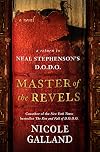
This is a truly terribly-written book. I came to it expecting a light entertainment built on the flimsy ground of its prequel. What I got was a baggy mess that got nowhere at all despite spending a few hundred pages groping for a plot.
If you read the first one, you might be curious about the attempted Irish accent that was inflicted on Grainne. This has not been repaired, and Grainne's dialog, which was just about the worst part of the original, is just as bad. This, unfortunately, is in no show more way the worst thing about this book.
It's actually pretty impressive just how bad this book manages to be. While the first was able to careen from one implausibility to the next fast enough to keep you from really thinking too much about just how ridiculous it was, this one lingers over its mistakes, like a dog over its vomit.
Trying to catalog those mistakes would be tedious. They all add up to one thing: Galland doesn't trust the plot she's concocted to carry the reader through from one end of the book to the other, and justifiably so. Instead of repairing the plot, she resorts to killing off characters or subjecting them to sexual assault or graphically-described torture when she's afraid the reader's attention might be flagging. The fact that the first of these incidents comes in the opening pages of the book should give you a pretty clear indication that this writer does not believe you're in good hands here.
And, gentle reader, on that she is perfectly correct. If you read and enjoyed The Rise and Fall of D.O.D.O, it's probably best to leave this one unread.
Personally, having read this sequel I've consigned both volumes to my local Little Free Library. show less
If you read the first one, you might be curious about the attempted Irish accent that was inflicted on Grainne. This has not been repaired, and Grainne's dialog, which was just about the worst part of the original, is just as bad. This, unfortunately, is in no show more way the worst thing about this book.
It's actually pretty impressive just how bad this book manages to be. While the first was able to careen from one implausibility to the next fast enough to keep you from really thinking too much about just how ridiculous it was, this one lingers over its mistakes, like a dog over its vomit.
Trying to catalog those mistakes would be tedious. They all add up to one thing: Galland doesn't trust the plot she's concocted to carry the reader through from one end of the book to the other, and justifiably so. Instead of repairing the plot, she resorts to killing off characters or subjecting them to sexual assault or graphically-described torture when she's afraid the reader's attention might be flagging. The fact that the first of these incidents comes in the opening pages of the book should give you a pretty clear indication that this writer does not believe you're in good hands here.
And, gentle reader, on that she is perfectly correct. If you read and enjoyed The Rise and Fall of D.O.D.O, it's probably best to leave this one unread.
Personally, having read this sequel I've consigned both volumes to my local Little Free Library. show less
First published at Booking in Heels.
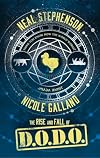
I loved this book. Loved, loved, loved this book. I always knew I was going to, but I feel like it defied even my highest of expectations.
It's almost like a way more detailed and technical version of The Chronicles of St Mary's series - I always complained that the concept was great but it was hugely lacking in detail - and now we have The Rise and Fall of D.O.D.O. In this book, we get to see the creation of the organisation from the ground up, as the show more machines are invented and the concept of D.O.D.O. (Department of Diachronic Operations) comes together. It could be boring, but it's not. It's time travel and so I will suck up every scrap of detail and love it.
It's told through a variety of different formats, but not so many that it becomes wearing (I'm looking at you, Illuminae). We mostly see mission reports and journal entries, but there's the odd internal company memo or policy briefing to add a dry and fun sense of humour. I wasn't over keen on the letters from Grainne O'Malley (a 16th Century witch) as I really didn't like her and they dragged on a bit but, looking back, they probably were necessary to the overarching plot, so I won't complain too much.
Ohhhhhh, the plot. It's ingenious. A lot of time is spent on setting the scene and I loved every second. However, the actual over-arching point of the novel is deeply hidden and quite subtle, so that you start to feel genuine little twinges of anxiety before you even really know what's going on. It's hard to pinpoint, but it's there. When it really gets going, towards the end, my stomach actually hurt, I cared so deeply about the characters. It's honestly a masterpiece.
Of course you get some detail of their time-travelling exploits - what's the point of a time travel book otherwise!? I loved Melisande travelling back to bury a rare book, and managing to navigate the 16th Century slightly better every time she headed back. I'd probably have liked more of that, but not at the expense of the amazing plot so I'll pipe down. There's a reasonable amount there anyway, in fairness.
I can only imagine how long it took Neal Stephenson and Nicole Galland to plan this book. Not only the set-up of D.O.D.O. but the intertwining threads of narrative that come together to make absolute sense. It is time travel, after all - it's not meant to be simple. This is the only book I've read by these authors, but I've already added a few more to my wishlist.
The only problem with The Rise and Fall of D.O.D.O. is that I was torn between frantically needing to read it, but then not wanting to read it because then I'd have finished it and couldn't read it anymore... *breathes into a paper bag* show less
I loved this book. Loved, loved, loved this book. I always knew I was going to, but I feel like it defied even my highest of expectations.
It's almost like a way more detailed and technical version of The Chronicles of St Mary's series - I always complained that the concept was great but it was hugely lacking in detail - and now we have The Rise and Fall of D.O.D.O. In this book, we get to see the creation of the organisation from the ground up, as the show more machines are invented and the concept of D.O.D.O. (Department of Diachronic Operations) comes together. It could be boring, but it's not. It's time travel and so I will suck up every scrap of detail and love it.
It's told through a variety of different formats, but not so many that it becomes wearing (I'm looking at you, Illuminae). We mostly see mission reports and journal entries, but there's the odd internal company memo or policy briefing to add a dry and fun sense of humour. I wasn't over keen on the letters from Grainne O'Malley (a 16th Century witch) as I really didn't like her and they dragged on a bit but, looking back, they probably were necessary to the overarching plot, so I won't complain too much.
Ohhhhhh, the plot. It's ingenious. A lot of time is spent on setting the scene and I loved every second. However, the actual over-arching point of the novel is deeply hidden and quite subtle, so that you start to feel genuine little twinges of anxiety before you even really know what's going on. It's hard to pinpoint, but it's there. When it really gets going, towards the end, my stomach actually hurt, I cared so deeply about the characters. It's honestly a masterpiece.
Of course you get some detail of their time-travelling exploits - what's the point of a time travel book otherwise!? I loved Melisande travelling back to bury a rare book, and managing to navigate the 16th Century slightly better every time she headed back. I'd probably have liked more of that, but not at the expense of the amazing plot so I'll pipe down. There's a reasonable amount there anyway, in fairness.
I can only imagine how long it took Neal Stephenson and Nicole Galland to plan this book. Not only the set-up of D.O.D.O. but the intertwining threads of narrative that come together to make absolute sense. It is time travel, after all - it's not meant to be simple. This is the only book I've read by these authors, but I've already added a few more to my wishlist.
The only problem with The Rise and Fall of D.O.D.O. is that I was torn between frantically needing to read it, but then not wanting to read it because then I'd have finished it and couldn't read it anymore... *breathes into a paper bag* show less
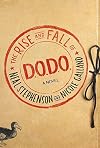
This book gets lots of things right about academia: things turn badly because entitled professors have way too big of an ego, steal the work of their (especially female) students, making collaborating with the military complex highly desirable for new graduates. It makes a number of good point on the epistemology and social functions of science. It also gets lots of things right about being a humanities scholar (I particularly loved how she used google to find Oda. There's a mastery to show more googling). And the science/engineering part is convincing enough.
Though the form is interesting (mixing different types of written records), it sometimes feels quite useless and disturbs the reading.
Overall, this is a good time travelling story, pretty funny at times, not always as immersive as one would like because of the alternative use of different types of narrative forms. show less
Though the form is interesting (mixing different types of written records), it sometimes feels quite useless and disturbs the reading.
Overall, this is a good time travelling story, pretty funny at times, not always as immersive as one would like because of the alternative use of different types of narrative forms. show less
Lists
Awards


You May Also Like


Associated Authors
Statistics
- Works
- 13
- Also by
- 1
- Members
- 5,972
- Popularity
- #4,131
- Rating
- 3.6
- Reviews
- 235
- ISBNs
- 100
- Languages
- 6
