
Eugene Thacker
Author of In The Dust of This Planet
About the Author
Eugene Thacker is the author of several books, including In The Dust of This Planet. He teaches at The New School in New York City.
Series
Works by Eugene Thacker
Drawn and Quartered 1 copy
A Short History of Decay 1 copy
Associated Works
First Person: New Media as Story, Performance, and Game (2004) — Contributor — 177 copies, 3 reviews
Collapse: Philosophical Research and Development. Volume IV: Concept Horror (2008) — Contributor — 44 copies
Tagged
Common Knowledge
- Birthdate
- 1971-04-06
- Gender
- male
- Education
- Rutgers University (PhD - Comparative Literature)
University of Washington, Seattle - Occupations
- professor (Media Studies)
philosopher
poet
author - Organizations
- New School for Social Research
- Nationality
- USA
- Associated Place (for map)
- USA
Members
Reviews
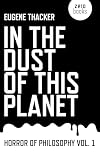
This book was another on the library’s new acquisition shelf to draw my eye. Actually, the publisher caught my eye, as I tend to enjoy Zer0 books but they rarely make their way into libraries. Then the blurb began, ‘The world is increasingly unthinkable - a world of planetary disasters, emerging pandemics, and the looming threat of extinction.’ How could I possibly resist? I was to find, however, that ‘In The Dust of This Planet’ (a glorious title) dwelt more in the past than the show more present. It contains a great deal about demonology and the occult, grounded in philosophy and theology centuries old. The range of cultural references is certainly broad, from Plato to an anonymous internet poet, early articulations of the Faust story to ‘Uzumaki’ (a creepy manga that friends have told me enough about that I don't want to read it). While I enjoyed the somewhat incongruous juxtapositions that this afforded, I struggled to get at the book’s overall thesis. To be fair, Thacker seemed like too subtle a writer for a clear and obvious single idea to emerge. I appreciated his tendency to qualify and counter-argue points. Perhaps the most memorable point was made early on concerning ‘the enigmatic concept of the world’:
This neat taxonomy, with obvious relevance to environmental destruction, returns near the end of the book in a commentary on Georges Bataille’s 'The Congested Planet':
This taxonomic discussion was to me the centre of the book, although it was woven in with a great deal about mysticism, theology, and ooze that I saw more as intellectual curiosities. When it comes to environmental philosophy, I find myself preferring the more focused approach of, for example, Timothy Morton’s [b:The Ecological Thought|7722063|The Ecological Thought|Timothy Morton|https://images.gr-assets.com/books/1348985833s/7722063.jpg|10474582].
I was a little disappointed by Thacker’s discussion of Dante’s [b:Inferno|15645|Inferno (The Divine Comedy #1)|Dante Alighieri|https://images.gr-assets.com/books/1520255019s/15645.jpg|2377563], in part because I didn’t agree with his interpretation of, “What I was once, alive, I still am, dead!” Still, it was nice to realise that I actually have opinions about the [b:Inferno|15645|Inferno (The Divine Comedy #1)|Dante Alighieri|https://images.gr-assets.com/books/1520255019s/15645.jpg|2377563], something of which I was not previously aware. One reference I was delighted to see pop up was Shiel’s [b:The Purple Cloud|209525|The Purple Cloud (Frontiers of Imagination)|M.P. Shiel|https://images.gr-assets.com/books/1328817985s/209525.jpg|923941], an extraordinary apocalyptic novel from 1901 that I read earlier this year. Now that Thacker does do justice to, comparing it with Hoyle’s [b:The Black Cloud|1246118|The Black Cloud|Fred Hoyle|https://images.gr-assets.com/books/1457534017s/1246118.jpg|1398552] (a book I regularly see in the library but do not borrow because it seems similar to so many others) and J. G Ballard’s first novel [b:The Wind from Nowhere|262359|The Wind from Nowhere|J.G. Ballard|https://images.gr-assets.com/books/1330051830s/262359.jpg|254310] (which I haven’t read either, but certainly sounds like J.G. Ballard’s first novel ought to). What links the three is apparently mist; I liked the comparison of Shiel’s slightly demented mysticism with Hoyle’s scientific rationalism and Ballard’s ambiguity.
Moreover, I smiled at the commentary on Roland Emmerich disaster movies. I’m not a great horror fan, but I’ve seen all of Emmerich’s stupid global catastrophe blockbusters multiple times. Something in me loves the morbid spectacle of civilisation collapsing dramatically. Thacker notes that the threat to civilisation evolves from alien invasion (Independence Day, 1996), to anthropogenic climate change (The Day After Tomorrow, 2004 - my personal favourite), to arbitrary heating up of Earth’s core (2012, 2009), so from external to internal to incomprehensible. I agree with Thacker that these films exhibit ‘implicitly or explicitly, eschatological themes’.
Perhaps my favourite comment in the whole book, though, is as follows:
Although I’m not sure how to interpret ‘provenance’ in that sentence, I need hardly explain why I enjoyed it. What social class would werewolves allegorise? The peasantry? There was certainly fun to be found in this book, but it was more interested in themes of horror in the past than the ‘unthinkable world’ of today. At the very end, Thacker admits that his conclusion, about the need to think through nihilism to the other side, to the ‘emptiness beyond the empty’, is not helpful. This is a rather frustrating note to conclude on, despite the interest and amusement to be found in the rest of the book. show less
We can even abbreviate these three concepts further: the world-for-us is simply the World, the world-in-itself is simply the Earth, and the world-without-us is simply the Planet.
This neat taxonomy, with obvious relevance to environmental destruction, returns near the end of the book in a commentary on Georges Bataille’s 'The Congested Planet':
It is a dilemma expressed in contemporary discourse on climate change, between a debate over the world-for-us (e.g. how do we as human beings impact - negatively or positively - the geological state of the planet?), and a largely unspoken, whispered query over the world-in-itself (e.g. to what degree is the planet indifferent to us as human beings, and to what degree are we indifferent to the planet?).
This taxonomic discussion was to me the centre of the book, although it was woven in with a great deal about mysticism, theology, and ooze that I saw more as intellectual curiosities. When it comes to environmental philosophy, I find myself preferring the more focused approach of, for example, Timothy Morton’s [b:The Ecological Thought|7722063|The Ecological Thought|Timothy Morton|https://images.gr-assets.com/books/1348985833s/7722063.jpg|10474582].
I was a little disappointed by Thacker’s discussion of Dante’s [b:Inferno|15645|Inferno (The Divine Comedy #1)|Dante Alighieri|https://images.gr-assets.com/books/1520255019s/15645.jpg|2377563], in part because I didn’t agree with his interpretation of, “What I was once, alive, I still am, dead!” Still, it was nice to realise that I actually have opinions about the [b:Inferno|15645|Inferno (The Divine Comedy #1)|Dante Alighieri|https://images.gr-assets.com/books/1520255019s/15645.jpg|2377563], something of which I was not previously aware. One reference I was delighted to see pop up was Shiel’s [b:The Purple Cloud|209525|The Purple Cloud (Frontiers of Imagination)|M.P. Shiel|https://images.gr-assets.com/books/1328817985s/209525.jpg|923941], an extraordinary apocalyptic novel from 1901 that I read earlier this year. Now that Thacker does do justice to, comparing it with Hoyle’s [b:The Black Cloud|1246118|The Black Cloud|Fred Hoyle|https://images.gr-assets.com/books/1457534017s/1246118.jpg|1398552] (a book I regularly see in the library but do not borrow because it seems similar to so many others) and J. G Ballard’s first novel [b:The Wind from Nowhere|262359|The Wind from Nowhere|J.G. Ballard|https://images.gr-assets.com/books/1330051830s/262359.jpg|254310] (which I haven’t read either, but certainly sounds like J.G. Ballard’s first novel ought to). What links the three is apparently mist; I liked the comparison of Shiel’s slightly demented mysticism with Hoyle’s scientific rationalism and Ballard’s ambiguity.
Moreover, I smiled at the commentary on Roland Emmerich disaster movies. I’m not a great horror fan, but I’ve seen all of Emmerich’s stupid global catastrophe blockbusters multiple times. Something in me loves the morbid spectacle of civilisation collapsing dramatically. Thacker notes that the threat to civilisation evolves from alien invasion (Independence Day, 1996), to anthropogenic climate change (The Day After Tomorrow, 2004 - my personal favourite), to arbitrary heating up of Earth’s core (2012, 2009), so from external to internal to incomprehensible. I agree with Thacker that these films exhibit ‘implicitly or explicitly, eschatological themes’.
Perhaps my favourite comment in the whole book, though, is as follows:
Whereas the three previous figures dealt with allegorical modes associated that reflected class dynamics (zombie-working class, vampire-aristocratic, demon-bourgeois), the ghost deals with the that strange or unknown provenance after life.
Although I’m not sure how to interpret ‘provenance’ in that sentence, I need hardly explain why I enjoyed it. What social class would werewolves allegorise? The peasantry? There was certainly fun to be found in this book, but it was more interested in themes of horror in the past than the ‘unthinkable world’ of today. At the very end, Thacker admits that his conclusion, about the need to think through nihilism to the other side, to the ‘emptiness beyond the empty’, is not helpful. This is a rather frustrating note to conclude on, despite the interest and amusement to be found in the rest of the book. show less

This book came to my attention after it was featured on a strong pair of linked episodes of two excellent WNYC podcasts I listen to, Radiolab and On the Media. (It also inspired True Detective, a show I have never seen.) Eugene Thacker's monograph explores the way horror fiction confronts the unknowable as a source of terror, taking in texts that include black metal, James Blish's The Devil's Day, M. P. Shiel's The Purple Cloud, an episode of The Outer Limits, and an anonymous Internet show more poem.
Thacker writes in an accessible style for a philosopher, and the best part of the book is definitely the introduction, that lays out the difference between what Thacker calls the World (the world-for-us, that which we experience as human beings), the Earth (the world-in-itself, what we do not know but are constantly seeking, especially through science), and the Planet (the world-without-us, the impersonal and horrific part of the universe that we cannot access, that which is not defined by human experience). In The Dust of This Planet essentially traces various manifestations of the Planet/world-without-us across these various texts, arguing that they reveal "the horror of philosophy: the isolation of those moments in which philosophy reveals its own limitations and constraints, moments in which thinking enigmatically confronts the horizon of its own possibility - the thought of the unthinkable that philosophy cannot pronounce but via a non-philosophical language" (2).
The introduction, alas, is the best part of the book. The rest consists of twenty mini-essays on various topics and texts; with seven pages per essay (and many essays covering multiple texts), I found that Thacker could not probe very deeply into any one subject, and that it felt like he was mostly identifying engagements with the idea of the world-without-us in horror fiction again and again, without clearly articulating what each new example brought to the concept. I guess I expected more from this based on what I had read/heard about it beforehand, but little about the book surprised or excited me. Still, if I bump into the other two volumes of the trilogy, I'll probably pick them up and give them a read. show less
Thacker writes in an accessible style for a philosopher, and the best part of the book is definitely the introduction, that lays out the difference between what Thacker calls the World (the world-for-us, that which we experience as human beings), the Earth (the world-in-itself, what we do not know but are constantly seeking, especially through science), and the Planet (the world-without-us, the impersonal and horrific part of the universe that we cannot access, that which is not defined by human experience). In The Dust of This Planet essentially traces various manifestations of the Planet/world-without-us across these various texts, arguing that they reveal "the horror of philosophy: the isolation of those moments in which philosophy reveals its own limitations and constraints, moments in which thinking enigmatically confronts the horizon of its own possibility - the thought of the unthinkable that philosophy cannot pronounce but via a non-philosophical language" (2).
The introduction, alas, is the best part of the book. The rest consists of twenty mini-essays on various topics and texts; with seven pages per essay (and many essays covering multiple texts), I found that Thacker could not probe very deeply into any one subject, and that it felt like he was mostly identifying engagements with the idea of the world-without-us in horror fiction again and again, without clearly articulating what each new example brought to the concept. I guess I expected more from this based on what I had read/heard about it beforehand, but little about the book surprised or excited me. Still, if I bump into the other two volumes of the trilogy, I'll probably pick them up and give them a read. show less

The Book of Pessimists by the Prince of Pessimism
There is a niche within philosophy of pessimists and misanthropes. Its celebrities all seem to be depressed white western males. Most of them lived solitary lives, tainted by religion, and surrounded by, when not participating in, suicide. Their books are filled with aphorisms and fragments rather than measured thought. So is this one. Every thought is precious, it seems.
The first 250 pages of Eugene Thacker’s Infinite Resignation are the show more stereotypical pessimist’s publication. It is clearly inspired by Schopenhauer, the patron saint of pessimism. It gets less and less reader-friendly as it goes on. And it is entirely horizontal. It does not build into anything. You find yourself trying to figure out why Thacker has put them in this particular order, not why he prints them at all. Because there is no answer to that. The flatness means you can open the book to any page without having missed anything. It is a collection, not an investigation or analysis. It reads like an Oscar Wilde notebook – experimenting with clever, hopefully immortal epigrams. Unfortunately, it seems to be lot of single words put in juxtaposition counterintuitively, without explanation, or verbs. They are instantly forgettable and forgotten, and you move on.
There are some minor gems worth mentioning:
-The pessimist is a well-informed optimist
-Two kinds of pessimism: The end is near and Will this never end?
-There are no solvable problems except in mathematics
-Good luck is bad luck because nothing lasts. Bad luck is bad luck because it’s worse than what came before.
-For pessimists, sleep is a form of training.
-Pessimist slogans: Drop all causes! or Not To Be!
-In writing I feel a strange euphoria… there are so many ways to say nothing.
The second (and last) chapter is a 150 page collection of Thacker’s pessimist heroes, in profiles of a few pages. They do not readily link to the previous chapter, and the point of the whole exercise is elusive. The unstated irony is that while Thacker mentions the ugly hubris of Man in the universe, this whole book is an act of hubris putting forth pessimism as if it were God’s Design. Pessimists revile life, are annoyed at all evidence of it, and spend their lives wondering if they should end it (or beating themselves up over why they don’t). It doesn’t lend itself to happy times or fortuitous outcomes for its proponents. Or as Thacker himself put it at the outset: “The problem is that when pessimism enters philosophical discussion, it is almost never helpful. In fact, it makes things worse.“
David Wineberg show less
There is a niche within philosophy of pessimists and misanthropes. Its celebrities all seem to be depressed white western males. Most of them lived solitary lives, tainted by religion, and surrounded by, when not participating in, suicide. Their books are filled with aphorisms and fragments rather than measured thought. So is this one. Every thought is precious, it seems.
The first 250 pages of Eugene Thacker’s Infinite Resignation are the show more stereotypical pessimist’s publication. It is clearly inspired by Schopenhauer, the patron saint of pessimism. It gets less and less reader-friendly as it goes on. And it is entirely horizontal. It does not build into anything. You find yourself trying to figure out why Thacker has put them in this particular order, not why he prints them at all. Because there is no answer to that. The flatness means you can open the book to any page without having missed anything. It is a collection, not an investigation or analysis. It reads like an Oscar Wilde notebook – experimenting with clever, hopefully immortal epigrams. Unfortunately, it seems to be lot of single words put in juxtaposition counterintuitively, without explanation, or verbs. They are instantly forgettable and forgotten, and you move on.
There are some minor gems worth mentioning:
-The pessimist is a well-informed optimist
-Two kinds of pessimism: The end is near and Will this never end?
-There are no solvable problems except in mathematics
-Good luck is bad luck because nothing lasts. Bad luck is bad luck because it’s worse than what came before.
-For pessimists, sleep is a form of training.
-Pessimist slogans: Drop all causes! or Not To Be!
-In writing I feel a strange euphoria… there are so many ways to say nothing.
The second (and last) chapter is a 150 page collection of Thacker’s pessimist heroes, in profiles of a few pages. They do not readily link to the previous chapter, and the point of the whole exercise is elusive. The unstated irony is that while Thacker mentions the ugly hubris of Man in the universe, this whole book is an act of hubris putting forth pessimism as if it were God’s Design. Pessimists revile life, are annoyed at all evidence of it, and spend their lives wondering if they should end it (or beating themselves up over why they don’t). It doesn’t lend itself to happy times or fortuitous outcomes for its proponents. Or as Thacker himself put it at the outset: “The problem is that when pessimism enters philosophical discussion, it is almost never helpful. In fact, it makes things worse.“
David Wineberg show less
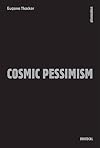
Wonderful little book which encapsulates the others views of the great pessimists of philosophy; Schopenhauer, Nietzsche, and Cioran, among others. This is done with brief essays and clever aphorisms dedicated to the "night side of thought", that perpetual "no-saying" to the world, the pessimistic outlook. I found this work, for all the negativity held within it, to be a breath of fresh air. There is something completely new and vital to author Eugene Thacker's approach to philosophy. The show more language is succinct, never too ornamental, intelligent, but never obfuscating, and wholly engrossing. I would recommend this book to anyone who ever, like me, finds themselves wholly at odds with the world; the doubters, the dour, and the depressives, here is solace and succor for your black hearts and bleak moods. show less
Lists
Books for Birute (1)
For Commonweal (1)
Awards


You May Also Like


Associated Authors
Statistics
- Works
- 21
- Also by
- 6
- Members
- 1,077
- Popularity
- #23,870
- Rating
- 3.7
- Reviews
- 13
- ISBNs
- 40
- Languages
- 3
- Favorited
- 1