

Jonathan Haidt
Author of The Righteous Mind: Why Good People Are Divided by Politics and Religion
About the Author
Works by Jonathan Haidt
The Righteous Mind: Why Good People Are Divided by Politics and Religion (2012) 4,186 copies, 92 reviews
The Coddling of the American Mind: How Good Intentions and Bad Ideas Are Setting Up a Generation for Failure (2018) 2,066 copies, 43 reviews
The Amazing Generation: Your Guide to Fun and Freedom in a Screen-Filled World (2025) 78 copies, 2 reviews
Can't We All Disagree More Constructively?: from The Righteous Mind (Kindle Single) (A Vintage Short) (2016) 24 copies
Jonathan Haidt Collection 3 Books Set (Happiness Hypothesis, The Righteous Mind, Coddling of the American Mind) (2019) 4 copies
Associated Works
The Believing Primate: Scientific, Philosophical, and Theological Reflections on the Origin of Religion (2009) — Contributor — 44 copies
Tagged
Common Knowledge
- Birthdate
- 1963-10-19
- Gender
- male
- Education
- Yale University (BA) (1985)
University of Pennsylvania (PhD) (1992) - Occupations
- psychologist
professor (ethical leadership) - Organizations
- University of Virginia
Stern School of Business - Short biography
- Jonathan Haidt is the Thomas Cooley Professor of Ethical Leadership at New York University’s Stern School of Business. He received his B. A. from Yale University in 1985 and his Ph.D. from the University of Pennsylvania in 1992. He then did post-doctoral research at the University of Chicago and in Orissa, India. He was a professor at the University of Virginia from 1995 until 2011, when he joined the Stern School of Business. His research focuses on morality – its emotional foundations, cultural variations, and developmental course. He began his career studying the negative moral emotions, such as disgust, shame, and vengeance, but then moved on to the understudied positive moral emotions, such as admiration, awe, and moral elevation. This work got him involved with the field of positive psychology, in which he has been a leading researcher. He is the co-developer of Moral Foundations theory, and of the research site YourMorals.org. He uses his research to help people understand and respect the moral motives of their enemies (see CivilPolitics.org). He won three teaching awards from the University of Virginia, and one from the governor of Virginia. His three TED talks have been viewed more than 3 million times. (Those talks are on political psychology, on religion, and on the causes of America’s political polarization.) He was named a “top 100 global thinker” of 2012 by Foreign Policy magazine, and one of the 65 “World Thinkers of 2013″ by Prospect. He is the author of more than 90 academic articles and two books: The Happiness Hypothesis: Finding Modern Truth in Ancient Wisdom, and the New York Times bestseller The Righteous Mind: Why Good People are Divided by Politics and Religion. For more information see JonathanHaidt.com.
http://righteousmind.com/wp-content/u... - Nationality
- USA
- Birthplace
- Scarsdale, New York, USA
- Places of residence
- Charlottesville, Virginia, USA
Orissa, India - Associated Place (for map)
- USA
Members
Discussions
Jonathan Haidt at TED in Pro and Con (October 2008)
Reviews
The anxious generation : how the great rewiring of childhood is causing an epidemic of mental illness by Jonathan Haidt
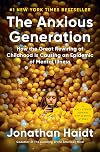
It has taken some time to gather empirical evidence, to perform research, and to compose and publish papers, but the conclusive truth about our new reality is now emerging: technology — smartphones specifically — are, globally, having a profound effect on the mental health, social and neurological development, and cognitive stamina of children and adolescents. In this groundbreaking, compelling book, psychologist Jonathan Haidt describes in great details these causes and effects, and why show more we (humanity) should be concerned. Very concerned.
I selected this title to fulfill the Read Harder 2026 category "a nonfiction book about AI or social media," and while I'm glad I did, as it is topical and enlightening, it also made me feel depressed and concerned about ways I may have already failed my child by being too permissive with screen time and access. This is a book which should be a must-read for parents, educators, teenagers, and anyone seeking to understand how these younger generations are functionally and psychologically different from previous generations. There are endless "Aha!" and "Of course!" and "Oh, no!" moments. The "Spiritual Elevation and Degradation" chapter provides insight into precisely why social media comment sections are overwhelmingly toxic. Here's a librarian pro tip: Right now (June 2026) you can bypass waiting lists and read The Anxious Generation through the Ebooks Minnesota website. An important and necessary, but not at all a feel-good, read. show less
I selected this title to fulfill the Read Harder 2026 category "a nonfiction book about AI or social media," and while I'm glad I did, as it is topical and enlightening, it also made me feel depressed and concerned about ways I may have already failed my child by being too permissive with screen time and access. This is a book which should be a must-read for parents, educators, teenagers, and anyone seeking to understand how these younger generations are functionally and psychologically different from previous generations. There are endless "Aha!" and "Of course!" and "Oh, no!" moments. The "Spiritual Elevation and Degradation" chapter provides insight into precisely why social media comment sections are overwhelmingly toxic. Here's a librarian pro tip: Right now (June 2026) you can bypass waiting lists and read The Anxious Generation through the Ebooks Minnesota website. An important and necessary, but not at all a feel-good, read. show less
The Anxious Generation: How the Great Rewiring of Childhood Is Causing an Epidemic of Mental Illness by Jonathan Haidt
I’ve seen an enormous amount of praise for The Anxious Generation: How the Great Rewiring of Childhood Is Causing an Epidemic of Mental Illness by Jonathan Haidt, and my curiosity finally got the better of me. As a retired therapist with no children and no background in education, I wasn’t sure the book was aimed at me. Still, I wanted to explore whether its arguments aligned with my own suspicions about smartphones and social media’s impact on young people.
I’m so glad I read show more it.
Haidt, a social psychologist, delivers a compelling, data-driven examination of the sharp rise in anxiety, depression, self-harm, and suicide among adolescents since the early 2010s. He argues persuasively that this mental health crisis stems from a profound cultural shift: the replacement of a play-based childhood—filled with free, unsupervised outdoor play and real-world social interactions—with a phone-based childhood dominated by smartphones, social media, and constant online connectivity.
Haidt carefully connects the dots between “overprotective” parenting in the real world (often called helicopter or fearful parenting) and “underprotective” policies in the digital realm. Together, these trends have robbed children of the experiences they need to develop resilience, social skills, and independence. He explores specific mechanisms—sleep disruption, attention fragmentation, addiction-like design, social comparison, and loneliness—that hit girls particularly hard through social media and boys through gaming and social withdrawal.
The book blends rigorous research, international data, and accessible explanations with clear, practical solutions. Haidt proposes four key reforms: no smartphones before high school, no social media before age 16, phone-free schools, and much more unsupervised playtime.
As someone who has grown weary of research studies after graduate school and a dissertation, I was pleasantly surprised by how engaged I remained. The statistics never felt overwhelming, and the findings confirmed what I had long suspected. Even without kids, I found the book deeply relevant. The insights about mental health impacts apply just as much to adults navigating social media.
I especially appreciated that Haidt maintains an active website and Substack (After Babel), where he continues sharing updated data and resources. It’s refreshing to see an author remain engaged with the conversation beyond the book itself.
That said, I cannot ignore what feels like a glaring inconsistency. After finishing the book, I discovered that Haidt maintains active accounts on both Facebook and Instagram. Given how forcefully he critiques these platforms in the book—detailing how they exploit children’s psychology, drive addictive usage, expose young users to pornography, and knowingly harm mental health—this feels deeply hypocritical. He understands the damage better than most, yet continues to support the very companies (particularly Meta) profiting from it.
Years ago, I deleted my own Facebook account after seeing the performative nonsense and distorted realities it encouraged. I also left Instagram after watching Mark Zuckerberg’s congressional testimony, which only reinforced everything Haidt describes. If we truly believe these platforms are doing serious harm—especially to children—our actions need to match our words.
Overall, The Anxious Generation is an excellent, important book that I highly recommend to everyone, whether you have kids or not. It’s insightful, well-researched, and offers both diagnosis and genuine hope for change. I just wish the author would practice what he so convincingly preaches by deleting his own Facebook and Instagram accounts.
Audiobook note: I listened to the audiobook version via Libby. Haidt narrates the introduction himself, then professional narrator Sean Pratt takes over and does an outstanding job.
I have photos and additional information that I'm unable to include here. It can all be found on my blog, in the link below.
A Book And A Dog show less
I’m so glad I read show more it.
Haidt, a social psychologist, delivers a compelling, data-driven examination of the sharp rise in anxiety, depression, self-harm, and suicide among adolescents since the early 2010s. He argues persuasively that this mental health crisis stems from a profound cultural shift: the replacement of a play-based childhood—filled with free, unsupervised outdoor play and real-world social interactions—with a phone-based childhood dominated by smartphones, social media, and constant online connectivity.
Haidt carefully connects the dots between “overprotective” parenting in the real world (often called helicopter or fearful parenting) and “underprotective” policies in the digital realm. Together, these trends have robbed children of the experiences they need to develop resilience, social skills, and independence. He explores specific mechanisms—sleep disruption, attention fragmentation, addiction-like design, social comparison, and loneliness—that hit girls particularly hard through social media and boys through gaming and social withdrawal.
The book blends rigorous research, international data, and accessible explanations with clear, practical solutions. Haidt proposes four key reforms: no smartphones before high school, no social media before age 16, phone-free schools, and much more unsupervised playtime.
As someone who has grown weary of research studies after graduate school and a dissertation, I was pleasantly surprised by how engaged I remained. The statistics never felt overwhelming, and the findings confirmed what I had long suspected. Even without kids, I found the book deeply relevant. The insights about mental health impacts apply just as much to adults navigating social media.
I especially appreciated that Haidt maintains an active website and Substack (After Babel), where he continues sharing updated data and resources. It’s refreshing to see an author remain engaged with the conversation beyond the book itself.
That said, I cannot ignore what feels like a glaring inconsistency. After finishing the book, I discovered that Haidt maintains active accounts on both Facebook and Instagram. Given how forcefully he critiques these platforms in the book—detailing how they exploit children’s psychology, drive addictive usage, expose young users to pornography, and knowingly harm mental health—this feels deeply hypocritical. He understands the damage better than most, yet continues to support the very companies (particularly Meta) profiting from it.
Years ago, I deleted my own Facebook account after seeing the performative nonsense and distorted realities it encouraged. I also left Instagram after watching Mark Zuckerberg’s congressional testimony, which only reinforced everything Haidt describes. If we truly believe these platforms are doing serious harm—especially to children—our actions need to match our words.
Overall, The Anxious Generation is an excellent, important book that I highly recommend to everyone, whether you have kids or not. It’s insightful, well-researched, and offers both diagnosis and genuine hope for change. I just wish the author would practice what he so convincingly preaches by deleting his own Facebook and Instagram accounts.
Audiobook note: I listened to the audiobook version via Libby. Haidt narrates the introduction himself, then professional narrator Sean Pratt takes over and does an outstanding job.
I have photos and additional information that I'm unable to include here. It can all be found on my blog, in the link below.
A Book And A Dog show less
The Coddling of the American Mind: How Good Intentions and Bad Ideas Are Setting Up a Generation for Failure by Greg Lukianoff
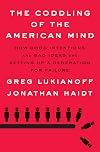
This book does not disappoint a long-time Haidt fan. His arguments continue to be exquisitely measured and explained to appeal to any reasonable person willing to listen. He does not suffer for collaborating with co-author Lukianoff, either, who seems to have the same style.
The title makes it sound like it is going to be a conservative or curmudgeonly rant - "coddle" is such a smug and "when I was your age" kind of verb. But you can trust Haidt. He's very sympathetic, for example, to what show more even the most strident and intolerant protesters may be trying to achieve; he's just pointing out, clearly and convincingly in my opinion, how they are harming their cause more than helping. That is one major area covered in the book - college protest; and although I was familiar with many of the cases described here, such as Charles Murray's appearance in Middlebury in my home state of Vermont, I had no idea of the extent of some of the other things going on in the rest of the country, like the truly anarchic takeover of Evergreen College in Washington state. Again, don't think this is just some conservative outrage-generating listing of cases where those liberal students went too far in their political correctness. There are some eyebrow-raising incidents described here, but the authors aren't out simply to raise ire about them; but to explain where they feel things went wrong.
Another subject covered in the book is the overprotectiveness of parents in our modern culture, and effects of excessive screen time on kids; they authors see these as roots of the excessive fragility of the younger generation of today's adults.
The authors hold up cognitive behavioral therapy (CBT) as a proven successful method of dealing with depression and anxiety, and use its tenets as models of how we SHOULD be raising children and encouraging young people to deal effectively with their feelings of fragility.
Major fault: I don't understand why they felt they had to end every chapter with a summary - and then end the book with an overall summary, as well! For Pete's sake, have a little faith that I know what I just read.
The only other fault was really just a personal disappointment that there was a lot in it about raising children, and the rest was almost all about college students - I guess if I had read the description I would have been more prepared; but I selfishly wanted more things to apply to my own life. show less
The title makes it sound like it is going to be a conservative or curmudgeonly rant - "coddle" is such a smug and "when I was your age" kind of verb. But you can trust Haidt. He's very sympathetic, for example, to what show more even the most strident and intolerant protesters may be trying to achieve; he's just pointing out, clearly and convincingly in my opinion, how they are harming their cause more than helping. That is one major area covered in the book - college protest; and although I was familiar with many of the cases described here, such as Charles Murray's appearance in Middlebury in my home state of Vermont, I had no idea of the extent of some of the other things going on in the rest of the country, like the truly anarchic takeover of Evergreen College in Washington state. Again, don't think this is just some conservative outrage-generating listing of cases where those liberal students went too far in their political correctness. There are some eyebrow-raising incidents described here, but the authors aren't out simply to raise ire about them; but to explain where they feel things went wrong.
Another subject covered in the book is the overprotectiveness of parents in our modern culture, and effects of excessive screen time on kids; they authors see these as roots of the excessive fragility of the younger generation of today's adults.
The authors hold up cognitive behavioral therapy (CBT) as a proven successful method of dealing with depression and anxiety, and use its tenets as models of how we SHOULD be raising children and encouraging young people to deal effectively with their feelings of fragility.
Major fault: I don't understand why they felt they had to end every chapter with a summary - and then end the book with an overall summary, as well! For Pete's sake, have a little faith that I know what I just read.
The only other fault was really just a personal disappointment that there was a lot in it about raising children, and the rest was almost all about college students - I guess if I had read the description I would have been more prepared; but I selfishly wanted more things to apply to my own life. show less
The Anxious Generation: How the Great Rewiring of Childhood Is Causing an Epidemic of Mental Illness by Jonathan Haidt
Summary: Explores the connections between the decline in independent play in childhood, the advent of smartphones, and the sharp rise in anxiety and depression, among adolescents and young adults.
Everyone in higher education is talking about the mental health crisis, particularly the incidence of anxiety and depression among adolescents and young adults. Counseling centers on every campus are slammed with the demand. But why is this? Some trace it to COVID and the experience of isolation show more these youth went through. But in fact, COVID only accelerated a trend mental health professionals were seeing for the past decade.
Jonathan Haidt believes this may be traced to a shift from a play-based to a phone-based childhood, a transition that coincides with the rise in incidence in anxiety and depression. He contends that children have been over-protected in the world of embodied, independent play and under-protected in the disembodied, virtual world that they are connected to by the devices in their pockets.
In the first part of the book, Haidt offers a number of of graphs, all showing sharp increases during the 2010’s in the incidence of various mental health issues. What is most striking is that this is true for all Western nations and not just the United States–it’s not just American cultural factors. It is striking that girls have been hit the hardest, but boys have also shown increases in all of these indicators.
Part Two explorers the decline of the play-based childhood going back to the 1990’s, reflecting parental fearfulness and overprotection. Free play, not controlled by adults, is crucial for the development of social skills and attunement to others. Children become more resilient and antifragile with play in which there is an element of risk and where parents don’t immediately swoop in and rescue (unless there are actual injuries requiring attention). This makes children more inclined to operate in “discover” rather than “defend” mode and for children learning to care for themselves and assess risks. We’ve also eliminated rites of passage that build a ladder from childhood through puberty to adulthood. Haidt offers guidelines for age appropriate steps, including when (not until high school) children have smartphones. The advent of smartphones accelerated this decline, replacing embodied play with the unprotected virtual world online.
In Part Three, Haidt outlines the harms phone-based childhoods cause. He notes four foundational harms to both boys and girls: social deprivation, sleep deprivation, attention fragmentation, and addiction. He then discusses the harms to girls, which are greater, as well as the harms to boys, Haidt shows the experimental evidence for how social media harms girls: visual media results in invidious physical comparisons, promotes aggression against other girls, promotes sharing of emotions resulting in “sociogenic” illness, and exposes girls to male predators urging sexting and other dangerous activities. Boys engage differently, engaging more with online porn and multi-player online games. While there are some positive aspects of the latter, Haidt traces the “failure to launch,” including problems of forming healthy relationships with real-life partners. Finally, Haidt explores how phones pull us downward in the spiritual or “elevation” aspect of our life, and suggests six practices, secular spiritual disciples as it were, to recover what we’ve lost.
The last part of the book explores what government and industry, what schools, and what parents can do. He advocates for four foundational reforms:
1. No smartphones before high school, giving children only basic flip phones before then (up to about age 14).
2. No social media before age 16, including more stringent age verification standards on social media platforms.
3. Phone-free schools, where phones, smartwatches, and other devices are stored in phone lockers, to free up students attention.
4. Far more unsupervised play and childhood independence.
Haidt draws on the work of Lenore Skenazy, who wrote Free Range Kids for his guidance to parents about unsupervised play and independence. He commends the work of Let Grow, an organization Skenazy has served as president. He notes how working with other parents and needing to be aware of state laws (and in some cases, working to change them), around child supervision is important. A child exercising responsible independence can look like a neglected child in some eyes. I would have liked to see Haidt address more the real-world dangers that did not exist or were very rare in our childhoods and how parents address these while not lapsing into over-protection, as well as addressing the particular risks girls and women face.
I know smartphones have rewired my brain and have snared me with their addictive power. I’ve had to make decisions regarding my own use of them. What Haidt proposes seems both scientifically demonstrable and just plain common sense. Talking with mental health professionals, it is just not feasible from workforce or insurance factors, to significantly expand their services. Haidt proposes that we tackle the problem at its roots in our shift from play-based to phone-based childhoods. This will take concerted action on the part of parents, schools, and governments acting together, but actually seem relatively low cost by comparison. It just takes shared recognition of the problem and concerted action (and maybe resistance to the social media lobby claiming the safety of its products). In the end, we will all be the better for it. show less
Everyone in higher education is talking about the mental health crisis, particularly the incidence of anxiety and depression among adolescents and young adults. Counseling centers on every campus are slammed with the demand. But why is this? Some trace it to COVID and the experience of isolation show more these youth went through. But in fact, COVID only accelerated a trend mental health professionals were seeing for the past decade.
Jonathan Haidt believes this may be traced to a shift from a play-based to a phone-based childhood, a transition that coincides with the rise in incidence in anxiety and depression. He contends that children have been over-protected in the world of embodied, independent play and under-protected in the disembodied, virtual world that they are connected to by the devices in their pockets.
In the first part of the book, Haidt offers a number of of graphs, all showing sharp increases during the 2010’s in the incidence of various mental health issues. What is most striking is that this is true for all Western nations and not just the United States–it’s not just American cultural factors. It is striking that girls have been hit the hardest, but boys have also shown increases in all of these indicators.
Part Two explorers the decline of the play-based childhood going back to the 1990’s, reflecting parental fearfulness and overprotection. Free play, not controlled by adults, is crucial for the development of social skills and attunement to others. Children become more resilient and antifragile with play in which there is an element of risk and where parents don’t immediately swoop in and rescue (unless there are actual injuries requiring attention). This makes children more inclined to operate in “discover” rather than “defend” mode and for children learning to care for themselves and assess risks. We’ve also eliminated rites of passage that build a ladder from childhood through puberty to adulthood. Haidt offers guidelines for age appropriate steps, including when (not until high school) children have smartphones. The advent of smartphones accelerated this decline, replacing embodied play with the unprotected virtual world online.
In Part Three, Haidt outlines the harms phone-based childhoods cause. He notes four foundational harms to both boys and girls: social deprivation, sleep deprivation, attention fragmentation, and addiction. He then discusses the harms to girls, which are greater, as well as the harms to boys, Haidt shows the experimental evidence for how social media harms girls: visual media results in invidious physical comparisons, promotes aggression against other girls, promotes sharing of emotions resulting in “sociogenic” illness, and exposes girls to male predators urging sexting and other dangerous activities. Boys engage differently, engaging more with online porn and multi-player online games. While there are some positive aspects of the latter, Haidt traces the “failure to launch,” including problems of forming healthy relationships with real-life partners. Finally, Haidt explores how phones pull us downward in the spiritual or “elevation” aspect of our life, and suggests six practices, secular spiritual disciples as it were, to recover what we’ve lost.
The last part of the book explores what government and industry, what schools, and what parents can do. He advocates for four foundational reforms:
1. No smartphones before high school, giving children only basic flip phones before then (up to about age 14).
2. No social media before age 16, including more stringent age verification standards on social media platforms.
3. Phone-free schools, where phones, smartwatches, and other devices are stored in phone lockers, to free up students attention.
4. Far more unsupervised play and childhood independence.
Haidt draws on the work of Lenore Skenazy, who wrote Free Range Kids for his guidance to parents about unsupervised play and independence. He commends the work of Let Grow, an organization Skenazy has served as president. He notes how working with other parents and needing to be aware of state laws (and in some cases, working to change them), around child supervision is important. A child exercising responsible independence can look like a neglected child in some eyes. I would have liked to see Haidt address more the real-world dangers that did not exist or were very rare in our childhoods and how parents address these while not lapsing into over-protection, as well as addressing the particular risks girls and women face.
I know smartphones have rewired my brain and have snared me with their addictive power. I’ve had to make decisions regarding my own use of them. What Haidt proposes seems both scientifically demonstrable and just plain common sense. Talking with mental health professionals, it is just not feasible from workforce or insurance factors, to significantly expand their services. Haidt proposes that we tackle the problem at its roots in our shift from play-based to phone-based childhoods. This will take concerted action on the part of parents, schools, and governments acting together, but actually seem relatively low cost by comparison. It just takes shared recognition of the problem and concerted action (and maybe resistance to the social media lobby claiming the safety of its products). In the end, we will all be the better for it. show less
Lists
Awards


You May Also Like


Associated Authors
Statistics
- Works
- 14
- Also by
- 3
- Members
- 11,144
- Popularity
- #2,119
- Rating
- 4.1
- Reviews
- 233
- ISBNs
- 129
- Languages
- 15
- Favorited
- 5


