
Primo Levi (1919–1987)
Author of If This Is a Man
About the Author
Primo Levi was born on July 31, 1919 in Turin, Italy. He pursued a career in chemistry, and spent the early years World War II as a research chemist in Milan. Upon the German invasion of northern Italy, Levi, an Italian Jew, joined an anti-fascist group and was captured and sent to the Auschwitz show more concentration camp in Poland. He was able to survive the camp, due in part to his value to the Nazis as a chemist. After the war ended, Levi did chemistry work in a Turin paint factory while beginning his writing career. His first book, If This Is a Man (title later was changed to Survival in Auschwitz) was published in 1947 and its sequel, The Truce (later retitled The Reawakening) came out in 1958. These two books recount Levi's story of surviving concentration camp life. Levi also published poetry, short stories, and novels, some under the pen name Damianos Malabaila. His 1985, largely autobiographical work, The Periodic Table, cemented his world fame. Awards in tribute to his writing included the Kenneth B. Smilen fiction award, presented by the Jewish Museum in New York. Ironically, despite his surviving Auschwitz, Primo Levi appears to have died by suicide, in Turin on April 11, 1987. (Bowker Author Biography) show less
Series
Works by Primo Levi
Survival In Auschwitz (Bioarchaeological Interpretations of the Human Past: Local, Regional, and Global) 217 copies, 2 reviews
The Auschwitz Trilogy: If This Is a Man / The Truce (a/k/a The Rewakening) / The Drowned and the Saved (1999) 193 copies, 2 reviews
The Complete Works of Primo Levi - I 5 copies
Opere III 5 copies
Mijnheer Simpson 4 copies
Uncollected Stories and Essays 2 copies
Autoritratto di Primo Levi 2 copies
Il processo 2 copies
UNKNOWN 2 copies
Zar je to čovek 1 copy
The Mark of the Chemist 1 copy
XINTOÍSMO - eBook 1 copy
Le tableau périodique 1 copy
The Destiny Thief 1 copy
Monkey's Wrench 1 copy
Pograzeni i ocaleni 1 copy
De zesde dag Verhalen 1 copy
Entre Sombras - eBook 1 copy
Trilogía de Auschwitz 1 copy
L'altrui mestiere 1 copy
Essays 1 copy
Present Indicative 1 copy
Future Anterior 1 copy
Flaw of Form 1 copy
Opere II. Romanzi e poesie 1 copy
Tutti i racconti. Volume 2 1 copy
Tåbrud 1 copy
From Lab to Writing Desk 1 copy
Tutti i racconti. Volume 1 1 copy
Luigi Orlando E I Suoi Fratelli per la Patria e per l'Industria Italiana (Classic Reprint) (2017) 1 copy
Primo Levi as witness : proceedings of a symposium held at Princeton University, April 30-May 2, 1989 (1990) 1 copy
STAMPA SERA TERZA ETA' 1 copy
Associated Works
Death Dealer: The Memoirs of the SS Kommandant at Auschwitz (0204) — Introduction, some editions — 744 copies, 19 reviews
Against Forgetting: Twentieth-Century Poetry of Witness (1993) — Contributor — 375 copies, 2 reviews
The Night of the Girondists (1957) — Afterword, some editions; Translator, some editions — 235 copies, 2 reviews
Here I Am: Contemporary Jewish Stories from Around the World (1998) — Contributor — 56 copies, 1 review
After the Holocaust: The Book of Job, Primo Levi, and the Path to Affliction (2009) — Associated Name — 13 copies
Holocaust Memoir Digest, Vol. 3: A Digest Of Published Survivor Memoirs With Study Guide And Maps (2006) — Contributor — 3 copies
Tagged
Common Knowledge
- Canonical name
- Levi, Primo
- Legal name
- Levi, Primo Michele
- Other names
- Λέβι, Πρίμο
MALABAILA, Damiano
Levi, Primo - Birthdate
- 1919-07-31
- Date of death
- 1987-04-11
- Gender
- male
- Education
- University of Turin (PhD|Chemistry|1941)
- Occupations
- chemist
resistance fighter
writer
paint factory Technical Director - Organizations
- Giustizia e Libertà
- Awards and honors
- Premio Bagutta (1967)
Premio Strega (1979)
Premio Viareggio (1982) - Relationships
- Dallaporta, Nicolò (student)
- Cause of death
- a fall
- Nationality
- Italy
- Birthplace
- Turin, Piedmont, Italy
- Places of residence
- Turin, Italy
Milan, Italy
Saint-Vincent, Aosta Valley, Italian Social Republic
Amay, Italian Social Republic
Fossoli, Carpi, Emilia-Romagna, Italian Social Republic
Monowitz, Auschwitz, Poland - Place of death
- Turin, Piedmont, Italy
- Burial location
- Cimitero Monumentale di Torino, Turin, Piedmont, Italy
- Map Location
- Italy
- Associated Place (for map)
- Italy
Members
Discussions
A run on If This is a Man - Primo Levi? in Folio Society Devotees (October 2025)
Reviews
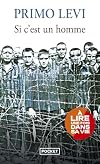
Ça faisait longtemps que je n'avais pas autant accroché à un livre. C'est pourtant un sujet délicat, sur lequel j'ai lu et vu beaucoup de choses, très différentes, plus ou moins appréciées. Mais ici, ça n'a rien à voir.
C'est tout d'abord un témoignage de l'intérieur, avec très peu de vécu ou d'analyse extérieur.
C'est ensuite à peu près show more vide de tout misérabilisme, sensationnalisme, drame en tout genre - et ceci n'est pas une critique des autres choses vues ou lues, car le sujet se prête tout "naturellement" au drame - mais ici l'auteur y échappe et apporte même de l'humour, quasiment toujours présent, en filigrane, et je trouve ça magnifique.
C'est enfin, et surtout, une écriture comme je les aime - Ah, cette écriture! Simple, directe, précise, sans fioriture ni effet de manche. J'adore. Ça met le sujet au premier plan, tout nu, tout cru, efficace.
Il me semble inutile d'ajouter qu'aucun des faits n'y est inventé.
C'est tout d'abord un témoignage de l'intérieur, avec très peu de vécu ou d'analyse extérieur.
Je cultivais à part moi un sentiment de révolte abstrait et modéré.
C'est ensuite à peu près show more vide de tout misérabilisme, sensationnalisme, drame en tout genre - et ceci n'est pas une critique des autres choses vues ou lues, car le sujet se prête tout "naturellement" au drame - mais ici l'auteur y échappe et apporte même de l'humour, quasiment toujours présent, en filigrane, et je trouve ça magnifique.
leurs âmes sont mortes et c'est la musique qui les pousse en avant comme le vent les feuilles sèches, et leur tient lieu de volonté. Car ils n'ont plus de volonté: chaque pulsation est un pas, une contraction automatique de leurs muscles inertes. Voilà ce qu'on fait les Allemands. Ils sont dix mille hommes, et ils ne forment plus qu'une même machine grise ; ils sont exactement déterminés ; ils ne pensent pas, ils ne veulent pas, ils marchent. Jamais les SS n'ont manqué l'une de ces parades d'entrée et de sortie. Qui pourrait leur refuser le droit d'assister à la chorégraphie qu'ils ont eux-même élaborée, à la danse de ces hommes morts qui laissent, équipe par équipe, le brouillard pour le brouillard? Quelle preuve plus tangible de leur victoire?
C'est enfin, et surtout, une écriture comme je les aime - Ah, cette écriture! Simple, directe, précise, sans fioriture ni effet de manche. J'adore. Ça met le sujet au premier plan, tout nu, tout cru, efficace.
Je ne suis plus assez vivant pour être capable de me supprimer.show less
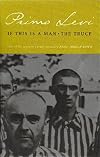
If This Is a Man
If This Is a Man is a memoir by an Italian Jew betrayed, arrested and imprisoned for a year in an Auschwitz concentration camp in 1944. It is on par with Solzhenitsyn in its rawness, but lacks the invectiveness found in the Russian's works. We find accounts of the camp hierarchy, comprising criminals, politicals and Jews; the juxtaposition of cultures and languages; the "relief" of suffering just the right kind of malady; a market economy whose currency is bread rations; show more trade in goods obtained by means ingenious or nefarious; the dehumanising treatment of a group plagued by cold, hunger and sickness; and the horrors of an arbitrary "selection". Precious acts of kindness are highlighted as vestiges of humanity. A chemist by trade, one of Levi's few respites was working in a synthetic rubber factory, an initiative which, characteristic of output from slave labour, never reached fruition.
Stuart Woolf's translation is likely true to the original as it was made under Levi's close supervision, but it is clunky and requires patience. There is little philosophy, the prose is factual and measured. Without fail, read "The Author's Answers to His Readers' Questions", where Levi describes his motivations and post-Auschwitz life, as well as a short history of anti-Semitism. Most interesting is Levi's explanation of why hatred of the Jews has been so constant throughout history (animalistic mistrust of difference untempered by positive societal influences), and why If This Is a Man barely mentions or criticizes the German oppressors (intentional absence of contact with officialdom; lack of transparency to the German population on what happened inside camps).
Recommended by Jared Diamond in a podcast, the sole reason I found this gem.
The Truce
The Truce charts Levi's circuitous journey with around 1,400 other prisoners from Auschwitz to Turin. The novel begins where If This Is a Man ends, with the sick left to die and healthy taken on a death march away from the Russians. When they are finally found by the Russians, they are given basic assistance and eventually led on a route through Ukraine, Russia, Romania, Hungary, Slovakia, Germany and Austria, before finally reaching the Italian border at Brenner. Apart from the death toll in Auschwitz, the frail condition of the survivors together with the gruelling nature of the return trip meant that, of the 650 Italian Jews who were taken with Levi to Auschwitz only 3 returned home.
The account focuses on the scale and helplessness of displaced peoples across Eastern Europe after the German collapse. There is precious little organisation: provisions are unreliable and the travellers are often left to their own resources for fuel and water. Language barriers abound: local Russians cannot abide the non-Russian speaking ex-prisoners. There are also some lighter moments of theatre and film when encamped. An unstable environment breeds unlikely friendships, such as Levi's one with the Greek who has the knack of making a market in anything from shirts to people.
Characters from all sides are brought to life. Many, especially in the earlier chapters, are psychologically scarred, as they are unable to believe or appreciate the war is over. Several incidents in the later chapters are memorable. A disillusioned group abandons the train to hitchhike their way to an intermediary camp. Half a dozen plates are exchanged for a chicken in a desperate search for nutritious food. An enterprising Italian sells a bronze ring as gold to a local peasant just before the train departs a station.
I found Ann Goldstein's translation, found in The Complete Works of Primo Levi (2015), more readable than Stuart Woolf's translation of If This Is a Man. However, while worthwhile reading, The Truce for me does not have the same emotional draw as If This Is a Man. show less
If This Is a Man is a memoir by an Italian Jew betrayed, arrested and imprisoned for a year in an Auschwitz concentration camp in 1944. It is on par with Solzhenitsyn in its rawness, but lacks the invectiveness found in the Russian's works. We find accounts of the camp hierarchy, comprising criminals, politicals and Jews; the juxtaposition of cultures and languages; the "relief" of suffering just the right kind of malady; a market economy whose currency is bread rations; show more trade in goods obtained by means ingenious or nefarious; the dehumanising treatment of a group plagued by cold, hunger and sickness; and the horrors of an arbitrary "selection". Precious acts of kindness are highlighted as vestiges of humanity. A chemist by trade, one of Levi's few respites was working in a synthetic rubber factory, an initiative which, characteristic of output from slave labour, never reached fruition.
Stuart Woolf's translation is likely true to the original as it was made under Levi's close supervision, but it is clunky and requires patience. There is little philosophy, the prose is factual and measured. Without fail, read "The Author's Answers to His Readers' Questions", where Levi describes his motivations and post-Auschwitz life, as well as a short history of anti-Semitism. Most interesting is Levi's explanation of why hatred of the Jews has been so constant throughout history (animalistic mistrust of difference untempered by positive societal influences), and why If This Is a Man barely mentions or criticizes the German oppressors (intentional absence of contact with officialdom; lack of transparency to the German population on what happened inside camps).
Recommended by Jared Diamond in a podcast, the sole reason I found this gem.
The Truce
The Truce charts Levi's circuitous journey with around 1,400 other prisoners from Auschwitz to Turin. The novel begins where If This Is a Man ends, with the sick left to die and healthy taken on a death march away from the Russians. When they are finally found by the Russians, they are given basic assistance and eventually led on a route through Ukraine, Russia, Romania, Hungary, Slovakia, Germany and Austria, before finally reaching the Italian border at Brenner. Apart from the death toll in Auschwitz, the frail condition of the survivors together with the gruelling nature of the return trip meant that, of the 650 Italian Jews who were taken with Levi to Auschwitz only 3 returned home.
The account focuses on the scale and helplessness of displaced peoples across Eastern Europe after the German collapse. There is precious little organisation: provisions are unreliable and the travellers are often left to their own resources for fuel and water. Language barriers abound: local Russians cannot abide the non-Russian speaking ex-prisoners. There are also some lighter moments of theatre and film when encamped. An unstable environment breeds unlikely friendships, such as Levi's one with the Greek who has the knack of making a market in anything from shirts to people.
Characters from all sides are brought to life. Many, especially in the earlier chapters, are psychologically scarred, as they are unable to believe or appreciate the war is over. Several incidents in the later chapters are memorable. A disillusioned group abandons the train to hitchhike their way to an intermediary camp. Half a dozen plates are exchanged for a chicken in a desperate search for nutritious food. An enterprising Italian sells a bronze ring as gold to a local peasant just before the train departs a station.
I found Ann Goldstein's translation, found in The Complete Works of Primo Levi (2015), more readable than Stuart Woolf's translation of If This Is a Man. However, while worthwhile reading, The Truce for me does not have the same emotional draw as If This Is a Man. show less

Primo Levi started his writing career before his incarceration in Auschwitz although it would seem only two short stories, which later appeared in The Periodic Table, survive. His ouvre consists mainly of memoirs and poetry. It wasn't until 1984 when "If Not Now, When?" was written that Levi as a writer emerged. In this towering book we finally hear his proper authorial voice.
His sentences are beautiful and his paragraphs so well balanced that reading this work is almost effortless and at show more the same time almost endlessly satisfying and while the book ostensibly chronicles the wanderings and adventures of a group of mainly Jewish partisans in the rubble of the rout of Third Reich forces in Europe at the end of WWII there are other ways to read it. It is only when Levi finally turned to the novel form that he grudgingly gave the reader a valid role in his writing.
Although Levi was lionised for his memoirs and essays the justification for such heavy praise was, in this writer's opinion, chiefly based in the guilt that the non-Jewish readership felt after WWII and a fellow feeling among literary critics but this late work shows Levi in a more reflective and less polemical mind.
Where his previous work concentrated on memorialising the horrors of the German project to annihilate Jewry "If Not Now, When?" examines the nature of resistance and integrity in the face of overwhelming circumstances and emphasises the humanity of its characters - the rich, the generous, the flawed, and sometimes hateful humanity of them.
I was left wondering as I read this superb work whether Levi had finally come to terms with the reality that the holocaust had been something other than the unique, singularly evil, historically anomalous event that he had always portrayed. By 1984 Vietnam and the Cambodian genocide were already historically attested. By 1984 the disgraceful treatment of the Palestinians was into its third decade and the first Lebanon War was over. The Sabra and Shatila Masacre was history by 1984.
For this reader the regular references throughout "If Not Now, When?" to Palestine as the ultimate escape destination for his brave partisans are signifiers. His partisans talk of Palestine but never the Palestinians. Palestine is theirs by right. In Palestine the horrors of the holocaust can finally be laid to their proper historical resting place - burnt into the racial memory of mankind, never to be repeated and in this light the title and its context is oddly, macabrely ironic. show less
His sentences are beautiful and his paragraphs so well balanced that reading this work is almost effortless and at show more the same time almost endlessly satisfying and while the book ostensibly chronicles the wanderings and adventures of a group of mainly Jewish partisans in the rubble of the rout of Third Reich forces in Europe at the end of WWII there are other ways to read it. It is only when Levi finally turned to the novel form that he grudgingly gave the reader a valid role in his writing.
Although Levi was lionised for his memoirs and essays the justification for such heavy praise was, in this writer's opinion, chiefly based in the guilt that the non-Jewish readership felt after WWII and a fellow feeling among literary critics but this late work shows Levi in a more reflective and less polemical mind.
Where his previous work concentrated on memorialising the horrors of the German project to annihilate Jewry "If Not Now, When?" examines the nature of resistance and integrity in the face of overwhelming circumstances and emphasises the humanity of its characters - the rich, the generous, the flawed, and sometimes hateful humanity of them.
I was left wondering as I read this superb work whether Levi had finally come to terms with the reality that the holocaust had been something other than the unique, singularly evil, historically anomalous event that he had always portrayed. By 1984 Vietnam and the Cambodian genocide were already historically attested. By 1984 the disgraceful treatment of the Palestinians was into its third decade and the first Lebanon War was over. The Sabra and Shatila Masacre was history by 1984.
For this reader the regular references throughout "If Not Now, When?" to Palestine as the ultimate escape destination for his brave partisans are signifiers. His partisans talk of Palestine but never the Palestinians. Palestine is theirs by right. In Palestine the horrors of the holocaust can finally be laid to their proper historical resting place - burnt into the racial memory of mankind, never to be repeated and in this light the title and its context is oddly, macabrely ironic. show less

A grad school colleague, knowing of my interest in literature and science, recommended this book to me. I couple years later I bought it so I could scan a couple chapters and teach it in my "vision of science"–themed academic writing class. Based on a quick skim, I selected a couple that looked good to teach, but this did not happen; a couple weeks into the course, it became clear to me I had assigned too much reading, and I dropped the readings from the schedule, much to my students' show more relief. But of course I chucked the book onto my reading list, and some six years later I have finally gotten around to it.
The book consists of twenty-one chapters, each titled after an element of the periodic table. They cover Levi's life, from his childhood to his adulthood, with a particular emphasis on his career as an industrial chemist and some discussion of his time in a concentration camp (which he covered in more detail elsewhere), but also a number of embedded narratives about other people.
It's my first work by Levi, and an interesting one. Like a lot of collections, I did not glom onto every story but there were a number of good ones. A lot of the stuff about Levi's young attempt to get into chemistry are quite funny, especially his attempts at romance, and there's an interesting tale of his attempt to solve contamination at a chemical site.
But it is also, of course, a book about fascism and how it affects our lives. I found this passage from "Potassium" about the certainty of chemistry fascinating:
Or is there? Later, in "Chromium," he solves a bit of a scientific mystery and imparts to his coworkers a new process they have to follow to avoid contamination issues. Years later, he has long left that plant, but the process remains:
The best story in the book is "Vanadium," where Levi bumps into a German chemist he knows from the concentration camp. Levi wants to find the man a monster against which to validate himself; the German chemist wants to use Levi to vindicate himself as someone who really was not that bad. Neither gets what he wants—it's a really touching meditation on complicity and blame. It ends kind of uncertainly, but how else could it? show less
The book consists of twenty-one chapters, each titled after an element of the periodic table. They cover Levi's life, from his childhood to his adulthood, with a particular emphasis on his career as an industrial chemist and some discussion of his time in a concentration camp (which he covered in more detail elsewhere), but also a number of embedded narratives about other people.
It's my first work by Levi, and an interesting one. Like a lot of collections, I did not glom onto every story but there were a number of good ones. A lot of the stuff about Levi's young attempt to get into chemistry are quite funny, especially his attempts at romance, and there's an interesting tale of his attempt to solve contamination at a chemical site.
But it is also, of course, a book about fascism and how it affects our lives. I found this passage from "Potassium" about the certainty of chemistry fascinating:
the Fascism around us did not have opponents. We had to begin from scratch, 'invent' our anti-Fascism, create it from the germ, from the roots, from our roots. We looked around us and traveled up roads that led not very far away. The Bible, Croce, geometry, and physics seemed to use sources of certainty.We may like to think of science as source of certainty in an uncertain world, but Levi argues that the truths of science are as arbitrary the truths of humans when you come down to it—there is nothing to be found in science that will let you resist fascism.
[...]
Chemistry, for me, had stopped being such a source. It led to the heart of Matter, and Matter was our ally precisely because the Spirit, dear to Fascism, was our enemy; but having reached the fourth year of Pure Chemistry, I could no longer ignore that chemistry itself, or at least that which we were being administered, did not answer my questions. To prepare phenyl bromide or methyl violet... was amusing, even exhilarating, but... [w]hy in that particular way and not in another? After having been force fed in liceo [school] the truth revealed by Fascist Doctrine, all revealed, unproven truths either bored me stiff or aroused my suspicion. (43-4)
Or is there? Later, in "Chromium," he solves a bit of a scientific mystery and imparts to his coworkers a new process they have to follow to avoid contamination issues. Years later, he has long left that plant, but the process remains:
my report went the way of all flesh: but formulas are as holy as prayers, decree-laws, and dead languages, and not an iota in them can be changed. As so my ammonium chloride... by now completely useless and probably a bit harmful, is religiously ground into the chromate anti-rust paint on the shore of that lake, and nobody knows why anymore. (133)There's an odd sort of hope in this, tinged with melancholy. The good you do can linger for a long time... albeit until it has become actively harmful in its own way! Humans cling on to revealed truths, for good or for ill—this is probably the lasting lesson of fascism, religion, science, and The Periodic Table.
The best story in the book is "Vanadium," where Levi bumps into a German chemist he knows from the concentration camp. Levi wants to find the man a monster against which to validate himself; the German chemist wants to use Levi to vindicate himself as someone who really was not that bad. Neither gets what he wants—it's a really touching meditation on complicity and blame. It ends kind of uncertainly, but how else could it? show less
Lists
Italian Literature (10)
. (1)
Writers at Risk (1)
1970s (1)
Favourite Books (1)
War Literature (1)
Read This Next (1)
Non-Fiction (1)
el (1)
1960s (1)
2016 UpROOTed (1)
1940s (1)
1980s (1)
Jewish Books (5)
THE WAR ROOM (2)
Holocaust (2)
Folio Society (2)
First Novels (1)
Five star books (1)
Wishlist (1)
Awards


You May Also Like


Associated Authors
Statistics
- Works
- 167
- Also by
- 31
- Members
- 25,260
- Popularity
- #830
- Rating
- 4.2
- Reviews
- 362
- ISBNs
- 707
- Languages
- 31
- Favorited
- 86


