
D. H. Lawrence (1885–1930)
Author of Lady Chatterley's Lover
About the Author
D(avid) H(erbert) Lawrence was born on September 11, 1885. His father was a coal miner and Lawrence grew up in a mining town in England. He always hated the mines, however, and frequently used them in his writing to represent both darkness and industrialism, which he despised because he felt it was show more scarring the English countryside. Lawrence attended high school and college in Nottingham and, after graduation, became a school teacher in Croyden in 1908. Although his first two novels had been unsuccessful, he turned to writing full time when a serious illness forced him to stop teaching. Lawrence spent much of his adult life abroad in Europe, particularly Italy, where he wrote some of his most significant and most controversial novels, including Sons and Lovers and Lady Chatterly's Lover. Lawrence and his wife, Frieda, who had left her first husband and her children to live with him, spent several years touring Europe and also lived in New Mexico for a time. Lawrence had been a frail child, and he suffered much of his life from tuberculosis. Eventually, he retired to a sanitorium in Nice, France. He died in France in 1930, at age 44. In his relatively short life, he produced more than 50 volumes of short stories, poems, plays, essays, travel journals, and letters, in addition to the novels for which he is best known. (Bowker Author Biography) show less
Image credit: Lawrence in Mexico, 1923
Series
Works by D. H. Lawrence
D. H. Lawrence and Italy: Sketches from Etruscan Places, Sea and Sardinia, Twilight in Italy (Penguin Classics) (1985) 323 copies, 2 reviews
Sons and Lovers / Women in Love / Lady Chatterly's Lover / Love Among the Haystacks (1983) 108 copies, 1 review
Sons and Lovers; St Mawr; The Fox; The White Peacock; Love among the Haystacks; The Virgin and the Gypsy; Lady Chatterley's Lover (1980) 82 copies
England, My England and Other Stories (The Cambridge Edition of the Works of D. H. Lawrence) (1990) 57 copies, 1 review
Sons and Lovers [and] The Fox [and] Love Among the Haystacks [and] Aaron's Rod [and] The Ladybird [and] Women in Love (1979) 46 copies
Life with a Capital L: Essays Chosen and Introduced by Geoff Dyer (Penguin Modern Classics) (2019) 28 copies
The Letters of D. H. Lawrence; Volume I, 1901-13 (The Cambridge Edition of the Letters of D. H. Lawrence) (1979) 26 copies, 1 review
The Selected Letters of D. H. Lawrence (The Cambridge Edition of the Letters of D. H. Lawrence) (1997) 25 copies, 1 review
Study of Thomas Hardy and Other Essays (The Cambridge Edition of the Works of D. H. Lawrence) (1985) 23 copies
D. H. Lawrence: The Complete Novels (Women in Love, Sons and Lovers, Lady Chatterley's Lover, The Rainbow...) (2020) 18 copies
A Selection of Short Stories by D. H. Lawrence: Pre-intermediate (Macmillan Readers) (2007) 17 copies, 2 reviews
The First and Second Lady Chatterley Novels (The Cambridge Edition of the Works of D. H. Lawrence) (1999) 15 copies
The Poems 2 Volume Hardback Set (The Cambridge Edition of the Works of D. H. Lawrence) (2013) 14 copies
Women in Love • Lady Chatterley's Lovers • The Rainbow • Sons and Lovers • The Plumed Serpent 12 copies
The Letters of D. H. Lawrence; Volume II, 1913-16 (The Cambridge Edition of the Letters of D. H. Lawrence) (1982) 12 copies
D. H. Lawrence: Late Essays and Articles (The Cambridge Edition of the Works of D. H. Lawrence) (2004) 10 copies
The Complete Works 9 copies
Meesterwerken van Lawrence 9 copies
D.H. LAWRENCE OMNIBUS: THE COMPLETE NOVELS: SONS AND LOVERS, ST. MAWR, THE FOX, THE WHITE PEACOCK, LOVE AMONG THE HAYSTA (1986) 8 copies
The symbolic meaning : the uncollected versions of Studies in classic American literature (1964) 7 copies
The Letters of D. H. Lawrence: Volume 3, October 1916-June 1921 (The Cambridge Edition of the Letters of D. H. Lawrence) (1984) 6 copies
Ölen Adam 6 copies
The Letters of D. H. Lawrence (The Cambridge Edition of the Letters of D. H. Lawrence) (1989) 5 copies
Kangaroo / The Boy in the Bush 4 copies
The Last Laugh 4 copies
The Letters of D. H. Lawrence: Volume 4, June 1921-March 1924 (The Cambridge Edition of the Letters of D. H. Lawrence) (1987) 4 copies
A Collier's Friday Night 4 copies
Reading & Training : D. H. Lawrence : Sons and lovers [book + sound recording] (2008) — Writer — 3 copies
Love I (Femme Amoureuses) 3 copies
Short Novels (Phoenix e.) 3 copies
Selected poems 3 copies
Pagine di viaggio 3 copies
Life 3 copies
Aki a szigeteket szerette : novellák 3 copies
Um Amante Moderno e Outras Histórias 3 copies
The Letters of D. H. Lawrence (The Cambridge Edition of the Letters of D. H. Lawrence) (Volume 8) (2001) 3 copies
DH Lawrence: The Rainbow and Women in Love: A Selection of Critical Essays (1969) 3 copies, 1 review
The paintings of D. H. Lawrence 3 copies
Brev 3 copies
Walt Whitman 3 copies
Leppäkerttu ja muita novelleja 2 copies
The Mystic Sea Volume 3 2 copies
Novelleja 2 copies
A Mortal Coil and Other Stories 2 copies
Selected poems of D. H. Lawrence; 2 copies
Miejsca Etrusków 2 copies
Narrativa completa I 2 copies
D. H. Lawrence Collection, Volume I: Sons and Lovers, Aaron’s Rod, Twilight in Italy, The Prussian Officer & Other Stories (2020) 2 copies
The Letters of D. H. Lawrence VOL. VII 1928-30 (The Cambridge Edition of the Letters of D. H. Lawrence) (1993) 2 copies
Romanzi 2 copies
Haciendo el amor con música 2 copies
Mulheres apaixonas 2 copies
Women in Love by D. H. Lawrence "The Annotated Classic Edition" Fiction" Vintage Romance Novel (2020) 2 copies
Kobieta i paw 2 copies
Naar Kvinder elsker 2 copies
The Prussian Officer [short story] 2 copies
Viaggio in Italia 2 copies
Todgeweihtes Herz 2 copies
Elskov i høst 2 copies
Lawrence : en samlingsvolym : Räven och andra berättelser, noveller, brev, lyrik, essäistik 2 copies
La segunda Lady Chatterley: John Thomas and Lady Jane (Grandes clásicos) (Spanish Edition) (2013) 2 copies
Sons and Lovers [audio - abridged] 2 copies
The D. H. Lawrence Collection: 19 Novels and Short Stories (Unexpurgated Edition) (Halcyon Classics) (2009) 2 copies
Piano 2 copies
İki Öykü 2 copies
Rawdon's Roof 2 copies
Delilah and Mr. Bircumshaw 2 copies
The Thimble 2 copies
Monkey Nuts 2 copies
Fanny and Annie 2 copies
Collected letters 1 2 copies
Libri di viaggio 2 copies
The Letters of D.H. Lawrence 2 copies
D.H Lawrence 2 copies
Atını Sürüp Giden Kadın 1 copy
Short Stories I 1 copy
Short Novels I 1 copy
Collected letters 2 1 copy
Historias de los oculto 1 copy
England My England 1 copy
Le Paon blanc. 1 copy
Racconti 1 copy
Lady Chatterley's lover, with an Appendix containing the decision of the United States Direct Court 1 copy
Biglietti, prego / Sorriso 1 copy
Sea and Sardinia 1 copy
Die Apokalypse. 1 copy
El caballito de madera ganador - Un vidrio de colores [The Winning Rocking Horse - A Stained Glass] 1 copy
La volpe 1 copy
Refurinn 1 copy
Obras completas - Tomo I: El amante de lady Chatterley / El oficial prusiano y otras historias 1 copy
Söhne und Liebhaber 1 copy
Sons & Lovers & Other Novels 1 copy
PREMIKAYEIN 1 copy
The prussian officier 1 copy
Elskov i høst 1 copy
Il purosangue. 1 copy
El hombre que murió 1 copy
PR6023 .A93 Women in Love 1 copy
Oğullar ve sevililer 1 copy
GRA TË DASHURUARA 1 copy
শ্রেষ্ঠ গল্প 1 copy
Selected essays 1 copy
Mavrica 1 copy
A tiszteletes úr leányai. A szűz és a cigány / David Herbert Lawrence ; [ford. Tellér Gyula, Pap Mária] (2005) 1 copy
Decadência pelo amor 1 copy
Lady Chatterley's House 1 copy
The Later D.H. Lawrence 1 copy
O Arco-íris 1 copy
O doamnă încântătoare 1 copy
[Contos] 1 copy
Zwei blaue Vögel : Erzählung 1 copy
Sun and other stories 1 copy
a jovem perdida 1 copy
Prmikayen (प्रेमिकाएं) 1 copy
Mexikanische Tage 1 copy
Șarpele cu pene 1 copy
LA VARA DE AARON 1 copy
o amante de lady chaterley 1 copy
LA MUJER PERDIDA 1 copy
"The Fox" Movie Pressbook 1 copy
CARTAS 1 copy
L'Amazone fugitive 1 copy
El Hombre que Muruó 1 copy
La Mujer y la Bestia 1 copy
El Pavo Real Blanco 1 copy
Promenades étrusques 1 copy
La volpe: La coccinella 1 copy
Revista de occidente. Año XIII. N° CXLV, CXLVI, CXLVII — Contributor — 1 copy
SONS AUR LOVERS 1 copy
Tickets, please 1 copy
Z5-N 1 copy
D.H. Lawrence: Seven Novels 1 copy
ooo7-Short Stories 1 copy
Four Short Stories 1 copy
O Raposo 1 copy
Spy Catchers 1 copy
Homme d'abord, essais choisis et présentés par Marcel Marnat. Traductions de Thérèse Aubray... 1 copy
In Your Footsteps 1 copy
1973 1 copy
CORRESPONDENCIA 2 1 copy
CORRESPONDENCIA 1 1 copy
Parfum de Crizanteme 1 copy
Défense de Lady Chatterley 1 copy
CRISOL 260 LA MUJER PERDIDA 1 copy
Second Best [short story] 1 copy
Short novels Vol. III 1 copy
Poesie d'amore 1 copy
Touch and Go 1 copy
Dikter 1 copy
The Collected Poems, Vol. 2 1 copy
The Collected Poems Vol. 1 1 copy
Love Stories (Advanced) 1 copy
Homme d'abord 1 copy
Günahkar Ruhlar 1 copy
The Fight for Barbara 1 copy
St Mawr 1 copy
D. H. LAWRENCE - SONS & LOVERS; THE FOX; LOVE AMONG THE HAYSTACKS; AARON'S ROD; THE LADYBIRD; WOMEN IN LOVE. (1979) 1 copy
ST. Maur e outros contos 1 copy
The Ladybird/Love Among the Haystacks — Author — 1 copy
Drie novellen 1 copy
Aaron's Rod and Other Works 1 copy
Granatæbler Pomegranates 1 copy
The White Stocking 1 copy
The Collected Poetry 1 copy
The Letters of D. H. Lawrence 8 Volume Set in 9 Paperback Pieces (The Cambridge Edition of the Letters of D. H. Lawrence) (2003) 1 copy
La volpe / La coccinella 1 copy
The Old Adam 1 copy
The Witch A La Mode 1 copy
The Miner At Home 1 copy
The Letters of D. H. Lawrence Part 2 (The Cambridge Edition of the Letters of D. H. Lawrence) (2007) 1 copy
Once--! 1 copy
A Fly In The Ointment 1 copy
Classic Short Stories: "A Modern Lover","The Old Adam","A Lesson on a Tortoise","Her Turn","The Fly in the Ointment" (2001) 1 copy
D.H.Lawrence Poems Vol.2 1 copy
D.H.Lawrence Poems Vol.1 1 copy
The Primrose Path 1 copy
Altitude 1 copy
Correspondencia (I) y (II) 1 copy
Noah's Flood 1 copy
Paula Winokur 1 copy
The Flying Fish 1 copy
Short stories Vol. III 1 copy
The Works of D.H. Lawrence 1 copy
2 1 copy
Tutte le poesie 1 copy
A Lesson on a Tortoise 1 copy
The Stories of D.H. Lawrence 1 copy
Essays & Belles-Lettres 1 copy
THE LETTERS OF D. H. LAWRENCE: Volume (1) One: 1909 - 1915; Volume (2) Two: 1916 - 1923; Volume (3) Three: 1923 - 1930 (1939) 1 copy
Het verblijde spook 1 copy
The Fox / Lady Chatterley's Lover / A Modern Lover / Sons and Lovers / The Virgin and the Gipsy / Women in Love (1500) 1 copy
Adolf 1 copy
Rex 1 copy
A Prelude 1 copy
Lessford's Rabbits 1 copy
DH Lawrence Selected Poems 1 copy
Fire & Other Poems 1 copy
[Title missing] 1 copy
Una mujer partió a caballo 1 copy
The plays of D.H. Lawrence 1 copy
Sardaigne 1 copy
La verga d'Aronne : romanzo 1 copy
D.H. Lawrence - A Mortal Coil & Other Stories: "Life is ours to be spent, not to be saved." (2014) 1 copy
Sons and Lovers (Mint Editions (In Their Own Words: Biographical and Autobiographical Narratives)) (2021) 1 copy
Racconti italiani 1 copy
D H Lawrence - Bay: “This is the very worst wickedness, that we refuse to acknowledge the passionate evil that is in us. ” (2014) 1 copy
The Mowers 1 copy
Kr̃lek bland hs̲tackar 1 copy
Oakshot Complete Works of D.H Lawrence. (Illustrated/Inline Footnotes) (Classics Book 16) (2017) 1 copy
Udvalgte noveller 1 copy
The Symbolic Meaning 1 copy
Uvas y Otros Poemas 1 copy
El Verdadero D. H. Lawrence 1 copy
Milenec lady Chatterlayové 1 copy
works 1 copy
Fii şi amanți 1 copy
Poems Volume I 1 copy
Letters to Bertrand Russell 1 copy
Narrativa completa II 1 copy
İki Mavi Kuş 1 copy
O Amante de Lady Chartterley 1 copy
Obras completas, 7 vols. 1 copy
Omnibus 1 copy
Mujer y la bestia, La 1 copy
Teatro e prose varie 1 copy
Poemas escogidos 1 copy
Bakire İle Çingene 1 copy
The story of a lower 1 copy
Romanzi Brevi 1 copy
D. H. Lawrence Collection, Volume II: The Rainbow, Women In Love, England, My England & Other Stories (2020) 1 copy
The D.H. Lawrence Collection 1 copy
The Virgin & The Gipsy 1 copy
The Plummed Serpent 1 copy
Il serpente piumato 1 copy
The blue Moccasins 1 copy
Oriental Assembly 1 copy
La dama encantadora 1 copy
Neitsi ja mustlane 1 copy
Associated Works
The Best Poems of the English Language: From Chaucer Through Robert Frost (2004) — Contributor — 1,249 copies, 3 reviews
Literature: An Introduction to Fiction, Poetry, and Drama (1995) — Contributor, some editions — 1,012 copies, 7 reviews
A Book of Luminous Things: An International Anthology of Poetry (1996) — Contributor — 942 copies, 12 reviews
Perrine's Literature: Structure, Sound, and Sense (1970) — Contributor, some editions — 893 copies, 4 reviews
The World of the Short Story: A 20th Century Collection (1986) — Contributor — 512 copies, 4 reviews
World Poetry: An Anthology of Verse from Antiquity to Our Time (1998) — Contributor — 499 copies, 2 reviews
The Norton Anthology of English Literature, 4th Edition, Volume 2 (1979) — Contributor — 270 copies, 1 review
The Vampire Archives: The Most Complete Volume of Vampire Tales Ever Published (2007) — Contributor — 218 copies, 5 reviews
In Another Part of the Forest: An Anthology of Gay Short Fiction (1994) — Contributor — 191 copies, 2 reviews
Pages Passed from Hand to Hand: The Hidden Tradition of Homosexual Literature in English from 1748 to 1914 (1997) — Contributor — 185 copies, 1 review
The Graphic Canon, Vol. 3: From Heart of Darkness to Hemingway to Infinite Jest (2013) — Contributor — 162 copies, 1 review
Answering Back: Living Poets Reply to the Poetry of the Past (2007) — Contributor — 119 copies, 1 review
My Favorite Plant: Writers and Gardeners on the Plants They Love (1998) — Contributor — 100 copies, 1 review
The Blithedale Romance [Norton Critical Edition, 2nd ed.] (2010) — Contributor — 62 copies, 2 reviews
Fifty Years: Being a Retrospective Collection of Novels, Novellas, Tales, Drama, Poetry, and Reportage and Essays: All Drawn from Volumes Issued during the Last Half-Century by… (1965) — Contributor; Contributor — 56 copies
Buzz Words: Poems About Insects (Everyman's Library Pocket Poets Series) (2021) — Contributor — 56 copies
Benjamin Franklin's Autobiography [Norton Critical Edition, 2nd ed.] (2012) — Contributor — 47 copies
Alfred Hitchcock Presents : A Baker's Dozen of Suspense Stories (1963) — Contributor — 36 copies, 2 reviews
Best-Loved Short Stories: Flaubert, Chekhov, Kipling, Joyce, Fitzgerald, Poe and Others (2004) — Contributor — 34 copies
Gender in Modernism: New Geographies, Complex Intersections (2007) — Contributor — 12 copies, 1 review
Oogst Der Tijden. keur uit de werken van schrijvers en dichters aller volken en eeuwen (1940) — Contributor — 12 copies
Imagist Anthology 1930 — Contributor — 4 copies
Racconti del terrore — Preface, some editions — 3 copies
Die englische Literatur 09 in Text und Darstellung. 20. Jahrhundert. (2001) — Contributor — 3 copies
Then and Now. A Selection of Articles, Stories & Poems, Taken from the First Fifty Numbers of ‘Now & Then’, 1921–35. Together with Some Illustrations, etc. (1935) — Contributor — 2 copies
For Want of a Horse: Twenty-Three Tales of Supernatural Stallions, Magical Mares, and Paranormal Ponies (2015) — Contributor; Contributor — 2 copies, 2 reviews
Ode to Boy: Vol. 2: An Anthology of Same-Sex Attraction in Literature from the 19th Century Through the First World War (2014) — Contributor — 2 copies
American Aphrodite: A Quarterly for the Fancy Free (Volume 3, Number 11) (1953) — Contributor — 2 copies
Modern Short Stories — Contributor — 2 copies
The New Decameron, the Third day — Contributor — 1 copy
Eight Modern Essayists (First Edition) — Contributor — 1 copy
* De Provence Lege Artis: Verhalen uit het land van Van Gogh — Contributor — 1 copy
Ugoszczone Duchy 1 copy
Contemporary British Short Stories II. George Orwell, Dylan Thomas, D. H. Lawrence, Virginia Woolf, H. E. Bates. (1998) — Author — 1 copy
Argosy (UK) [Vol. IV No. 5, June 1943] — Contributor — 1 copy
Sapte povesti de calatorie — Contributor — 1 copy
Tagged
Common Knowledge
- Canonical name
- Lawrence, D. H.
- Legal name
- Lawrence, David Herbert Richards
- Other names
- Lawrence, David Herbert
- Birthdate
- 1885-09-11
- Date of death
- 1930-03-02
- Gender
- male
- Education
- Beauvale Board School
Nottingham High School
British School, Eastwood
University College of Nottingham (cert. 1908) - Occupations
- novelist
short story writer
teacher
clerk - Organizations
- The Imagists
New Directions - Relationships
- Lawrence, Frieda von Richthofen (spouse)
Chambers, Jessie (friend)
Pound, Ezra (friend)
Aldington, Richard (friend) - Short biography
- "Lawrence wrote this unfinished review a few days before he died. The book interested him, and he agreed with much of it. Then he got tired of writing and I persuaded him not to go on. It is the last thing he wrote. -- Frieda Lawrence." (The book-collector's quarterly, no. XII, Oct.-Dec. 1933, p. 1, re. Eric Gill, Art-nonsense and other essays).
- Cause of death
- tuberculosis
- Nationality
- UK
- Birthplace
- Eastwood, Nottinghamshire, England, UK
- Places of residence
- Zennor, Cornwall, England, UK
New Mexico, USA
London, Middlesex, England, UK
Metz, Germany
Fiascherino, Italy
Middleton-by-Wirksworth, Derbyshire, England, UK (show all 10)
Darlington, New South Wales, Australia
Thirroul, New South Wales, Australia
Kiowa Ranch, San Cristobal, Taos County, New Mexico, USA
Florence, Italy (near) - Place of death
- Vence, Alpes-Maritimes, France
- Burial location
- Old Vence Cemetery, Vence, France
San Cristobal, New Mexico, USA (Kiowa Ranch | ashes scattered) - Map Location
- England, UK
Members
Discussions
British Author Challenge June 2024: Kiran Millwood Hargrave & DH Lawrence in 75 Books Challenge for 2024 (July 2024)
1915: D. H. Lawrence - The Rainbow in Literary Centennials (December 2014)
The lady Chatterley's lover in Literary Snobs (April 2013)
1001 Group Read: Sons and Lovers in 1001 Books to read before you die (October 2011)
Lady Chatterley's Lover in 1001 Books to read before you die (January 2008)
Reviews
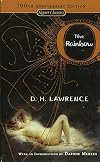
This is a three-generation family saga, set in Nottinghamshire, starting in Victorian times and ending before fears of WW1 loomed. Except that it isn’t that: the brief Introduction summarises all the key characters, careers, couplings, births and deaths.
Events are mere tools and waypoints, not the purpose or destination, because this is not primarily a story: it’s an experience of passions, clothed in elliptically floral, fiery, watery imagery, stained deep with Biblical themes.
But show more these are not conventionally Christian people: they seek and submit to the forces of nature, their physical desires, free of guilt and shame. They marvel at creation, and worship it and each other through the medium of their mingling, tingling flesh. A deep, true sacrament. (Yet when this was banned shortly after publication, it was on the grounds of obscenity, rather than blasphemy: lesbianism alluded to, though nowadays, any outrage comes from the fact thatone is the teacher of the other .)
This is a profoundly sensual, sexual book, but it’s not at all explicit: the most intimate encounters are described in terms of flowers and flames, rather than human anatomy. I’m not one for florid language or euphemisms, but I was first seduced, then bewitched, and finally intoxicated by the surreal erotic lyricism that is often more poem than prose.
Reading this was a total emotional immersion. I opened up to receive Lawrence's words: I burned in the fire, dusted the ashes from my lips, and drowned in the waters.
Reliving it now, I melt and burn and dissolve and yearn all over again. I quiver and shiver, even as I wave and drown, licked in the flames of Lawrence’s passion.
Lawrence’s Words
I am too much in the thrall of this book to write more words of my own:
• “Outside, the rain slanted by in fine, steely, mysterious haste, emerging out of the gulf of darkness.”
• “The pure love came in sunbeams between them, when she was like a flower in the sun to him… feeling the radiance from the Almighty beat through him like a pulse, as he stood in the upright flame of praise, transmitting the pulse of Creation.”
• “Then softly, oh softly, so softly… his lips touched her cheek, and she drifted through strands of heat and darkness.”
• “His limbs, his body, took fire and beat up in flames. She clung to him, she cleaved to his body. The flames swept him, he held her in sinews of fire. If she would kiss him! He bent his mouth down. And her mouth, soft and moist, received him. He felt his veins burst with anguish of thankfulness, his heart was made with gratefulness, he could pour himself out upon her forever.”
• Plum trees, “All glittering and snowy and delighted with the sunshine, in full bloom under a blue sky. They threw out their blossom, they flung it about under the blue heavens.”
• “But to him, she was a flame that consumed him… till he existed only as an unconscious, dark transit of flame, deriving from her.”
• "Now, ah now, she was swimming in the same water... The girl moved her limbs voluptuously, and swam by herself, deliciously, yet with a craving of unsatisfaction. She wanted to touch the other, to touch her, to feel her."
• “She would… feel her blood running, feel herself lying open like a flower unsheathed in the sun, insistent and potent with demand.”
• “She laid hold of him for her dreams.”
• “He was the warm colouring to her dreams, he was the hot blood beating within them.”
MORE quotes… I have saved many more quotes, grouped loosely by theme, HERE, along with a (very) few observations about the story, and the change of tone at the end.
But that is not the review; this one is.
Ursula's story (plus Gudrun's) is continued in Women in Love, which is remarkably different style - in some ways. See my review HERE.
Image: Georgia O’Keeffe “Blue Flower” 1918, http://whitney.org/image_columns/0026/3487/okeeffe_blue_flower_481_481.jpg show less
Events are mere tools and waypoints, not the purpose or destination, because this is not primarily a story: it’s an experience of passions, clothed in elliptically floral, fiery, watery imagery, stained deep with Biblical themes.
But show more these are not conventionally Christian people: they seek and submit to the forces of nature, their physical desires, free of guilt and shame. They marvel at creation, and worship it and each other through the medium of their mingling, tingling flesh. A deep, true sacrament. (Yet when this was banned shortly after publication, it was on the grounds of obscenity, rather than blasphemy: lesbianism alluded to, though nowadays, any outrage comes from the fact that
This is a profoundly sensual, sexual book, but it’s not at all explicit: the most intimate encounters are described in terms of flowers and flames, rather than human anatomy. I’m not one for florid language or euphemisms, but I was first seduced, then bewitched, and finally intoxicated by the surreal erotic lyricism that is often more poem than prose.
Reading this was a total emotional immersion. I opened up to receive Lawrence's words: I burned in the fire, dusted the ashes from my lips, and drowned in the waters.
Reliving it now, I melt and burn and dissolve and yearn all over again. I quiver and shiver, even as I wave and drown, licked in the flames of Lawrence’s passion.
Lawrence’s Words
I am too much in the thrall of this book to write more words of my own:
• “Outside, the rain slanted by in fine, steely, mysterious haste, emerging out of the gulf of darkness.”
• “The pure love came in sunbeams between them, when she was like a flower in the sun to him… feeling the radiance from the Almighty beat through him like a pulse, as he stood in the upright flame of praise, transmitting the pulse of Creation.”
• “Then softly, oh softly, so softly… his lips touched her cheek, and she drifted through strands of heat and darkness.”
• “His limbs, his body, took fire and beat up in flames. She clung to him, she cleaved to his body. The flames swept him, he held her in sinews of fire. If she would kiss him! He bent his mouth down. And her mouth, soft and moist, received him. He felt his veins burst with anguish of thankfulness, his heart was made with gratefulness, he could pour himself out upon her forever.”
• Plum trees, “All glittering and snowy and delighted with the sunshine, in full bloom under a blue sky. They threw out their blossom, they flung it about under the blue heavens.”
• “But to him, she was a flame that consumed him… till he existed only as an unconscious, dark transit of flame, deriving from her.”
• "Now, ah now, she was swimming in the same water... The girl moved her limbs voluptuously, and swam by herself, deliciously, yet with a craving of unsatisfaction. She wanted to touch the other, to touch her, to feel her."
• “She would… feel her blood running, feel herself lying open like a flower unsheathed in the sun, insistent and potent with demand.”
• “She laid hold of him for her dreams.”
• “He was the warm colouring to her dreams, he was the hot blood beating within them.”
MORE quotes… I have saved many more quotes, grouped loosely by theme, HERE, along with a (very) few observations about the story, and the change of tone at the end.
But that is not the review; this one is.
Ursula's story (plus Gudrun's) is continued in Women in Love, which is remarkably different style - in some ways. See my review HERE.
Image: Georgia O’Keeffe “Blue Flower” 1918, http://whitney.org/image_columns/0026/3487/okeeffe_blue_flower_481_481.jpg show less

A paean to a kind of Nietzschean paganism, with the will-to-power being replaced with a will-to-collective-wholeness, Lawrence here seeks to reestablish the pre-Judaeo-Christian world’s connection with the cosmos, an acephalic rapturous correspondence from a man’s blood to the rays of the Sun and the salve of the Moon. It’s all rather beautiful really, with Lawrence’s venom toward John of Patmos being tempered by a congenial warmth. Lawrence utilises his dying pen strokes here to show more outline a program of contented living for modern man, one contradictory to the individualistic and envious vision portrayed in Revelations: a vision which has been handed down to us by the cruel side of Christianity’s Janus face (the Christian Love of Jesus versus the Christian Envy of John of Patmos, with such envy bringing about the desire to destroy Rome and then the entire universe just because John could not enjoy the delicacies of Babylon).
Of course it’s a shame that any mention of paganism these days makes people quite rightfully turn up their noses, it’s been somewhat co-opted by the dregs of the New-Age-hippy-cum-weird-sex-magick-stuff community (think of Kathy Bates in About Schmidt, wind chimes and a sour sopping pussy, balding chubby men with musty miserable-looking ponytails, you get the picture), even worse are the eye-rolling racist rants espoused by Scandinavian dolts who identify as pagans and think that by using the word ‘degeneracy’ enough times they’ll magically be able to regain some absurd connection with their Norse Gods by virtue of blood and soil alone (I see you Varg Vikernes and The Golden One, you sad bastards). I think there really is something to be said about the line of thought through the Romantic poets, Nietzsche and Lawrence, some kind of link between us and our environment that needs to be rekindled, and it’s always interesting to see someone try to put the words down to communicate such an idea. I think the question now is to try to steer away from the flat and dull materialism of scientism (and the dull orthodox interpretations of Marxism for that matter) whilst at the same time not indulging in some meatheaded irrationalism, aiming instead to give a voice to the capabilities of emotional intelligence, something wider than the individual (almost collective unconscious-y, but I’ve never been a card-carrying Jungian). Don’t tell anyone that I’ve been reading this during my virtual business meetings, I have to cling onto it just so as to remind myself that there is indeed something eternal out there, something worthy of praise outside of the slow suicide I am participating in each and every time I hop on a zoom call.
Lawrence has the virtue/terrible tendency to leave his best stuff on the last page, so I’ll leave you with this.
‘What man most passionately wants is his living wholeness and his living unison, not his own isolate salvation of his 'soul'. Man wants his physical fulfilment first and foremost, since now, once and once only, he is in the flesh and potent. For man, the vast marvel is to be alive. For man, as for flower and beast and bird, the supreme triumph is to be most vividly, most perfectly alive. Whatever the unborn and the dead may know, they cannot know the beauty, the marvel of being alive in the flesh. The dead look after the afterwards. But the magnificent here and now of life in the flesh is ours, and ours alone, and ours only for a time. We ought to dance with rapture that we should be alive and in the flesh, and part of the living, incarnate cosmos. I am part of the sun as my eye is part of me. That I am part of the earth my feet know perfectly, and my blood is part of the sea. My soul knows that I am part of the human race, my soul is an organic part of the great human soul, as my spirit is part of my nation. In my own very self, I am part of my family. There is nothing of me that is alone and absolute except my mind, and we shall find that the mind has no existence by itself, it is only the glitter of the sun on the surface of the waters.’
‘Shadow wizard money gang
We love casting spells’
‘Who says the sun cannot speak to me! The sun has a great blazing consciousness, and I have a little blazing consciousness. When I can strip myself of the trash of personal feelings and ideas, and get down to my naked sun-self, then the sun and I can commune by the hour, the blazing interchange, and he gives me life, sun-life, and I send him a little new brightness from the world of the bright blood. The great sun, like an angry dragon, hater of the nervous and personal consciousness in us. As all these modern sunbathers must realize, for they become disintegrated by the very sun that bronzes them. But the sun, like a lion, loves the bright red blood of life, and can give it an infinite enrichment if we know how to receive it. But we don't. We have lost the sun. And he only falls on us and destroys us, decomposing something in us: the dragon of destruction instead of the life-bringer. And we have lost the moon, the cool, bright, ever-varying moon. It is she who would caress our nerves, smooth them with the silky hand of her glowing, soothe them into serenity again with her cool presence. For the moon is the mistress and mother of our watery bodies, the pale body of our nervous consciousness and our moist flesh. Oh, the moon could soothe us and heal us like a cool great Artemis between her arms. But we have lost her, in our stupidity we ignore her, and angry she stares down on us and whips us with nervous whips. Oh, beware of the angry Artemis of the night heavens, beware of the spite of Cybele, beware of the vindictiveness of horned Astarte. For the lovers who shoot themselves in the night, in the horrible suicide of love, they are driven mad by the poisoned arrows of Artemis: the moon is against them: the moon is fiercely against them. And oh, if the moon is against you, oh, beware of the bitter night, especially the night of intoxication. Now this may sound nonsense, but that is merely because we are fools. There is an eternal vital correspondence between our blood and the sun: there is an eternal vital correspondence between our nerves and the moon. If we get out of contact and harmony with the sun and moon, then both turn into great dragons of destruction against us. The sun is a great source of blood-vitality, it streams strength to us. But once we resist the sun, and say: It is a mere ball of gas! - then the very streaming vitality of sunshine turns into subtle disintegrative force in us, and undoes us. The same with the moon, the planets, the great stars. They are either our makers or our unmakers. There is no escape. We and the cosmos are one. The cosmos is a vast living body, of which we are still parts. The sun is a great heart whose tremors run through our smallest veins. The moon is a great gleaming nerve-centre from which we quiver forever. Who knows the power that Saturn has over us, or Venus?’ show less
Of course it’s a shame that any mention of paganism these days makes people quite rightfully turn up their noses, it’s been somewhat co-opted by the dregs of the New-Age-hippy-cum-weird-sex-magick-stuff community (think of Kathy Bates in About Schmidt, wind chimes and a sour sopping pussy, balding chubby men with musty miserable-looking ponytails, you get the picture), even worse are the eye-rolling racist rants espoused by Scandinavian dolts who identify as pagans and think that by using the word ‘degeneracy’ enough times they’ll magically be able to regain some absurd connection with their Norse Gods by virtue of blood and soil alone (I see you Varg Vikernes and The Golden One, you sad bastards). I think there really is something to be said about the line of thought through the Romantic poets, Nietzsche and Lawrence, some kind of link between us and our environment that needs to be rekindled, and it’s always interesting to see someone try to put the words down to communicate such an idea. I think the question now is to try to steer away from the flat and dull materialism of scientism (and the dull orthodox interpretations of Marxism for that matter) whilst at the same time not indulging in some meatheaded irrationalism, aiming instead to give a voice to the capabilities of emotional intelligence, something wider than the individual (almost collective unconscious-y, but I’ve never been a card-carrying Jungian). Don’t tell anyone that I’ve been reading this during my virtual business meetings, I have to cling onto it just so as to remind myself that there is indeed something eternal out there, something worthy of praise outside of the slow suicide I am participating in each and every time I hop on a zoom call.
Lawrence has the virtue/terrible tendency to leave his best stuff on the last page, so I’ll leave you with this.
‘What man most passionately wants is his living wholeness and his living unison, not his own isolate salvation of his 'soul'. Man wants his physical fulfilment first and foremost, since now, once and once only, he is in the flesh and potent. For man, the vast marvel is to be alive. For man, as for flower and beast and bird, the supreme triumph is to be most vividly, most perfectly alive. Whatever the unborn and the dead may know, they cannot know the beauty, the marvel of being alive in the flesh. The dead look after the afterwards. But the magnificent here and now of life in the flesh is ours, and ours alone, and ours only for a time. We ought to dance with rapture that we should be alive and in the flesh, and part of the living, incarnate cosmos. I am part of the sun as my eye is part of me. That I am part of the earth my feet know perfectly, and my blood is part of the sea. My soul knows that I am part of the human race, my soul is an organic part of the great human soul, as my spirit is part of my nation. In my own very self, I am part of my family. There is nothing of me that is alone and absolute except my mind, and we shall find that the mind has no existence by itself, it is only the glitter of the sun on the surface of the waters.’
‘Shadow wizard money gang
We love casting spells’
‘Who says the sun cannot speak to me! The sun has a great blazing consciousness, and I have a little blazing consciousness. When I can strip myself of the trash of personal feelings and ideas, and get down to my naked sun-self, then the sun and I can commune by the hour, the blazing interchange, and he gives me life, sun-life, and I send him a little new brightness from the world of the bright blood. The great sun, like an angry dragon, hater of the nervous and personal consciousness in us. As all these modern sunbathers must realize, for they become disintegrated by the very sun that bronzes them. But the sun, like a lion, loves the bright red blood of life, and can give it an infinite enrichment if we know how to receive it. But we don't. We have lost the sun. And he only falls on us and destroys us, decomposing something in us: the dragon of destruction instead of the life-bringer. And we have lost the moon, the cool, bright, ever-varying moon. It is she who would caress our nerves, smooth them with the silky hand of her glowing, soothe them into serenity again with her cool presence. For the moon is the mistress and mother of our watery bodies, the pale body of our nervous consciousness and our moist flesh. Oh, the moon could soothe us and heal us like a cool great Artemis between her arms. But we have lost her, in our stupidity we ignore her, and angry she stares down on us and whips us with nervous whips. Oh, beware of the angry Artemis of the night heavens, beware of the spite of Cybele, beware of the vindictiveness of horned Astarte. For the lovers who shoot themselves in the night, in the horrible suicide of love, they are driven mad by the poisoned arrows of Artemis: the moon is against them: the moon is fiercely against them. And oh, if the moon is against you, oh, beware of the bitter night, especially the night of intoxication. Now this may sound nonsense, but that is merely because we are fools. There is an eternal vital correspondence between our blood and the sun: there is an eternal vital correspondence between our nerves and the moon. If we get out of contact and harmony with the sun and moon, then both turn into great dragons of destruction against us. The sun is a great source of blood-vitality, it streams strength to us. But once we resist the sun, and say: It is a mere ball of gas! - then the very streaming vitality of sunshine turns into subtle disintegrative force in us, and undoes us. The same with the moon, the planets, the great stars. They are either our makers or our unmakers. There is no escape. We and the cosmos are one. The cosmos is a vast living body, of which we are still parts. The sun is a great heart whose tremors run through our smallest veins. The moon is a great gleaming nerve-centre from which we quiver forever. Who knows the power that Saturn has over us, or Venus?’ show less
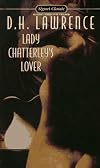
You know a book is trouble when it's published privately in Italy in 1928 and again in France a year later. It wasn't published openly to the masses until 1960 when it was promptly banned across the world. The United States, Canada, Australia, India, and Japan all found fault with it. Finally, when it was at the center of a 1960 British obscenity trial, things came to a head.
Who doesn't know this story? Lady Chatterley is an attractive upper-class woman married to an equally handsome man show more who happens to be paralyzed from the waist down. Connie is young, spoiled, and has certain...needs. Her husband says he understands, but a man and wife's varying perceptions of the same marriage are striking. Clifford Chatterley doesn't really understand the resentments of his wife. A poignant scene is when Connie watches a mother hen protect her eggs and feels empty. She wants a child. She wants a lover. She finds solace in the gamekeeper, Oliver Mellors, who lives on the grounds. His cottage is a short distance from the estate...It is the classic tale of class differences. Lawrence goes a bit further by exploring themes of industrialism (Clifford wants to modernize mining with new technology) and mind-body psychology (the struggle between the heart and mind when it involves sexuality, especially when it is illicit in nature). The ending is ambiguous, as typical of Lawrence's work, but it ends with hope. show less
Who doesn't know this story? Lady Chatterley is an attractive upper-class woman married to an equally handsome man show more who happens to be paralyzed from the waist down. Connie is young, spoiled, and has certain...needs. Her husband says he understands, but a man and wife's varying perceptions of the same marriage are striking. Clifford Chatterley doesn't really understand the resentments of his wife. A poignant scene is when Connie watches a mother hen protect her eggs and feels empty. She wants a child. She wants a lover. She finds solace in the gamekeeper, Oliver Mellors, who lives on the grounds. His cottage is a short distance from the estate...It is the classic tale of class differences. Lawrence goes a bit further by exploring themes of industrialism (Clifford wants to modernize mining with new technology) and mind-body psychology (the struggle between the heart and mind when it involves sexuality, especially when it is illicit in nature). The ending is ambiguous, as typical of Lawrence's work, but it ends with hope. show less

I often come away from D.H. Lawrence thinking, "What an odd book." This is no exception. The love story/romance is full of nothing happening and the rapidly shifting feelings of one person for another, bouncing back and forth between affection, attraction, frustration, and disdain. At first, I found this jarring. Then, I began to wonder if it is closer to how humans actually feel if examined in that minute by minute manner. Though the affair was presumably the main story, I found the pieces show more with Siegmund's family (their painful rejection, his overpowering guilt) the most gripping. show less
Lists
Reading LIst (7)
Women's Stories (1)
discontinued (1)
Classics (1)
Overdue Podcast (1)
Erotic Fiction (1)
Greatest Books (1)
Review 4 (1)
Yet another list (1)
Art Books (1)
Schwob Nederland (1)
1910s (1)
Read in 2011 (1)
Shaking a Leg (1)
el (1)
Country Life (1)
Favourite Books (1)
100 (1)
bound (1)
. (2)
United Kingdom (2)
A Novel Cure (2)
Read in 2006 (5)
Unread books (4)
Modernism (3)
. (3)
BBC Big Read (1)
Five star books (1)
Banned Books (1)
Backlisted (1)
Short and Sweet (1)
Read in 2010 (1)
1920s (2)
Read in 2009 (1)
1970s (1)
AP Lit (1)
Carole's List (1)
Awards


You May Also Like


Associated Authors
Statistics
- Works
- 890
- Also by
- 199
- Members
- 60,515
- Popularity
- #239
- Rating
- 3.6
- Reviews
- 717
- ISBNs
- 3,505
- Languages
- 34
- Favorited
- 121


