
Richard Brautigan (1935–1984)
Author of Trout Fishing in America
About the Author
Works by Richard Brautigan
Trout Fishing in America | The Pill Versus the Springhill Mine Disaster | In Watermelon Sugar (1989) 1,497 copies, 14 reviews
Revenge of the Lawn | The Abortion | So the Wind Won't Blow It All Away (1995) 552 copies, 2 reviews
A Confederate General from Big Sur | Dreaming of Babylon | The Hawkline Monster (1991) 516 copies, 2 reviews
Lay the Marble Tea 12 copies
The Galilee hitch-hiker (An OR book) 6 copies
The Pill Versus the Springhill Mine Disaster | Rommel Drives on Deep into Egypt | Loading Mercury with a Pitchfork (1990) 3 copies
Desire in a Bowl of Potatoes 2 copies
Richard Brautigan Poems 1 copy
Can't read title 1 copy
Five poems 1 copy
The Return of the Rivers 1 copy
Associated Works
Literature: An Introduction to Fiction, Poetry, and Drama (1995) — Contributor, some editions — 1,017 copies, 7 reviews
Drinking, Smoking and Screwing: Great Writers on Good Times (1994) — Contributor — 354 copies, 5 reviews
The Graphic Canon, Vol. 3: From Heart of Darkness to Hemingway to Infinite Jest (2013) — Contributor — 162 copies, 1 review
West Coast Fiction: Modern Writing from California, Oregon, and Washington (1979) — Contributor — 8 copies, 1 review
Tagged
Common Knowledge
- Canonical name
- Brautigan, Richard
- Legal name
- Brautigan, Richard Gary
- Birthdate
- 1935-01-30
- Date of death
- 1984-09-14
- Gender
- male
- Education
- South Eugene High School
- Occupations
- novelist
short story writer
poet - Organizations
- California Institute of Technology (Poet-in-Residence)
- Relationships
- Brautigan, Ianthe (daughter)
- Cause of death
- suicide
- Nationality
- USA
- Birthplace
- Tacoma, Washington, USA
- Places of residence
- Eugene, Oregon, USA
San Francisco, California, USA
Tokyo, Japan
Great Falls, Montana, USA
Pine Creek, Montana, USA - Place of death
- Bolinas, California, USA
- Burial location
- Cremated
- Associated Place (for map)
- USA
Members
Reviews
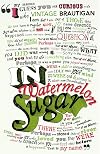
Poetic 60s fantasia.
An unnamed narrator relates life at iDEATH, He tells us of the extinct Tigers who ate his parents but spared him because, as they told him, we don’t harm children, and who were beautiful singers. He tells us of Margaret, who he used have a relationship with but won’t accept it’s over, and her obsession with the Forgotten Works; where the disillusioned inBOIL lives with his followers drinking whisky. Mostly he tells us about the characters of (Pauline, whom he loves; show more Fred, his best friend, and Old Charlie) and day-to-day events in iDEATH.
In the land of the cult writer Richard Brautigan sits at the top table – his novels are oddball, quirky, strange (pick your adjective). They contain a little plot and a little characterisation but mainly they contain a dream-like prose. They often resemble linked prose poems: beautiful and intriguing but so lightweight as novels they could simply blow away. Whether or not you like Brautigan depends solely on your reaction to his poetic prose.
The community of iDEATH is the embodiment of the 1960’s hippie dream - set in a environmentally friendly community, where the buildings are built round, and from (watermelon sugar), nature, the inhabitants live, eat and sleep communally. The life is slow and easy, work gets done when it is needed by who wants to do it. Brautigan also incorporates aspects of Eastern philosophy such as living with ancestors – in iDEATH it is almost literal, as the dead are buried in glass coffins at the bottom of the river so that they are always there.
Despite the bucolic nature of iDEATH acts of violence lie at the heart of the novel. The narrator and others mourn the loss of the Tigers’ beautiful singing, while acknowledging that the community had to hunt them to extinction as they preyed on its members. Then inBOIL and his followers commit suicide by cutting off their thumbs, ears and noses, bleeding to death on the floor of the trout hatchery, after he promises to reveal the truth about iDEATH. As he lies dying he states, “I am iDEATH”. Margaret, who is questioned about her obsession with the Forgotten Works, hangs herself.
Are the deaths of inBOIL and Margaret, and the name of the community itself, suggesting that in order for iDEATH to succeed certain aspects of individual personality must be lost? It is interesting that inBOIL and Margaret both are obsessed with the Forgotten Works where there are buildings, books and objects belonging to a previous civilisation. (Watermelon is nominally a post-apocalyptic novel). For the rest of iDEATH these items should be left to decay or disappear – they are at worst dangerous; at best pointless.
In the majority of utopian novels the suppression of the self and acceptance of things as they are is portrayed as bad but Brautigan appears more ambivalent. If the community members remain happy and contented does it matter? The unnamed narrator is puzzled by the deaths of inBOIL and his followers, saddened by the death of Margaret but also believes that they these deaths may have been for the best – that inBOIL and Margaret made iDEATH a less happy place to be. It is the same with the Tigers – the community made the decision to be safe at the cost of losing beauty. People miss the songs of the Tigers but they don’t dispute the necessity of the killing them all.
Is Brautigan really saying that it is acceptable to lose some aspects of human behaviour in order to reach a placid middle place of acceptance? The characters that we are expected to empathise with in the book certainly suggest that. These characters however are completely naïve; they don’t question the world the way an ordinary person would do. To a large extent they are philosophically and intellectually empty – they don’t accept the world of iDEATH because it is the best possible world, they accept it because it is their world.
There is always the possibility that iDEATH is a personal utopia for Brautigan. He suffered from mental problems throughout his life and perhaps iDEATH is a fictional manifestation of what he would have given up in order to achieve some level of inner peace. (He later committed suicide, aged 49, after talking about it for years – he was not discovered for a month).
In the end, In Watermelon Sugar is your typical Richard Brautigan novel – full of lovely descriptions of sunsets and rivers and the colours of watermelon sugar but empty of the many of the attributes that make up a good novel. That doesn’t mean the book isn’t worth reading, there are worse ways to fill a quiet Sunday afternoon or a lazy summer evening than relaxing with Brautigan’s prose. show less
An unnamed narrator relates life at iDEATH, He tells us of the extinct Tigers who ate his parents but spared him because, as they told him, we don’t harm children, and who were beautiful singers. He tells us of Margaret, who he used have a relationship with but won’t accept it’s over, and her obsession with the Forgotten Works; where the disillusioned inBOIL lives with his followers drinking whisky. Mostly he tells us about the characters of (Pauline, whom he loves; show more Fred, his best friend, and Old Charlie) and day-to-day events in iDEATH.
In the land of the cult writer Richard Brautigan sits at the top table – his novels are oddball, quirky, strange (pick your adjective). They contain a little plot and a little characterisation but mainly they contain a dream-like prose. They often resemble linked prose poems: beautiful and intriguing but so lightweight as novels they could simply blow away. Whether or not you like Brautigan depends solely on your reaction to his poetic prose.
The community of iDEATH is the embodiment of the 1960’s hippie dream - set in a environmentally friendly community, where the buildings are built round, and from (watermelon sugar), nature, the inhabitants live, eat and sleep communally. The life is slow and easy, work gets done when it is needed by who wants to do it. Brautigan also incorporates aspects of Eastern philosophy such as living with ancestors – in iDEATH it is almost literal, as the dead are buried in glass coffins at the bottom of the river so that they are always there.
Despite the bucolic nature of iDEATH acts of violence lie at the heart of the novel. The narrator and others mourn the loss of the Tigers’ beautiful singing, while acknowledging that the community had to hunt them to extinction as they preyed on its members. Then inBOIL and his followers commit suicide by cutting off their thumbs, ears and noses, bleeding to death on the floor of the trout hatchery, after he promises to reveal the truth about iDEATH. As he lies dying he states, “I am iDEATH”. Margaret, who is questioned about her obsession with the Forgotten Works, hangs herself.
Are the deaths of inBOIL and Margaret, and the name of the community itself, suggesting that in order for iDEATH to succeed certain aspects of individual personality must be lost? It is interesting that inBOIL and Margaret both are obsessed with the Forgotten Works where there are buildings, books and objects belonging to a previous civilisation. (Watermelon is nominally a post-apocalyptic novel). For the rest of iDEATH these items should be left to decay or disappear – they are at worst dangerous; at best pointless.
In the majority of utopian novels the suppression of the self and acceptance of things as they are is portrayed as bad but Brautigan appears more ambivalent. If the community members remain happy and contented does it matter? The unnamed narrator is puzzled by the deaths of inBOIL and his followers, saddened by the death of Margaret but also believes that they these deaths may have been for the best – that inBOIL and Margaret made iDEATH a less happy place to be. It is the same with the Tigers – the community made the decision to be safe at the cost of losing beauty. People miss the songs of the Tigers but they don’t dispute the necessity of the killing them all.
Is Brautigan really saying that it is acceptable to lose some aspects of human behaviour in order to reach a placid middle place of acceptance? The characters that we are expected to empathise with in the book certainly suggest that. These characters however are completely naïve; they don’t question the world the way an ordinary person would do. To a large extent they are philosophically and intellectually empty – they don’t accept the world of iDEATH because it is the best possible world, they accept it because it is their world.
There is always the possibility that iDEATH is a personal utopia for Brautigan. He suffered from mental problems throughout his life and perhaps iDEATH is a fictional manifestation of what he would have given up in order to achieve some level of inner peace. (He later committed suicide, aged 49, after talking about it for years – he was not discovered for a month).
In the end, In Watermelon Sugar is your typical Richard Brautigan novel – full of lovely descriptions of sunsets and rivers and the colours of watermelon sugar but empty of the many of the attributes that make up a good novel. That doesn’t mean the book isn’t worth reading, there are worse ways to fill a quiet Sunday afternoon or a lazy summer evening than relaxing with Brautigan’s prose. show less

I don’t consider myself a sexual prude but a book where every other chapter is about a Bob and Constance, a couple having sex in ways that keep their venereal warts from infecting the other’s intimate parts was very off-putting to me. The other chapters were about three brothers who were searching for their stolen bowling trophies. We learn that the trophies are stored in the apartment below Bob and Constance and guarded by Willard, a paper-mache bird who stands about three feet tall. show more Weird – yes, but I read on as this is a very short book and I have to admit these opening chapters intrigued me.
It quickly became obvious that while this book poses a number of mysteries, it has no intention of actually solving the mysteries or explaining the who, what, when, why or where of the story. It is whimsical, outrageous, silly and highly stylized and yet, I couldn’t stop myself from reading on.
The subtitle of this book is “a perverse mystery” and perverse seems to be the right word. This short book takes the reader on a very bumpy ride with it’s false leads and contradictory statements. I’ve seen this author’s style described as comic realism which I would say is pretty apt. Willard and His Bowling Trophies blended satire, suspense and comedy in an absurdly unique way that certainly caught my attention. show less
It quickly became obvious that while this book poses a number of mysteries, it has no intention of actually solving the mysteries or explaining the who, what, when, why or where of the story. It is whimsical, outrageous, silly and highly stylized and yet, I couldn’t stop myself from reading on.
The subtitle of this book is “a perverse mystery” and perverse seems to be the right word. This short book takes the reader on a very bumpy ride with it’s false leads and contradictory statements. I’ve seen this author’s style described as comic realism which I would say is pretty apt. Willard and His Bowling Trophies blended satire, suspense and comedy in an absurdly unique way that certainly caught my attention. show less
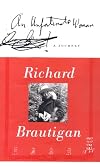
The book is structured as a semi-autobiographical journal, chronicling the travels of its narrator, who is closely modeled after Brautigan himself. Brautigan's narrative style reflects his characteristic wit, irony, and poetic prose. The journey is not just geographical but also an introspective one, marked by digressions and reflections rather than a linear plot. The episodic nature of the entries, spanning from January to June 1982, captures the whimsy and randomness of life, yet they show more cover themes of mortality, depression, and solitude.
Central to the book's thematic exploration is the shadow of death. Brautigan's protagonist navigates through the aftermath of the suicide of a woman he knew, whose home he temporarily occupies, and the death of a friend from cancer. These events cast a melancholic tone over the narrative, mirroring Brautigan's own struggles with depression, alcoholism, and his contemplation of mortality. This personal connection makes the book an eerie foreshadowing of the author's own suicide in 1984.
Despite its dark themes, "An Unfortunate Woman" retains Brautigan's signature humor and irony. His ability to find the absurd in the mundane, like describing a chicken in Hawaii or a courtroom scene for forgetting when one last wrote, provides a counterbalance to the narrative's inherent sadness. This juxtaposition of humor against despair showcases Brautigan's complex engagement with the human condition.
The novel serves as a personal document, offering glimpses into Brautigan's life during his final years. It's a raw, sometimes painful look at a man grappling with his identity, his past, and his imminent end. For Brautigan's fans, this book is a treasure, providing not just entertainment but a deeper understanding of the man behind the literary persona. His daughter, Ianthe Brautigan, found and later advocated for its publication, recognizing its value as a piece of her father's best work. show less
Central to the book's thematic exploration is the shadow of death. Brautigan's protagonist navigates through the aftermath of the suicide of a woman he knew, whose home he temporarily occupies, and the death of a friend from cancer. These events cast a melancholic tone over the narrative, mirroring Brautigan's own struggles with depression, alcoholism, and his contemplation of mortality. This personal connection makes the book an eerie foreshadowing of the author's own suicide in 1984.
Despite its dark themes, "An Unfortunate Woman" retains Brautigan's signature humor and irony. His ability to find the absurd in the mundane, like describing a chicken in Hawaii or a courtroom scene for forgetting when one last wrote, provides a counterbalance to the narrative's inherent sadness. This juxtaposition of humor against despair showcases Brautigan's complex engagement with the human condition.
The novel serves as a personal document, offering glimpses into Brautigan's life during his final years. It's a raw, sometimes painful look at a man grappling with his identity, his past, and his imminent end. For Brautigan's fans, this book is a treasure, providing not just entertainment but a deeper understanding of the man behind the literary persona. His daughter, Ianthe Brautigan, found and later advocated for its publication, recognizing its value as a piece of her father's best work. show less
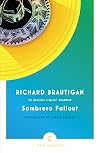
Razor-sharp depiction of being the most neurotic person alive. I am both the paranoid and incorrigible writer and his dreamy, misunderstood beloved. There is also a town that turns mad and mutinous and becomes an awesome anti-nationalist front. What more could a writer herself want from a book.
In terms of the writing: I thought the spare prose would bore me after a while, but Brautigan's use of repetition and clever phrasing made every sentence fresh and surprising. Also, this book is show more CRAZY-- and hysterical in a way only someone clinically depressed can acheive. On top of all of this, it is also stunningly lyrical at times. Many passages took my breath away. Brautigan's ability to invent totally original metaphors (knowing the english language is already obsessed with the figurative) is astounding.
This is truly something else. Just go in blind and read it. show less
In terms of the writing: I thought the spare prose would bore me after a while, but Brautigan's use of repetition and clever phrasing made every sentence fresh and surprising. Also, this book is show more CRAZY-- and hysterical in a way only someone clinically depressed can acheive. On top of all of this, it is also stunningly lyrical at times. Many passages took my breath away. Brautigan's ability to invent totally original metaphors (knowing the english language is already obsessed with the figurative) is astounding.
This is truly something else. Just go in blind and read it. show less
Lists
Awards


You May Also Like


Associated Authors
Statistics
- Works
- 50
- Also by
- 22
- Members
- 14,817
- Popularity
- #1,554
- Rating
- 3.8
- Reviews
- 266
- ISBNs
- 418
- Languages
- 21
- Favorited
- 111
